

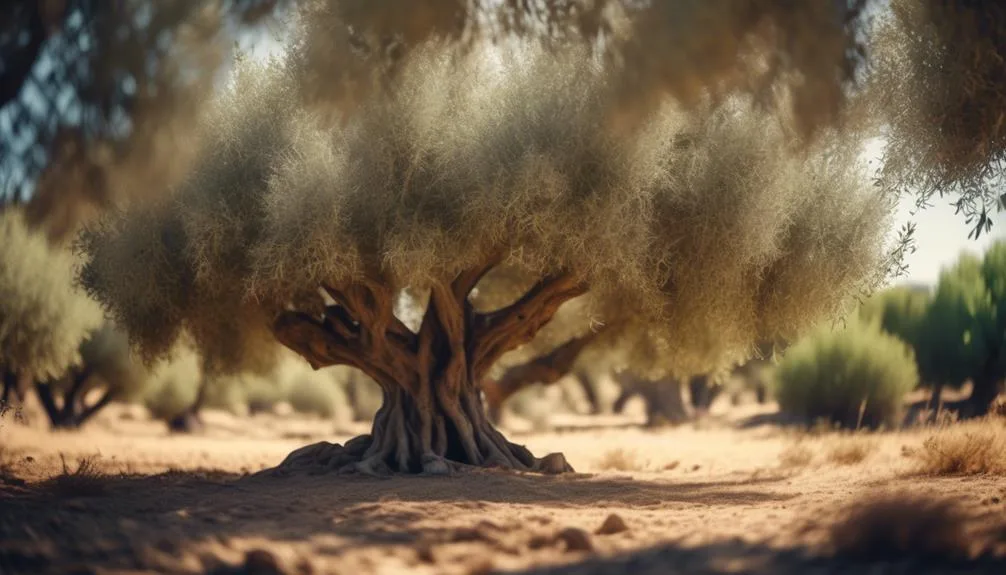
Olive trees are like conductors of a rich ecosystem, benefiting the environment in many ways. They help protect the soil and support a variety of plant and animal life.
But their impact goes even further. Exploring the connections between olive trees and their surroundings reveals a range of surprising ecological advantages. These ancient trees play a vital role in creating a harmonious environment, making them unsung heroes in the local ecosystem.
Key Takeaways
- Soil conservation and sustainable agriculture practices associated with olive trees play a crucial role in maintaining soil fertility and preventing erosion.
- Olive trees support biodiversity by providing essential wildlife habitat, acting as a food source, and attracting pollinators, contributing to a balanced ecosystem.
- Olive trees improve air quality by filtering pollutants, releasing oxygen, and actively contributing to urban greening.
- Olive tree cultivation and processing have economic benefits, creating job opportunities, attracting tourism, and supporting local economies.
Soil Conservation
To maintain healthy soil and preserve local ecosystems, implementing effective soil conservation practices is essential for protecting the environment and sustaining agricultural productivity.
Erosion prevention is crucial in maintaining soil fertility and preventing the loss of valuable topsoil. By incorporating sustainable agriculture and organic farming methods, you can actively contribute to preventing erosion and retaining essential nutrients in the soil.
Sustainable agriculture practices, like crop rotation and contour plowing, can significantly reduce soil erosion, preserving the land for future generations. Organic farming techniques such as using cover crops and composting also aid in nutrient retention and soil structure improvement.
These practices not only benefit the environment but also contribute to the long-term viability of agricultural land, ensuring its productivity for years to come.
Biodiversity Support
Supporting biodiversity in local ecosystems is crucial for maintaining healthy and resilient natural environments. Olive trees play a significant role in this by providing essential wildlife habitat.
The dense foliage and abundant fruit of olive trees create a favorable environment for various species of birds, insects, and small mammals. These trees not only offer shelter and nesting sites but also serve as a valuable food source, contributing to the overall richness of the ecosystem.
Furthermore, olive trees contribute to pollination support, attracting and sustaining diverse pollinators such as bees and butterflies. As these pollinators move from flower to flower, they facilitate the reproduction of numerous plant species, promoting a balanced and thriving ecosystem.
Air Quality Improvement
Olive trees play a crucial role in improving air quality by filtering pollutants and releasing oxygen into the atmosphere. This not only benefits the environment but also contributes to your health.
- Carbon Sequestration
- Olive trees absorb and store carbon dioxide, a greenhouse gas, mitigating its impact on climate change.
- This process helps regulate the climate, reducing the effects of global warming.
- Health Benefits
- The presence of olive trees in urban areas contributes to urban greening, reducing air pollution and creating a healthier environment for you and your community.
- Improved air quality from olive trees positively impacts respiratory health and overall well-being.
Olive trees aren't only aesthetically pleasing but also actively contribute to cleaner air and a healthier living environment.
Economic Contribution
With their versatile uses and significant economic impact, olive trees have long been valued for their contributions to various industries and local economies. The cultivation and processing of olives create numerous job opportunities, especially in regions where olive production is a significant part of the economy. This contributes to community development and stability.
Olive tree groves are also a draw for tourism, attracting visitors interested in olive oil production, culinary experiences, and agritourism.
Furthermore, the sustainable agricultural practices associated with olive tree cultivation support agricultural sustainability, as these trees are often grown using traditional and environmentally friendly methods. This not only benefits the local ecosystem but also supports the long-term economic viability of the region, making olive trees a vital component of many local economies.
Water Resource Protection
To protect local water resources, it's essential to implement sustainable irrigation practices that minimize water usage and prevent pollution from olive tree groves. By incorporating efficient irrigation methods, such as drip irrigation or precision watering systems, you can significantly reduce water wastage and ensure optimal water usage for olive tree cultivation.
Additionally, proper watershed management techniques play a crucial role in safeguarding water quality in the surrounding areas. Implementing measures like contour plowing and maintaining vegetative buffers can help prevent soil erosion and minimize the risk of agricultural runoff, preserving the overall health of local water bodies.
Conclusion
In summary, olive trees are vital for local ecosystems, contributing to soil conservation, water protection, air quality improvement, and economic benefits. Their presence fosters biodiversity and overall environmental health.
Understanding the significance of olive trees encourages sustainable practices and the preservation of our local ecosystems.
How can we continue to support these environmental champions for the benefit of future generations?
