

Ever wondered how often banana trees actually bear fruit? If you’re dreaming of a lush garden filled with vibrant banana plants, knowing their fruiting schedule can be a game changer. You might picture a tropical paradise with endless bunches of bananas, but the reality is a bit more nuanced.
Understanding the fruiting cycle of banana trees can help you plan your garden better and manage your expectations. This article will break down how frequently these trees produce fruit and what factors influence their yield. You’ll gain insights that can help you cultivate your own banana paradise, whether you’re a seasoned gardener or just starting out.
Key Takeaways
- Fruiting Schedule: Banana trees typically produce fruit 9 to 12 months after planting, yielding one bunch per cycle, which influences garden planning and expectations.
- Growing Conditions: Optimal growth requires warm, humid climates, well-drained nutrient-rich soils, full sunlight, and consistent moisture to enhance fruit production.
- Lifecycle Awareness: Understanding the stages of growth—from planting to harvesting—helps anticipate fruiting and care needs, ensuring successful cultivation.
- Nutrient Management: Regular fertilization with potassium-rich fertilizers and organic compost significantly boosts the yield and health of banana trees.
- Harvest Timing: Bananas are best harvested 75 to 80 days after flowering when they exhibit a yellow tint, ensuring optimal sweetness and texture.
- Pest Control: Proactively monitoring for pests and diseases is crucial to maintaining plant health and maximizing fruit production in your banana garden.
Overview Of Banana Trees
Banana trees, despite their name, are technically herbaceous plants. These tropical plants belong to the genus Musa and thrive in warm, humid climates. Understanding their characteristics aids in knowing their fruiting cycles.
Recommended Products

PREMIUM FUEL LIQUID FERTILIZER: Wellspring Gardens Banana Fuel Liquid Fertilizer Concentrate provides a quality nutrient blend with minor elements that could grow your plants. Its 3-1-6 formula ratio is the ideal fertilizer ration according to University of Florida which is what our product is made of.
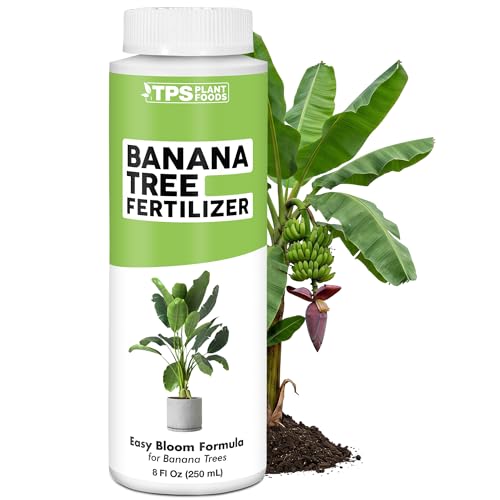
Made for Banana Trees – Specially formulated banana fertilizer designed to support the nutrient needs of banana plants.
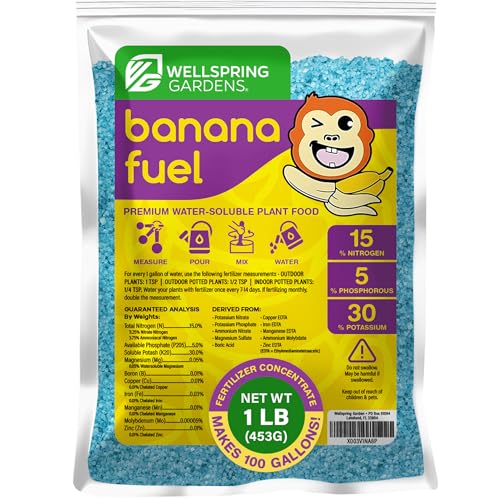
PREMIUM WATER SOLUBLE FERTILIZER: Wellspring Gardens Banana Fuel Fertilizer provides a water-soluble and high-quality nutrient blend with minor elements to promote optimal growth for your banana plants. Its premium 15-5-30 blend ensures that your banana plants are healthy and happy.
Physical Characteristics
Banana trees grow tall, typically reaching heights of 10 to 30 feet. They feature large, broad leaves that can extend up to 9 feet long. Each tree produces a pseudostem, which is formed by tightly packed leaf bases. When you look closely, you’ll notice that these stems give the impression of being woody, though they’re quite soft.
Growing Conditions
Banana trees thrive in well-drained soil rich in organic matter. They require full sun and temperatures between 75°F and 95°F. Regular watering supports optimal growth; however, overwatering can lead to root rot. Incorporating mulch helps maintain soil moisture and promotes healthy growth.
Fruiting Schedule
Banana trees typically produce fruit about 9 to 12 months after planting, depending on the variety and growing conditions. Each plant produces one cluster of bananas, known as a bunch. After fruiting, the main pseudostem dies, but suckers, or offshoots, grow to replace it. These suckers will eventually produce more bananas.
Nutrient Needs
Fertilizing banana trees regularly encourages healthy fruit production. Use a balanced fertilizer high in potassium. Adding compost enriches the soil with nutrients and enhances moisture retention. Regular applications, every 6 to 8 weeks, support optimal growth rates.
Harvesting Tips
When bananas change from green to a slight yellow tint, they are nearing the harvesting stage. Cut the bunch from the plant, leaving a couple of fingers of the stem attached. This helps delay the ripening process. Store harvested bananas at room temperature until they ripen fully.
With these insights into banana trees, you’re equipped to manage their growth and maximize fruit production effectively.
Life Cycle Of Banana Trees
Understanding the life cycle of banana trees helps you anticipate fruit production and manage your garden effectively. Banana trees have a unique growth process that contributes to their fruiting schedule.
Stages Of Growth
- Planting: Begin with a healthy banana plant. Choose a location with plenty of sunlight and well-drained, nutrient-rich soil.
- Sprouting: The plant starts to grow, producing a pseudostem. This initial stage lasts about 1 to 3 months.
- Vegetative Growth: Leaves emerge and rapidly grow. This stage can continue for 6 to 8 months, resulting in a tall plant with large leaves.
- Flowering: After about 9 to 12 months, the flowering stage initiates. The plant produces a large, colorful inflorescence that eventually develops into bananas.
- Fruiting: The bunch of bananas forms and ripens over several months. Once the fruit is ready, cut the entire bunch.
- Post-Harvest: After harvesting, the main pseudostem dies. Suckers emerge from the base to start the next cycle.
- Climate: Banana trees thrive in warm, humid climates. Optimal temperatures range from 75°F to 95°F (24°C to 35°C).
- Soil Quality: Well-drained, nutrient-rich soil promotes healthy growth. Amend your soil with compost and potassium-rich fertilizers.
- Watering: Consistent moisture is essential. Ensure regular watering, especially during dry spells, but avoid waterlogging.
- Sunlight: Full sun exposure supports growth. Aim for at least 6 to 8 hours of direct sunlight daily.
- Pest Control: Monitor for pests such as the banana weevil and aphids. Implement organic pest management strategies to protect your plants.
Understanding these stages and factors aids in maximizing the fruit yield of banana trees in your garden.
Frequency Of Fruit Production
Banana trees produce fruit based on their life cycle, typically yielding one bunch of bananas every 9 to 12 months. Understanding this cycle helps you manage expectations and plan your garden effectively.
Recommended Products

2X MORE VALUE: The 16 oz bottle of Banana Plant Fertilizer makes 16 gallons of banana fertilizer for fruit trees, while the bigger size 32 oz bottle makes 32 gallons for lasting care of your banana trees.

Let our professionally formulated plant food help your fruit tree grow healthy, strong AND abundantly producing

Let our professionally formulated plant food help your fruit tree grow healthy, strong AND abundantly producing
Typical Fruit Bearing Cycle
Banana trees undergo a typical fruit-bearing cycle that includes distinct stages.
- Planting: Start with a healthy sucker or rhizome.
- Sprouting: New shoots emerge within weeks.
- Vegetative Growth: Leaves grow rapidly, reaching heights of 10 to 30 feet.
- Flowering: After roughly 7 to 9 months, flowers appear, developing into small fruits.
- Fruiting: Bananas mature within 60 to 90 days post-flowering.
- Post-Harvest: After harvesting, the main pseudostem dies and suckers take over for the next cycle.
Each plant produces fruit only once before it dies, but suckers continue the growth cycle, allowing for continuous fruiting in your garden over time.
Environmental Influences
Environmental factors play a major role in how often banana trees produce fruit. Here are the key influences:
- Climate: Warm and humid conditions enhance growth and fruiting. Ideal temperatures range from 75°F to 95°F.
- Soil Quality: Nutrient-rich, well-drained soil promotes healthier plants and higher yields. Conduct soil tests to ensure proper pH levels (5.5 to 7.0).
- Watering: Consistent watering is crucial, as banana trees thrive on moist soil. Aim for at least 1 to 2 inches of water per week.
- Sunlight: Full sun exposure (at least 6 to 8 hours per day) is necessary for optimal growth.
- Pest Control: Managing pests and diseases influences production frequency. Monitor plants regularly for infestations.
By providing the right environmental conditions, you maximize the chances of frequent fruit production in your banana trees.
Harvesting And Yield
Harvesting banana crops at the right time ensures optimal flavor and texture. Understanding the timing and yield of your banana trees can enhance your gardening experience.
Recommended Products

【Fruit Picker Tool】The fruit picker with 8 parts extension pole and 1 fruit picker cloth bag. The included cloth bag gently catches the picked fruit without damaging it.

🍎【13.8 FT Telescoping Fruit Picker Pole, Reach High Fruits Safely】 Harvest fruits from tall trees without climbing ladders. The adjustable telescoping fruit picker pole extends up to 13.8 feet, allowing you to easily reach high branches and pick apples, mangoes, oranges, and other tree fruits safely.

1:EXTENDABLE REACH FOR LADDER-FREE SAFETY – Acting as both a reliable tree pruner and a fruit picker pole, this tool effortlessly extends from 3.28 to 5.25 FT to reach high branches up to 10 FT from the ground. The innovative rotating and locking head allows for precise angles without unstable ladders or risky stretching, ensuring maximum safety.
Optimal Harvesting Time
Bananas are ready for harvest typically 75 to 80 days after the flowering stage. Look for a slight yellow tint on the bananas. Harvesting them too early results in less sweet fruit, while overripe bananas may spoil quickly. For the best results:
- Check the size of the fruit; mature bananas are plump.
- Observe the color change; they should start showing yellow.
- Cut the entire bunch with a sharp knife or machete.
Store harvested bananas at room temperature to allow them to ripen evenly. This process enhances their natural sweetness.
Expected Yield Per Tree
Each banana tree produces one bunch of bananas during its life cycle. The average yield varies significantly depending on growing conditions.
| Factors Affecting Yield | Average Yield per Tree |
|---|---|
| Ideal Conditions | 30 to 40 pounds |
| Average Conditions | 10 to 20 pounds |
| Poor Conditions | Less than 10 pounds |
Maintaining optimal care translates into a higher yield. Regular fertilization, proper watering, and attention to sunlight contribute significantly to productive trees. After harvesting, banana trees typically die back, but you can nurture suckers that grow nearby to ensure ongoing production.
Conclusion
Growing banana trees can be a rewarding experience. With the right care and understanding of their fruiting cycle you can enjoy fresh bananas right from your garden. Remember that patience is key since it takes about 9 to 12 months for a tree to produce its first bunch.
By nurturing the suckers that grow after harvesting you can keep the cycle going and ensure a continuous supply of bananas. Pay attention to the essential factors like soil quality sunlight and watering to maximize your yield. With these tips in mind you’re well on your way to becoming a successful banana tree gardener. Happy planting!
Frequently Asked Questions
How long does it take for banana trees to bear fruit?
Banana trees typically produce fruit about 9 to 12 months after planting. Each plant yields one bunch of bananas during its lifecycle.
How many times do banana trees produce fruit?
Each banana tree produces fruit only once before the main pseudostem dies. However, suckers from the plant can grow and produce fruit continuously.
What factors influence banana tree fruit yield?
The yield of banana trees is affected by various factors, including climate, soil quality, watering, sunlight, and pest control.
When should I harvest bananas?
Bananas are ready for harvest approximately 75 to 80 days after flowering. Look for a slight yellow tint on the fruit to determine ripeness.
What is the expected yield of bananas per tree?
Under ideal conditions, banana trees can yield 30 to 40 pounds of bananas, while average conditions yield 10 to 20 pounds, and poor conditions yield less than 10 pounds.
