

Have you ever wondered how long it takes for a banana tree to bear fruit? If you’re dreaming of that tropical delight right in your backyard, you’re not alone. Many people are eager to grow their own bananas but often find themselves asking when they can finally enjoy those sweet, golden treats.
Key Takeaways
- Banana trees typically start bearing fruit between 12 to 18 months after planting, depending on optimal growing conditions.
- The life cycle includes stages: planting, vegetative growth, flowering, fruit development, and harvesting.
- Key factors for successful growth are climate, soil quality, sunlight, and watering practices.
- Different banana species have varying fruiting timelines; for instance, Cavendish takes 12-14 months, while dwarf varieties can fruit in 9-12 months.
- Regular fertilization and pest management are essential for healthy growth and optimal fruit production.
Understanding Banana Trees
Banana trees are fascinating plants that thrive in tropical and subtropical climates. They can reach impressive heights and yield delicious fruit, offering satisfaction to any gardener.
The Life Cycle of a Banana Tree
The life cycle of a banana tree includes several stages.
- Planting: You start with a banana sucker or tissue-cultured plant.
- Vegetative Growth: During this period, the tree can grow 10 to 20 feet tall, with broad leaves that can span up to 3 feet.
- Flowering: After 9 to 12 months, flowers develop from the tree’s pseudostem. The male and female flowers form clusters, called hands.
- Fruit Development: Once pollinated, fruit will start forming, taking an additional 3 to 6 months to mature.
- Harvesting: You can harvest the bananas when they turn green and plump, often around 12 to 18 months after planting.
Growth Conditions for Banana Trees
Banana trees flourish under specific conditions.
- Climate: They require warm temperatures, ideally between 75°F and 95°F.
- Soil: Well-draining, rich, loamy soil promotes growth. It must maintain moisture without becoming waterlogged.
- Sunlight: Full sun, meaning 6 to 8 hours of direct sunlight daily, is crucial for vigorous growth.
- Watering: Regular watering ensures roots receive adequate hydration, but you should avoid overwatering.
By catering to these factors, you’ll create an optimal environment for your banana trees to thrive and fruit successfully.
Factors Affecting Fruit Production
Several factors influence the time it takes for a banana tree to produce fruit. Understanding these can help you cultivate your banana trees more effectively.
Recommended Products

PREMIUM FUEL LIQUID FERTILIZER: Wellspring Gardens Banana Fuel Liquid Fertilizer Concentrate provides a quality nutrient blend with minor elements that could grow your plants. Its 3-1-6 formula ratio is the ideal fertilizer ration according to University of Florida which is what our product is made of.

2X MORE VALUE: The 16 oz bottle of Banana Plant Fertilizer makes 16 gallons of banana fertilizer for fruit trees, while the bigger size 32 oz bottle makes 32 gallons for lasting care of your banana trees.

Let our professionally formulated plant food help your fruit tree grow healthy, strong AND abundantly producing
Climate and Weather Conditions
Climate plays a crucial role in banana fruit production. Tropical and subtropical climates provide the warmth that banana trees require. Ideal temperatures range from 75°F to 95°F. Cool temperatures below 50°F can hinder growth and delay fruiting.
Humidity levels should remain high, ideally between 50% and 75%. Adequate rainfall is necessary, but too much rain may lead to fungal diseases. Regular sunlight exposure, around 10 to 12 hours a day, supports healthy growth and flowering.
Soil Quality and Nutrition
Soil quality significantly impacts banana tree health and fruit production. Well-draining, loamy soil provides the best conditions. Soil should retain moisture without becoming waterlogged.
Nutrient-rich soil supports robust growth. Incorporate organic matter like compost to enhance soil fertility. Essential nutrients include nitrogen, potassium, and phosphorous. A balanced fertilizer can supplement nutrients as needed. Regular soil testing helps identify deficiencies, ensuring optimal growing conditions.
By considering these factors, you can create an environment that encourages your banana trees to thrive and produce fruit efficiently.
Time Frame for Banana Trees to Fruit
Banana trees take time to produce fruit, but understanding the timeline can help you plan your cultivation efforts effectively.
Recommended Products

🌿 NUTRIENT-BALANCED 8-10-10 BLEND: Engineered for excellence, our 8-10-10 formula combines 8% Nitrogen for vigorous leaf growth, 10% Phosphate for robust roots and vibrant blooms, and 10% Potash for overall plant health. This scientific blend ensures your garden thrives with enriched foliage, splendid flowers, and plentiful fruits.


🌿 NUTRIENT-BALANCED 8-10-10 BLEND: Engineered for excellence, our 8-10-10 formula combines 8% Nitrogen for vigorous leaf growth, 10% Phosphate for robust roots and vibrant blooms, and 10% Potash for overall plant health. This scientific blend ensures your garden thrives with enriched foliage, splendid flowers, and plentiful fruits.
Average Time to First Fruit
Most banana trees start bearing fruit within 12 to 18 months after planting. The duration often depends on optimal conditions. If you plant a sucker or tissue-cultured plant, it typically reaches the flowering stage in about 8 to 10 months. Following flowering, fruit development occurs over the next 2 to 6 months. Factors influencing this timeline include temperature, soil quality, and care practices.
Variations Among Different Banana Species
Different banana species exhibit variations in time to fruiting. For example:
- Cavendish: Fruits in 12 to 14 months; popular for commercial production.
- Dwarf Varieties: Fruits in 9 to 12 months; ideal for smaller gardens.
- Lady Finger: Fruits in 15 to 18 months; known for its sweet, tender fruit.
These differences depend on growth habits and environmental preferences. Select a species based on your growing conditions and desired harvest time.
Care and Maintenance for Fruit Production
Maintaining proper care for your banana tree enhances its potential to bear fruit efficiently. Focus on consistent watering, fertilizing, and managing pests and diseases to ensure healthy growth.
Recommended Products

Made for Banana Trees – Specially formulated banana fertilizer designed to support the nutrient needs of banana plants.
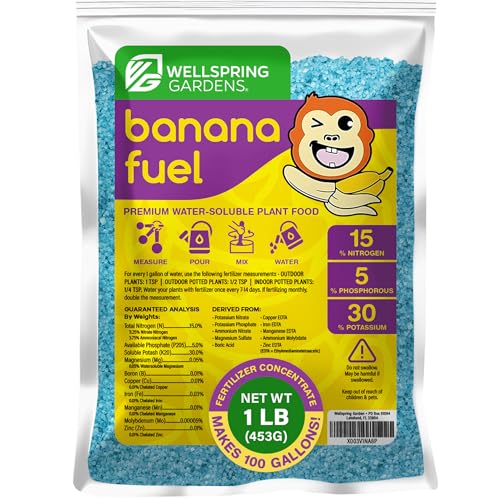
PREMIUM WATER SOLUBLE FERTILIZER: Wellspring Gardens Banana Fuel Fertilizer provides a water-soluble and high-quality nutrient blend with minor elements to promote optimal growth for your banana plants. Its premium 15-5-30 blend ensures that your banana plants are healthy and happy.

🌿 BALANCED 6-4-6 FORMULA FOR HEALTHY PLANTS: Give your plants balanced nutrition with a professional 6-4-6 NPK fertilizer formulated to support strong roots, greener foliage, healthy leaf development, flowering, and vigorous overall growth. A versatile plant food for a wide variety of indoor and outdoor plants.
Watering and Fertilizing
Water consistently to keep the soil moist but not waterlogged. Aim for about 1 to 2 inches of water per week, either from rainfall or irrigation. During dry spells, increase your watering frequency.
Fertilize every 6 to 8 weeks using a balanced fertilizer, ideally one high in potassium. For example, a 10-10-30 formula works well. Monitor the banana tree’s growth; signs of nutrient deficiency include yellowing leaves or poor growth. To boost soil fertility, apply organic matter like compost or well-rotted manure.
Pest and Disease Management
Monitor your banana tree for common pests like aphids and spider mites. Use insecticidal soap or neem oil for effective treatment. Regularly inspect both the top and underside of leaves.
Prevent disease by ensuring good air circulation around the tree. Aim to space banana plants at least 4 to 6 feet apart. Manage any fungal issues by applying fungicides as needed and ensuring the tree doesn’t sit in waterlogged conditions. Always remove any dead or diseased leaves to promote healthy growth.
Conclusion
Growing your own banana tree can be an exciting journey that rewards your patience and care. With the right conditions and attention to detail you can enjoy fresh bananas in about 12 to 18 months.
Each step from planting to harvesting is a chance to learn and connect with nature. So whether you’re a seasoned gardener or just starting out remember to choose the right variety for your space and climate.
With a little love and effort your banana tree will not only bear fruit but also bring joy to your garden. Happy gardening and enjoy the sweet rewards of your hard work!
Frequently Asked Questions
How long does it take for a banana tree to produce fruit?
Banana trees typically take about 12 to 18 months to produce fruit after planting. Factors such as climate, soil quality, and care can influence this time frame.
What are the ideal conditions for growing banana trees?
Banana trees thrive in warm temperatures between 75°F and 95°F, need well-draining loamy soil rich in nutrients, require ample sunlight, and should be watered regularly, about 1 to 2 inches per week.
How do I care for my banana tree to ensure fruit production?
To promote fruit production, water consistently, fertilize every 6 to 8 weeks with a high-potassium fertilizer, monitor for pests, and maintain good air circulation. Proper spacing and removing dead leaves are also important.
Do all banana species fruit at the same time?
No, different banana species have varying growth rates. For example, Cavendish bananas fruit in 12 to 14 months, dwarf varieties fruit in 9 to 12 months, and Lady Finger varieties take 15 to 18 months.
What soil conditions are best for banana trees?
Banana trees prefer well-draining, loamy soil enriched with organic matter and essential nutrients like nitrogen, potassium, and phosphorus. Regular soil testing is recommended for optimal growth.
