

Thinking about planting fruit trees in your yard? You might be wondering how far apart to space them for the best growth and fruit production. It’s a common dilemma for many gardeners, whether you’re a seasoned pro or just starting out.
Spacing your trees correctly can make a big difference in their health and yield. If they’re too close, they’ll compete for nutrients and sunlight, leading to poor growth. On the other hand, giving them too much space can waste valuable garden real estate. This article will guide you through the ideal distances for various fruit trees, helping you create a thriving orchard that produces delicious fruit for years to come.
Key Takeaways
- Proper spacing between fruit trees is vital for their growth and productivity, preventing competition for nutrients and sunlight.
- Different fruit trees require specific spacing: apple trees need 20-30 feet apart, peach trees require 15-20 feet, and citrus trees should be spaced 10-15 feet apart.
- Factors influencing spacing include tree size, growth habit, and soil conditions; larger and more vigorous trees necessitate greater distances.
- Adequate spacing improves air circulation, reducing the risk of fungal diseases, and enhances sunlight exposure, promoting healthy growth and fruit production.
- Ensuring good maintenance access is easier with properly spaced trees, allowing for efficient pruning, harvesting, and pest management.
Importance Of Proper Spacing
Proper spacing between fruit trees significantly influences their growth and productivity. Each type of fruit tree requires specific distances to thrive. Inadequate spacing leads to several challenges.
Recommended Products

You Will Receive: 15 Pcs 3.94in fruit tree branch puller suitible for 0.4in branch, 5 tree limb spreaders about 10 inches long, and a protable carrying Bag.

1. Iron branch support, orchard expenditure tools for apple trees, cherry trees, for old branches, fruit tree branch training, increased light, ventilation and air.

Complete 30-Piece Branch Training Kit: Your kit includes 20 M-shaped branch pullers (10 each in 3.9 inch and 5.1 inch sizes) and 10 tree limb spreaders (5 each in 7.1 inch and 10 inch sizes). This comprehensive set provides multiple tools for precise branch bending and shaping at various growth stages
Nutrient Competition
Plants compete for nutrients in the soil. If trees are too close, their root systems overlap, making it difficult for each tree to access essential nutrients. This competition can stunt growth and reduce fruit production.
Sunlight Access
Trees need sunlight for photosynthesis. When planted too closely, branches shade each other, limiting light exposure. This reduction in sunlight can weaken trees, leading to fewer blossoms and fruits.
Air Circulation
Good air circulation is crucial for preventing diseases. Insufficient space can trap moisture, increasing humidity around the trees. This condition fosters fungal infections and pests, harming overall health.
Maintenance Ease
Proper spacing simplifies maintenance tasks. You can easily access each tree for pruning, harvesting, and checking for pests or diseases. Crowded trees make these tasks difficult, risking increased labor and potential damage.
- Apple Trees: Space them 20 to 30 feet apart.
- Peach Trees: Space them 15 to 20 feet apart.
- Citrus Trees: Space them 10 to 15 feet apart.
Following these guidelines enhances the health and yield of your orchard. Ensuring adequate space reduces competition, promotes healthy growth, and simplifies maintenance tasks.
Factors Influencing Spacing
Spacing trees correctly depends on several important factors. Understanding these elements ensures healthy growth and fruit production.
Recommended Products

Durable & Long-Lasting: Crafted from high-quality materials, these fruit tree branch pullers to withstand the rigors of outdoor use season after season. Resistant to rust, weathering, and wear, they provide consistent performance, becoming your go-to tools for maintaining your orchard year after year.

★ 1. What you get: Professional convenient grafting tool set including a dual-use grafting pruner tool contain 2 extra replaceable blades, a wrench and a screwdriver, along with 36pcs wide rubber bands, 150 thick rubber bands and 1 grafting tape, packed in a black wallet to meet all your needs

✂Multifunctional -2 in 1 Garden Grafting Tools-Professional grafting set allows you to pruning and grafting at the same time, saving more time and effort than traditional grafting methods, easy to use and more efficient. It allows you to trim away excess leaves and twigs and prepare the plants to be grafted. At the same time, you can make a precise cut into the grafting stock with the special grafting blade.
Tree Size
Tree size plays a crucial role in determining spacing. Larger trees, like apples, need more distance—20 to 30 feet apart. Smaller varieties, such as dwarf citrus, thrive when placed 10 to 15 feet apart. Consider the mature height and spread of each tree type. Research the expected size for your specific varieties to make informed decisions.
Growth Habit
Growth habit also impacts how closely you can plant trees. Trees that grow upright require less horizontal space. Variants that spread wider, like peaches, need additional room to avoid overcrowding. Assess each tree’s growth pattern before planting. For instance, if a tree has a broad canopy, plant it farther from nearby trees to ensure ample air circulation and sunlight exposure.
Soil Conditions
Soil conditions affect root development and nutrient access. Dense or compacted soil limits root expansion, necessitating greater distances between trees. On looser soils, roots spread more easily, allowing closer planting. Test your soil’s texture and composition before planting. If soil lacks nutrients, consider amending it to support healthier growth. Ensure enough space between trees to maximize nutrient intake and prevent competition.
General Guidelines
Planting fruit trees with proper spacing enhances growth and production. Follow these guidelines to make informed decisions about how far apart to plant your trees.
Recommended Products

Product Quantity: 180+ premium bonsai fruit seeds across 5 varieties; Individual packs contain 40+ apple, 40+ lemon, 40+ orange, 20+ blueberry, and 40+ cherry seeds; Perfect for starting a diverse miniature orchard

4 kinds of the most popular fruits, individually packaged, 50pcs Lemon seeds 50pcs Cherry seeds 50pcs Orange seeds 50pcs Apple seeds Fresh seeds, all fruit seeds are packed in tear and moisture resistant zipper sealed bags for your long term storage.
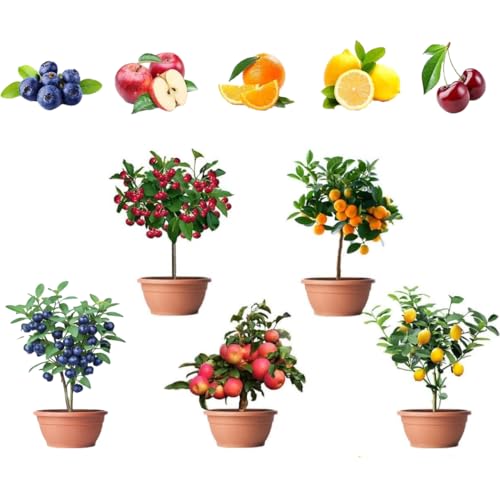
Variety Pack of 5 Fruits: Includes 40 Lemon seeds, 40 Orange seeds, 40 Apple seeds, 20 Cherry seeds, and 20 Blueberry seeds for a colorful and diverse home garden
Standard Spacing Recommendations
- Apple Trees: Space apple trees 20 to 30 feet apart. This distance allows room for their expansive root systems and broad canopies.
- Peach Trees: Plant peach trees 15 to 20 feet apart. This spacing accommodates their spreading branches, ensuring each tree gets adequate sunlight.
- Citrus Trees: Space citrus trees 10 to 15 feet apart. Dwarf varieties can be planted closer together, ideally 6 to 8 feet apart, due to their smaller size.
By following these recommendations, you prevent overcrowding and promote better air circulation, enhancing overall health.
Adjustments For Specific Varieties
Consider adjusting spacing based on specific tree characteristics.
- Dwarf Varieties: Dwarf fruit trees thrive in tighter spaces. You can plant them 6 to 8 feet apart, maximizing garden space while ensuring good access to sunlight.
- Vigorous Growers: For more vigorous varieties, such as certain apple or peach trees, increase the distance to 30 feet to accommodate their larger size and growth habits.
- Soil Quality: If soil quality is poor or compacted, increase space by a few feet. This adjustment provides roots with more room to expand and access nutrients effectively.
Understanding these adjustments helps you plant with confidence, leading to a flourishing orchard.
Benefits Of Proper Planting Distance
Planting fruit trees at the right distance promotes healthy growth and optimal fruit production. Good spacing prevents issues like overcrowding and competition for resources.
Improved Air Circulation
Proper spacing enhances air circulation around each fruit tree. Adequate airflow reduces humidity levels, which lowers the risk of fungal diseases. When trees have room to breathe, moisture evaporates quickly, keeping foliage drier and less susceptible to infections. Aim for a distance that allows wind to flow freely around the trees, helping to maintain a healthy environment.
Enhanced Sunlight Exposure
Spacing fruit trees correctly optimizes their sunlight exposure. Trees planted too close together can shade one another, inhibiting photosynthesis. Each tree thrives on sunlight; adequate space ensures that each receives enough light, leading to vigorous growth and plentiful fruit production. For instance, apple trees spaced 20 to 30 feet apart can grow taller and produce better fruit than if crammed together.
Easier Maintenance
Good planting distance simplifies maintenance tasks like pruning and harvesting. With ample space, you can easily access each tree for care activities. This setup minimizes the risk of damaging branches or disrupting root systems. Moreover, when trees are properly spaced, monitoring for pests becomes straightforward, allowing for quicker interventions when necessary.
Conclusion
Finding the right spacing for your fruit trees is key to a thriving garden. By giving each tree the room it needs you’re setting the stage for healthier growth and better fruit production. Remember to consider the specific requirements of each type of tree and the conditions of your soil.
With proper planning you can create a beautiful and productive orchard that not only looks great but also provides delicious fruit for years to come. So grab those shovels and start planting with confidence knowing you’ve got the spacing down! Happy gardening!
Frequently Asked Questions
Why is proper spacing important when planting fruit trees?
Proper spacing is crucial for fruit trees to thrive, as it ensures sufficient access to nutrients, sunlight, and air circulation. When trees are too close, competition can lead to stunted growth, reduced fruit production, and increased disease risk due to inadequate airflow.
How far apart should apple trees be planted?
Apple trees should be spaced 20 to 30 feet apart to allow for their larger size and extensive root systems. This distance helps prevent overcrowding and promotes healthy growth and optimal fruit production.
What is the recommended spacing for peach trees?
Peach trees should be spaced 15 to 20 feet apart. This spacing accommodates their growth habit and ensures each tree receives adequate light and nutrients without competing with neighboring trees.
How close can dwarf citrus trees be planted?
Dwarf citrus trees can be planted 6 to 8 feet apart. Their smaller size allows for closer spacing, enabling gardeners to maximize space while promoting healthy growth and fruit yield.
What factors influence the spacing of fruit trees?
Factors that influence tree spacing include tree size, growth habit, and soil conditions. Larger trees need more distance, while smaller varieties can be closer. Additionally, compacted soils may require greater spacing to allow for proper root expansion.
How does spacing affect maintenance of fruit trees?
Proper spacing simplifies maintenance tasks like pruning, harvesting, and pest checks. When trees are adequately spaced, it’s easier to access each tree, ensuring that care can be provided without hindrance from overlapping branches or crowded conditions.
