


I’ve been thinking about ways to make my everyday crochet tees a little more interesting without adding too much fuss.
Textured stitches can give a simple shape some depth while still keeping things wearable.
I collected a few patterns that use different textures in basic tee styles.
Some work well in lighter yarns for warmer days and others in slightly thicker ones for cooler evenings.
They all stay pretty straightforward once you get the stitch pattern going.
Horizontal Bobble Pattern on a Short-Sleeved Tee
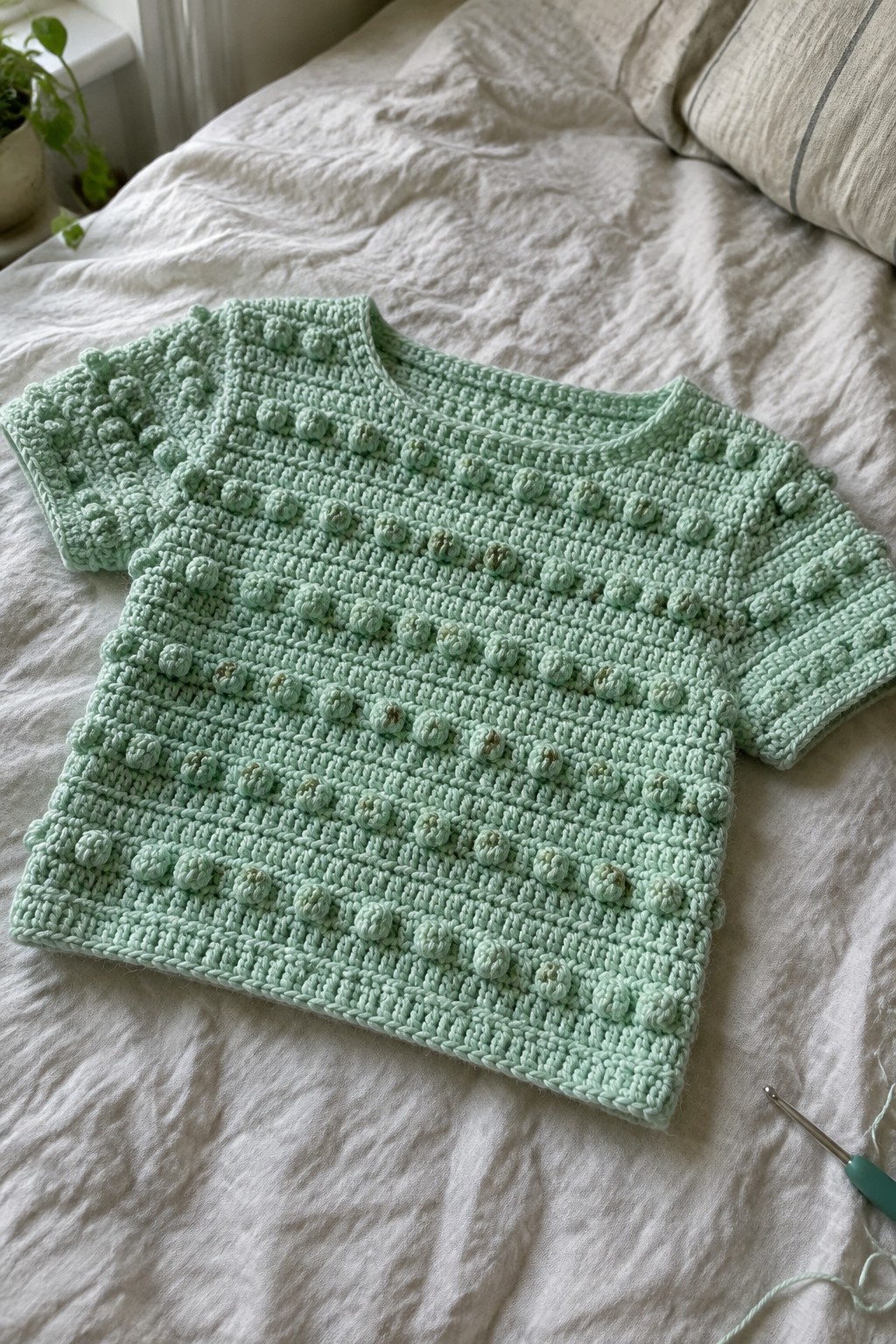
A short-sleeved top uses repeating horizontal bands of bobbles worked into a light mint yarn to create a dotted surface across the body and sleeves. The bobbles sit in even rows that alternate with plain stitch sections, giving the garment a clear, structured texture while keeping the overall shape simple. This kind of wearable works because the pattern stays flat enough for comfortable wear but adds visible dimension through the raised dots.
What makes this idea useful is how the bobble spacing can be changed without rewriting the whole pattern. You could move the rows closer together or spread them out depending on the yarn and the look you want. The short sleeves and basic neckline also make it simple to swap colors or adjust the length for different seasons. A project like this stands out in a feed because the texture reads clearly even in a small photo.
Child’s Tee with Granny Square Yoke and Striped Body

A child’s short-sleeved tee uses a row of granny square motifs to form the yoke and upper sleeves, then switches to solid rows of stitches for the lower body. The open squares create a lighter top section while the dense stripes add coverage and structure below. The gradual color shift across both the motifs and the stripes keeps the design cohesive without extra embellishment.
What makes this idea useful is how the yoke size can be changed simply by adding or removing squares to fit a range of ages. The striped lower section is easy to extend or shorten and works well with any leftover yarn in similar weights. A project like this stands out for gifts because the small scale finishes quickly and the mix of motifs and stripes gives it a finished look without complicated shaping.
Boxy Tee with Lace Sleeves and Scalloped Hem

A boxy short-sleeve tee combines a dense textured body with open lace panels on the sleeves and hem. The solid center section gives structure and coverage while the lacy edges create visual contrast and keep the piece from feeling heavy. The rounded neckline and slightly cropped shape work as a simple layering piece over a tank or alone in warmer months. This fits the wearable category as an everyday top that mixes stitch textures without complicated shaping.
What makes this idea useful is how easily the lace sections can be swapped for other openwork patterns or even left off for a simpler look. You could adjust the body length for a longer tunic or change the sleeve width depending on the yarn and drape you want. The solid torso section also gives room to test different textured stitches while the decorative edges stay contained to smaller areas. A project like this stands out on Pinterest when shown in a single soft color that highlights the stitch contrast.
Textured Grid Stitch Tee
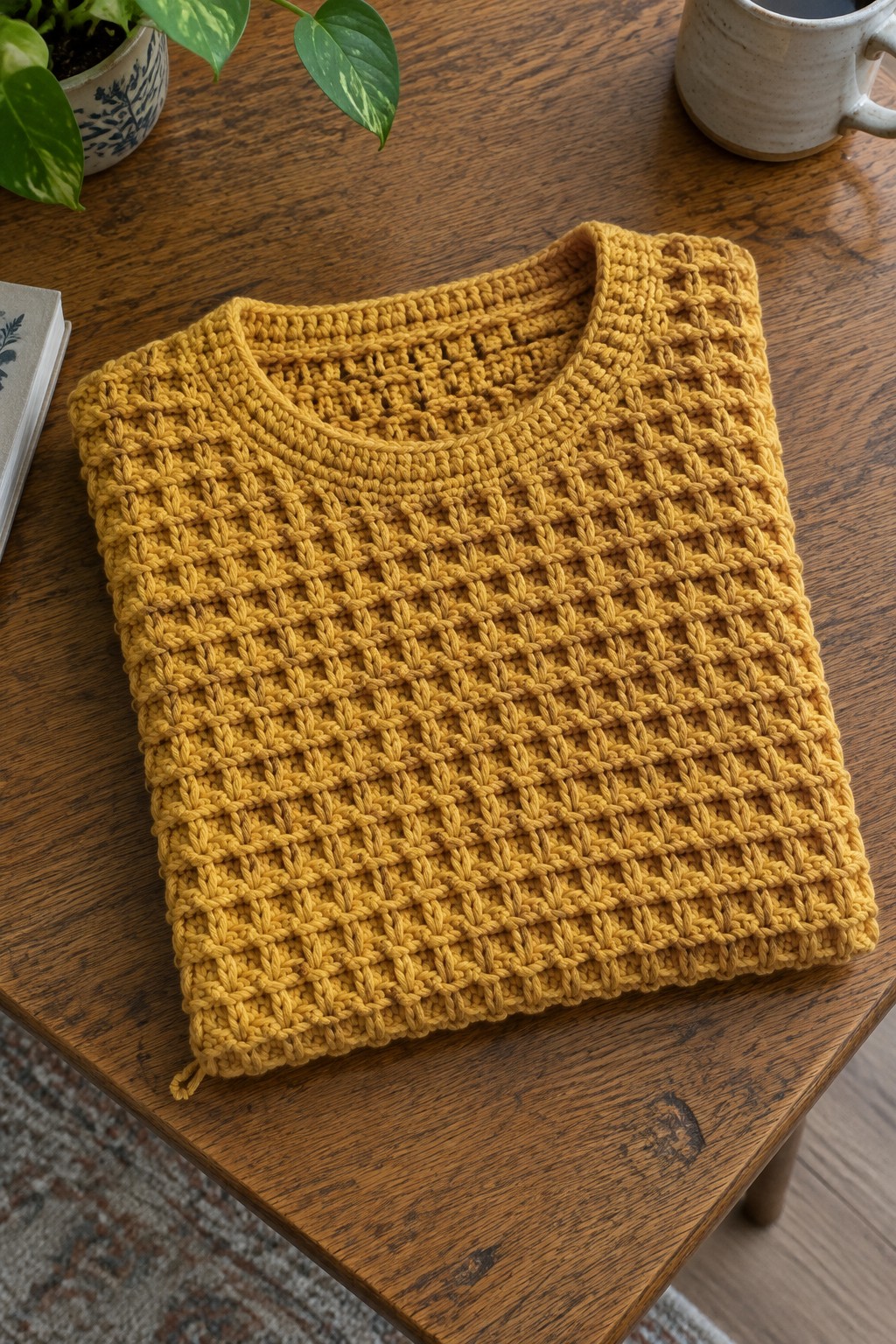
A crochet top worked in a repeating square texture forms a dense fabric that looks almost woven. This style suits casual wearables because the boxy cut and round neck keep the focus on the stitch pattern itself. The solid color choice makes each raised section stand out clearly without any colorwork. It belongs in the textured tee category where the stitch does the design work.
What makes this idea useful is how the structured stitch helps the top hold its shape after washing. You can adjust the width for a closer fit or add length to turn it into a tunic. The same pattern works well in lighter yarn for warmer months or heavier yarn for cooler weather. For gifts, this kind of top stands out in photos because the texture shows up clearly even in simple shots.
Cropped Tee with Bobble Texture Bands

A cropped short-sleeve tee works from a simple base fabric with several horizontal bands of raised bobbles worked in a contrasting color. The bobbles sit in even rows across the chest and lower edge, creating clear visual breaks without changing the overall shape. This keeps the project in the wearable category as a light top that can be worn alone or layered.
The small scale of the piece makes it fast to complete and simple to adjust by moving the bobble bands higher or adding them only to the sleeves. Using a light base color with the textured rows in a lighter shade keeps the focus on the stitch pattern. The same band layout could be repeated on a longer tee or turned into a matching cardigan front for a coordinated set.
Child’s Striped Pullover with Open Yoke and Scalloped Borders

A child’s short-sleeved pullover gains interest when the fabric is split into horizontal bands that alternate between solid rows and open lace. The top section uses a lighter open stitch for the yoke while the lower body stays solid, and the sleeves pick up the same open pattern at the cuffs. Scalloped borders in a fourth color finish the hem and sleeve edges. This structure works as a wearable because the open sections add airflow while the solid sections provide coverage.
What makes this idea useful is how the color changes double as natural markers for where to switch stitch patterns. The small scale makes this easy to adapt by adding or removing rows to adjust length for different ages. For gifts, a design like this stands out because the border color can be swapped to match a specific child’s favorite shades without changing the overall layout. The mix of solid and open sections also keeps the finished piece from feeling too heavy for everyday wear.
Basketweave Panel Tee
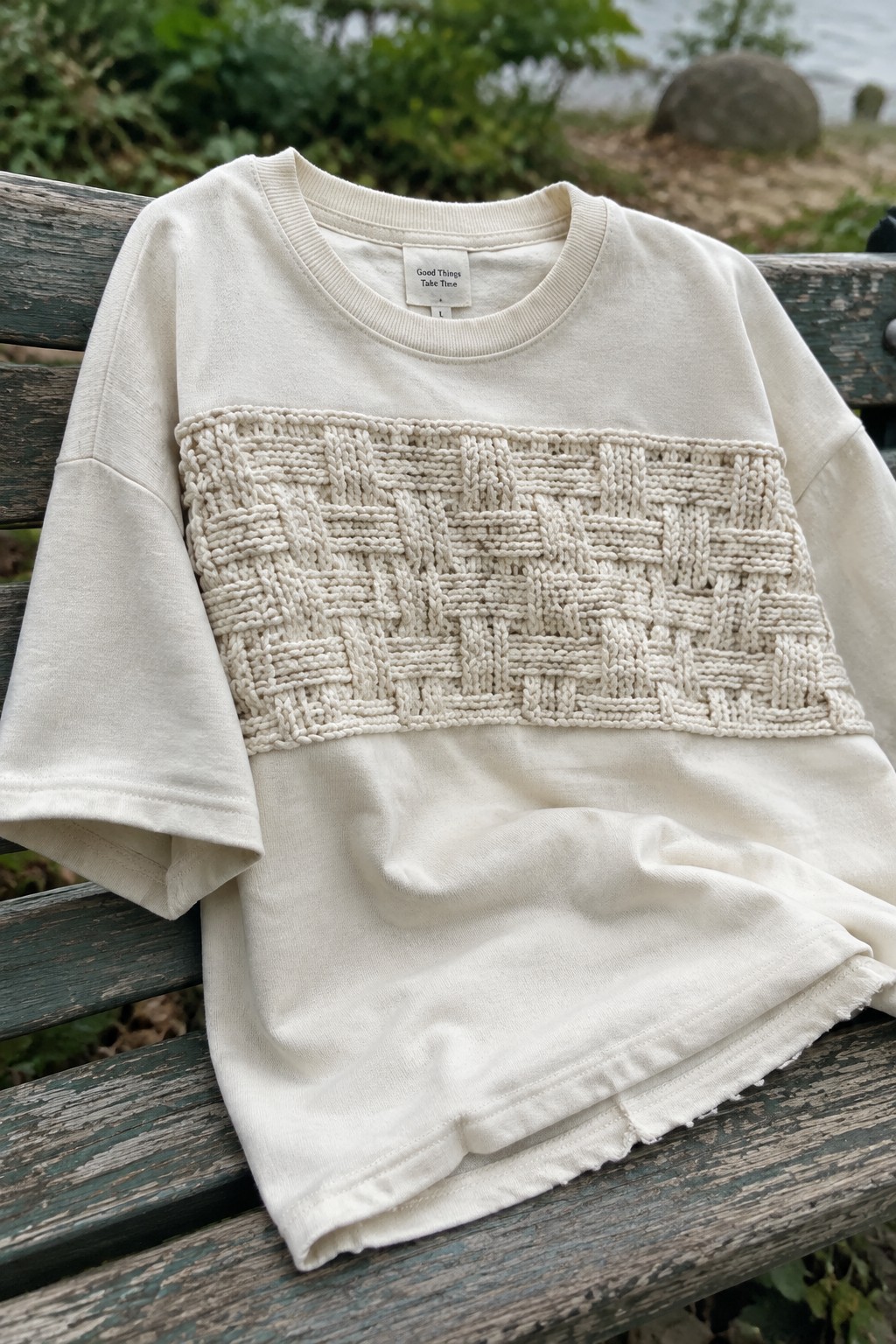
A wide horizontal band of basketweave crochet creates a raised grid texture across the front of a basic short-sleeve t-shirt. The panel is worked separately then attached, letting the structured stitch pattern contrast with the smooth fabric below and above it. This placement keeps the detail centered while leaving the rest of the tee simple and easy to wear.
What makes this idea useful is how quickly the panel can be resized to match different shirt widths or yarn weights. The same basketweave section works on both fitted and oversized tees, and the neutral tone makes it simple to layer or match with other clothes. For gifts, a design like this lets you customize a store-bought shirt without sewing an entire garment from scratch.
Scattered Textured Hearts on a Crop Tee

Heart appliqués worked in a dense looped stitch add texture to a basic short-sleeve tee. The hearts vary slightly in size and sit at different angles across the front, keeping the layout casual rather than symmetrical. This approach suits a cropped boxy fit in a solid color that lets the white motifs stand out clearly.
What makes this idea useful is how simple it is to adjust the number of hearts for different shirt sizes or necklines. You can make the hearts larger for a bolder look or space them out more for a subtler effect. A project like this works especially well for refreshing old tees or making quick gifts since the appliqués attach after the shirt is finished.
Textured Yoke Tees with Mixed Stitch Details

Short sleeve tops for babies and toddlers work well when the main body stays simple while the yoke carries the texture. One version uses a scalloped shell pattern around the neckline, another adds rows of small bobbles across the upper chest, and the third features an all-over openwork diamond pattern on the body. These designs keep the fit loose and easy to wear while letting the stitch work show clearly against a plain background.
What makes this idea useful is how easily the yoke treatments can be swapped or scaled for different sizes. The small bobble rows translate directly to crochet as popcorn or cluster stitches, and the open diamond pattern works as a filet or mesh variation. A project like this suits quick gifts because the short sleeves and simple shaping finish fast, and the color choice keeps the focus on the stitch texture rather than complicated colorwork.
Wavy Bobble Short Sleeve Tee

A short-sleeve tee built from horizontal rows of bobble clusters separated by open mesh creates a repeating wave pattern across the front and back. The bobbles add raised texture while the mesh keeps the fabric light and drapey enough for a fitted top. This approach works well for wearables because the horizontal lines emphasize shape without needing complex shaping.
What makes this idea useful is the clear repeat that can be lengthened or shortened to change the fit. The open sections make it practical for warm weather tops, and switching the bobble size or spacing gives an easy way to customize the look. A project like this photographs clearly for sharing because the texture shows up well against the open background.
Bobble Stripe Short-Sleeve Tee

A short-sleeve crochet tee built from horizontal bands of bobble stitches in mint green and plain stitches in white creates clear contrast across the fabric. The raised dots form solid stripes that break up the smoother sections and give the top a structured yet lightweight feel. This design sits in the wearable category as a simple summer top that can be worn on its own or layered.
What makes this idea useful is the repeating stripe sequence that lets you adjust length or width without changing the overall pattern. You can swap the color order, widen the plain sections, or shorten the sleeves to fit different body types or yarn weights. A project like this works especially well as an introduction to textured wearables because the small size means you finish the body and sleeves faster than a full sweater.
Open Lace Short Sleeve Tee

A short-sleeved top worked in an open lace stitch gives lightweight coverage with visible texture throughout the fabric. The repeating pattern of spaces and clusters creates natural breathability while keeping the overall shape simple and unfussy. This approach fits the wearable category and works best in cotton or linen blends that hold the open structure without collapsing.
What makes this idea useful is how quickly the same lace repeat can be lengthened or shortened to change the fit from cropped to tunic length. A project like this works especially well as a first wearable because the neckline and sleeves need only basic finishing. The structure also makes it easy to swap in a different yarn weight for a denser or airier version depending on the season.
Scattered Daisy Appliqués on a Basic Tee

Crochet small daisy motifs with white petals and yellow centers, then attach them at random intervals across a solid-colored crewneck. Connect a few of the flowers with simple chain stitches in a contrasting shade to create light trailing lines that mimic stems. This approach turns an ordinary tee into a wearable with added surface texture while keeping the base fabric comfortable and flexible.
What makes this idea useful is how easily you can scale the number of motifs to match the shirt size or your available time. Start with a store-bought tee and add flowers only where you want them, which lets you finish the project in stages. The small size of each motif also means it works well with leftover yarn, and the same layout adapts quickly to different color combinations or even a cardigan front.
Lace Openwork V-Neck Tee with Scalloped Edges
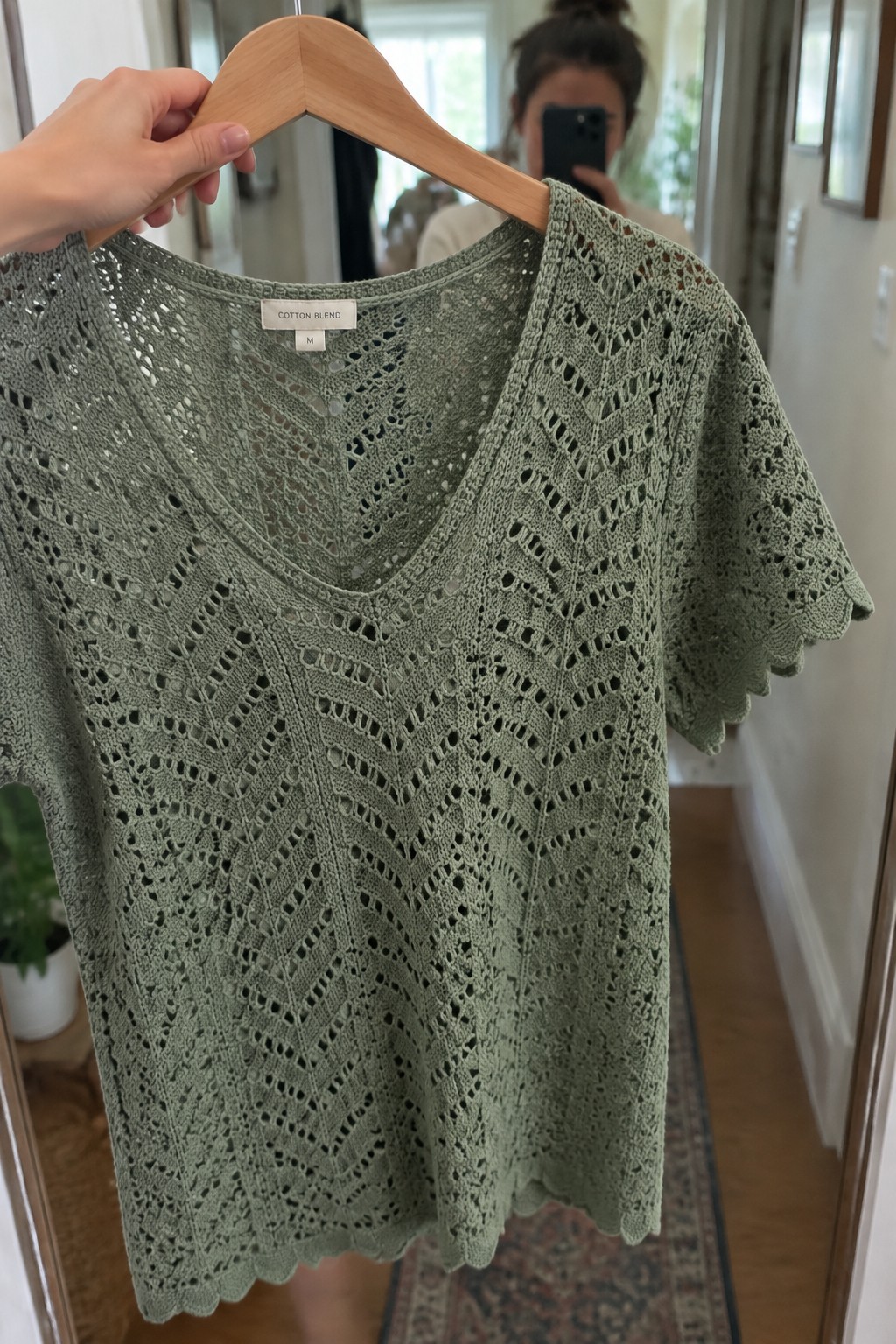
A short-sleeved V-neck tee worked in a repeating open lace pattern that forms chevron and diamond shapes across the front and back. The design uses a lightweight cotton blend that keeps the fabric breathable while the scalloped edges on the hem and sleeves give the piece a clean finish. This type of top falls into the wearable category and suits warm weather because the open stitches create texture without adding bulk.
What makes this idea useful is how the lace repeat can be widened or narrowed to change the fit without rewriting the whole pattern. The scalloped border works along any straight edge, so you could easily switch the neckline shape or extend the length into a tunic. A project like this layers well over a tank top for daily wear and the muted green keeps it easy to pair with most wardrobes.
Frequently Asked Questions
1. What textured stitch patterns are typically used in crochet tees like these? Textured stitches such as waffle, basketweave, bobble, and popcorn add dimension and visual interest to a tee without overwhelming the lightweight feel needed for summer wear. These patterns work well in cotton or linen blends because they create subtle raised effects that catch light and provide breathability. Start with a simple swatch to test tension before committing to a full project.
2. How much yarn should I buy for one of these crochet tees? Most patterns in this style require between 800 and 1200 yards of DK or worsted weight yarn depending on size and sleeve length. Always purchase an extra skein to account for texture that uses more yarn and for any gauge adjustments. Check the specific pattern notes for yardage estimates and consider buying from the same dye lot to avoid color shifts.
3. Which of these designs would suit a beginner crocheter? Look for tees that rely on basic repeats like the grit stitch or simple post stitches rather than complex combinations of bobbles and cables. Many of the 14 options include charts or video tutorials that break down the texture into manageable rows. Beginners should practice the stitch pattern on a small swatch first to build confidence before starting the garment.
4. How do I block a finished crochet tee that features heavy texture? Pin the damp garment to a blocking mat in its final shape paying special attention to the raised stitches so they do not flatten. Use a light steam from a distance if needed rather than direct heat. Allow it to dry completely before wearing to set the texture and even out any uneven edges.
5. Can these patterns be adjusted for different necklines or sleeve styles? Yes most of the designs allow easy modifications by changing the number of foundation chains or adding rows at the neck and armholes. For a scoop neck simply work fewer rows before shaping or add a ribbed border for a finished look. Always keep track of your stitch counts when altering to maintain the textured pattern alignment.
