

Pear trees can self pollinate, but cross pollination with another pear variety will produce a higher quality fruit.
No, pear trees cannot self pollinate. They require cross pollination from another pear tree in order to produce fruit.
Do you need 2 pear trees to pollinate?
Other fruit trees, such as most apple, plum, sweet cherry and pear trees, are cross-pollinating or self-unfruitful. They need another tree for pollination, and not just one of the same variety, but a different variety of the same fruit.
Most pear trees are self-fertile, but you will get a larger crop if you plant another pear tree next to it. Pear trees also require chill hours to produce fruit.
Do you need 2 pear trees
To ensure cross-pollination and fruit production, you have to plant at least two varieties of pear trees. The trees should be spaced 15-20 feet apart when planted. Lastly, make sure the varieties you choose are compatible with each other.
If you are growing pears for maximum fruit production, it is best to plant two or more varieties that are compatible for pollination. Anjou, Kieffer, and Bartlett are all self-pollinating, but they will produce more fruit if paired with another of the same kind. You can intermix these varieties and still get a successful fruit set, as they all bloom around the same time. One variety, Seckel, is not a good pollinator for Bartlett.
Can a apple tree pollinate a pear tree?
It is true that apples only pollinate apples, pears only pollinate pears, and plums only pollinate plums. However, it is possible to plant a different variety of tree in the same fruiting species. This is because the pollination process is not restricted to one type of tree. In fact, any tree in the same fruiting genus can pollinate another tree in the same genus.
Most pear varieties require at least two trees for pollination and fruit set. If you don’t have the space, look for self-fertile varieties like ‘Sunshine’ or ‘Bonza’. Dwarf varieties are also self-fertile.
When planting, make sure to space the trees at least 20 feet apart to give them room to grow. Pears prefer full sun but will tolerate some light shade.
The best time to plant pears is in the fall, but they can also be planted in early spring. Amend the planting area with compost or other organic matter before planting.
Water the trees regularly, especially during dry periods. Fertilize in early spring with an all-purpose fertilizer.
Pears are susceptible to a number of pests and diseases. Consult with your local extension office or nursery for information on how to deal with these problems in your area.
How many years does it take a pear tree to bear fruit?
Pear trees need a few years before they can start to bear fruit properly. Usually, a pear tree will begin to bear fruit somewhere between 3 and 7 years of age, depending on its size and variety.
Lots of trees are hermaphroditic — that is, their flowers contain both male and female reproductive parts. Other species have male trees and female trees, which you can tell apart by looking at their flowers: The male reproductive parts are the pollen-laden stamen; the female parts are the egg-holding pistils.
Recommended Products
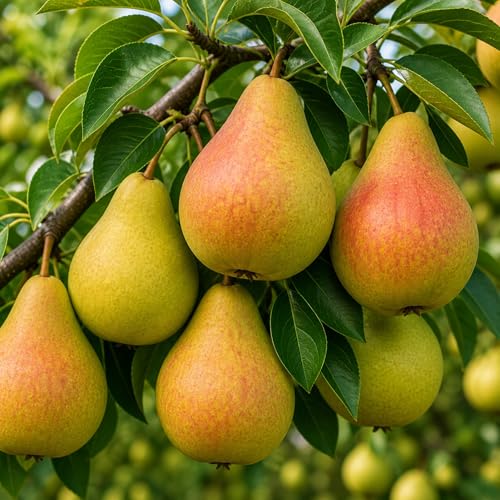
🍐 Grow Your Own Sweet Pears Enjoy fresh, homegrown pears right from your backyard or patio. These saplings are selected for healthy growth and reliable fruit production. Ships bare root and dormant (no leafs)

🌳 3-Pack Fruit Tree Bundle Includes live apple, apricot, and pear trees—perfectly paired for a diverse and productive backyard orchard.
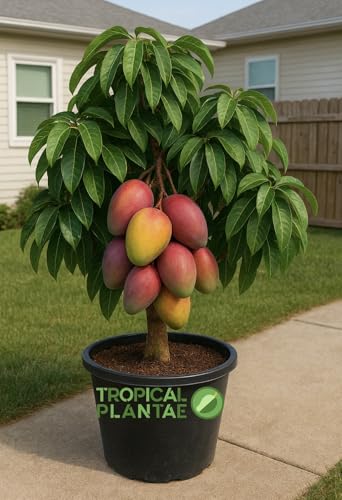
Imagine stepping into your backyard a few months from now and seeing a beautiful grafted Haden mango tree, growing stronger every day — a tree that will soon reward you with one of the most classic, flavorful mangoes ever grown.
Can you plant a pear tree next to an apple tree
When fruit trees are pollinated with other trees of the same genus, the fruit is usually better quality. However, pears can cross-pollinate with apples and still produce high quality fruit, as long as both trees are blooming at the same time. The other cultivar in the yard is sterile, so it cannot be used for pollination.
Peaches and pears are two great low-maintenance tree varieties that will produce quality fruit for many years. Planting either of these types of trees is a great way to get the best fruit for your garden.
Can you cut a branch off a pear tree and plant it?
It’s not easy to grow a pear tree from a stem cutting, but it is possible. You’ll need to take a cutting from a healthy pear tree and make sure it has at least two leaves. Put the cutting in a pot of moist soil and keep it in a sunny spot. Water it regularly and be patient; it can take several months for the cutting to take root. Once it does, you’ll have a clone of the parent tree.
Pears need some sun to produce, but they will still produce in partial shade. Try a variety such as ‘Beth’ planted in a westerly facing area that will get a few hours of sun in the afternoon.
Does it take 2 pear trees to produce fruit
If you plan on planting pear trees, make sure to plant at least two different varieties. This is because the trees will need to be cross-pollinated in order to produce fruit. Be sure to choose varieties that are compatible with each other.
Bartlett pears are self-pollinating to some extent, but planting them near a compatible pear tree will help with pollination and result in better fruit production.
Why does my pear tree not produce fruit?
If a pear tree is weak, it will produce very little fruit or poor quality fruit. If a pear tree is stressed, it will also produce very little fruit or poor quality fruit. If a pear tree is diseased, it will produce even less fruit or poor quality fruit.
This is a note on the topic of flower care. Flower care is not complicated, but there are some things you should know in order to keep your flowers looking their best. One of the most important things to do is to deadhead your flowers. This means removing spent blooms from the plant. This will encourage the plant to produce more flowers. Another important thing to do is to water your plants regularly. Plants need water to thrive, so make sure to give them a good drink every week or so. Lastly, don’t forget to fertilize your plants. Fertilizer provides the nutrients that plants need to grow. Be sure to use a fertilizer that is specifically designed for flowers.
What fruit trees do not need cross-pollination
Self-fertile means that the tree can pollinate itself without needing another tree of the same variety. This is common in fruit trees like peaches, nectarines, apricots, plums, citrus, figs, sour cherries, persimmons, quince and pomegranates.
The pros and cons of mono-cropping have been debated for years. Some people argue that mono-cropping is more efficient because it maximizes the land’s potential and results in greater yields. Others argue that mono-cropping is detrimental because it increases the risk of crop failure and can lead to soil depletion.
Conclusion
Most pear varieties are self-pollinating, which means they can pollinate themselves without the help of another tree. However, there are a few exceptions, such as the Asian pear, which requires another tree for pollination.
It is possible for pear trees to self pollinate, but it is not the most effective way to pollinate the trees. It is better to use a insect or other method to pollinate the pear trees.
