
Close Menu
    Fruit Tree Hub
    • Home
    • Apple Trees
    • Lemon Trees
    • Mango Trees
    • Orange Trees
    • More Trees
      • Best Fruit Trees
      • Apricot Trees
      • Cherry Trees
      • Fig Trees
      • Lime Trees
      • Mulberry Trees
      • Peach Trees
      • Pear Trees
      • Plum Trees
      • Pomegranate Trees
    • Tips and Advice
      • Tools
    • About Us
      • Contact
      • Privacy Policy
    Fruit Tree Hub
    Home»Fruit Trees»Tamarind Trees»How to Create a Tamarind Tree Orchard
    Tamarind Trees

    How to Create a Tamarind Tree Orchard

    Lucy SmithBy Lucy SmithMarch 29, 20244 Mins Read
    Share Facebook Twitter Pinterest WhatsApp Email
    Share
    Facebook Twitter LinkedIn Pinterest Telegram Email

    Tamarind trees can live for centuries and bear fruit for just as long. Imagine having your own tamarind orchard with shade-providing trees and plentiful sweet and tangy pods. Creating a tamarind tree orchard takes planning, the right location, and proper care, but the rewards are worth it.

    Contents show
    1 Key Takeaways
    2 Selecting the Right Location
    3 Preparing the Soil
    4 Planting Tamarind Trees
    5 Caring for Your Orchard
    6 Harvesting and Maintenance
    7 Conclusion

    From choosing the perfect spot to harvesting your first crop, the journey to creating a tamarind tree orchard is fulfilling and enriching.

    Key Takeaways

    • Select a site with well-draining soil and abundant sunlight for a tamarind tree orchard.
    • Protect the trees from strong winds and prevent waterlogging by considering the topography of the site.
    • Conduct soil testing to determine pH level and nutrient content, and adjust as necessary.
    • Provide regular irrigation, implement pest control measures, and fertilize with balanced fertilizer for healthy growth and fruit production.

    Selecting the Right Location

    When choosing the location for your tamarind tree orchard, prioritize a site with well-draining soil, abundant sunlight, and protection from strong winds.

    Optimal sunlight is crucial for tamarind trees to thrive and produce high-quality fruit.

    Before planting, conduct soil testing to ensure the pH level and nutrient content are suitable for tamarind cultivation. This step will help you determine if any soil amendments are necessary to create an ideal growing environment for your trees.

    Additionally, consider the topography of the site to prevent waterlogging, which can be detrimental to tamarind trees.

    Preparing the Soil

    To prepare the soil for your tamarind tree orchard, assess its drainage, pH level, and nutrient content to ensure it's conducive to healthy tree growth and fruit production. Start by conducting a soil test to determine its composition. This will help you understand the soil's pH and nutrient levels, allowing you to make any necessary adjustments.

    MUST READ
    How to Propagate Tamarind Trees From Seeds

    The ideal pH level for tamarind trees is between 6.5 and 7.5. If the pH is too high or too low, you can amend the soil with lime to raise the pH or elemental sulfur to lower it. Additionally, the soil should have good drainage to prevent waterlogging, which can be achieved by adding organic matter such as compost.

    Once you have completed the necessary soil preparations, your tamarind trees will have a solid foundation for healthy growth and abundant fruit production.

    Recommended Products

    SONKIR Soil pH Meter, MS02 3-in-1 Soil Moisture/Light/pH Tester Gardening Tool Kits for Plant Care, Great for Garden, Lawn, Farm, Indoor & Outdoor Use (Green)
    SONKIR Soil pH Meter, MS02 3-in-1 Soil Moisture/Light/pH Tester Gardening Tool Kits for Plant Care, Great for Garden, Lawn, Farm, Indoor & Outdoor Use (Green)

    Kindly NOTE: This soil tester can not be applied to test pH value of any other liquid. If the soil is too dry the indicator will not move, and water it before testing.

    VIEW LATEST PRICE

    As an affiliate, we earn on qualifying purchases.

    Soil Test Kit – 100 Soil pH Test Strips (3.5–9 Range) for Garden, Lawn & Indoor Plants – Easy At-Home Soil Testing
    Soil Test Kit – 100 Soil pH Test Strips (3.5–9 Range) for Garden, Lawn & Indoor Plants – Easy At-Home Soil Testing

    Accurate Soil pH Testing: Dewildetradingco Soil pH Test Strips offer measurements of soil pH levels (pH 3.5-9). As an essential tool for every gardener and grower, these test strips help determine the optimal pH for various plants, such as outdoor plants, indoor plants, gardens, grass lawns, fruit trees, flowers, vegetables, and forest shrubs.

    VIEW LATEST PRICE

    As an affiliate, we earn on qualifying purchases.

    Soil Test Kit 140 Tests (2026 Updated Instructions) – pH, Nitrogen, Phosphorus, Potassium & Ammonia – Garden, Lawn & Plant Soil Tester Kit for Accurate Fertility Analysis
    Soil Test Kit 140 Tests (2026 Updated Instructions) – pH, Nitrogen, Phosphorus, Potassium & Ammonia – Garden, Lawn & Plant Soil Tester Kit for Accurate Fertility Analysis

    Comprehensive Soil Analysis: Liquid soil test kits offer a comprehensive analysis of essential soil parameters, including pH, ammonia, nitrogen, phosphorus, and potassium. Having all these measurements in one kit provides a holistic understanding of the soil's fertility and health.

    MUST READ
    How to Treat Common Tamarind Tree Diseases
    VIEW LATEST PRICE

    As an affiliate, we earn on qualifying purchases.

    Planting Tamarind Trees

    Now is the time to carefully select the location for planting your tamarind trees, ensuring it provides adequate sunlight and sufficient space for the trees to thrive and grow.

    When planting your tamarind trees, consider the following:

    1. Tree Spacing: Tamarind trees require ample space for their expansive root systems. Ensure a distance of at least 25 to 30 feet between each tree to allow for proper growth and development.
    2. Irrigation: Tamarind trees thrive in well-drained soil, but they also require regular watering, especially during the dry season. Consider setting up an irrigation system or hand-watering the trees to maintain optimal moisture levels.
    3. Pest Control and Fertilization: Implement a pest control plan to protect your tamarind trees from common pests and diseases. Additionally, fertilize the trees with a balanced fertilizer to promote healthy growth and fruit production.

    Recommended Products
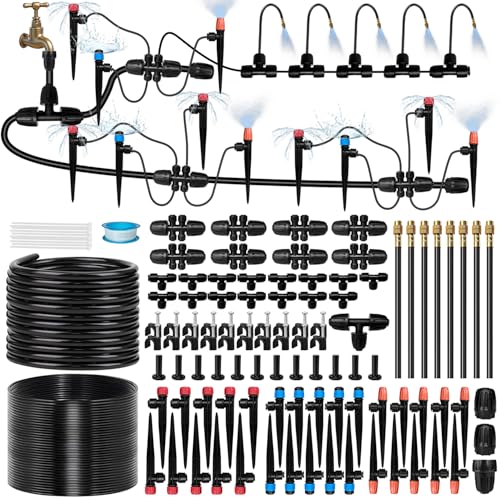
    230FT Drip Irrigation System for Garden with 38pcs Adjustable Copper Nozzles & Emitters, Automatic Garden Watering System with 1/2" & 1/4" Tubing for Raised Bed, Yard, Greenhouse, Potted Plants, Lawn
    230FT Drip Irrigation System for Garden with 38pcs Adjustable Copper Nozzles & Emitters, Automatic Garden Watering System with 1/2" & 1/4" Tubing for Raised Bed, Yard, Greenhouse, Potted Plants, Lawn

    【Upgraded Tube Design & Water Saving】 Our garden watering system is upgraded to 1/2” diameter to support high water pressure. The 1/2” tee connector allows seamless splitting into 2 independent zones for customized watering schedules. By delivering moisture directly to root zones, this drip Irrigation system significantly reduces evaporation and runoff—saving more water compared to conventional sprinklers while eliminating the need for manual watering.

    VIEW LATEST PRICE

    As an affiliate, we earn on qualifying purchases.

    MUST READ
    Where to Plant Tamarind Trees for Best Fruit Production
    MIXC 200Ft 1/4" Drip Irrigation System,2026-Upgrade Garden Irrigation Kit with 32pcs Adjustable Copper Nozzles, Atomizing Watering System for Outdoor Plants,Raised Bed,Yard,Potted Plant,Lawn
    MIXC 200Ft 1/4" Drip Irrigation System,2026-Upgrade Garden Irrigation Kit with 32pcs Adjustable Copper Nozzles, Atomizing Watering System for Outdoor Plants,Raised Bed,Yard,Potted Plant,Lawn

    【Universal 1/4 Inch Size Set】- Designed for US market compatibility,MIXC new drip irrigation system set uses 1/4 inch (6mm) components to address potential mismatches with standard hoses, unlike some 5/16 inch systems. It includes 2-way connectors, tubing, and 3-way connectors to help users set up DIY garden irrigation more conveniently.

    VIEW LATEST PRICE

    As an affiliate, we earn on qualifying purchases.

    Bonviee Drip Irrigation System Kit for Garden Watering, 230FT Quick Connect | For Garden, Raised Beds, Greenhouses, with 33FT 5/16" Mainline + 1/4" Tubing + 40 Emitters, 20-45 PSI and up to 40 GPH
    Bonviee Drip Irrigation System Kit for Garden Watering, 230FT Quick Connect | For Garden, Raised Beds, Greenhouses, with 33FT 5/16" Mainline + 1/4" Tubing + 40 Emitters, 20-45 PSI and up to 40 GPH

    NO MORE HARD INSTALLATION - SET UP IN MINUTES. Tired of struggling with stiff barbed fittings? This drip irrigation system features quick-connect fittings that let you push, lock, and secure tubing effortlessly. No tools, no leaks, just a smooth setup experience. Enjoy a frustration-free installation and get your garden watering system running in minutes.

    VIEW LATEST PRICE

    As an affiliate, we earn on qualifying purchases.

    Caring for Your Orchard

    After planting your tamarind trees and ensuring proper spacing, irrigation, and pest control, it's essential to shift your focus to caring for your orchard to ensure healthy growth and bountiful harvests.

    Pruning techniques play a crucial role in maintaining the health and productivity of your tamarind trees. Regularly prune to remove dead or diseased branches, and shape the tree to facilitate sunlight penetration and air circulation.

    Effective pest control is also vital. Monitor for signs of pests and apply appropriate measures promptly.

    MUST READ
    How to Manage Tamarind Tree Diseases Organically

    When it comes to irrigation, ensure the soil is consistently moist but not waterlogged. Implement a fertilization schedule to provide essential nutrients for robust growth and fruit production.

    Recommended Products

    ZALALOVA Garden Grafting Tool Kits, 2 in 1 Pruning Tools | Including Grafting Knife Replacement Blades Grafting Tapes Rubber Bands and Labels for Plant Branch Vine Fruit Tree Cutting
    ZALALOVA Garden Grafting Tool Kits, 2 in 1 Pruning Tools | Including Grafting Knife Replacement Blades Grafting Tapes Rubber Bands and Labels for Plant Branch Vine Fruit Tree Cutting

    PROFESSIONAL GARDENING GRAFTING TOOLS: Including 2 in 1 grafting pruning tools, 3 replaceable blades, a grafting knife, a screwdriver, a wrench, 2 grafting films, 160 rubber bands, 40 wide rubber bands, and 50 colorful tag cards

    VIEW LATEST PRICE

    As an affiliate, we earn on qualifying purchases.

    BlumeTrec 8.5FT Pole Saw with Adjustable Length for Tree Trimming, Lightweight Manual Pruning Saw with Mn Steel Blade, Long Extension Branch Cutter Long Pole for Yard, Garden, Patio and Forestry Use
    BlumeTrec 8.5FT Pole Saw with Adjustable Length for Tree Trimming, Lightweight Manual Pruning Saw with Mn Steel Blade, Long Extension Branch Cutter Long Pole for Yard, Garden, Patio and Forestry Use

    Sharp Mn Steel Blade for Fast & Clean Cuts: This pole saw uses a sharp three-sided edge with a double-sided barb design to grip branches securely and cut smoothly from multiple angles. The Mn steel blade is durable, rust-resistant, and lightweight, delivering fast, clean cuts. This is a manual pole saw with detachable pole sections for adjustable reach; not pruner not telescoping pole, it is neither electric nor battery-powered.

    VIEW LATEST PRICE

    As an affiliate, we earn on qualifying purchases.

    13.7 Ft Manual Pole Saw for Tree Trimming, Extendable 2-in-1 Tree Pruner | Rope-Pulley Scissor Head, Steel Pruning Saw Blade and Detachable Pole Sections for Different Branch Sizes
    13.7 Ft Manual Pole Saw for Tree Trimming, Extendable 2-in-1 Tree Pruner | Rope-Pulley Scissor Head, Steel Pruning Saw Blade and Detachable Pole Sections for Different Branch Sizes

    Two Modes for High Limbs and Twigs: Tackle overgrown trees with the 2 in 1 design. Pull the rope to snip thin growth with the scissor head or switch to the sharp saw blade for thick limbs. This manual pole saw handles varied yard tasks without switching tools

    MUST READ
    Why Do Tamarind Trees Produce Astringent Fruit
    VIEW LATEST PRICE

    As an affiliate, we earn on qualifying purchases.

    Harvesting and Maintenance

    When harvesting tamarind, it's essential to wait until the pods are fully ripe and ready to be harvested. This ensures that the fruit is at its peak flavor.

    To maintain your tamarind orchard, consider the following:

    1. Pruning Techniques: Regularly prune your tamarind trees to remove dead or diseased branches, improve air circulation, and promote better fruit production. Use clean, sharp pruning shears and make clean cuts to avoid damaging the tree.
    2. Pest Control Strategies: Keep an eye out for common pests such as aphids, scales, and fruit borers. Consider using natural predators like ladybugs or introducing beneficial insects to manage pest populations. Additionally, neem oil or insecticidal soaps can also be effective for controlling pests while minimizing environmental impact.

    Conclusion

    In nurturing your tamarind tree orchard, remember that with proper location, soil preparation, and care, you're setting the stage for a thriving orchard and a bountiful harvest.

    Stay attentive to your trees, provide regular maintenance, and look forward to enjoying the fruits of your labor.

    Happy growing!

    Share. Facebook Twitter Pinterest LinkedIn Tumblr Email
    lucy smith
    Lucy Smith
    • Website

    Lucy Smith is a highly experienced horticulturist with a passion for fruit tree cultivation. She holds a degree in Horticulture from the University of California, Davis, and has worked in various roles in the industry. With over 10 years of experience, Lucy is dedicated to using eco-friendly methods for sustainable gardening practices.

    Related Posts

    How to Identify Different Tamarind Tree Varieties

    March 30, 2024

    Why Do Tamarind Trees Have Long Seed Pods

    March 30, 2024

    Can Tamarind Trees Grow in Cold Climates

    March 30, 2024

    The Best Soil Conditions for Tamarind Trees

    March 30, 2024

    How to Properly Water Tamarind Trees

    March 30, 2024

    Are Tamarind Trees Suitable for Small Gardens

    March 30, 2024
    Leave A Reply Cancel Reply

    Affiliate Disclosure

    As an Amazon Associate I earn from qualifying purchases.

    Recommended Reading

    Almond Trees in Oklahoma: Heat and Soil Management Secrets

    Find the Perfect Long Tree Limb Lopper: A Guide to Selecting the Best Gardening Tool

    19 Simple One-Color Crochet Blanket Ideas for Minimalist Designs

    Can Persimmon Trees Be Used in Herbal Teas

    How Long for a Pear Tree to Bear Fruit: Understanding Timelines and Care Tips

    Do Black Cherry Trees Produce Fruit and How to Maximize Your Harvest

    Apricot Trees in Vermont: New England Cold-Hardiness Tips

    How to Cover Fruit Trees for Ultimate Frost and Pest Protection Techniques

    What Fruit Trees Grow Indoors to Create a Lush and Fruitful Home Oasis

    Pruning Kiwi Fruit Vines: Essential Tips for Healthy Growth

    Fruit Tree Hub

    Fruit Tree Hub is a website dedicated to providing you everything you need to grow fruit trees successfully at in your own yard.

    Contact us at: [email protected]

    - AFFILIATE DISCLOSURE: As an Amazon Associate I earn from qualifying purchases.

    Latest Posts

    18 Crochet Keychain Packaging Ideas With Gift Tags and Display Cards

    19 Crochet Backpack Charm Ideas for Lightweight Everyday Accessories

    20 Personalized Crochet Initial Keychain Ideas for Handmade Gifts

    18 Couples’ Crochet Keychain Ideas With Matching Half-and-Half Designs

    21 Pastel Crochet Keychain Ideas Featuring Coordinated Color Palettes

    19 Cotton Yarn Crochet Keychain Ideas With Crisp Stitch Definition

    22 Scrap-Yarn Crochet Keychain Ideas for Colorful Miniature Projects

    18 Flat Crochet Keychain Ideas Using Simple Shapes and Basic Stitches

    Categories
    • Almond Trees
    • Apple Trees
    • Apricot Trees
    • Best Fruit Trees
    • Blackberry
    • Cantaloupe
    • Cherry Trees
    • Christmas Crochet Ideas
    • Crochet Bag Ideas
    • Crochet Blanket Ideas
    • Crochet Dress Ideas
    • Crochet Ideas
    • Crochet Ideas for Beginners
    • Crochet Keychain Ideas
    • Crochet Top Ideas
    • Cucamelon
    • Cute Crochet Ideas
    • Easy Crochet Ideas
    • Easy Knitting Projects
    • Fall Crochet Ideas
    • Fig Trees
    • Grapefruit Trees
    • Grapes
    • Guava Trees
    • Halloween Crochet Ideas
    • Honeydew
    • Jujube Trees
    • Kiwi
    • Knitting For Beginners
    • Knitting Ideas
    • Knitting Inspiration
    • Lemon Trees
    • Lime Trees
    • Loquat Trees
    • Mango Trees
    • Mulberry Trees
    • Nectarine Trees
    • Olive Trees
    • Orange Trees
    • Papaya Trees
    • Peach Trees
    • Pear Trees
    • Persimmon Trees
    • Planting
    • Plum Trees
    • Pomegranate Trees
    • Quince Trees
    • Raspberry
    • Reviews
    • Small Crochet Ideas
    • Star Fruit Trees
    • Summer Crochet Ideas
    • Tamarind Trees
    • Tangerine Trees
    • Tips and Advice
    • Tools
    • Uncategorized
    • Walnut Trees
    • Winter Crochet Ideas
    © 2026 Fruit Tree Hub
    • Home
    • About Us
    • Contact
    • Privacy Policy
    • Terms and Conditions
    • Disclaimer
    • Editorial Policy
    • Affiliate Disclosure

    Type above and press Enter to search. Press Esc to cancel.