

Taking care of your tamarind trees means getting the watering just right. It's a crucial part of keeping them healthy and productive.
But how do you know if you're doing it correctly? Understanding what your tamarind trees need and adjusting your watering routine accordingly is key.
Let's break down the best way to water tamarind trees to help you grow a thriving orchard.
Key Takeaways
- Water tamarind trees deeply once a week, adjusting frequency during dry spells.
- Monitor soil moisture and water when dry at a depth of 2-4 inches.
- Consider using drip irrigation for consistent and efficient watering, ensuring even distribution to the entire root zone.
- Increase watering during summer due to higher evaporation rates and reduce watering frequency during winter dormant period.
Watering Frequency
To ensure the health and productivity of your tamarind tree, it's essential to water it consistently and appropriately throughout the growing season. Understanding the root depth of your tamarind tree is crucial for determining the appropriate watering schedule.
Tamarind trees have deep root systems that can extend up to 6 feet, especially as they mature. This means that watering should penetrate deep into the soil to reach the roots effectively. During the first year, frequent watering is necessary to help the roots establish.
As a general rule, water your tamarind tree deeply once a week, especially during dry spells. However, always monitor the soil moisture and adjust the watering frequency as needed.
Recommended Products

4-Hole Side Design: This high-performance tree watering spike makes it easy to deliver water and fertilizer directly to the root zone. The upgraded side-hole design helps improve watering efficiency, while the sharp tip makes it easy to push into hard or compact soil. The 4 side outlets help reduce clogging and distribute water more evenly for deep root watering and feeding.

【Unique Design Deep Root Tree Watering Tool】 Our root watering tool have four exit hole for the water,won't got clogged easily,It made of stainless steel,not rusting from the inside out.It can leave in the soil and is strong enough to drive through gravel,help your plants build a strong root system .

NO SHIP TO CA, HI, AK
Soil Moisture Levels
Maintain optimal soil moisture levels by regularly checking the depth of moisture penetration and adjusting your watering schedule accordingly to support the healthy growth of your tamarind tree.
Proper soil moisture is crucial for root health and the overall growth rate of the tamarind tree. Test the soil moisture by inserting your finger into the soil near the tree.
If the soil feels dry to the touch at a depth of 2-4 inches, it's time to water. Overly wet soil can lead to root rot, while excessively dry soil can stress the tree, affecting its growth rate.
Watering Techniques
For optimal watering of your tamarind tree, consider using a drip irrigation system to provide consistent and efficient moisture to the roots. Deep watering is essential for tamarind trees as it encourages deep root growth and helps them withstand dry periods.
Drip irrigation is a practical and effective method for deep watering. It delivers water directly to the root zone, minimizing evaporation and runoff. This ensures that the tree's roots receive a consistent and adequate water supply.
When using drip irrigation, place the emitters in a spiral pattern around the tree, starting from the trunk and extending to the dripline. This will cover the entire root zone and provide an even distribution of water.
Recommended Products
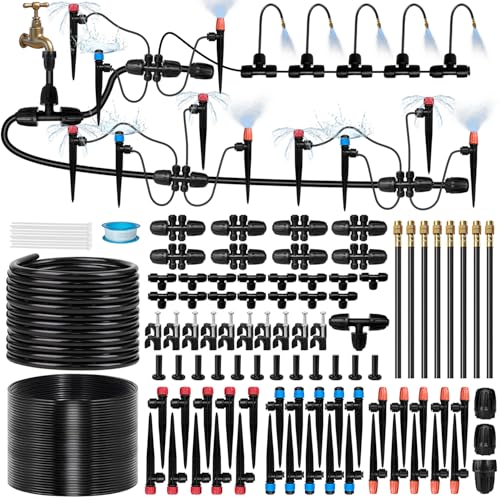
【Upgraded Tube Design & Water Saving】 Our garden watering system is upgraded to 1/2” diameter to support high water pressure. The 1/2” tee connector allows seamless splitting into 2 independent zones for customized watering schedules. By delivering moisture directly to root zones, this drip Irrigation system significantly reduces evaporation and runoff—saving more water compared to conventional sprinklers while eliminating the need for manual watering.

NO MORE HARD INSTALLATION - SET UP IN MINUTES. Tired of struggling with stiff barbed fittings? This drip irrigation system features quick-connect fittings that let you push, lock, and secure tubing effortlessly. No tools, no leaks, just a smooth setup experience. Enjoy a frustration-free installation and get your garden watering system running in minutes.

🍀【Extra-Long 50FT 5/16” Mainline Tubing】 With 50 feet of premium 5/16” main tubing, you have more flexibility to build a central watering path across larger garden layouts. The enhanced flow capacity supports multiple emitters with consistent water pressure throughout your irrigation zones.
Seasonal Considerations
Consider adjusting your watering schedule according to the changing seasons to ensure the optimal health and growth of your tamarind tree.
In summer, tamarind trees require more water due to the higher evaporation rates. Water deeply and less frequently to encourage deep root growth, ideally every 7-10 days. Keep an eye on the soil moisture, ensuring it remains consistently moist but not waterlogged. Mulching can help retain soil moisture and regulate temperature during hot summer months.
On the other hand, during winter, tamarind trees experience a dormant period and require less water. Reduce watering frequency to prevent waterlogging and root rot. Allow the soil to dry out slightly between waterings, typically every 2-3 weeks.
Recommended Products

Accurate Soil Moisture Detection: The XLUX Soil Moisture Meter can tell you if the soil deep inside your pot or garden is dry, moist or wet; whereas your eyes and fingers can only determine the moisture level of the soil surface. The probe is 5.5 inches (14 cm) longer than regular styles, allowing it to measure the soil moisture at the bottom of larger and deeper flower pots.

Accurate Soil Moisture Detection: The XLUX Soil Moisture Meter can tell you if the soil deep inside your pot or garden is dry, moist or wet; whereas your eyes and fingers can only determine the moisture level of the soil surface. The probe is 5.5 inches (14 cm) longer than regular styles, allowing it to measure the soil moisture at the bottom of larger and deeper flower pots.
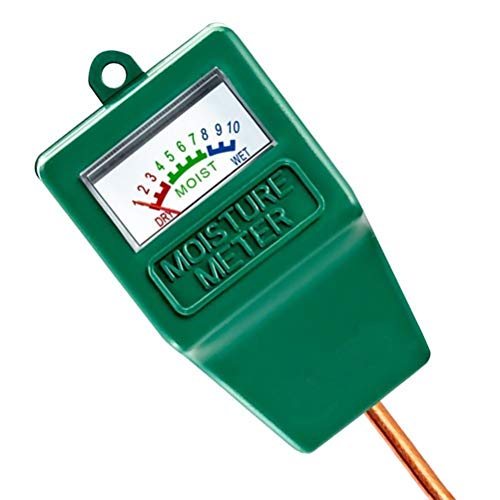
Soil Moisture Meter: This single probe soil moisture meter is specially designed for testing the moisture level in the soil, helps you decide whether the plants need water or not, helps to keep plants alive.
Signs of Over/Underwatering
Watch for visible changes in the foliage and soil to gauge whether your tamarind tree is receiving too much or too little water. Signs of overwatering include leaf discoloration, wilting, and soil that remains consistently soggy. On the other hand, underwatering may cause the leaves to turn yellow or brown and become dry and crispy. Additionally, the soil may appear dry and cracked.
Here are some other signs to look out for:
- Wilting leaves: Seeing your tamarind tree's leaves droop and lose their vitality can be distressing.
- Leaf discoloration: When you notice the leaves turning yellow or brown, it may indicate that your tree isn't getting enough water.
- Root rot: Discovering a foul smell or dark, mushy roots when you check the soil can be disheartening.
- Stunted growth: Observing little to no new growth in your tamarind tree can be a cause for concern.
Conclusion
In caring for your tamarind tree, remember to water it deeply and infrequently, adjusting your schedule based on soil moisture and seasonal changes.
By following these simple guidelines, you can nurture a healthy tree that will bear delicious fruit for years to come.
Happy gardening!
