

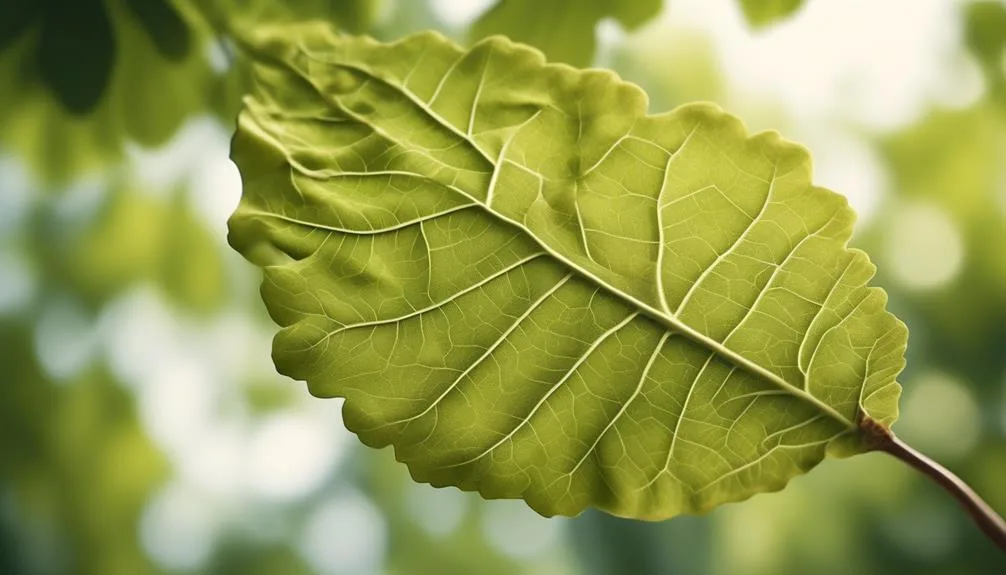
Walnut trees have compound leaves for a good reason. The leaflets are arranged in a unique way that helps the tree to survive.
But what exactly is so special about these leaves, and how do they benefit the tree? Let's take a closer look at the compound nature of walnut tree leaves and discover the reasons behind it.
Key Takeaways
- Compound leaves in walnut trees increase photosynthesis efficiency by capturing more sunlight.
- The arrangement of leaflets ensures maximum light absorption without shading.
- Smaller leaflets reduce water loss through transpiration and provide resistance to wind.
- The genetic basis for compound leaves in walnut trees involves specific genes and complex signaling pathways.
Structure of Walnut Tree Leaves
When examining the structure of walnut tree leaves, it's essential to note the distinctive compound nature that sets them apart from many other tree species. Unlike simple leaves, compound leaves are composed of multiple leaflets arranged along a central stalk.
This unique leaf arrangement allows walnut trees to maximize their photosynthesis efficiency. By having numerous leaflets, the tree can capture more sunlight and perform more photosynthesis, thus producing the energy needed for growth and development.
The efficient distribution of leaflets also allows for better air circulation, reducing the risk of diseases. This intricate design not only contributes to the tree's overall health but also adds to its visual appeal, making the walnut tree a remarkable and valuable part of the natural landscape.
Purpose of Compound Leaves
The compound nature of walnut tree leaves not only sets them apart from many other tree species but also serves a vital purpose in maximizing the tree's photosynthesis efficiency.
The advantages of compound leaves lie in their ability to capture more sunlight for photosynthesis. Each leaflet can orient itself to receive light independently, optimizing the tree's overall light exposure. Additionally, the smaller size of individual leaflets reduces water loss through transpiration, helping the tree conserve water.
However, there are also disadvantages to consider. For instance, compound leaves may be more vulnerable to damage from herbivores or environmental stress due to their intricate structure.
Despite this, the advantages of increased sunlight capture and water conservation generally outweigh the potential drawbacks, making compound leaves an adaptive and beneficial feature for walnut trees.
Adaptation to Environmental Factors
Adapting to the challenges posed by their environment, walnut tree leaves have evolved to maximize sunlight capture and water conservation through their compound structure. This adaptation in leaf morphology allows walnut trees to thrive in diverse environmental stressors.
Here's why this is important:
- Sunlight Capture
- Compound leaves increase the surface area exposed to sunlight, optimizing photosynthesis for better growth and reproduction.
- The arrangement of leaflets ensures that no part of the leaf shades another, maximizing light absorption.
- Water Conservation
- The smaller size of individual leaflets reduces water loss through transpiration.
- The compound structure reduces wind resistance, helping the leaves retain moisture in dry or windy conditions.
Recommended Products
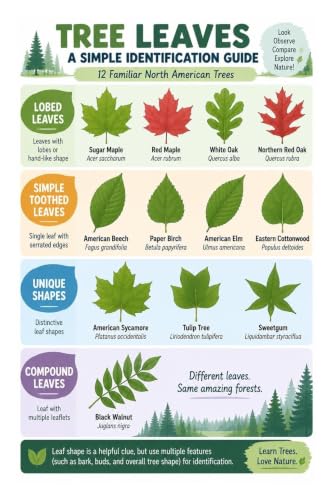
This tree leaves identification poster introduces twelve familiar North American trees through illustrated leaf shapes.
This tree leaves identification poster introduces twelve familiar North American trees through illustrated leaf shapes.
This tree leaves identification poster introduces twelve familiar North American trees through illustrated leaf shapes.
Evolutionary Advantage of Compound Leaves
With its compound structure, the walnut tree's leaves confer an evolutionary advantage that enhances its ability to thrive in diverse environmental conditions, maximizing its chances for survival and reproduction.
The ecological benefit of compound leaves lies in their efficient use of resources. By dividing the leaf into smaller leaflets, the tree can optimize its photosynthetic capacity while minimizing water loss through transpiration. This adaptation allows the walnut tree to efficiently capture sunlight and exchange gases, contributing to its overall fitness and competitive advantage in various habitats.
Additionally, the compound leaves offer a defense mechanism against herbivores, as the smaller leaflets make it harder for insects to consume the entire leaf surface. This evolutionary advantage of compound leaves has played a crucial role in the successful adaptation and proliferation of walnut trees in diverse ecosystems.
Genetic Basis for Compound Leaves
Exploring the genetic basis for compound leaves reveals the intricate mechanisms behind this adaptive trait in walnut trees, shedding light on the underlying genetic factors that contribute to their unique leaf structure.
- Genetic Regulation:
Genetic studies have identified specific genes responsible for the regulation of leaf development in walnut trees. These genes control the formation of leaflets and the overall architecture of compound leaves.
- Leaf Development:
The genetic regulation of leaf development involves complex signaling pathways and transcription factors that orchestrate the growth and patterning of leaflets. Understanding these mechanisms provides insight into the evolutionary significance of compound leaves in walnut trees.
Unraveling the genetic basis for compound leaves not only enhances our comprehension of plant morphology but also offers valuable knowledge for potential applications in agriculture and botany.
Conclusion
In nature, the compound leaves of walnut trees play a crucial role in their adaptation and survival.
Their intricate design and genetic advantages have enabled these trees to thrive for centuries.
This serves as a reminder of nature's remarkable ability to create solutions for thriving in diverse environments.
