

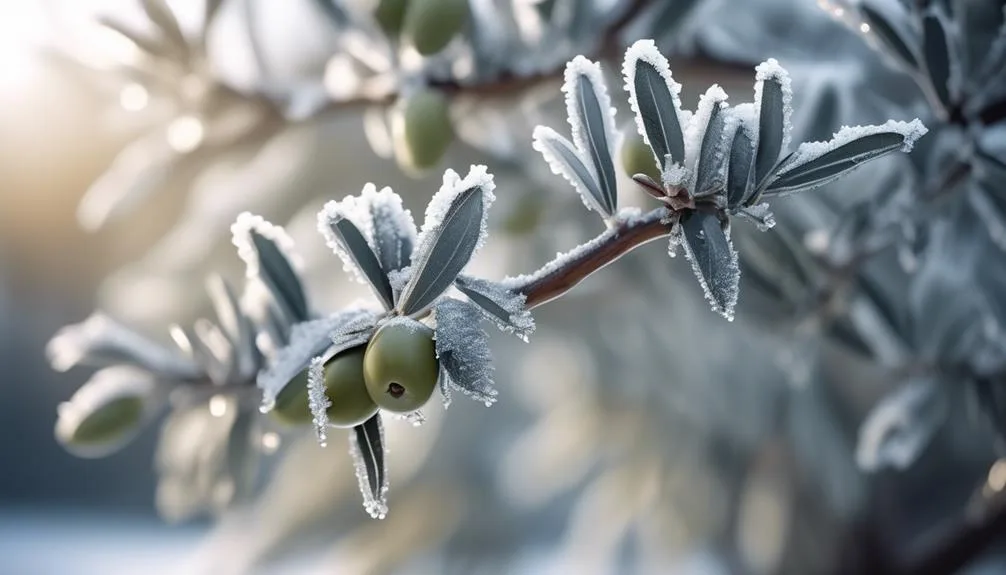
Olive trees are known for their toughness and resilience. However, the question of whether they can survive frost is not a simple one. Several factors come into play, including the age and health of the tree, as well as the severity and duration of the frost.
To understand the truth about olive trees and frost, it is important to consider the delicate balance between freezing temperatures and the resilience of these trees.
Key Takeaways
- Olive trees require a temperature range of 70 to 85 degrees Fahrenheit during the growing season for optimal growth and fruit development.
- Mature olive trees can withstand temperatures as low as 15 to 20 degrees Fahrenheit for short periods, but younger trees are more vulnerable and may need additional winter protection.
- Pruning olive trees in late winter promotes healthy growth and reduces susceptibility to cold-related stress.
- Implementing protective measures such as mulching, winter watering, and planting in sheltered areas can enhance frost resilience in olive trees.
Optimal Temperature Range for Olive Trees
To thrive and produce high-quality olives, olive trees require an optimal temperature range between 70 to 85 degrees Fahrenheit during the growing season. This range ensures that the trees can photosynthesize and develop their fruit properly.
However, when winter comes, olive trees need protection from the cold. Their cold hardiness is a crucial factor in their survival during the winter months. While mature olive trees can withstand temperatures as low as 15 to 20 degrees Fahrenheit for short periods, younger trees are more vulnerable and may require additional winter protection.
Mulching around the base of the tree and covering it with frost cloth can provide the necessary insulation to shield the tree from freezing temperatures.
Understanding the optimal temperature range and the cold hardiness of olive trees is essential for ensuring their survival and productivity.
Tolerance to Low Temperatures
When it comes to olive trees, understanding their cold hardiness and tolerance to low temperatures is crucial for ensuring their survival and productivity through the winter months. Olive trees exhibit remarkable resilience to cold temperatures, but it's essential to provide them with the right care to help them thrive even in chilly conditions.
Here's what you need to know:
- Winter Pruning: Pruning your olive trees in late winter can help remove any damaged or diseased branches, promoting healthy growth and reducing susceptibility to cold-related stress.
- Cold Hardiness: Olive trees are typically hardy to temperatures as low as 15°F (-9°C), but young trees may require additional protection during severe cold snaps.
- Optimal Microclimates: Planting olive trees in sheltered areas or using frost cloth during extreme cold can further enhance their ability to withstand low temperatures.
Understanding these aspects will aid in safeguarding your olive trees and ensuring their well-being during the winter months.
Protective Measures Against Frost
Enhance the frost resilience of your olive trees by implementing protective measures to safeguard them during periods of low temperatures.
Utilize mulching techniques to insulate the soil and regulate its temperature. Apply a layer of organic mulch, such as straw or wood chips, around the base of the tree, extending it outwards to cover the root zone. This helps to maintain a more stable soil temperature and protect the roots from frost.
Additionally, practice winter watering to ensure the soil is adequately moist before the onset of freezing temperatures. Deep watering in late fall helps hydrate the roots and provides thermal mass, which can moderate temperature fluctuations.
Signs of Frost Damage on Olive Trees
You can identify frost damage on your olive trees by observing the discoloration and wilting of the leaves, as well as the appearance of blackened or mushy patches on the bark and stems.
Signs of frost damage on olive trees include:
- Leaf Discoloration and Wilting: The leaves may turn brown or black at the tips and edges and appear wilted or droopy.
- Blackened or Mushy Patches on Bark and Stems: The bark and stems may develop blackened or mushy areas, indicating damage from the frost.
- Stunted Growth: The overall growth of the olive tree may be stunted, with new shoots and buds failing to develop properly.
To mitigate frost damage, consider implementing pruning techniques to remove damaged areas and improve the overall health of the tree. Additionally, proper soil insulation can help protect the roots from extreme cold temperatures.
Recovery and Care After Frost Exposure
After experiencing frost exposure, it's crucial to assess the extent of damage and promptly initiate recovery and care measures for your olive trees.
Start by examining the foliage, branches, and trunk for signs of damage. Pruning techniques are essential for removing any dead or damaged wood. Trim back affected branches to healthy growth points, promoting new growth and preventing disease.
Additionally, consider soil amendment to support recovery. Add organic matter or compost to the soil surface, followed by a layer of mulch to help retain moisture and protect the roots. Adjust irrigation to ensure the soil remains evenly moist but not waterlogged.
With proper care and attention, your olive trees can recover from frost damage and thrive once again.
Conclusion
In conclusion, it's crucial to monitor the temperature and protect olive trees from prolonged frost exposure. By recognizing signs of frost damage and providing proper care, your olive trees can thrive despite the challenges.
Consider the broader implications of climate on olive tree health and how proactive measures can make a difference. With attentive care, your olive trees can continue to flourish even in frosty conditions.
