

I have made a few crochet dresses myself and I prefer ones with a fitted bodice that holds its shape.
The adjustable ties are handy because they let you tweak the fit without starting over.
I gathered some patterns that focus on those details so it is easier to find what works.
They vary in length and style but all keep things straightforward to crochet.
You can look through them and see which one fits your skill level.
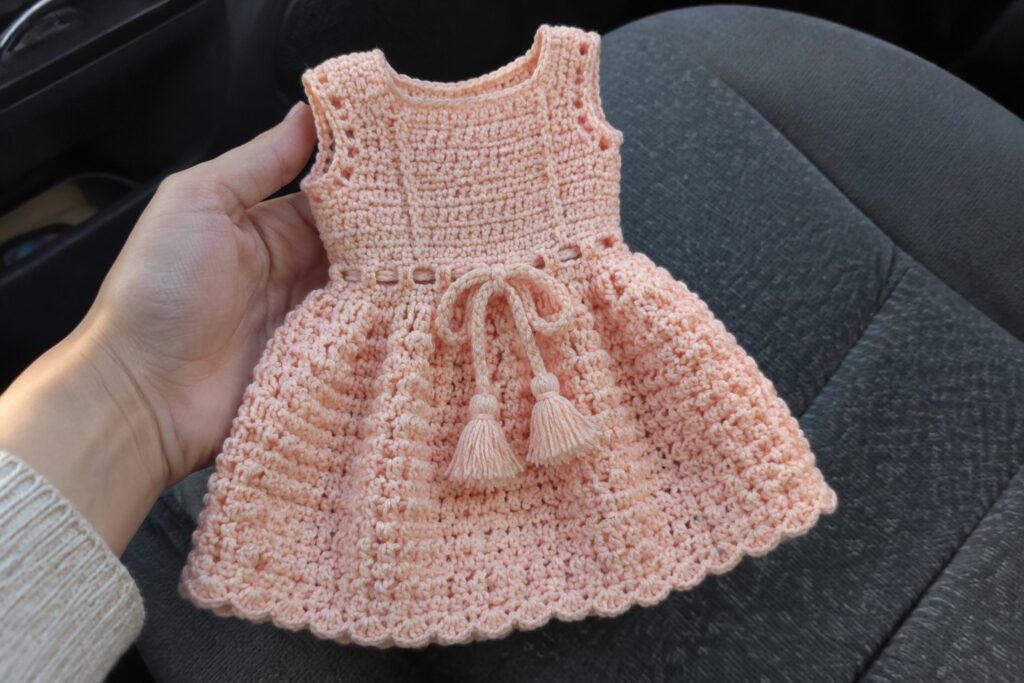
Mini Doll Dress with Adjustable Waist Tie

A crocheted doll dress uses a fitted bodice worked in solid stitches to create structure, then switches to an openwork pattern for the flared skirt. A single tie threads through eyelets at the waist and knots into a bow with tassel ends, letting the wearer adjust the gathering. The compact size keeps the project quick while the flared shape gives it movement without extra shaping. This approach suits doll clothing or small decorative wearables.
What makes this idea useful is the adjustable tie, which lets you fit the same dress to multiple doll sizes without changing the pattern. The small scale means it works as a quick gift topper, a toy accessory, or even a keychain ornament if scaled down further. You can swap the tassels for beads or change the yarn color to match different themes. The structure also translates well to baby photo props if you enlarge the measurements.
Adjustable Tie-Strap Dress with Motif Skirt

A fitted bodice worked in solid rows sits above a flared skirt built from joined circular motifs that create an open texture. Adjustable ties at the shoulders replace fixed straps so the dress can fit a growing child without major changes. The scalloped edges along the top and hem finish the piece cleanly while keeping the overall shape simple.
What makes this idea useful is how the structured bodice balances the lighter skirt without extra lining or stiffening. You could swap the yellow for a neutral cotton to make it a layering piece or shorten the skirt for a top version. The motif layout also lets you add or remove rounds to change the length quickly. For gifts, a design like this works well because the ties handle size variations across different kids.
Spiral Bodice Doll Dresses with Adjustable Ties
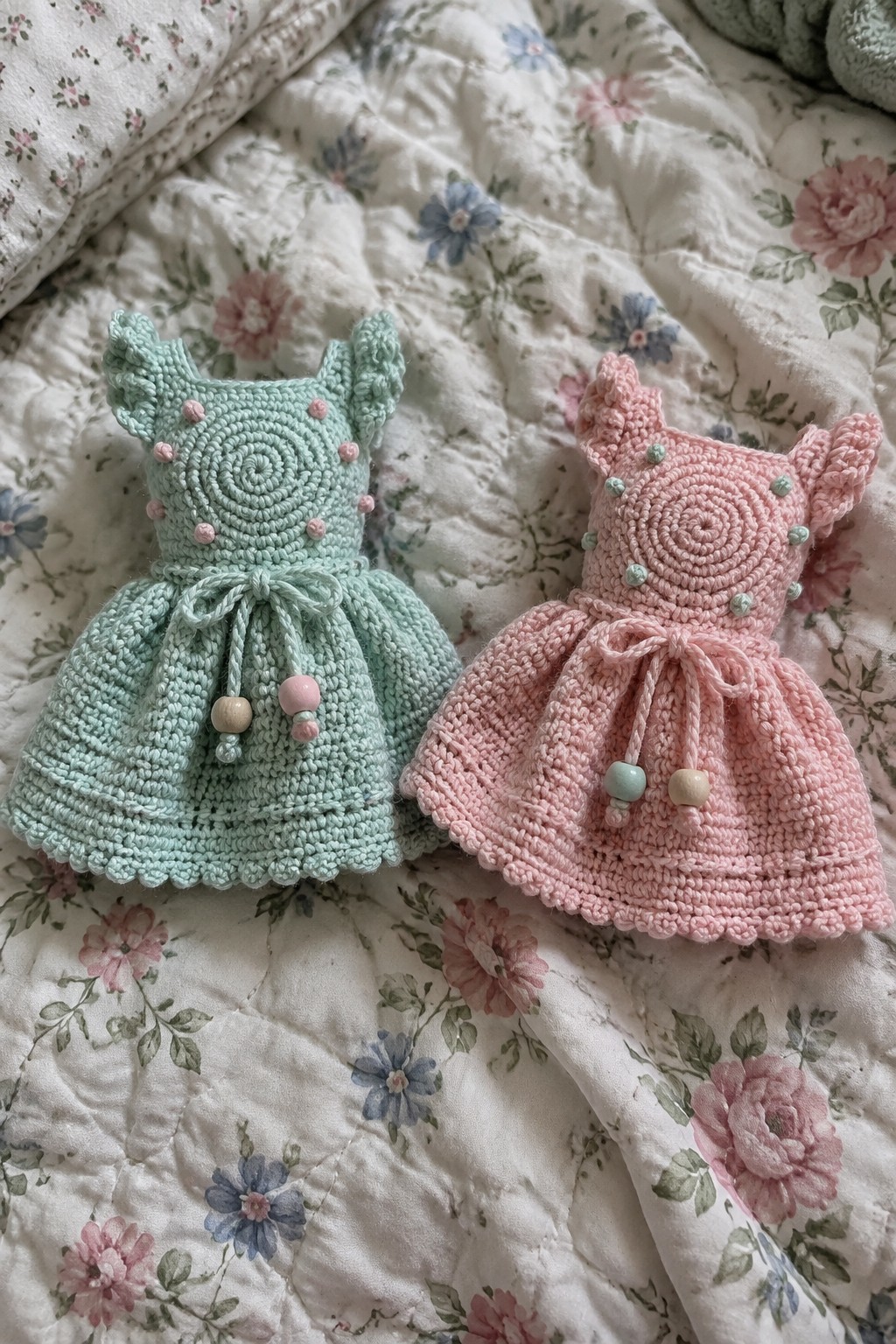
Crochet dresses like these start with a tight circular center that forms the bodice and creates a visible spiral texture. The skirt flares out from the waistline and finishes with a simple drawstring tie threaded through the stitches. Beads added to the tie ends keep the cords from slipping out while adding a small decorative touch. This style suits doll clothing or small display pieces where fit matters.
What makes this idea useful is how the drawstring lets you adjust the waist on different doll sizes without changing the pattern. A project like this works especially well as quick gifts or seasonal ornaments. You can swap the pastel yarn for brighter colors or add stripes to match a specific doll wardrobe. The small scale also means you can finish one in an evening and test new color combinations without using much yarn.
Adjustable Tie Dress in Coral and Cream Stripes
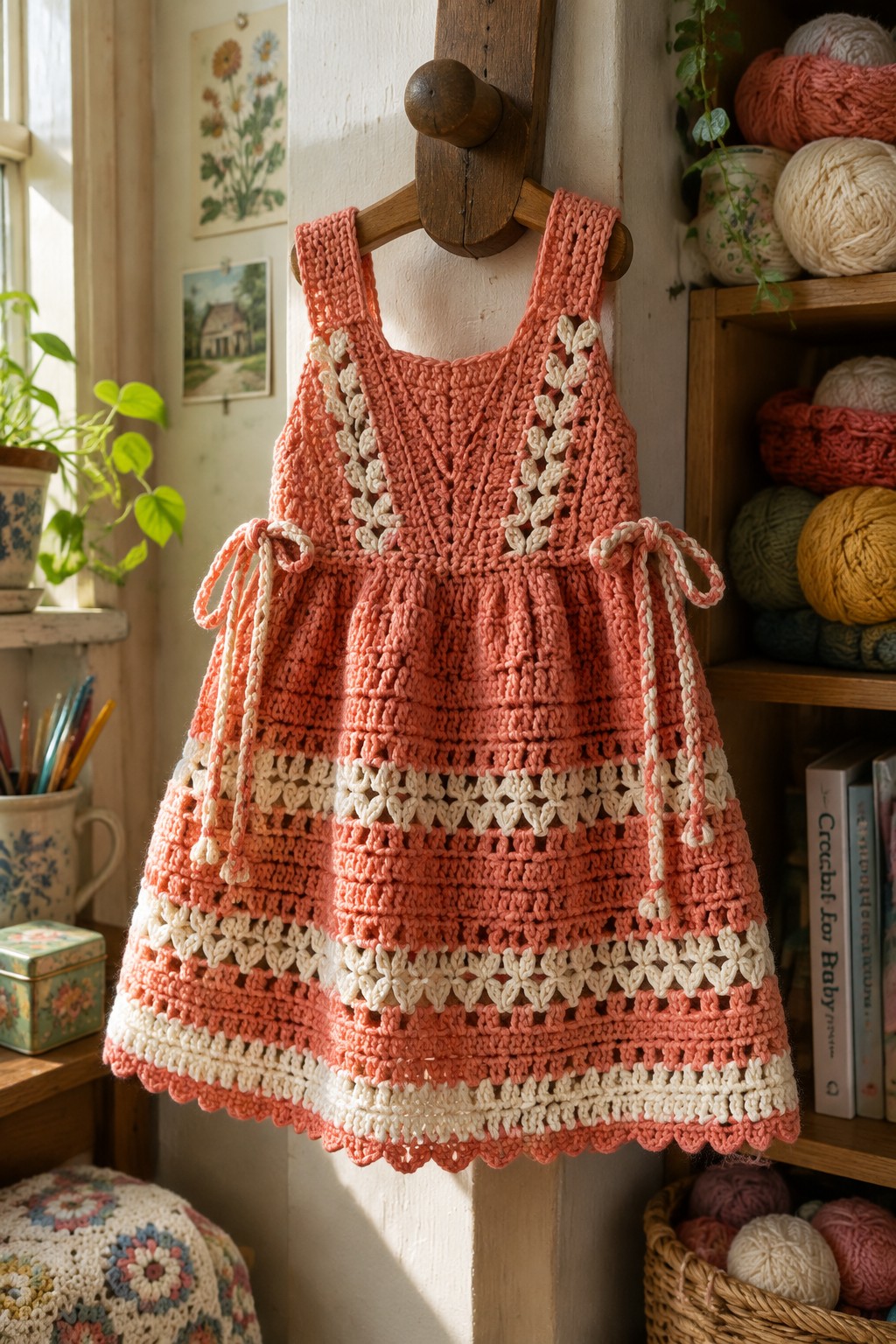
A sleeveless crochet dress for a young child uses a fitted bodice that narrows at the waist before flaring into a gathered skirt. The bodice incorporates openwork sections in cream yarn against the coral background, while the skirt alternates solid rows with bands of lacy open stitches for added texture. Side drawstrings thread through the waist area to let the fit tighten or loosen as needed, and the scalloped hem gives the lower edge a finished look without extra edging work.
What makes this idea useful is the side ties that let one dress fit a range of sizes, which helps when making pieces for growing kids or as gifts. The color blocking between the bodice and skirt breaks up the project into smaller sections that are easier to complete in stages. You could swap the stripe sequence or use leftover yarn for the cream sections to change the look without buying new supplies. The openwork rows also keep the skirt from feeling heavy, so the dress works for warmer months.
Ribbed Bodice Dress with Open Skirt and Waist Tie

This crochet dress pairs a fitted sleeveless bodice in vertical ribbing with a flared skirt worked in an open lace pattern. The waist features a simple drawstring tie that cinches the fit and adds a functional detail. The solid texture on the upper half gives the bodice structure while the lighter skirt allows for movement and breathability. The overall shape works as a wearable garment that can be made in different lengths depending on the intended use.
What makes this idea useful is the adjustable tie that lets the same dress fit a range of sizes without heavy alterations. You can shorten the skirt to tunic length or extend it for more coverage, and the openwork section is easy to swap for a different lace repeat. This design works especially well for summer wear or as a layering piece over a slip or leggings. The clear contrast between the tight bodice and airy skirt also makes the pattern simple to adapt in other colors or yarn weights.
Mini Doll Dress with Adjustable Waist Tie

A small crochet dress like this uses a fitted bodice that narrows at the waist before flaring into an openwork skirt. The adjustable tie sits right at the waist and lets you change the fit or hang the piece as needed. Two shades of yarn keep the bodice and skirt sections distinct while the scalloped edge finishes the hem cleanly. This type of project fits the wearable miniature or ornament category and works especially well when you want to test a dress shape before committing to a larger piece.
What makes this idea useful is how quickly it uses small amounts of yarn for a finished item you can gift or display. Scale it up with thicker yarn and a larger hook to turn it into a baby photo prop or a decorative cover for a small jar. The tie detail makes it simple to personalize with different colors or beads on the ends. Projects of this size also photograph well for pattern notes or social sharing because the full shape stays visible in one frame.
Rainbow Striped Dress with Adjustable Neck Ties
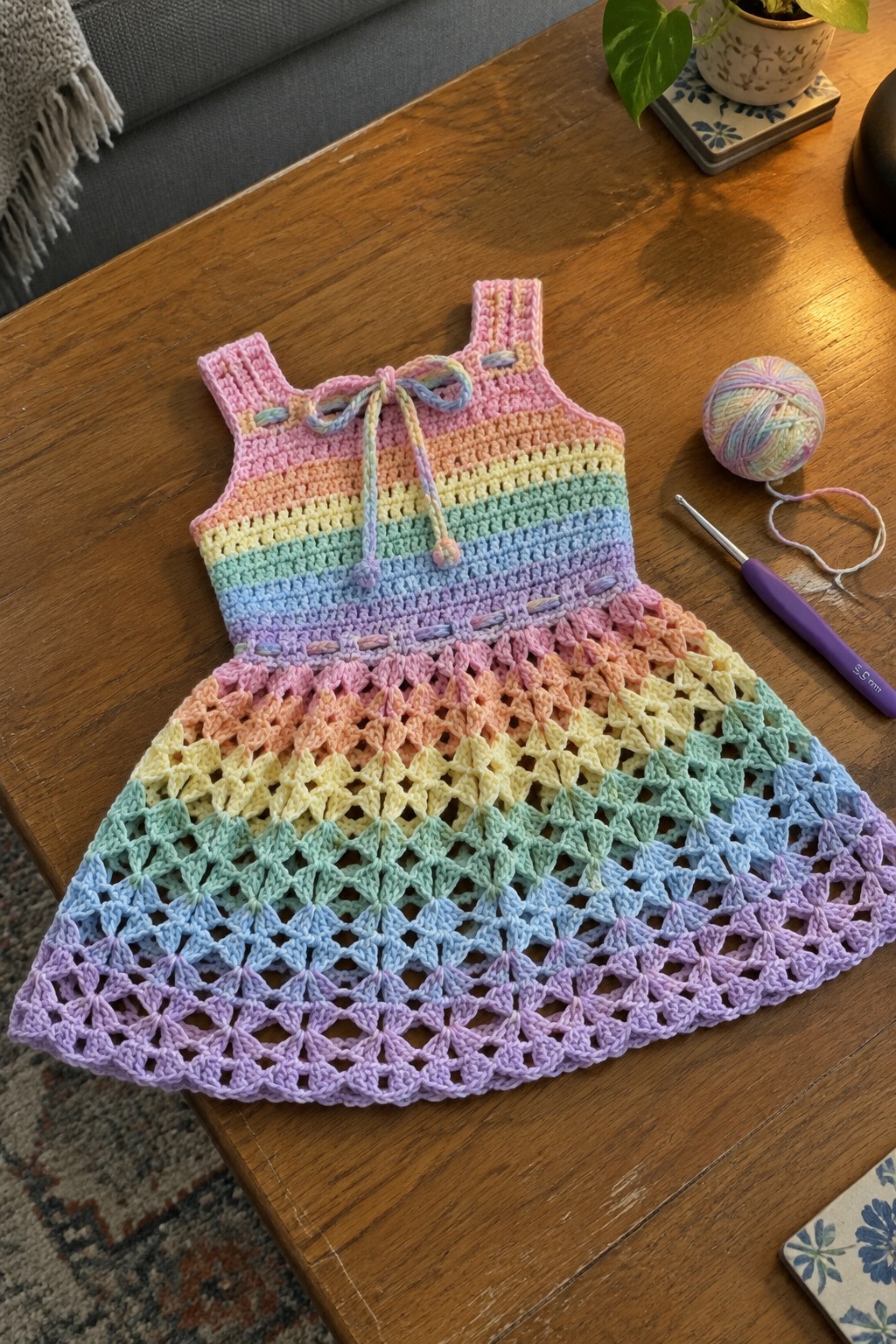
A fitted bodice worked in solid horizontal stripes sits above a flared skirt made with an open fan stitch pattern. Ties threaded through the neckline let the fit adjust at the shoulders, and the color changes run continuously from top to bottom in pastel rainbow order. The contrast between the denser upper section and the lighter skirt keeps the shape balanced while the ties remove the need for buttons or zippers.
The adjustable ties make this dress easy to fit on different sizes without rewriting the pattern. Self-striping yarn handles the color flow so you can focus on the stitches rather than constant color changes. This style works well for baby gifts or doll clothes because the open skirt section grows quickly once the bodice is done and the ties let one finished piece serve multiple wearers.
Circular Yoke Dress with Adjustable Tie Straps
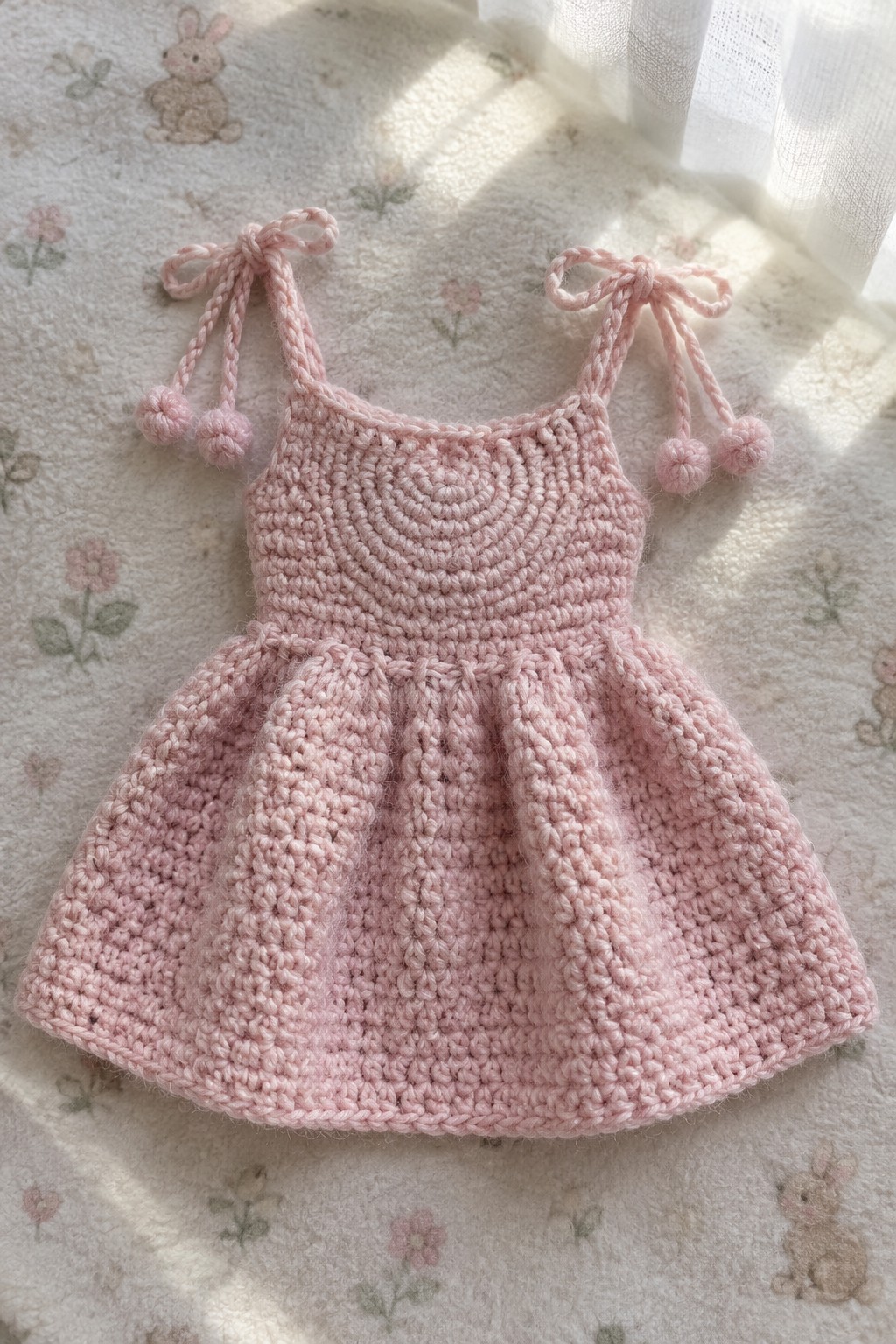
A crocheted dress built from a circular yoke creates a smooth transition from the fitted top into a flared skirt without extra seams. The spiral stitch pattern in the bodice adds subtle texture while the lower section uses basic stitches that let the fabric expand naturally. Tie straps with small pom-poms allow the fit to adjust across different sizes and make the piece easy to put on and remove.
What makes this idea useful is how the tie straps remove the need for exact measurements during construction. A project like this works especially well as a fast gift for babies or as part of a doll clothing set where multiple sizes are needed. The small overall scale also makes it simple to test new color combinations or try out different skirt lengths without committing much yarn.
Toddler Dress with Textured Bodice and Braided Waist Tie

A child’s dress gains structure from a fitted bodice worked in horizontal bands of dense stitches that create subtle texture across the upper body. Short sleeves and a modest round neck keep the top simple while the skirt expands from the waist into a gentle flare. The braided tie threaded through the waistband provides an adjustable closure that defines the silhouette without needing buttons or zippers.
What makes this idea useful is the combination of a fitted top and a tie that lets the dress adapt to different sizes as a child grows. The solid color and clean lines photograph well for pattern sales or finished-item listings. You can easily change the skirt length or swap the tie for a contrasting color to match different seasons or outfits.
Adjustable Waist Ties on a Fan Stitch Bodice Dress
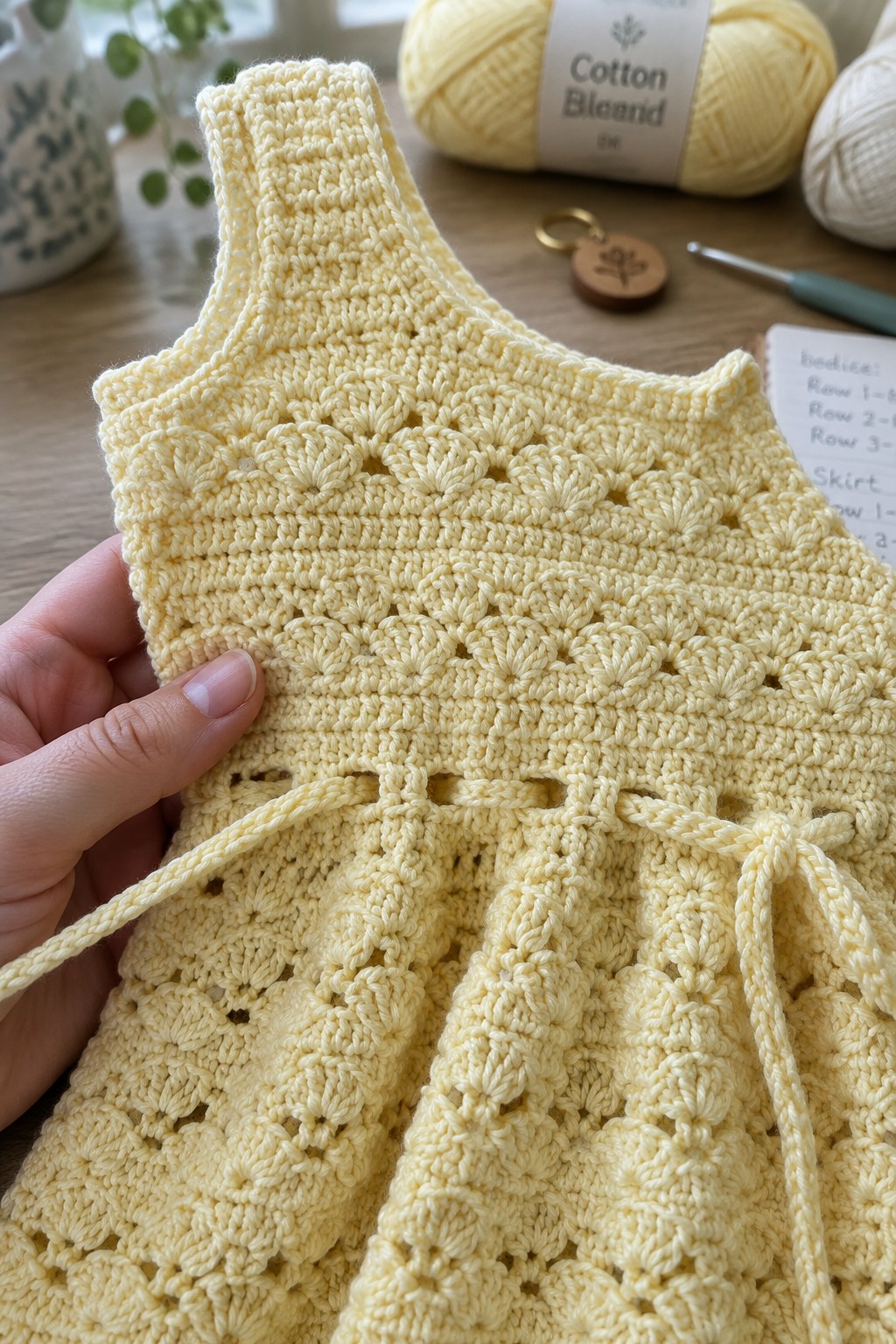
A child’s dress combines a fitted bodice worked in repeating fan stitches with a separate skirt section joined at the waist. Thin ties thread through spaces along that seam so the waist can be cinched or loosened as needed. The bodice stays structured while the lower portion gains flexibility and slight flare from the tie placement.
What makes this idea useful is the way the ties solve fit problems without requiring changes to the stitch pattern itself. The small scale means the bodice can be lengthened or widened for different sizes, and the same tie method could be added to other dress shapes or even tops. For gifts, a design like this works well because one finished piece can fit a range of children simply by adjusting the drawstring.
Spiral Bodice Dresses with Adjustable Shoulder Ties
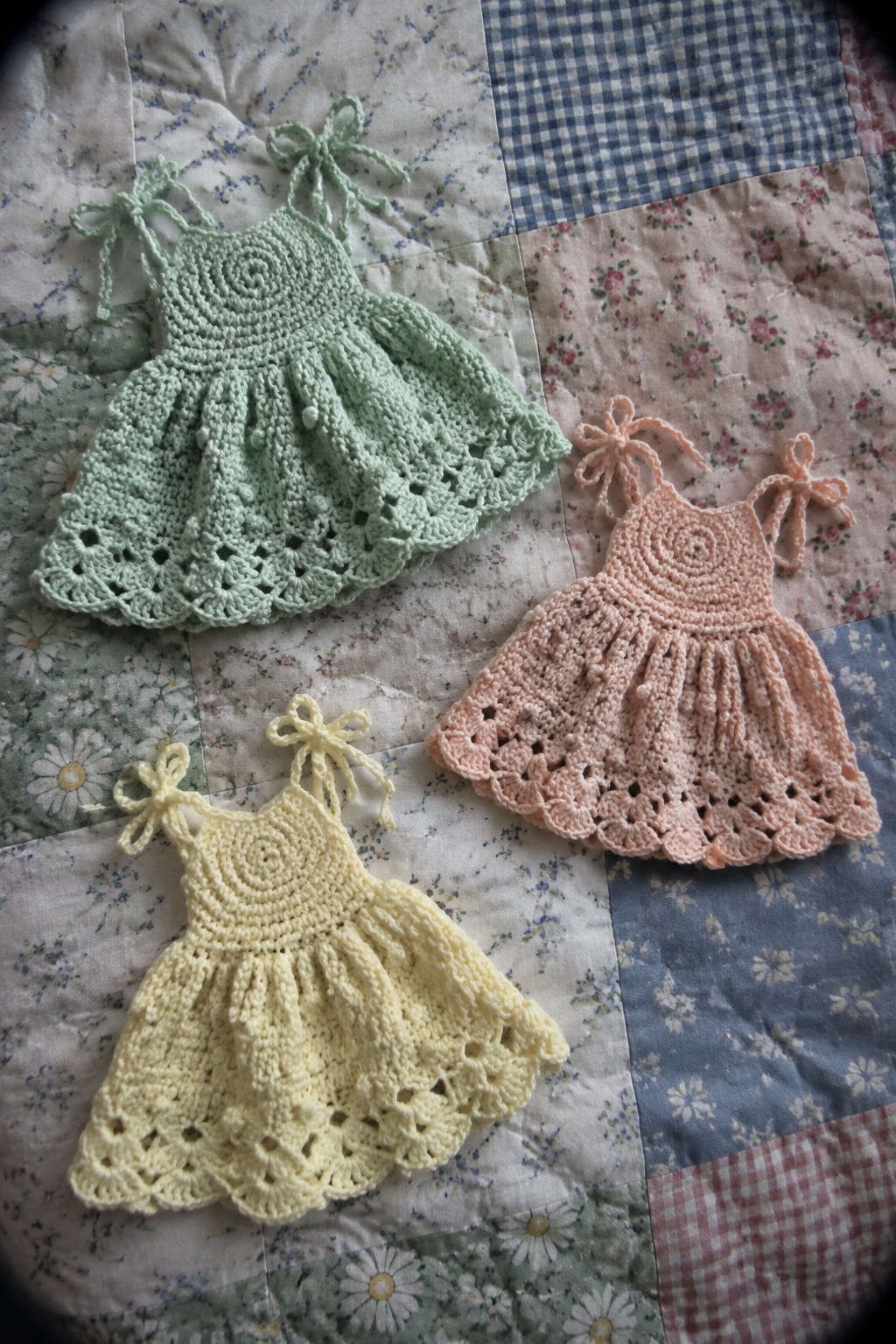
These dresses start with a round spiral that forms the bodice and creates a naturally fitted shape without extra shaping rows. The skirt is worked outward from the bodice in plain stitches before switching to an open lace pattern along the hem. Shoulder ties let you tighten or loosen the fit on whatever you’re dressing. The style suits doll clothes, newborn photo props, or small decorative pieces.
What makes this idea useful is how the spiral construction keeps the top smooth while the ties handle most of the sizing. You can easily change the skirt length or swap the lace edge for a different border to match other projects. The small size means they work up fast from leftover yarn and make good last-minute gifts. Scaling the same pattern up a couple of sizes turns it into a simple baby dress option.
Halter Dress with Striped Openwork and Adjustable Ties
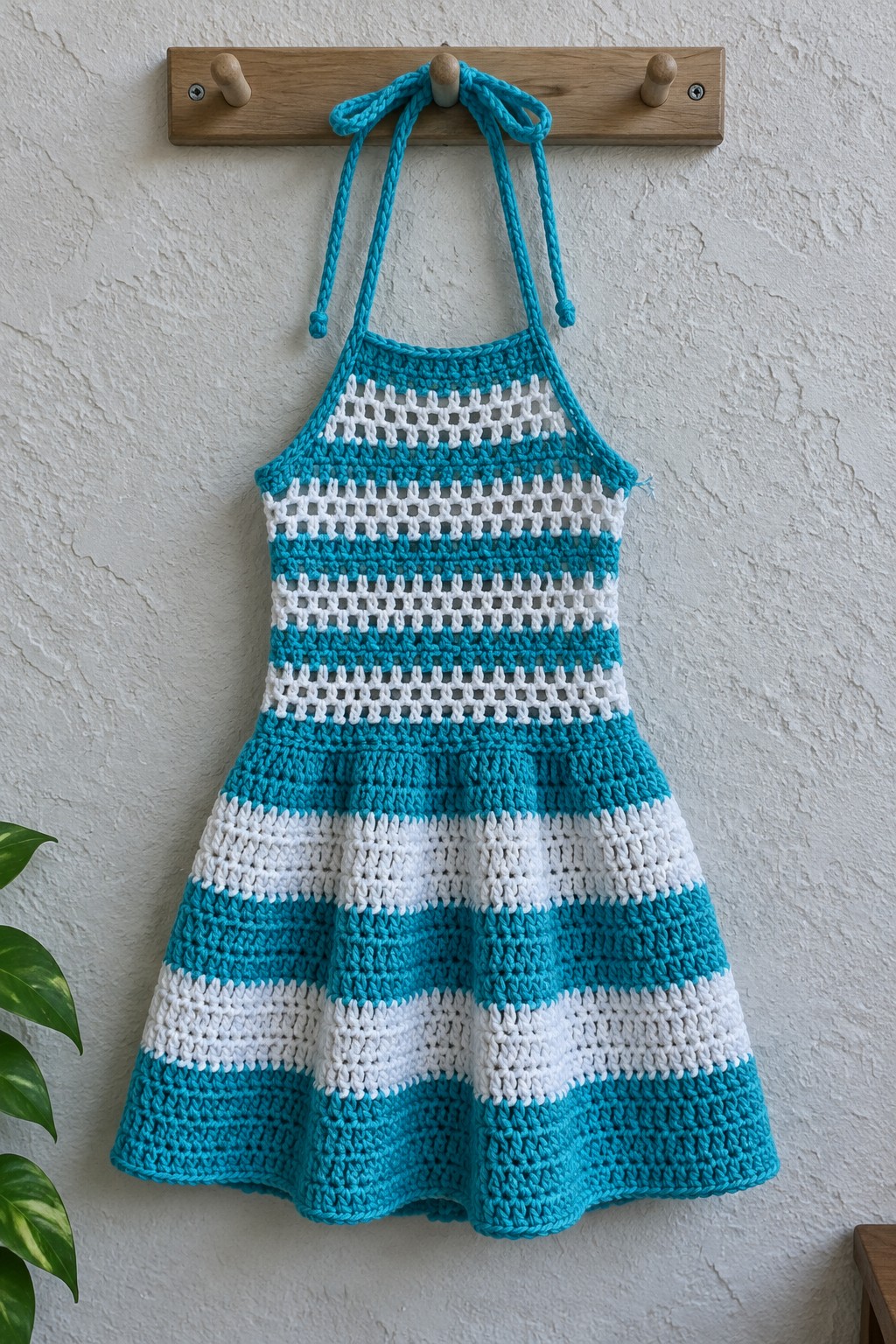
A halter neck crochet dress uses alternating bands of solid stitches and mesh to create a fitted upper section that then flares into a tiered skirt. The design places the openwork rows at regular intervals so the fabric stays light while still showing clear color changes between teal and white. Adjustable ties at the neck handle the fit at the shoulders and keep the bodice close to the body before the skirt widens. This type of project sits in the wearable category because the shape and strap style work for a finished garment rather than a decorative piece.
What makes this idea useful is that the tie straps remove the need for exact shoulder measurements and let one dress fit a range of sizes. You can repeat the bottom stripe sequence to add length or swap which color gets the mesh rows to change how much skin shows through. The horizontal bands also make it easy to adjust the overall length without rewriting the pattern. A dress built this way works especially well as a quick gift because the stripes make the shape read clearly in photos and the open sections keep the finished piece from feeling heavy.
Gradient Baby Dress With Drawstring Waist Tie
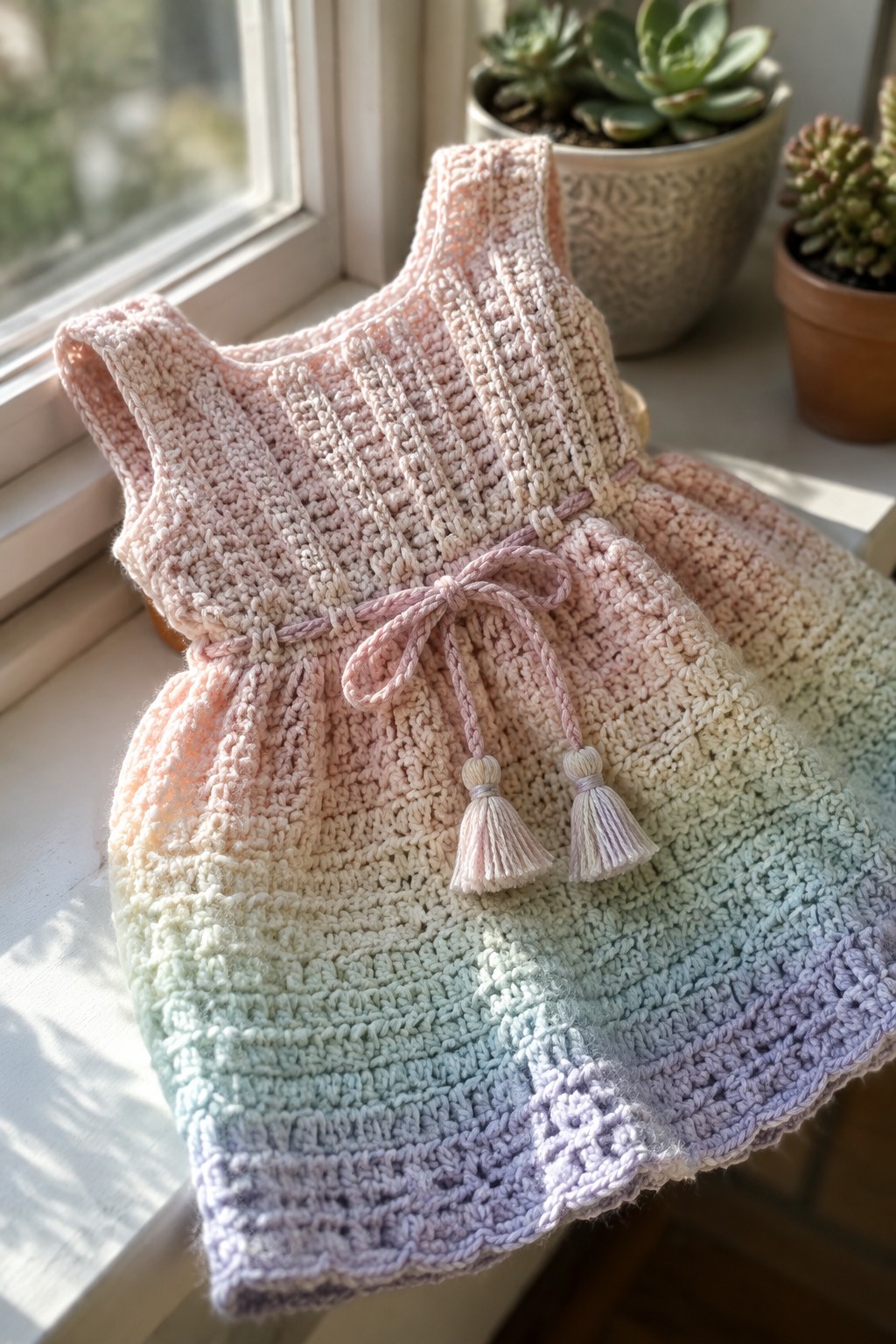
This design uses a sleeveless bodice worked in a raised stitch pattern that creates vertical texture, then transitions into a flared skirt made with a pastel gradient yarn. A separate cord threads through the waist and ties in front with small tassels on the ends, giving an adjustable fit without extra closures. The shape works as a wearable for babies or dolls because the bodice stays close while the skirt flows out naturally from the tie point.
What makes this idea useful is how the tie lets you adjust the waist on the fly instead of relying on exact sizing. You can change the scale easily by switching hook size or yarn weight if you want a larger version for a toddler. The gradient yarn does the color work automatically so the focus stays on the bodice texture and simple shaping. For gifts, a project like this finishes quickly once the bodice is done and still looks polished with the tassel details added.
Mini Doll Dress With Lace-Up Back and Adjustable Waist Tie
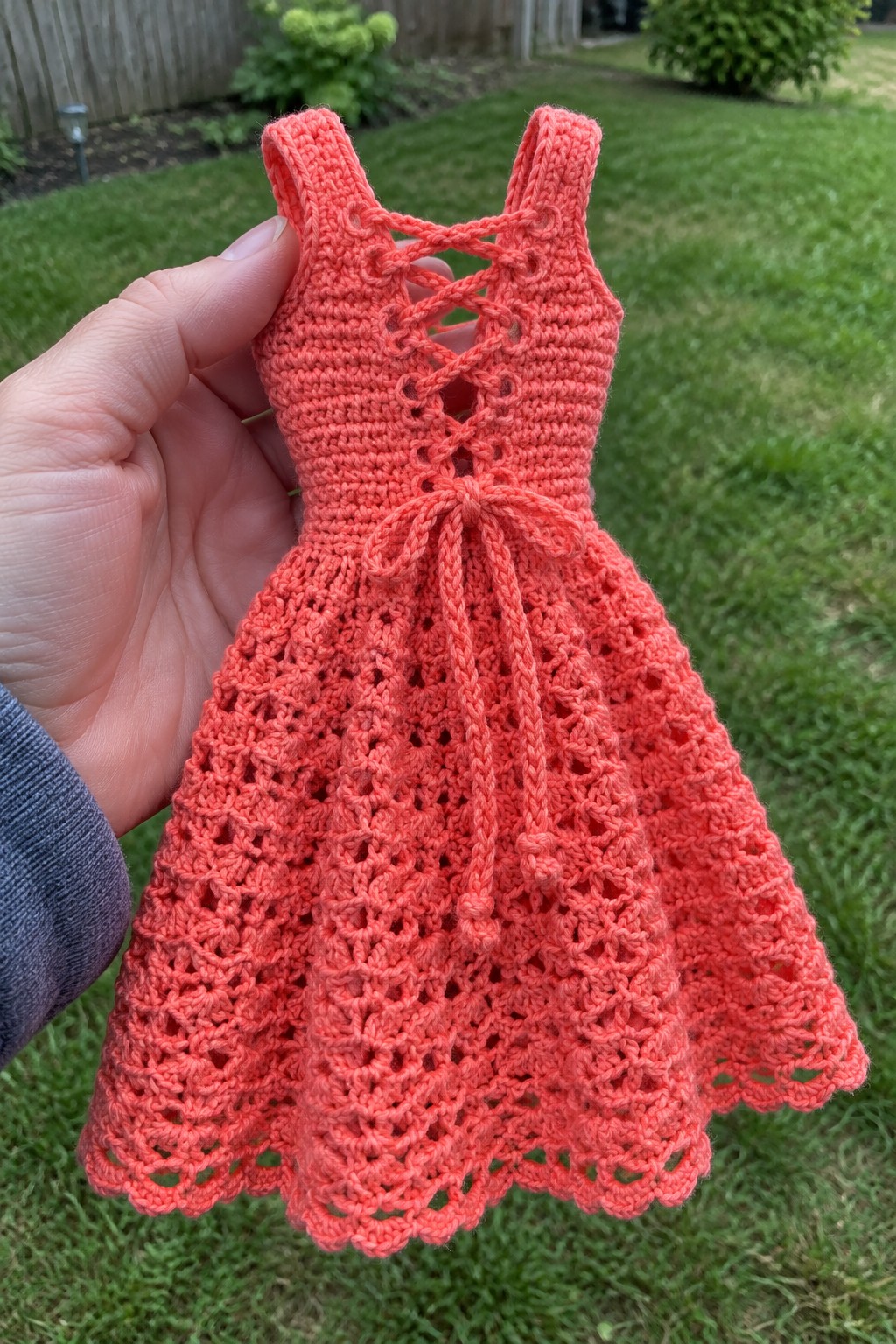
A small-scale crochet dress works well as doll clothing or a decorative accent. It features a fitted bodice with a back opening closed by crossed ties, plus an A-line skirt in an open lace stitch that ends in a scalloped border. The separate tie at the waist lets you adjust the fit on different sizes. This style fits the wearable or giftable category and keeps the focus on simple construction with visible structure.
What makes this idea useful is the built-in adjustability from the back ties and waist tie, which lets one pattern fit multiple doll sizes without major changes. The open skirt pattern shows up clearly in lighter colors and adds texture without extra yarn. Scale the same bodice and tie method up for a baby dress or down for amigurumi outfits. For gifts, the adjustable elements make it practical because the finished piece can fit a range of toys or small mannequins.
Ribbed Bodice Dress with Braided Waist Tie

A crocheted child’s dress uses vertical ribbing to create a fitted bodice that sits close to the body before the fabric opens into a flared skirt. An adjustable braided tie threads through the waist to gather the fabric and create shape, with small tassels on the ends. The scalloped hem adds a finished edge that follows the natural flare of the skirt without needing extra shaping rows.
This design works well for growing kids because the tie lets you tighten or loosen the waist as needed instead of committing to one size. You can easily change the length of the skirt or swap the tie for a different color to match other clothes. The simple structure also makes it straightforward to resize for a larger child or adjust the bodice width by adding more ribbed panels.
Fitted Bodice Sundress with Adjustable Tie Straps
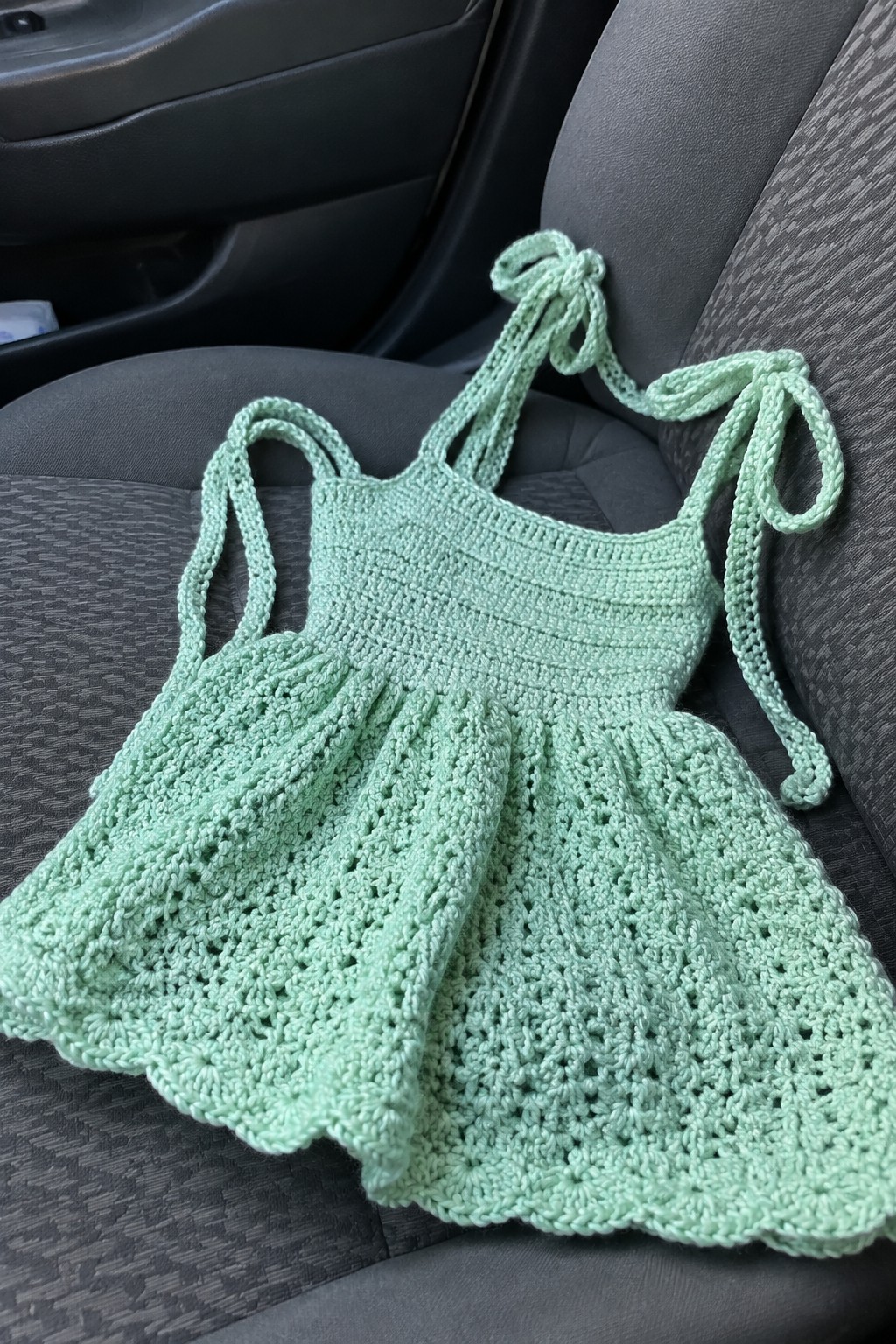
This crochet dress uses a solid, close-fitting bodice that sits at the chest and transitions into a flared skirt worked with open stitches and gentle increases. The long ties at each shoulder let the wearer adjust the fit at the back and neck without any buttons or zippers. The dense top section keeps the shape stable while the lighter skirt adds movement and breathability, making it a straightforward wearable project.
What makes this idea useful is how the tie straps solve fit issues across different body sizes with one pattern. This kind of dress works especially well as a summer layer for children or as a quick project when you want something finished in a few evenings. You could shorten the skirt for a top version or change the tie length to suit different necklines. The simple color and clean lines also make it easy to photograph for pattern sales or project shares.
Rainbow Striped Dress with Adjustable Waist Tie
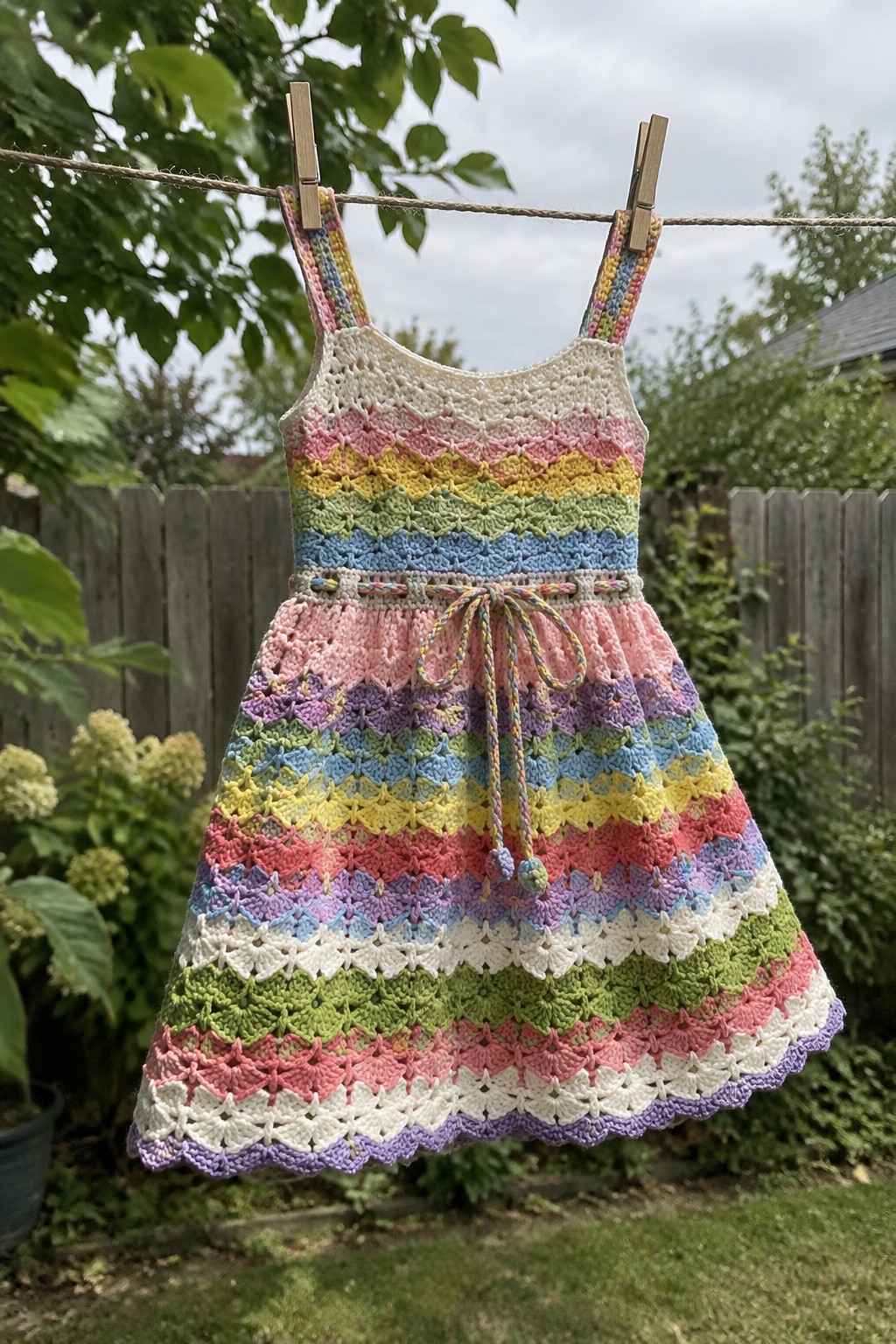
A child’s dress built with horizontal stripes of bright colors uses a fitted upper section that narrows at the waist before flaring into a full skirt. The bodice stays structured with tighter stitches while the lower portion opens up for easier movement, and a braided tie threads through eyelets at the waist to create an adjustable fit. This style lands in the wearable category where the repeating stripe sequence keeps the construction straightforward and the tie adds practical sizing flexibility as the wearer grows.
What makes this idea useful is the waist tie, which lets one dress fit across multiple sizes without major reworking. The stripe pattern is easy to shorten or lengthen by dropping or adding color bands, and the same shape works well in softer pastels or seasonal colors depending on the yarn on hand. A project like this stands out for gifts because the adjustable element reduces the risk of it being outgrown too quickly.
Tie-Strap Dress with Open-Stitch Skirt

A crocheted dress with a solid fitted bodice and a flared skirt in an open lace pattern creates a lightweight wearable suitable for children. The shoulder ties allow the fit to be adjusted easily, while the shift from a dense top to a more open skirt adds texture and movement through the stitch work. Small flower details near the ties provide a simple accent that matches the overall scale without overpowering the design.
What makes this idea useful is how the tie closure removes the need for precise measurements or zippers when making kids’ clothes. You can change the skirt length or switch to a different yarn weight to resize it for babies or slightly older children. The repeat in the lace section makes it straightforward to customize the color or add stripes if you want to match specific outfits. For gifts, a design like this works well because the adjustable ties make it more practical than fixed-size pieces.
Fitted Bodice Dresses With Bobble Skirts and Tie Straps
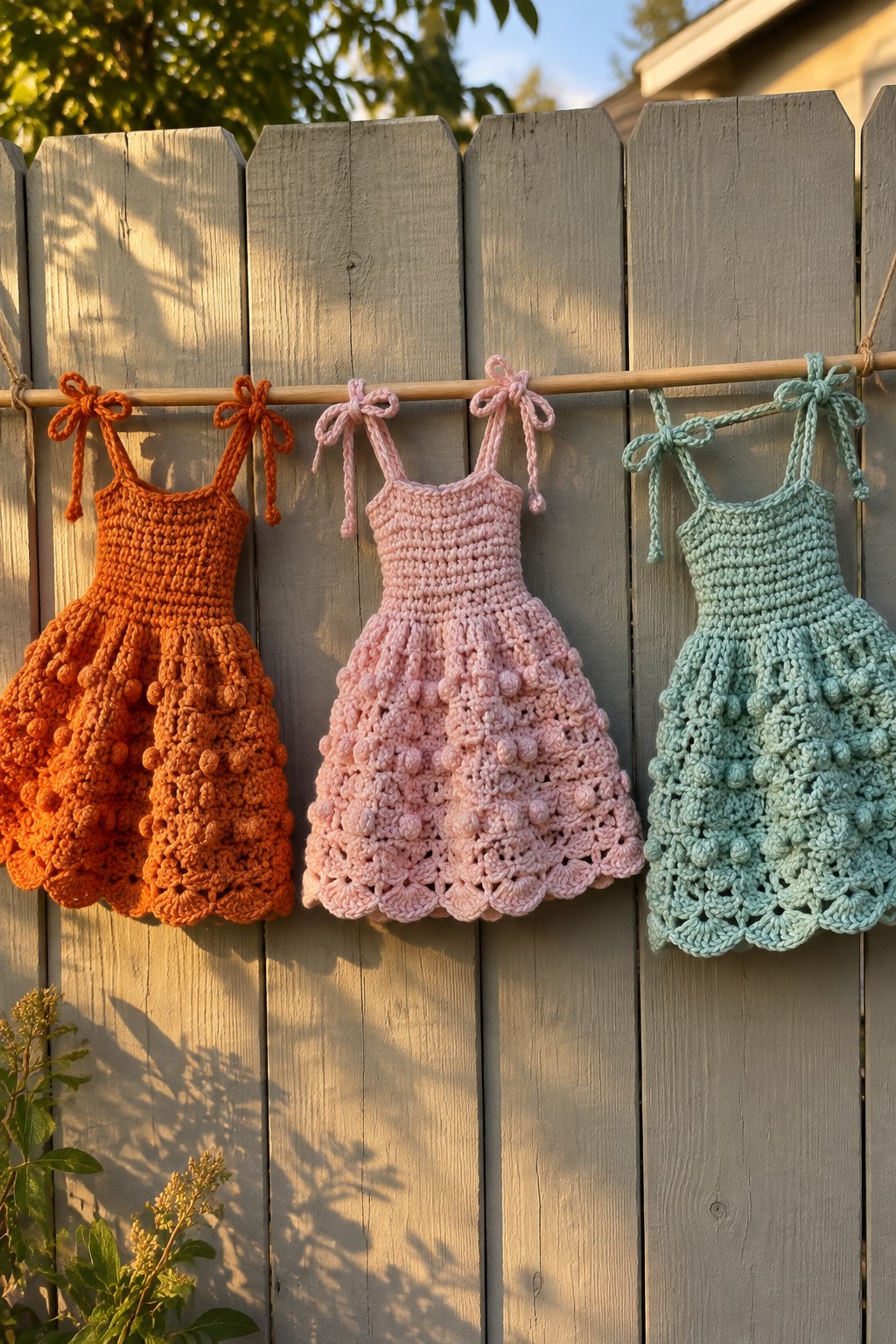
Crochet dresses like these begin with a fitted bodice that transitions into a flared skirt built from repeated bobble clusters. The adjustable ties at the shoulders thread through the top edge so the fit can be tightened or loosened without changing the main body. This approach keeps the upper section smooth while the lower section gains dimension from the raised bobble texture.
What makes this idea useful is how simply the bodice can be widened or narrowed to suit different sizes before the skirt begins. The tie straps remove the need for exact shoulder measurements, which helps when making pieces for growing children or as gifts. A project like this works especially well in multiple colors because the bobble pattern shows up clearly against any solid yarn. The overall shape also translates easily to doll sizes if you scale the starting chain down.
Lace-Up Back Closure on a Two-Tone Dress
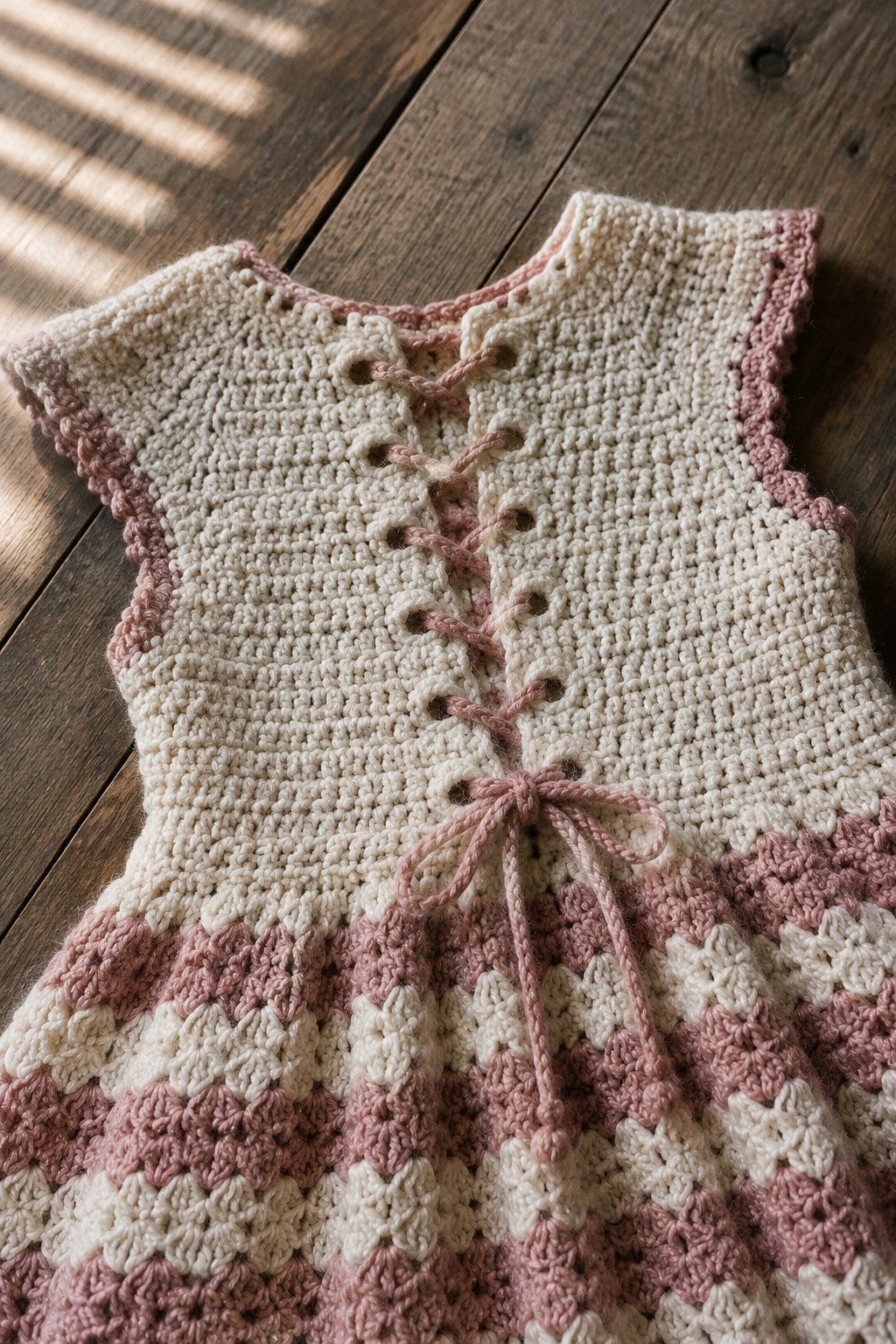
A sleeveless crochet dress uses a back opening with eyelets and a single tie threaded through them to create an adjustable fit across the bodice. The top half stays solid in cream while the lower section shifts into a repeating two-color pattern of cream and dusty pink that adds texture and movement. The ties knot at the waist, letting the wearer control how fitted or relaxed the back feels without changing the stitch work.
What makes this idea useful is how the tie placement can shift during seaming to suit different torso lengths. The design works especially well for lightweight summer pieces where you want coverage but still need airflow. You can swap the color order, shorten the patterned section, or add more rows to the solid top to change the proportions. For gifts, this style appeals because most people can wear it without needing exact measurements upfront.
Frequently Asked Questions
What yarn works best for crochet dresses with fitted bodices and adjustable ties? Cotton or cotton blend yarns are ideal because they hold shape well in fitted areas while allowing the ties to adjust comfortably. Look for DK or worsted weight options with good stitch definition. These fibers breathe in warm weather and block nicely to highlight the bodice shaping. Always check the pattern for recommended hook size and make a gauge swatch first to ensure the fit stays true after washing.
How do I adjust the ties for a perfect fit on different body types? Start by trying the dress on before fully securing the ties. Thread the ties through the designated eyelets or loops and pull gently to cinch the bodice without restricting movement. For broader shoulders or busts, leave extra length in the ties and tie them in a bow at the back or side. Test the fit while sitting and standing to avoid gaping, then trim excess yarn only after confirming the length works across multiple wears.
Are these patterns beginner friendly or do they require advanced skills? Many of the 21 designs use basic stitches like single crochet and double crochet for the bodice, with ties added as simple chains or straps. Beginners can start with options that have minimal shaping and clear photo tutorials. More complex ones include increases for the fitted silhouette, so review the pattern notes for skill level and consider practicing the tie technique on a swatch before committing to the full dress.
How should I care for a finished crochet dress to keep the fitted bodice looking sharp? Hand wash in cool water with mild detergent and lay flat to dry, reshaping the bodice while damp. Avoid wringing or machine drying, as that can stretch the ties and loosen the fit. Store the dress folded rather than on a hanger to prevent the bodice from sagging over time. If the ties loosen after repeated washes, tighten them with a quick re-block.
Where can I find the patterns for all 21 dresses mentioned? Search the designer’s website or popular pattern platforms like Ravelry and Etsy using the exact dress titles. Many include free versions alongside paid PDF downloads with sizing charts and tie instructions. Join crochet communities for tips on modifications, and always verify the pattern includes the adjustable tie details before purchasing.
