Close Menu
    Fruit Tree Hub
    • Home
    • Apple Trees
    • Lemon Trees
    • Mango Trees
    • Orange Trees
    • More Trees
      • Best Fruit Trees
      • Apricot Trees
      • Cherry Trees
      • Fig Trees
      • Lime Trees
      • Mulberry Trees
      • Peach Trees
      • Pear Trees
      • Plum Trees
      • Pomegranate Trees
    • Tips and Advice
      • Tools
    • About Us
      • Contact
      • Privacy Policy
    Fruit Tree Hub
    Home»Fruit Trees»Walnut Trees»Why Do Walnut Trees Produce Nuts Biennially
    Walnut Trees

    Why Do Walnut Trees Produce Nuts Biennially

    Lucy SmithBy Lucy SmithJanuary 29, 20244 Mins Read
    Share Facebook Twitter Pinterest WhatsApp Email
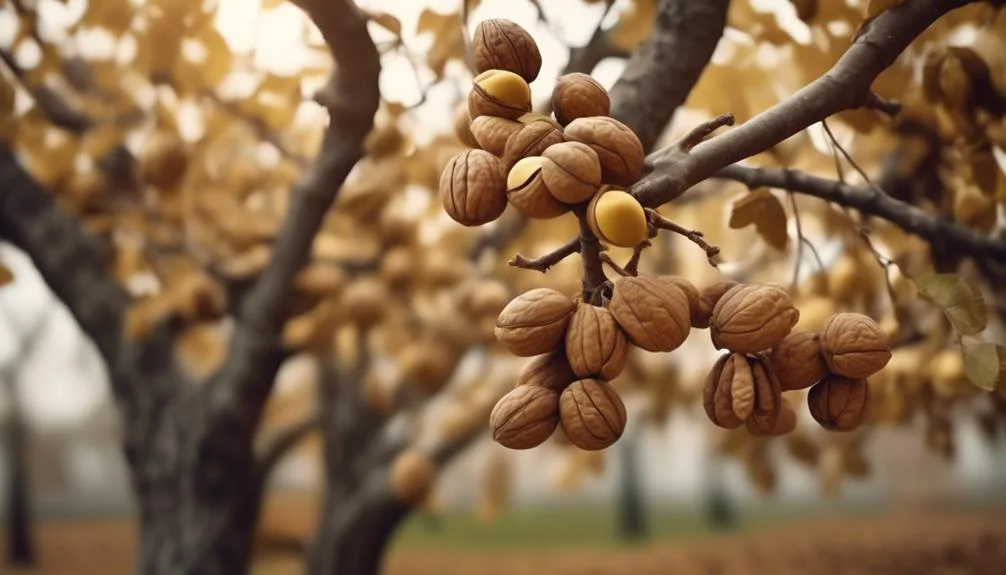
    walnut trees biennial nut production
    Share
    Facebook Twitter LinkedIn Pinterest Telegram Email

    Walnut trees often produce nuts every other year, which can be frustrating for those expecting a yearly harvest. The reasons for this biennial pattern are complex, involving environmental factors and hormonal regulation within the trees.

    Contents show
    1 Key Takeaways
    2 Walnut Tree Nut Production Cycle
    3 Environmental Factors Affecting Nut Production
    4 Hormonal Regulation in Walnut Trees
    5 Nutrient Availability and Nut Production
    6 Strategies for Managing Biennial Nut Crops
    7 Conclusion

    Understanding this cycle can provide insights into managing and improving nut production. So, what exactly causes walnut trees to follow this biennial nut production cycle?

    Key Takeaways

    • Walnut trees follow a biennial nut production cycle, meaning they produce nuts every other year.
    • Factors such as tree maintenance, soil health, and nutrient availability directly influence nut production.
    • Environmental factors like climate variability, extreme weather, pests, and diseases can hinder consistent nut production.
    • Hormonal regulation, specifically the balance of auxin and cytokinin, determines the biennial pattern of nut production.

    Walnut Tree Nut Production Cycle

    Every two years, walnut trees go through a natural cycle of producing nuts, known as the biennial bearing phenomenon. This cycle is influenced by various factors, including tree maintenance and soil health.

    Proper tree maintenance, such as pruning and shaping, can help optimize nut production. Ensuring that the trees receive adequate nutrients and water is essential for healthy nut development.

    Additionally, maintaining soil health through practices like mulching and regular fertilization can significantly impact the tree's ability to produce nuts consistently. Understanding and addressing these factors are crucial for maximizing walnut tree nut production.

    Environmental Factors Affecting Nut Production

    To ensure consistent walnut tree nut production, understanding the environmental factors that affect nut development is crucial. Several key factors influence the production of walnuts:

    • Climate Variability: Fluctuations in temperature and precipitation can impact the flowering and pollination process, directly affecting nut development.
    • Tree Stress: Environmental stressors such as extreme weather conditions, pests, or diseases can hinder the tree's ability to produce nuts consistently.
    • Soil Composition: The composition of the soil directly impacts the tree's ability to uptake nutrients essential for nut production.
    • Water Availability: Adequate water supply is critical for the tree's overall health and the development of nuts.
    • Nutrient Levels: Imbalances in soil nutrients can affect the tree's reproductive capabilities, influencing nut production.
    MUST READ
    The Best Soil Types for Walnut Trees

    Recommended Products

    MySoil Soil Test Kit, Unlock Your Lawn & Garden Potential, Complete & Accurate Nutrient and pH Analysis with Recommendations Tailored to Your Soil and Plant Needs
    MySoil Soil Test Kit, Unlock Your Lawn & Garden Potential, Complete & Accurate Nutrient and pH Analysis with Recommendations Tailored to Your Soil and Plant Needs

    KNOW BEFORE YOU GROW | Grow the healthiest, sustainable lawn and garden with the most accurate and easy to use professional soil test kit on the market

    VIEW LATEST PRICE

    As an affiliate, we earn on qualifying purchases.

    Soil Test Kit – 100 Soil pH Test Strips (3.5–9 Range) for Garden, Lawn & Indoor Plants – Easy At-Home Soil Testing
    Soil Test Kit – 100 Soil pH Test Strips (3.5–9 Range) for Garden, Lawn & Indoor Plants – Easy At-Home Soil Testing

    Accurate Soil pH Testing: Dewildetradingco Soil pH Test Strips offer measurements of soil pH levels (pH 3.5-9). As an essential tool for every gardener and grower, these test strips help determine the optimal pH for various plants, such as outdoor plants, indoor plants, gardens, grass lawns, fruit trees, flowers, vegetables, and forest shrubs.

    VIEW LATEST PRICE

    As an affiliate, we earn on qualifying purchases.

    NewTest Soil Test Kit 4 Parameters: Professional Accurate 40 Tests Soil Testing Kits for Lawns Gardening Vegetable Garden for pH Nitrogen Phosphorus Potassium - Soil Tester for Garden Nutrients (40)
    NewTest Soil Test Kit 4 Parameters: Professional Accurate 40 Tests Soil Testing Kits for Lawns Gardening Vegetable Garden for pH Nitrogen Phosphorus Potassium - Soil Tester for Garden Nutrients (40)

    Professional Soil Test Kit: All soil test kits on the market can not accurately detect soil chemical elements, the soil must be sent to the laboratory to test in order to obtain accurate data; NewTest Labs to solve this pain point, after a long period of in-depth research, the development of this professional soil testing kit; beginners can also accurately detect the chemical elements in the soil

    VIEW LATEST PRICE
    MUST READ
    How to Identify Different Walnut Tree Species

    As an affiliate, we earn on qualifying purchases.

    Hormonal Regulation in Walnut Trees

    Hormonal regulation plays a crucial role in determining the biennial pattern of nut production in walnut trees. It influences the tree's reproductive cycle and the development of nuts. The balance of hormones, particularly auxin and cytokinin, governs the growth patterns and fruiting habits of walnut trees.

    During the 'on' year of production, high levels of auxin promote the formation of female flowers and the subsequent development of nuts. In contrast, the 'off' year is characterized by lower levels of auxin and increased concentrations of cytokinin. This leads to the formation of vegetative buds instead of reproductive structures.

    This intricate hormonal signaling ultimately dictates whether the tree will allocate resources towards flowering and nut production or vegetative growth. It results in the biennial nut-bearing pattern observed in walnut trees.

    Understanding these hormonal mechanisms is essential for optimizing walnut orchard management and enhancing consistent nut yields.

    Nutrient Availability and Nut Production

    Ensuring adequate nutrient availability is crucial for maximizing walnut tree productivity and nut production. Nutrient uptake plays a pivotal role in the overall health and yield of walnut trees. Here are five key factors that are essential to consider in relation to nutrient availability and nut production:

    • Soil fertility: The fertility of the soil directly impacts the availability of essential nutrients for walnut trees.
    • Nutrient uptake: Understanding the mechanisms of nutrient uptake by walnut trees is vital for optimizing their productivity.
    • Nutrient deficiencies: Identifying and addressing any nutrient deficiencies is crucial to ensure healthy nut production.
    • Fertilization practices: Implementing effective fertilization practices can significantly enhance the nutrient availability for walnut trees.
    • Balanced nutrition: Providing a balanced mix of essential nutrients is essential for maximizing walnut tree productivity and nut production.
    MUST READ
    How to Properly Water Walnut Trees

    Recommended Products

    Miracle-Gro Fruit & Citrus Plant Food Spikes, 12 Spikes, 3 lb.
    Miracle-Gro Fruit & Citrus Plant Food Spikes, 12 Spikes, 3 lb.

    FORMULATED FOR CITRUS AND FRUIT TREES: Use these citrus fertilizer spikes on apple, orange, lemon, lime, and avocado trees; this formula is also great for feeding palm trees

    VIEW LATEST PRICE

    As an affiliate, we earn on qualifying purchases.

    Jobe’s Organics Granular Fertilizer, Organic Fertilizer for Palm Trees and Plants, 4 lbs Bag
    Jobe’s Organics Granular Fertilizer, Organic Fertilizer for Palm Trees and Plants, 4 lbs Bag

    Package contains 4 pounds organic fertilizer grains for palm trees and plants and is produced to avoid wasteful runoff, mess, hazards and smells

    VIEW LATEST PRICE

    As an affiliate, we earn on qualifying purchases.

    Miracle-Gro Shake 'N Feed Flowering Trees and Shrubs Plant Food, 8 lb.
    Miracle-Gro Shake 'N Feed Flowering Trees and Shrubs Plant Food, 8 lb.

    Contains natural ingredients to feed microbes in the soil

    VIEW LATEST PRICE

    As an affiliate, we earn on qualifying purchases.

    Strategies for Managing Biennial Nut Crops

    Maximizing nut production requires implementing effective strategies for managing the biennial cropping pattern of walnut trees.

    Pruning techniques play a crucial role in managing biennial nut crops. Proper pruning during the 'off' year can help balance the tree's resources, encouraging more consistent yields. Focus on removing excess vegetative growth and maintaining an open canopy to optimize sunlight exposure for the following year's nut production.

    Additionally, utilizing pollination methods can help mitigate the effects of biennial bearing. Introducing compatible walnut varieties or ensuring the presence of sufficient pollinators can enhance nut set during the 'on' years.

    Recommended Products

    Corona Tools 13-Inch RazorTOOTH Pruning Saw | Tree Saw Designed for Single-Hand Use | Curved Blade Hand Saw | Cuts Branches up to 7" in Diameter | RS 7120
    Corona Tools 13-Inch RazorTOOTH Pruning Saw | Tree Saw Designed for Single-Hand Use | Curved Blade Hand Saw | Cuts Branches up to 7" in Diameter | RS 7120

    Razortooth saw technology removes more material in each pass

    MUST READ
    Why Do Walnut Trees Have Compound Leaves
    VIEW LATEST PRICE

    As an affiliate, we earn on qualifying purchases.

    Corona Tools 18-Inch RazorTOOTH Pruning Saw | Heavy-Duty Hand Saw with Curved Blade | D-Handle Design for Gloved or 2-Handed Operation | Cuts Branches Up to 10" in Diameter | RS 7510D
    Corona Tools 18-Inch RazorTOOTH Pruning Saw | Heavy-Duty Hand Saw with Curved Blade | D-Handle Design for Gloved or 2-Handed Operation | Cuts Branches Up to 10" in Diameter | RS 7510D

    18″ Curved Steel Blade for Large Branches – Designed to cut limbs up to 10 inches in diameter, the curved blade keeps more teeth engaged for faster, smoother cuts through thick wood and heavy branches.

    VIEW LATEST PRICE

    As an affiliate, we earn on qualifying purchases.

    Pole Saw for Tree Trimming, 2-in-1 Tree Pruner with Saw & Pruning Scissors, 10FT Tree Trimmer, Quadruple Pulley System for High Branch Trimming, Yard, Garden & Orchard
    Pole Saw for Tree Trimming, 2-in-1 Tree Pruner with Saw & Pruning Scissors, 10FT Tree Trimmer, Quadruple Pulley System for High Branch Trimming, Yard, Garden & Orchard

    2-in-1 Saw & Pruning Scissors Cutting System: This manual tree pruner combines a durable saw blade for thicker branches and pruning scissors for smaller branches, allowing you to handle different trimming tasks with one versatile tool. Reduce tool switching and improve daily tree maintenance efficiency.

    VIEW LATEST PRICE

    As an affiliate, we earn on qualifying purchases.

    Conclusion

    In conclusion, the biennial nut production cycle of walnut trees is influenced by environmental factors, hormonal regulation, and nutrient availability.

    Understanding these factors is crucial for walnut growers to develop effective strategies for managing biennial nut crops and ensuring a more consistent harvest.

    Keep a close watch on the health of your walnut trees and make necessary adjustments to support a successful nut production cycle.

    Happy harvesting!

    Share. Facebook Twitter Pinterest LinkedIn Tumblr Email
    lucy smith
    Lucy Smith
    • Website

    Lucy Smith is a highly experienced horticulturist with a passion for fruit tree cultivation. She holds a degree in Horticulture from the University of California, Davis, and has worked in various roles in the industry. With over 10 years of experience, Lucy is dedicated to using eco-friendly methods for sustainable gardening practices.

    Related Posts

    Why Do Walnut Trees Produce Bitter Walnuts

    February 4, 2024

    Can Walnut Trees Adapt to Climate Change

    February 4, 2024

    Creating a Wildlife Habitat With Walnut Trees

    February 4, 2024

    Where Are Walnut Trees Considered Invasive

    February 4, 2024

    Is Walnut Tree Pollen Allergenic

    February 4, 2024

    Can Walnut Trees Be Used in Traditional Remedies

    February 4, 2024
    Leave A Reply Cancel Reply

    Affiliate Disclosure

    As an Amazon Associate I earn from qualifying purchases.

    Recommended Reading

    When Do Kiwi Plants Bloom: Understanding Blooming Signs & Enhancing Flower Production

    How Long Does a Cherry Tree Produce Fruit and Tips for Maximizing Your Harvest

    Pomegranate Trees in a Pot in New Jersey (Garden State Potting Guide)

    How to Make Apple Trees Produce More Fruit: Tips for Thriving and Abundant Harvests

    Are Quince Trees Suitable for Small Gardens

    Growing Pear Trees in Texas (Lone Star State Variety Guide)

    Growing Raspberries in Florida: Tips for Success in Warm Climates

    When Will a Banana Tree Produce Fruit: Timeline and Tips for a Successful Harvest

    What Time of Year Do You Prune Fruit Trees for Optimal Growth and Harvesting Success

    Peach Trees in Maryland (Mid-Atlantic Planting and Care)

    Fruit Tree Hub

    Fruit Tree Hub is a website dedicated to providing you everything you need to grow fruit trees successfully at in your own yard.

    Contact us at: [email protected]

    - AFFILIATE DISCLOSURE: As an Amazon Associate I earn from qualifying purchases.

    Latest Posts

    Can Olive Trees Grow in New Jersey? Garden State Growth Tips

    Can Star Fruit Trees Grow in Missouri? Expert Variety Guide

    How to Grow Jujube Trees in Las Vegas, NV: Desert Growth

    Mango Trees in Illinois: Indoor and Greenhouse Growth Secrets

    Growing Papaya Trees in Oklahoma: High Heat Resilience

    Tamarind Trees in a Pot in Ohio (Complete Maintenance Manual)

    Can Fig Trees Grow in Long Beach, CA? Coastal Salt Tips

    Plum Trees in District of Columbia (Urban Microclimate Tips)

    Categories
    • Almond Trees
    • Apple Trees
    • Apricot Trees
    • Best Fruit Trees
    • Blackberry
    • Cantaloupe
    • Cherry Trees
    • Crochet Ideas
    • Crochet Ideas for Beginners
    • Cucamelon
    • Easy Crochet Ideas
    • Easy Knitting Projects
    • Fig Trees
    • Grapefruit Trees
    • Grapes
    • Guava Trees
    • Honeydew
    • Jujube Trees
    • Kiwi
    • Knitting For Beginners
    • Knitting Ideas
    • Knitting Inspiration
    • Lemon Trees
    • Lime Trees
    • Loquat Trees
    • Mango Trees
    • Mulberry Trees
    • Nectarine Trees
    • Olive Trees
    • Orange Trees
    • Papaya Trees
    • Peach Trees
    • Pear Trees
    • Persimmon Trees
    • Planting
    • Plum Trees
    • Pomegranate Trees
    • Quince Trees
    • Raspberry
    • Reviews
    • Small Crochet Ideas
    • Star Fruit Trees
    • Summer Crochet Ideas
    • Tamarind Trees
    • Tangerine Trees
    • Tips and Advice
    • Tools
    • Uncategorized
    • Walnut Trees
    © 2026 Fruit Tree Hub
    • Home
    • About Us
    • Contact
    • Privacy Policy
    • Terms and Conditions
    • Disclaimer
    • Editorial Policy
    • Affiliate Disclosure

    Type above and press Enter to search. Press Esc to cancel.