

Have you ever planted a peach tree and wondered when you’ll finally get to enjoy those juicy fruits? You’re not alone. Many new gardeners find themselves eagerly waiting for their trees to bear fruit, only to be unsure of what to expect.
Understanding the timeline of peach production can help you set realistic expectations and care for your tree properly. In this article, you’ll learn about the factors that influence fruiting, including age, variety, and environmental conditions. By the end, you’ll be equipped with the knowledge to nurture your peach tree and enjoy delicious homegrown peaches in no time.
Key Takeaways
- Age Matters: Peach trees generally take 2 to 5 years to start producing fruit, depending on the variety and age of the tree.
- Variety Impacts Fruiting Time: Different peach varieties have varying maturation rates; early-season types yield fruit sooner than late-season varieties.
- Cross-Pollination: Many peach varieties benefit from cross-pollination, so planting compatible varieties nearby can enhance fruit production.
- Environmental Factors: Climate, soil quality, and care practices like watering and pruning significantly affect the production of peaches.
- Regular Maintenance: Managing pests, diseases, and environmental stressors is crucial for ensuring healthy growth and maximizing fruit yield.
- Consistent Harvests: Mature peach trees can produce 50 to 100 pounds of fruit annually, depending on care and variety, with peak production occurring from late spring to early fall.
Understanding Peach Tree Growth Cycles
Peach trees follow distinct growth cycles that influence fruit production. Knowing these cycles helps you understand when to expect fruiting and how to care for your tree effectively.
Factors Influencing Growth
Tree Age: Young peach trees, typically younger than four years, might not produce fruit. As the tree matures, it becomes more likely to bear fruit.
Tree Variety: Different varieties mature at varying rates. Some varieties can produce fruit within two to three years, while others may take up to five years.
Environmental Conditions: Climate significantly impacts growth. Peach trees thrive in warm climates with well-draining soil. Insufficient sunlight or excessive moisture can hinder fruit production.
Pollination: Many peach varieties require cross-pollination for effective fruit set. Ensure at least one compatible variety is planted nearby to improve yields.
Care Practices: Proper pruning and fertilizing promote healthy growth and fruit production. Regular monitoring of pests and diseases also plays a crucial role.
Life Stages of a Peach Tree
Planting Stage: After planting, you see growth mainly in the root system for the first year. The tree focuses on establishing itself rather than producing fruit.
Juvenile Stage (1-3 Years): In the juvenile stage, the tree grows rapidly. You might see a few flowers, but most don’t set fruit. Your attention should be on watering and feeding.
Young Adult Stage (4-6 Years): Expect your first real harvest. Trees in this stage often produce some fruit, with the quantity increasing annually.
Mature Stage (7+ Years): Once your tree reaches maturity, it can produce a consistent harvest of peaches each year. Proper care can extend the productive life of the tree to 15-20 years or more.
Familiarizing yourself with these growth cycles helps you set realistic expectations and care for your peach tree more effectively.
The Fruit-Bearing Process
The fruit-bearing process of a peach tree involves several important factors, including pollination requirements and the timeframe for fruit development.
Recommended Products

Product Quantity: Five+ dwarf peach tree seeds per packet; Premium selection for optimal viability; Perfect for starting your own backyard orchard
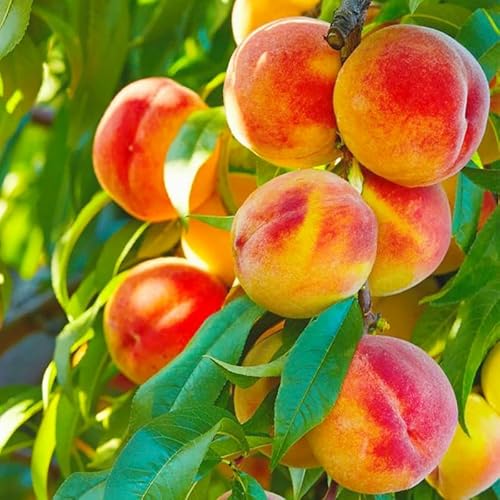
Peach trees produce fruit with multiple applications. The fruit can be enjoyed fresh and is also suitable for making jams, preserves, pies, and fruit salads.

Fragrant Flowers: Bloom blossoms that provide precious nectar for pollinators like bees, creating your own romantic orchard with heavy fruit and rich flavor
Pollination Requirements
Most peach trees require cross-pollination to set fruit effectively. This means you’ll need at least two different varieties of peach trees nearby. Variations such as ‘Elberta’ and ‘Red Haven’ work well together, enhancing fruit production. Some self-pollinating varieties, like ‘Contender,’ can still benefit from additional pollinators. Planting a mix of trees encourages better yields from the blossoms.
Timeframe for Fruit Development
The timeframe for a peach tree to produce fruit depends mainly on its age and variety. Typically, young peach trees take a few years to bear fruit:
- 1-3 years: In this juvenile stage, trees focus on root and foliage growth, often yielding little to no fruit.
- 4-6 years: As trees enter the young adult stage, you might see your first harvest, with production increasing each season.
- 7+ years: Once mature, a peach tree can produce consistently, yielding 50 to 100 pounds of fruit annually, depending on the variety and care.
Each tree’s environment plays a critical role. Factors like climate, soil quality, and maintenance can influence when your tree begins to bear fruit. By understanding these stages, you can better care for your peach tree, leading to fruitful rewards.
When Does a Peach Tree Produce Fruit?
Understanding when a peach tree produces fruit involves knowing the tree’s age, variety, and growing conditions.
Recommended Products

Do not plant in a container, only in the ground. All pictures are of fully grown plants. Sizes shipped are in the title and description. Deciduous plants do not have leaves in the winter.

Made for Peach Trees - This peach tree fertilizer is formulated specifically to support healthy growth and fruiting in peach trees.

Due to agricultural laws, we cannot ship to California, Arizona, Alaska, or Hawaii; orders will be cancelled if you ship to one of these states
Typical Harvest Times
Peach trees typically bear fruit between late spring and early fall, depending on the variety. Most trees produce fruit around July to August. For example, early-season varieties like ‘Red Haven’ yield fruit in July, while late-season types like ‘Elberta’ produce in September. Checking the specific variety can help you know when to expect your harvest.
Regional Variations in Fruiting
Regional differences significantly impact fruit production. In warmer climates, such as the Southern US, peach trees might start producing as early as their second or third year. In cooler regions, like the Northeast, fruiting may not happen until the tree’s fourth or fifth year. Additionally, frost can affect blooming times and fruit set, so researching your local climate and frost dates aids in successful peach production.
Common Issues Affecting Fruit Production
Various factors can hinder the fruit production of peach trees. Addressing these issues can help ensure a healthy and productive harvest.
Pests and Diseases
Pests and diseases can significantly impact your peach tree’s ability to produce fruit. Common pests include:
- Peach Tree Borer: Larvae tunnel into the trunk, weakening the tree. Monitor for signs like oozing sap and remove them promptly.
- Aphids: These small insects feed on sap, potentially causing leaf curl and stunted growth. Introduce beneficial insects like ladybugs to control the population.
- Brown Rot: This fungal disease attacks fruit, causing decay. Practice good sanitation by removing fallen and infected fruit to reduce spore spread.
Regular inspections and timely treatments can protect your tree from these threats, ensuring better fruit production.
Environmental Stressors
Environmental conditions play a crucial role in fruit production. Key stressors to consider include:
- Temperature Fluctuations: Extreme temperatures can affect blooming. Frost after blooming can damage flowers. Plant your tree in a sheltered location to mitigate this risk.
- Soil Quality: Poor soil can lead to nutrient deficiencies, inhibiting fruit set. Test your soil and amend as necessary to maintain a balanced pH and nutrient levels.
- Water Stress: Both overwatering and underwatering can impact fruit development. Ensure consistent watering through established routines, especially during dry spells.
By managing these environmental stressors effectively, you can enhance your peach tree’s chance of a bountiful harvest.
Conclusion
Growing a peach tree is a rewarding journey filled with excitement and patience. By understanding the different stages of growth and the factors that influence fruit production you can set realistic expectations for your harvest.
Remember that each tree is unique and may take a few years to start bearing fruit. With the right care and attention to environmental conditions you’ll be well on your way to enjoying delicious homegrown peaches.
Stay vigilant against pests and diseases and keep an eye on your tree’s health. Before you know it you’ll be savoring the sweet taste of your very own peaches right from the tree. Happy gardening!
Frequently Asked Questions
How long does it take for a peach tree to produce fruit?
Most peach trees begin to bear fruit between their second and fifth year, depending on the variety. Some trees may produce as early as two to three years, while others take up to five years to yield fruit.
What factors influence a peach tree’s fruit production?
Peach tree fruit production is influenced by its age, variety, and environmental conditions. Factors like climate, soil quality, and the need for cross-pollination from different varieties also play significant roles.
When are peaches typically harvested?
Peach harvest times usually range from late spring to early fall, with most varieties producing ripe fruit around July to August. Harvest time can vary based on the tree’s age and local climate.
What stages do peach trees go through before producing fruit?
Peach trees go through several stages: planting (root establishment), juvenile (1-3 years, minimal fruiting), young adult (4-6 years, beginning to harvest), and mature (7+ years, consistent production).
Do peach trees require pollination?
Yes, most peach trees require cross-pollination from different varieties to effectively set fruit. This is critical for fruit production, so planting compatible varieties nearby is recommended.
How can pests and diseases affect peach trees?
Pests like the Peach Tree Borer and diseases such as brown rot can severely hinder fruit production. Regular inspections and prompt treatments are essential for maintaining tree health and productivity.
What environmental factors can affect peach fruiting?
Temperature fluctuations, poor soil quality, and water stress can negatively impact peach fruiting. Careful management of these factors helps promote healthier trees and better yields.
