

Ever found yourself staring up at those overgrown branches, wondering how on earth you’re going to tackle them? You’re not alone. Long pole pruners can be a game-changer when it comes to reaching those lofty heights without breaking a sweat.
Picture this: You, effortlessly trimming those hard-to-reach branches from the comfort of the ground. No more teetering on wobbly ladders or risking life and limb climbing trees. With a long pole pruner in hand, you can conquer those unruly branches with ease.
In this article, we’ll walk you through the ins and outs of using a long pole pruner like a pro. Say goodbye to the days of struggling with tall trees and awkward angles. Get ready to elevate your pruning game and make those high-reaching branches bow down to your newfound expertise.
Choosing the Right Long Pole Pruner
When selecting a long pole pruner, consider the following factors:
Type of Blade:
- Bypass blades make clean cuts and are ideal for live branches.
- Anvil blades are suitable for deadwood but may crush live branches.
Length of Pole:
- Choose a pole length that allows you to reach the desired height without overextending.
Material:
- Opt for lightweight yet durable materials like fiberglass or aluminum for ease of use.
Cutting Capacity:
- Ensure the pruner can handle the diameter of branches you plan to cut.
- Look for features such as anti-slip grips and shock absorbers for a comfortable and safe pruning experience.
Remember, selecting the right long pole pruner tailored to your needs can make a significant difference in the effectiveness and ease of your tree trimming tasks.
Recommended Products
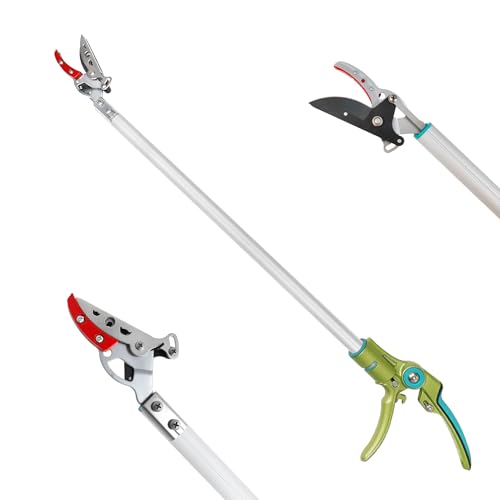
[REACH HIGH & STAY SAFE](No Ladder Required) Say goodbye to wobbly ladders! This 32inch long reach pole pruner offers an extra 30 inches of safe reach, allowing you to prune high branches or tall fruit trees while standing firmly on the ground. It’s the perfect extension tool for maintaining your backyard without the risk of falling.
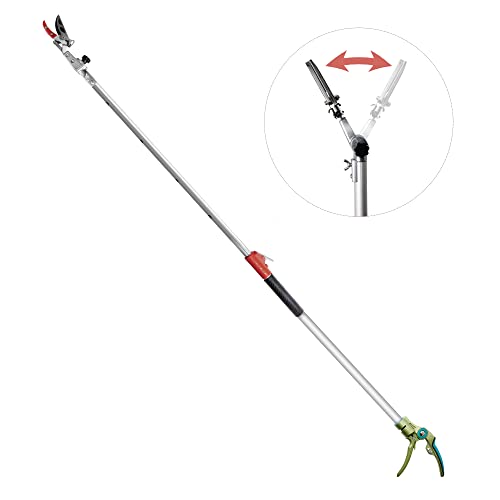
[Helpful Garden Tool] GARTOL brings to you a lightweight and extendable pruning tool to reach out to the least approachable arenas of your garden. You can conveniently get across other plants to remove the fastgrowing brambles and sting nettles without getting scratched or hurt. For gardening lovers, the telescopic pruner cutter head can can be rotated which resolves mobility issues and gives you the pleasure of trimming your garden without bending down or using a ladder to climb and cut them.
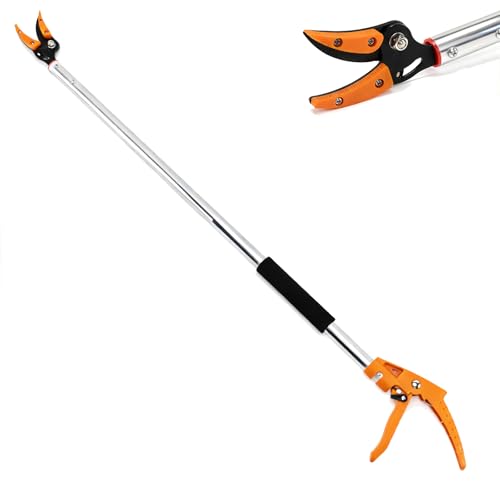
[Effortless High-Reach Pruning & Trimming]: Expertly designed for easy pruning of high branches, dense bushes, and delicate stems. At the same time, the fruits can also be harvested. The practical 3.5-foot (1.0-meter) extended reach allows you to trim and harvest fruit from the ground, eliminating strenuous bending, kneeling, or the need for a ladder, thereby enhancing both safety and efficiency.
Preparing for Pruning
When it comes to using a long pole pruner, preparation is key to a successful pruning session. Here are some steps to ensure you’re ready to tackle your tree trimming tasks effectively:
- Inspect Your Long Pole Pruner: Before starting, check for any damaged or dull blades that may need to be sharpened or replaced.
- Wear Safety Gear: Make sure to protect yourself with safety goggles, gloves, and a helmet to prevent any accidents while pruning.
- Survey the Area: Look around for any obstacles or power lines that could interfere with your pruning work.
- Adjust the Pole Length: Depending on the height of the tree branches you’ll be trimming, set the pole length of your pruner accordingly.
- Consider the Weather: Try to prune on a calm day to minimize the impact of wind on your cutting precision.
- Position Yourself: Stand at a safe distance from the tree to have optimal control over your pruner.
By properly preparing for your pruning session, you can ensure a safer and more efficient tree trimming experience.
Handling the Long Pole Pruner Safely
To handle a long pole pruner safely, remember these essential tips:
- Check the pruner for any damage before each use.
- Wear protective gear like gloves, goggles, and a helmet.
- Survey the area for obstacles that could interfere with your work.
- Adjust the pole to a comfortable length for better reach and control.
- Consider weather conditions – avoid pruning during windy or wet weather.
- Position yourself correctly for enhanced control and stability.
Always prioritize safety while using a long pole pruner – it’s the key to a successful and accident-free tree trimming experience.
Recommended Products

High-quality PR-20 Tree Pruner rope: Measuring 20 feet long, this product is a sturdy tree pruner rope that is compatible with Jameson Fiskars pruners.

TONYINGO All-in-One Pole Saw, Tree Trimmer & Pruner for High Branches: Our extendable manual pole saw functions as a complete branch cutter, tree trimmer, and pruner in one tool. The 5–20 FT adjustable pole reaches up to 26 FT overhead, letting you safely trim tall branches without climbing ladders

DATA:PLEASE READ BEFORE PURCHASING. Size(Including buckle)! Waist 30.7-51inch, Chest: 31.5-47.3inch, Leg: 19.6-39inch, fit weigh 130-310 pounds. Best for medium to large body, designed for construction & roofing work,not for rock climbing or hiking.
Techniques for Effective Pruning
When using a long pole pruner for tree trimming, effective pruning techniques are key to achieving desired results. Here are some tips to help you prune like a pro:
- Target Specific Branches: Focus on branches that are diseased, damaged, or crossing others to improve the tree’s health.
- Make Clean Cuts: Use sharp pruning tools to make smooth cuts that promote faster healing.
- Cut at the Right Angle: Aim for a 45-degree angle when pruning branches to prevent water from accumulating and causing rot.
- Avoid Over-pruning: Do not remove more than 25% of a tree’s foliage to prevent stress and damage.
- Step Back and Assess: Regularly step back to view your work from a distance to ensure even and balanced pruning.
Embracing these techniques will help you maintain the health and aesthetics of your trees through proper pruning practices.
Recommended Products

VERSATILE 2-IN-1 DESIGN: These pole saws for tree trimming combine a pruning saw for larger branches with a pull-rope tree pruner for smaller branches and twigs, giving homeowners one tool for routine garden and yard maintenance

2-In-1 for Versatile Tree Cutting: This 2-in-1 pole pruner with saw combines sharp pruning shears for smaller branches and a durable saw blade for thicker limbs, making it a practical tree pruning tool for various cutting needs. Designed as a manual pole saw and pruner combination, it allows you to trim twigs and branches efficiently while reaching higher tree limbs from the ground, reducing tool changes and improving overall pruning efficiency.

TONYINGO All-in-One Pole Saw, Tree Trimmer & Pruner for High Branches: Our extendable manual pole saw functions as a complete branch cutter, tree trimmer, and pruner in one tool. The 5–20 FT adjustable pole reaches up to 26 FT overhead, letting you safely trim tall branches
Maintenance and Storage Tips
Proper maintenance and storage of your long pole pruner are essential for longevity and optimal performance. Here are some tips to keep your tool in top shape:
- Before each use, inspect the pruner for any signs of damage.
- Clean the tool after each use to remove sap and debris.
- Oil the moving parts regularly to keep them lubricated.
- Store your pruner in a dry place away from direct sunlight to prevent rust.
Remember, a well-maintained long pole pruner not only lasts longer but also ensures efficient and safe pruning sessions.
Conclusion
You’ve learned the essential tips for safely handling a long pole pruner, from checking for damage to adjusting the pole length. Effective pruning techniques like targeting specific branches and making clean cuts are crucial. Remember to avoid over-pruning and assess your work for balanced pruning. Proper maintenance is key; inspect for damage, clean after each use, oil moving parts regularly, and store in a dry place away from direct sunlight. By following these guidelines, you’ll ensure a well-kept long pole pruner that guarantees efficient and safe pruning sessions.
Frequently Asked Questions
How should I handle a long pole pruner safely?
Handle a long pole pruner safely by checking for damage, wearing protective gear, and adjusting the pole length.
What are some effective pruning techniques to follow?
Effective pruning techniques include targeting specific branches, making clean cuts, cutting at the right angle, avoiding over-pruning, and assessing your work for balanced pruning.
What are some maintenance tips for a long pole pruner?
Proper maintenance tips include inspecting for damage before each use, cleaning the tool after each use, oiling moving parts regularly, and storing the pruner in a dry place away from direct sunlight to prevent rust.
