

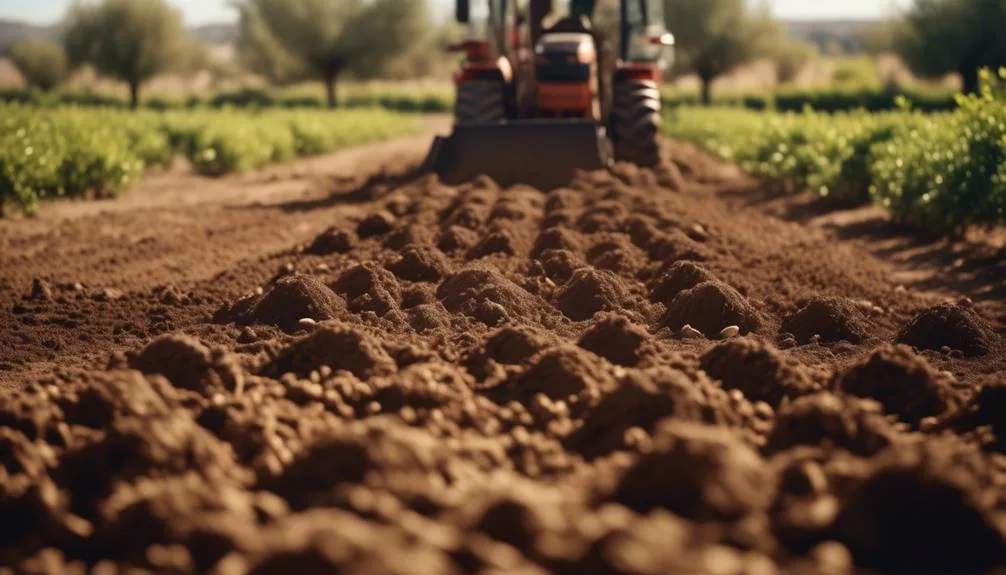
Growing almond trees in poor soil may seem daunting, but there are practical steps to improve the soil for these trees.
By testing the soil and making targeted amendments, you can create the ideal conditions for healthy almond trees.
Enhancing the soil's composition is key to transforming it into a thriving environment for almond trees.
With these strategies, you can significantly improve the soil and support the growth of thriving almond trees.
Key Takeaways
- Conduct a comprehensive soil test before planting almond trees to identify nutrient deficiencies and determine the soil composition.
- Supplement the soil with specific nutrients based on soil test results and incorporate organic matter like compost or manure.
- Implement a well-designed irrigation system for almond trees, promoting deep watering and minimizing water waste.
- Apply a 3-4 inch layer of organic mulch around the base of almond trees to benefit soil health and tree vigor.
Soil Testing for Almond Trees
Before planting almond trees, it's essential to conduct a comprehensive soil test to ensure optimal growing conditions. Nutrient deficiencies and soil composition greatly impact the health and yield of almond trees. A soil test will reveal if the soil lacks essential nutrients like nitrogen, potassium, or phosphorus, allowing you to make necessary amendments before planting.
Understanding the soil composition, whether it's sandy, loamy, or clay-based, is crucial as it affects drainage and nutrient retention. By testing the soil, you can create a tailored plan for your almond trees, ensuring they have the necessary nutrients for healthy growth. Knowing the soil composition also helps in determining the irrigation needs of your trees.
Therefore, conducting a thorough soil test is the first step towards creating a suitable environment for successful almond tree cultivation.
Soil Amendments and Nutrients
After conducting a comprehensive soil test for your almond trees, it's crucial to address any nutrient deficiencies and amend the soil to ensure optimal growing conditions. Here's what you need to do:
- Nutrient Supplementation: Based on the soil test results, identify the specific nutrient deficiencies and supplement the soil with the appropriate nutrients like nitrogen, phosphorus, and potassium to support the almond trees' growth.
- Organic Matter Incorporation: Integrate organic matter such as compost or well-rotted manure into the soil. This enhances soil structure, promotes beneficial microbial activity, and improves nutrient retention.
- Soil pH Adjustment: If the soil pH isn't within the ideal range for almond trees (around 6.0-7.5), consider incorporating amendments to adjust the pH levels accordingly.
- Mulching: Applying organic mulch around the base of almond trees helps conserve soil moisture, suppresses weed growth, and gradually enriches the soil as it decomposes.
Irrigation and Drainage Considerations
Consider implementing a well-designed irrigation system and ensuring proper drainage to maintain the health and productivity of your almond trees.
Effective irrigation management is crucial for almond tree health. Almond trees require regular, deep watering to promote healthy root growth and overall tree vigor. Drip irrigation systems are often preferred as they deliver water directly to the tree roots, minimizing water waste and reducing the risk of overwatering.
Additionally, proper drainage is essential to prevent soil compaction, which can hinder root development and nutrient uptake. To prevent soil compaction, consider incorporating cover crops, using mulch, and practicing no-till farming.
Adequate drainage also helps to prevent waterlogging, which can lead to root rot and other diseases.
Recommended Products

Be a Gardening Master with the help of our superior and complete Drip Irrigation Kit: 10 Drip Irrigation Emitters Vortex + 20 Drip Emitters Spray + 50ft flexible & durable 5/16 irrigation tubing + 50ft 1/4 inch Drip Irrigation Tubing + 12 tubing coupler + 5 ¼ Tubing Tee Splitter + Tubing End Plugs + Water Connector + 1 x Complete Instructions Guide Hard Copy + 2 Grow your Own Vegetables & Fruits Guide full with pieces of advice and practical tips Digital Format.

【Universal 1/4 Inch Size Set】- Designed for US market compatibility,MIXC new drip irrigation system set uses 1/4 inch (6mm) components to address potential mismatches with standard hoses, unlike some 5/16 inch systems. It includes 2-way connectors, tubing, and 3-way connectors to help users set up DIY garden irrigation more conveniently.

【Universal 1/4 Inch Size Set】- Designed for US market compatibility,MIXC new drip irrigation system set uses 1/4 inch (6mm) components to address potential mismatches with standard hoses, unlike some 5/16 inch systems. It includes 2-way connectors, tubing, and 3-way connectors to help users set up DIY garden irrigation more conveniently.
Mulching Techniques for Almond Trees
To maintain the health and productivity of your almond trees, implementing effective mulching techniques can provide numerous benefits for soil health and tree vigor.
When mulching your almond trees, consider the following:
- Mulch Depth: Apply a 3-4 inch layer of mulch around the base of the trees, ensuring it doesn't directly touch the trunks. This depth helps retain moisture and suppresses weed growth without suffocating the roots.
- Mulch Material: Opt for organic materials such as wood chips, straw, or compost. These materials break down gradually, enriching the soil and improving its structure.
- Mulch Placement: Ensure the mulch extends out to the drip line of the tree's canopy, covering the entire root zone.
- Mulch Maintenance: Regularly replenish the mulch layer as it decomposes to maintain the desired depth and benefits.
Soil Ph and Alkalinity Management
Maintain optimal soil pH and manage alkalinity to support the growth and nutrient uptake of your almond trees.
Regularly test the soil pH to ensure it falls within the ideal range of 6.0 to 7.0 for almonds.
If the soil is too acidic, consider applying lime to raise the pH level. Lime application helps to neutralize acidic soil and creates a more favorable environment for almond trees. Additionally, preventing acidic soil is crucial, as it can hinder the availability of essential nutrients to the trees.
Proper management of alkalinity is vital for ensuring that the soil provides a conducive environment for almond tree growth.
Conclusion
Incorporating these soil improvement techniques will create an optimal environment for your almond trees to thrive.
By testing the soil, adding the right amendments and nutrients, and managing irrigation and drainage, you can ensure the health and productivity of your trees.
Remember to maintain proper soil pH and alkalinity, and consider using mulching techniques to keep the soil fertile.
With these measures in place, your almond trees will flourish, providing you with a bountiful harvest for years to come.
