


Are you interested in creating your own almond tree orchard? Cultivating a successful orchard takes careful planning and understanding the needs of almond trees. From choosing the right location to managing pests, there are key elements to consider.
Where do you start, and what are the crucial factors? Let's explore the essential steps in creating and maintaining a thriving almond tree orchard.
Key Takeaways
- Conduct soil testing and microclimate analysis before selecting a location for the almond tree orchard.
- Prepare the soil by clearing debris, loosening it, and incorporating organic matter for improved fertility.
- Implement effective irrigation practices and understand the nutrient needs of almond trees.
- Prune and train the trees to promote healthy growth, maximize yield, and prevent the spread of pests and diseases.
Selecting the Right Location
Before planting an almond tree orchard, it's crucial to carefully select a location that provides optimal growing conditions for the trees. Start by conducting soil testing to ensure the soil is well-draining and has the right pH levels for almond tree cultivation. Additionally, perform a microclimate analysis to understand the temperature, sunlight, and wind patterns in the area. This will help in determining if the location is suitable for almond trees, which thrive in warm, dry climates.
The soil testing will also reveal the nutrient levels, allowing you to make any necessary amendments to the soil before planting. By conducting a thorough microclimate analysis and soil testing, you can identify the ideal location for your almond tree orchard, setting the stage for healthy and productive trees.
Preparing the Soil and Planting
Now, let's delve into the crucial steps of preparing the soil and planting your almond trees to ensure their successful growth and development.
Before planting, it's essential to prepare the soil properly. Almond trees thrive in well-drained soil with a pH level between 6.0 and 7.5. Start by clearing the area of any debris and weeds. Then, loosen the soil to a depth of at least 24 inches to facilitate root growth. Incorporate organic matter such as compost or well-rotted manure to improve soil structure and fertility.
When it comes to planting techniques, dig a hole that's twice as wide and just as deep as the root ball. Gently place the tree in the hole, making sure the root collar is level with the soil surface. Backfill the hole, tamp down the soil, and water thoroughly. This will provide the best start for your almond trees.
Irrigation and Nutrient Management
To ensure the successful growth and development of your almond trees, it's crucial to implement effective irrigation and nutrient management practices.
Water efficiency is key to providing the right amount of water to your almond trees while avoiding wastage. Consider using drip irrigation systems to deliver water directly to the root zone, ensuring that the trees receive adequate moisture.
When it comes to fertilizer application, understanding the specific nutrient needs of almond trees is essential. Regular soil testing can help determine the appropriate fertilizer blends and application rates.
Additionally, incorporating soil amendments such as organic matter or compost can improve soil structure and fertility, promoting healthy root development.
Recommended Products

Precision Watering for Healthier Plants: This drip irrigation system kit make you easily customize your watering with 16 flexible bendable misting arms that bend to any angle or height. Deliver water exactly where it’s needed—roots, stems, leaves, or flowers—so every plant gets the care it deserves. Promote stronger growth while reducing overwatering and plant disease.
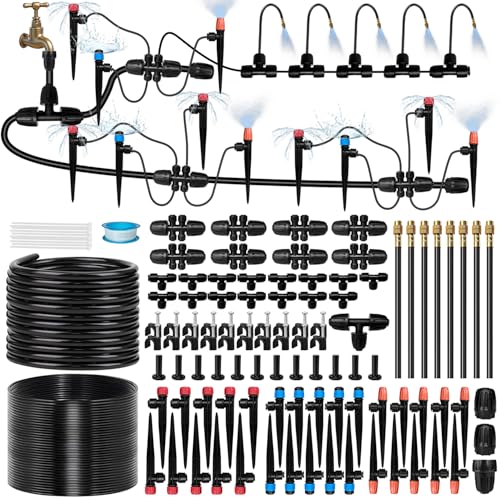
【Upgraded Tube Design & Water Saving】 Our garden watering system is upgraded to 1/2” diameter to support high water pressure. The 1/2” tee connector allows seamless splitting into 2 independent zones for customized watering schedules. By delivering moisture directly to root zones, this drip Irrigation system significantly reduces evaporation and runoff—saving more water compared to conventional sprinklers while eliminating the need for manual watering.

✔Comprehensive Drip Irrigation Kit:MIXC drip irrigation system, equipped with a versatile range of components, caters to all your garden watering needs.Includes essential parts such as 197ft 1/4'' irrigation tube, 33ft 1/2'' irrigation tube, 1/2‘’ Lock Barbed Tee connectors, drip emitter streams, vortex emitters, Blue Mist Nozzles, Quick connection tees, Faucet Connector, and more.
Pruning and Training the Trees
Prune and train your almond trees to promote optimal growth and fruit production, ensuring a healthy and robust orchard for years to come.
Proper pruning techniques are essential for shaping the tree structure and maximizing yield. Start by removing dead or diseased wood to prevent the spread of pests and diseases. Trim any crossed or overcrowded branches to improve air circulation and sunlight penetration.
Additionally, encourage lateral branching by cutting back the main stems, which promotes a balanced canopy and facilitates easier harvesting. Training the trees involves guiding their growth with careful pruning, ensuring a strong framework for supporting heavy fruit loads.
Pest and Disease Control
After shaping and training your almond trees to promote optimal growth and fruit production, it's crucial to implement effective pest and disease control measures to safeguard the health of your orchard.
Integrated pest and disease control involves a combination of preventive strategies such as selecting disease-resistant tree varieties, maintaining proper orchard sanitation, and regular monitoring for early detection of pests and diseases.
Organic pest and disease management techniques, including the use of beneficial insects, natural predators, and organic sprays, can help maintain a healthy balance in your orchard ecosystem.
It's essential to stay informed about common almond tree pests and diseases in your region and be proactive in managing potential risks.
Recommended Products

3-in-1 FORMULA: Aphid spray for outdoor plants for use on roses, flowers, shrubs and trees to control listed insects, disease and mites

3-IN-1 PLANT CARE: 3-In-1 Insect, Disease & Plant Mite Control provides insect control, disease control, and plant mite control all in one; Rainproof protection starts in 4 hours and lasts up to 14 days

INSECT KILLER: Army worm killer. Also kills insects such as Aphids, Spider Mites, Japanese Beetles, Caterpillars, and other listed insects
Conclusion
In nurturing your almond tree orchard with care and attention, you have laid the foundation for a thriving and fruitful future.
Location, soil preparation, and irrigation are key factors in ensuring the health and growth of your almond trees. By selecting a suitable location with adequate sunlight and well-draining soil, you have provided the optimal environment for your trees to flourish. Proper soil preparation, including soil testing and amendment, promotes strong root development and nutrient uptake. Regular irrigation, tailored to the specific needs of almond trees, ensures that they receive adequate water for growth and fruit production.
Equally important is providing the necessary nutrients for your almond trees. Through regular fertilization, you can ensure that your trees have access to the essential elements they need to thrive. Soil and leaf analysis can help determine any nutrient deficiencies and guide your fertilization program.
Pruning is another critical aspect of almond tree care. Regular pruning helps maintain tree structure, allows for better air circulation and sunlight penetration, and promotes healthy growth and fruit production. By removing dead or diseased branches and shaping the tree's canopy, you can ensure optimal tree health and maximize yields.
Pest control is an ongoing challenge in almond orchards. Regular monitoring and early detection are essential for managing pests and diseases effectively. Integrated pest management (IPM) practices, including cultural controls, biological controls, and judicious use of pesticides, can help keep pest populations in check while minimizing environmental impact.
With patience and dedication, your efforts will soon be rewarded with a bountiful harvest of delicious and nutritious almonds. Here's to the success of your orchard and the joy it will bring for years to come. Happy growing!
