

Choosing the right papaya tree variety is crucial for a successful garden. With so many options available, it can be overwhelming. We're here to help you navigate the choices and find the perfect match for your needs.
Whether you're dealing with specific climate conditions, limited space, or have particular fruit preferences, we've got you covered. Stay tuned to learn how to choose the right papaya tree variety for your garden.
Key Takeaways
- Choose a papaya variety with good frost tolerance if you live in an area with occasional frost.
- Papayas thrive in well-drained soil with a pH range of 5.5 to 7 and prefer slightly acidic to neutral pH levels.
- Consider the humidity levels in your area, as papaya trees thrive in moderately humid environments.
- Evaluate the fruit quality by taste testing fruits from different varieties and considering factors such as ripeness indicators, size, shape, texture, and sweetness.
Consider Your Climate
Before choosing a papaya tree variety, it's crucial to consider your climate to ensure the tree thrives in your specific environment. Papayas thrive in well-drained soil with a pH range of 5.5 to 7, and they require full sunlight for at least six hours a day.
If you live in an area with occasional frost, consider choosing a papaya variety with good frost tolerance to protect your tree during colder months. Additionally, papayas prefer areas with moderate to high humidity, so if you live in a dry climate, it's important to provide adequate moisture for the tree to flourish.
Understanding your local soil conditions, sunlight availability, frost tolerance, and humidity levels is essential for selecting the right papaya tree variety that will thrive in your specific climate.
Assess Your Space
Assessing your space for a papaya tree involves considering factors such as sunlight availability, soil conditions, and humidity levels, all of which are crucial for selecting the right variety that will thrive in your specific climate.
Maximizing sunlight is essential for papaya trees, so choose a location with full sun exposure for at least six hours a day.
Papayas prefer well-draining soil with a slightly acidic to neutral pH level, so it's important to assess your soil conditions to ensure it meets these requirements. Conduct a soil test to determine its pH and nutrient levels.
Additionally, consider the humidity levels in your area, as papaya trees thrive in moderately humid environments.
Determine Your Preferences
Consider your preferences for fruit size, flavor, and ripening time when choosing a papaya tree variety that best suits your tastes and needs. Understanding your taste and requirements will help you make the right choice.
Here are some key factors to consider:
- Size: Do you prefer larger or smaller fruits?
- Flavor: What flavor profile are you looking for? Sweet, mild, or intense?
- Check Maturity: How soon do you want your papayas to ripen? Consider the time it takes for different varieties to reach maturity.
- Yield: How much fruit do you want your tree to produce? Some varieties are known for high yields, while others produce fewer but larger fruits.
Recommended Products

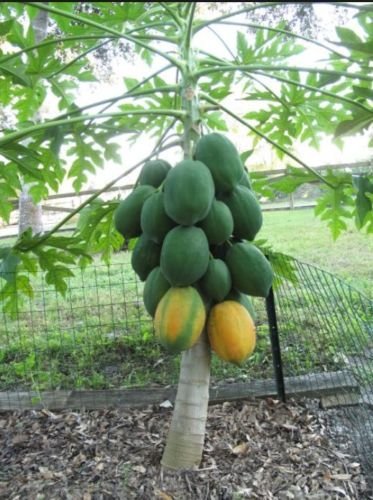
Here are 10 Dwarf Waimanalo papaya seeds (And we always throw in a few extra!). These seeds are very fresh and were just harvested. The Dwarf Waimanalo papaya is an uncommon variety of dwarf papaya that tastes extremely sweet and delicious.

Imagine stepping into your garden and seeing a fast-growing tropical plant that transforms your outdoor space into something vibrant, productive, and full of life. This Papaya Tree Seedling gives you exactly that opportunity.
Research Disease Resistance
To ensure that your chosen papaya tree variety thrives, it's crucial to consider its disease resistance. This can significantly impact the tree's overall health and fruit production. Look for varieties that exhibit strong pest resistance and are known for producing fruits of desirable size.
Disease-resistant papaya trees are better equipped to withstand common pests and diseases. This ensures a healthier and more robust tree. Additionally, consider the soil compatibility and yield potential of the variety. Some varieties may thrive in specific soil conditions, so understanding the soil compatibility can contribute to the overall success of your papaya tree.
Evaluate Fruit Quality
When choosing a papaya tree variety, it's important to closely evaluate the fruit quality to ensure a bountiful and delicious harvest. To make the right choice, consider the following factors:
- Taste testing: Sample the fruits from different varieties to determine which flavor profiles you prefer.
- Ripeness indicators: Look for varieties with clear ripeness indicators, such as changes in skin color, firmness, and aroma.
- Fruit size and shape: Consider the size and shape of the fruits, as this can impact their utility and presentation.
- Texture and sweetness: Assess the texture and sweetness of the fruits, as these qualities contribute significantly to the overall eating experience.
Conclusion
In choosing the right papaya tree variety, consider your climate, space, preferences, disease resistance, and fruit quality. By carefully assessing these factors, you can select a variety that thrives in your environment, fits your space, meets your taste preferences, and resists common diseases.
With the right papaya tree variety, you can enjoy delicious, homegrown papayas for years to come, creating a fruitful and satisfying garden experience.
