

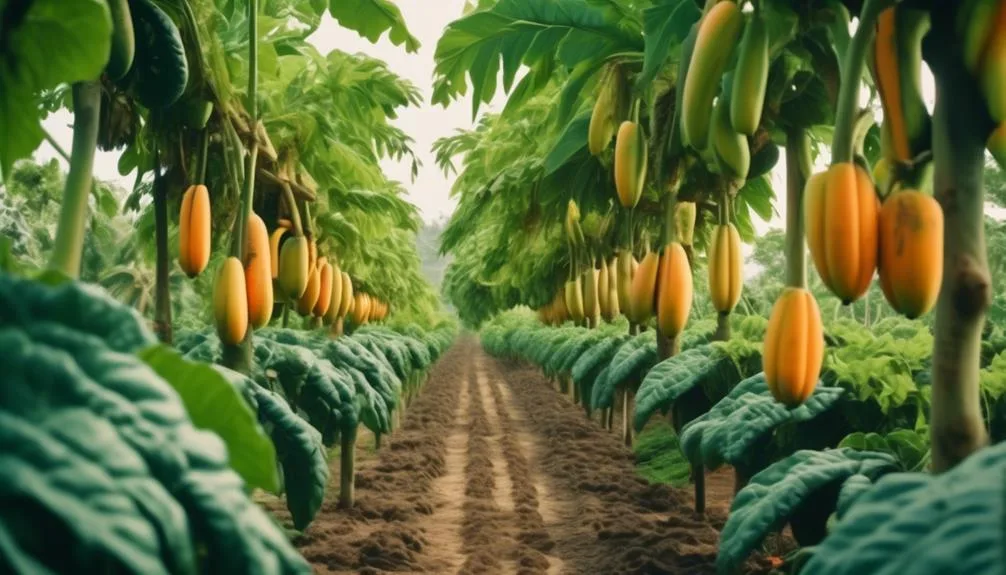
Papaya trees are essential in tropical agriculture for many reasons. Their disease resistance, high productivity, nutritional value, and economic importance make them crucial to sustaining agriculture in tropical regions. These trees are not just a pretty sight in the orchard; they play a vital role in supporting farming in these areas.
But their significance goes beyond just these points.
Key Takeaways
- Papaya trees exhibit impressive disease resistance and improved genetics, reducing the need for chemical pest control and resulting in higher yields and better fruit quality.
- Papaya trees have a quick growth cycle, high productivity, and adaptability to various soil types and climate conditions, contributing to the economic viability of tropical agricultural systems.
- Papayas are rich in vitamin C, digestive enzymes, folate, fiber, and antioxidants, making them suitable for various culinary uses and promoting overall health in tropical regions.
- Papaya trees have significant economic importance due to high market demand for their fruit, providing a reliable source of income for farmers. Additionally, their by-products such as seeds and leaves have various commercial applications.
Disease Resistance
Papaya trees exhibit impressive disease resistance, making them an ideal choice for tropical agriculture. Their improved genetics have played a significant role in enhancing this resistance, making them less susceptible to common diseases that affect other crops in tropical regions.
This attribute not only reduces the need for chemical pest control but also ensures a more sustainable and environmentally friendly farming practice. The ability of papaya trees to fend off diseases contributes to higher yields and better fruit quality, making them a valuable asset for farmers in tropical areas.
High Productivity
With its rapid growth and abundant fruit production, papaya trees are known for their high productivity in tropical agricultural settings. This high productivity leads to increased yields and agricultural efficiency, making papaya trees an essential component of sustainable farming practices.
Here's why papaya trees are so productive:
- Fast Growth: Papaya trees have a quick growth cycle, allowing for multiple harvests in a year.
- Abundant Fruit Production: A single papaya tree can produce a large number of fruits, contributing to high overall yields.
- Adaptability: Papaya trees are adaptable to various soil types and climate conditions, further enhancing their productivity.
The combination of these factors not only ensures a consistent supply of nutritious fruit but also contributes to the economic viability of tropical agricultural systems.
Nutritional Value
Known for their high productivity in tropical agricultural settings, papaya trees also offer impressive nutritional value to complement their prolific fruit production.
The vibrant orange flesh of papayas isn't only delicious but also packed with essential nutrients. Rich in vitamin C, papayas are known to boost the immune system and promote skin health. They also contain a digestive enzyme called papain, which aids in digestion and can help reduce bloating and inflammation. Additionally, papayas are a good source of folate, fiber, and antioxidants, making them a valuable addition to a healthy diet.
Their sweet, tropical flavor makes them a versatile ingredient in culinary uses, including salads, smoothies, salsas, and desserts.
With such remarkable nutritional benefits and culinary uses, papaya trees play a pivotal role in promoting overall health in tropical regions.
Economic Importance
An integral component of tropical agricultural economies, papaya trees contribute significantly to the economic importance of the region through their widespread cultivation and commercial value.
The economic impact of papaya trees is substantial, driven by high market demand for their fruit, which is used in various food products and juices. Additionally, papaya trees have a relatively short time to maturity, allowing for multiple harvests in a year, further enhancing their economic significance.
Their ability to thrive in diverse climatic conditions makes them a reliable source of income for farmers, contributing to the stability of tropical agricultural economies.
Moreover, the by-products of papaya trees, such as seeds and leaves, have various commercial applications, adding to their economic value.
Environmental Benefits
Papaya trees provide valuable environmental benefits, fostering biodiversity and supporting ecosystems through their role as a habitat and food source for diverse wildlife. Their fallen leaves and fruit create a rich environment for soil enrichment. This aids in maintaining soil fertility and moisture levels, crucial for sustaining diverse plant and animal life.
Furthermore, papaya trees contribute to biodiversity conservation by providing shelter and sustenance for various insects, birds, and small mammals. In addition, these trees play a significant role in carbon sequestration, helping to mitigate climate change. They absorb carbon dioxide during photosynthesis and store carbon in their biomass, thus aiding in climate regulation.
Conclusion
Overall, papaya trees are indispensable in tropical agriculture. They offer disease resistance, high productivity, and valuable nutritional and economic benefits.
Their ability to thrive in tropical climates makes them essential for sustainable farming. With their significant contributions to both farmers and communities, papaya trees are vital for ensuring food security and economic stability in tropical regions.
