

Have you ever wondered how long it takes for a banana tree to bear fruit? If you’ve planted one in your backyard or just dream of growing your own bananas, you’re not alone. Many people are eager to know when they can expect those delicious, yellow fruits to appear.
Key Takeaways
- Life Cycle Insight: Banana trees typically take 9 to 12 months to flower, followed by 2 to 3 months for fruit maturation, resulting in an overall timeframe of about 12 to 15 months from planting to harvest.
- Variety Matters: Different varieties of banana trees, such as Cavendish and Red Dacca, have varying fruiting times, with some bearing fruit as early as 10 months and others taking up to 15 months.
- Key Environmental Factors: Optimal growth conditions, including warm temperatures (75°F to 95°F), sufficient sunlight (6 to 8 hours daily), and well-draining, nutrient-rich soil, are crucial for quicker fruit development.
- Water and Nutrition: Regular watering (1 to 2 inches per week) and the use of high-potassium fertilizers every 6 to 8 weeks are essential for supporting robust fruit production in banana trees.
- Pest Management: Vigilant monitoring for pests like aphids and spider mites, along with disease prevention practices, helps maintain the health of banana trees and promotes better fruit yields.
- Harvest Planning: Understanding the specific timeline and requirements for the selected banana variety can help set realistic expectations for each growing season.
Understanding Banana Trees
Banana trees are unique plants that play a significant role in many gardens. They produce fruit in a fascinating way, and understanding their growth helps you anticipate when you’ll see bananas.
Life Cycle of Banana Trees
Banana trees undergo distinct life stages. The cycle begins with a seed or a sucker. From there, a shoot emerges and grows into a pseudostem. After about 9 to 12 months, you’ll see flowering, followed by fruit development. This entire life cycle can vary based on climate and care.
- Sucker Development: This occurs when you plant a banana sucker, which develops roots and starts growing.
- Pseudostem Formation: After a few weeks, the pseudostem rises, reaching heights of up to 12 feet if conditions are optimal.
- Flowering Stage: About 9 months post-planting, the plant flowers. At this point, you’ll notice a cluster of blossoms.
- Fruit Maturation: Bananas will appear within 2 to 3 months after flowering. During this time, the fruit will develop and ripen.
Understanding these stages helps you care for your banana plant effectively and know what to expect as it grows.
Factors Affecting Fruit Development
Several factors influence how quickly a banana tree fruits. Understanding these elements helps you optimize conditions for your plants.
Recommended Products

PREMIUM FUEL LIQUID FERTILIZER: Wellspring Gardens Banana Fuel Liquid Fertilizer Concentrate provides a quality nutrient blend with minor elements that could grow your plants. Its 3-1-6 formula ratio is the ideal fertilizer ration according to University of Florida which is what our product is made of.

2X MORE VALUE: The 16 oz bottle of Banana Plant Fertilizer makes 16 gallons of banana fertilizer for fruit trees, while the bigger size 32 oz bottle makes 32 gallons for lasting care of your banana trees.
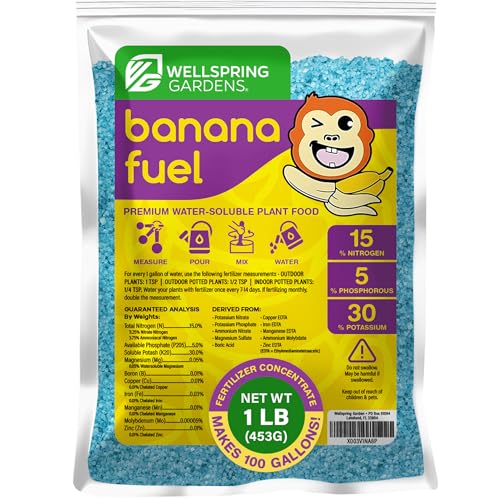
PREMIUM WATER SOLUBLE FERTILIZER: Wellspring Gardens Banana Fuel Fertilizer provides a water-soluble and high-quality nutrient blend with minor elements to promote optimal growth for your banana plants. Its premium 15-5-30 blend ensures that your banana plants are healthy and happy.
Variety of Banana Tree
Variety plays a significant role in fruiting time. Different banana tree varieties bear fruit at varying rates. For instance, the Cavendish variety commonly takes about 9 to 12 months to flower, while the Red Dacca variety might take a bit longer. If you’re growing a specific type, research its fruiting timeline to set your expectations accurately.
Environmental Conditions
Environmental conditions heavily affect fruit development. Key factors include:
- Temperature: Banana trees thrive in warm temperatures, ideally between 75°F and 95°F (24°C to 35°C). Consistently cooler temperatures can delay fruiting.
- Light: Full sunlight is crucial. Make sure your banana tree receives at least 6 to 8 hours of sunlight daily to promote flowering and fruit growth.
- Water: Regular watering is essential. The soil should remain moist but not waterlogged. Aim for a balanced irrigation plan, ensuring your banana tree gets about 1 to 2 inches of water per week.
- Soil Quality: Nutrient-rich soil supports healthy growth. Use well-draining soil with ample potassium and nitrogen. Fertilizing regularly can enhance your tree’s health and fruit yield.
By managing these factors effectively, you can encourage your banana tree to bear fruit sooner, maximizing your harvest potential.
Timeline for Banana Tree Fruit Production
Understanding the timeline for banana tree fruit production helps you set realistic expectations for your gardening efforts. Here’s a detailed look at the timeframes involved in this process.
Average Timeframes
Banana trees typically take between 9 to 12 months to flower after planting. After flowering, you’ll see bananas develop within 2 to 3 months. Overall, from planting to first harvest, it generally takes about 12 to 15 months for bananas to reach maturity. A good example is the Cavendish variety, which is one of the most commonly cultivated types. It thrives in optimal conditions and often produces fruit around the 12-month mark.
Early and Late Bloomers
Some varieties of banana trees exhibit different fruiting times. Early bloomers often bear fruit within 10 to 12 months, while late bloomers may take up to 15 months. For instance, the Red Dacca matures more slowly, requiring closer to 15 months before you can harvest your bananas. Selecting the right variety based on your timeline preference makes a significant difference in your gardening experience. Factors such as climate, soil, and care can further influence how quickly your banana tree produces fruit.
Care Tips for Healthy Fruit Production
Healthy fruit production in banana trees involves careful attention to watering, nutrition, and pest management. Following these care tips ensures your banana trees flourish and produce abundant fruit.
Recommended Products

Made for Banana Trees – Specially formulated banana fertilizer designed to support the nutrient needs of banana plants.

Let our professionally formulated plant food help your fruit tree grow healthy, strong AND abundantly producing

🌿 BALANCED 6-4-6 FORMULA FOR HEALTHY PLANTS: Give your plants balanced nutrition with a professional 6-4-6 NPK fertilizer formulated to support strong roots, greener foliage, healthy leaf development, flowering, and vigorous overall growth. A versatile plant food for a wide variety of indoor and outdoor plants.
Watering and Nutrition
Water consistently, as banana trees thrive in moist soil. Aim for 1 to 2 inches of water per week, adjusting based on climate. Use mulch to retain moisture and regulate soil temperature.
Feed your banana trees with a balanced fertilizer every 6 to 8 weeks. Choose a fertilizer high in potassium, which supports fruit development. Organic options like compost or well-rotted manure also enhance soil health, providing essential nutrients.
Pest and Disease Management
Monitor your banana trees for common pests like aphids and spider mites. Use insecticidal soap or neem oil to treat infestations promptly. Early intervention minimizes damage and keeps your plants healthy.
Inspect for signs of disease, such as yellowing leaves or black streaks on fruits. Practice good sanitation by removing dead leaves and debris around the base. Rotate planting locations each season to prevent soil-borne diseases.
Implementing these care tips leads to healthier banana trees and quicker fruit production, maximizing your harvest potential.
Conclusion
Growing banana trees can be an exciting journey filled with anticipation. With a little patience and the right care you can enjoy the thrill of watching your trees flourish and eventually bear fruit. Remember to choose the right variety for your timeline and pay attention to the environmental factors that can influence growth.
By nurturing your banana trees with consistent watering proper nutrition and pest management you’ll set the stage for a fruitful harvest. So keep an eye on your plants and soon enough you’ll be savoring the sweet rewards of your hard work. Happy gardening!
Frequently Asked Questions
How long does it take for a banana tree to bear fruit?
Typically, a banana tree takes about 12 to 15 months from planting to harvest. They generally flower within 9 to 12 months, with bananas developing within 2 to 3 months after flowering.
What are the stages of a banana tree’s life cycle?
The life cycle of a banana tree includes sucker development, pseudostem formation, flowering, and fruit maturation. Each stage is crucial for the eventual production of bananas.
What factors influence banana fruit development?
Factors such as banana variety, temperature, light, water, and soil quality significantly influence fruit development. Managing these elements can help encourage quicker fruit production.
Which banana varieties have different fruiting timelines?
The Cavendish variety often produces fruit around the 12-month mark, whereas early bloomers may bear fruit in 10 to 12 months. The Red Dacca variety may take up to 15 months.
How can I care for my banana trees to encourage fruit production?
To optimize fruit production, maintain moist soil with 1 to 2 inches of water weekly, use a balanced fertilizer high in potassium every 6 to 8 weeks, and monitor for pests and diseases.
