


I like to change up my home decor with crochet items when the weather turns cooler.
Leaf motifs have become one of my go to choices for adding texture to pillows.
They are simple enough to repeat but still look detailed once finished.
I collected some patterns that use these motifs in different ways.
You might find one or two that suit what you are looking for this season.
Pumpkin Pillow Built from Wedge Sections and Leaf Appliqués

A large spherical pillow worked in vertical wedges of rust-orange yarn forms the base shape that suggests a pumpkin without extra shaping. Individual leaf motifs in cream, mustard, and gold are crocheted separately then sewn on at scattered spots to create texture and color contrast across the surface. A small brown stem piece at the top completes the outline. This approach fits the decor category and lets the maker control exactly where the leaves land.
What makes this idea useful is that the wedge construction gives natural segmentation so the pillow holds its rounded form even when stuffed firmly. The separate leaves allow quick color swaps or additions if the first layout feels sparse. Scale the finished size down for a lumbar cushion or keep it large for a floor seat. The same leaf set can be used on a flat rectangular pillow if a pumpkin shape no longer fits the room.
Oversized Oak Leaf Appliqué Pillow

This project applies a large oak leaf motif as an appliqué onto a basic square pillow cover. The leaf is built from separate sections in green and rust tones, then stitched down with visible veins in a darker brown to define the shape. The neutral background keeps the focus on the leaf’s outline and texture changes across the lobes.
What makes this idea useful is the appliqué method that lets you finish the pillow base quickly before adding the leaf. You can resize the motif for smaller cushions or repeat it across a larger throw. For decor, this kind of shape works especially well on plain furniture where a single bold element stands out without extra stitching.
Bolster Pillow with Rows of Leaf Motifs
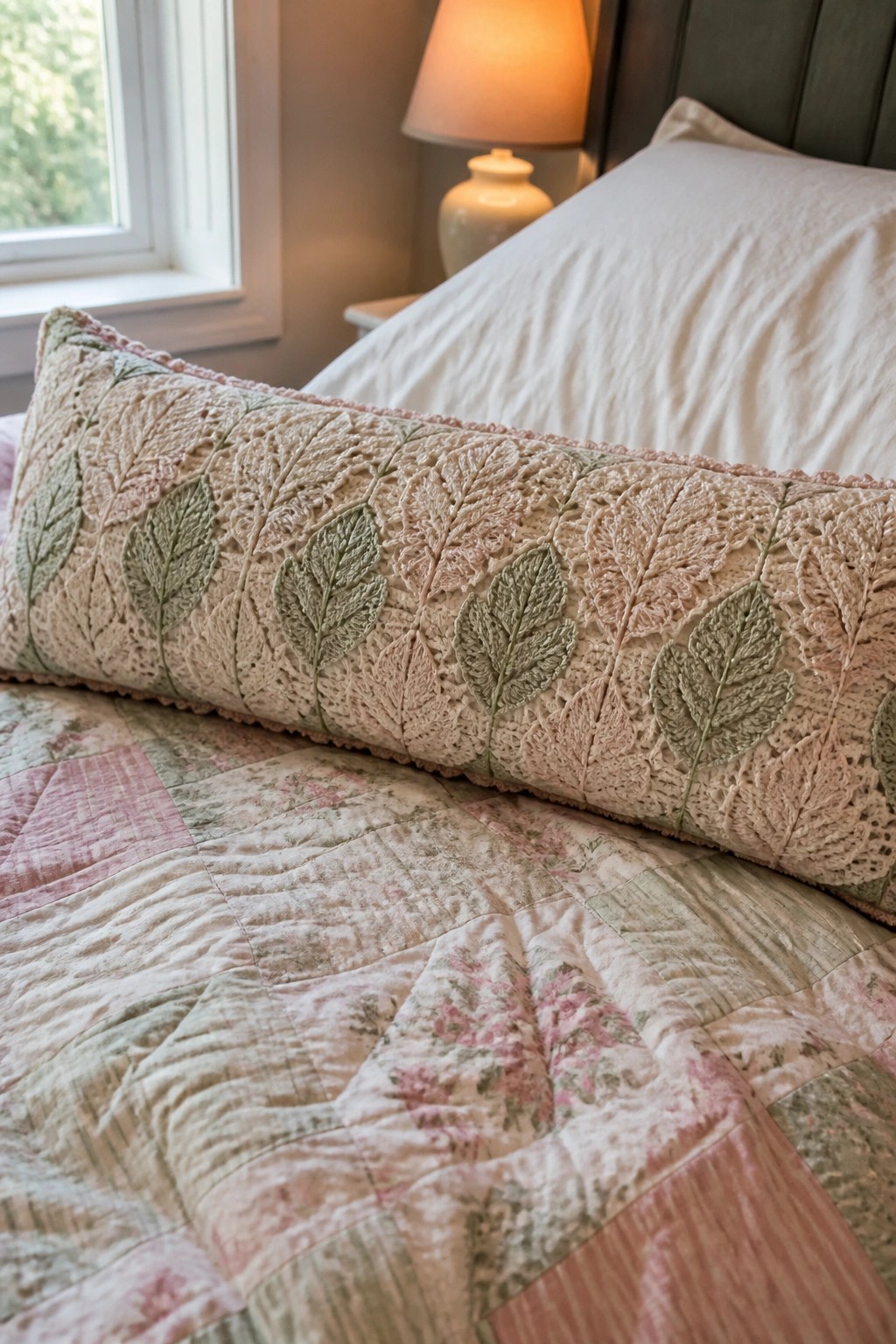
A long bolster pillow covered in repeating leaf shapes gives a simple way to add seasonal texture to bedding. The leaves sit in offset rows across the surface, some filled solidly in green while others stay openwork in cream to create contrast. The rectangular form lets the pattern run lengthwise without crowding, and the border keeps the edges tidy. This approach fits the decor category because the scale works on a bed or couch where smaller pillows would get lost.
What makes this idea useful is the way the length balances stacks of square pillows behind it. You can shorten the repeat to fit a smaller insert or swap the green tones for deeper rust shades if the room needs more warmth. For gifts, a design like this stands out because the motif repeat looks planned even if you stop at a basic number of rows. The structure makes this a smart option for practicing even tension on a flat piece before seaming it around a form.
Maple Leaf Appliques on a Neutral Pillow Base

This project uses three separate maple leaf shapes worked in textured stitches and then sewn onto a plain cream pillow cover. The leaves sit at different angles and use three distinct autumn shades against a light background with a narrow teal border. The simple rectangular shape and even spacing keep the focus on the dimensional leaf details rather than on complicated background patterning. It fits squarely in the seasonal home decor category.
What makes this idea useful is that the applique method lets you finish the pillow cover first and add the leaves afterward. You can swap the three colors for any fall palette or reduce the number of leaves to two for a smaller pillow. The design works especially well on solid or lightly textured bases because the raised leaves provide the main visual interest. For gifts, a design like this stays quick to repeat once you have the leaf pattern memorized.
Heart Pillow with Layered Leaf Motifs

A heart-shaped pillow works well as a fall decor piece when covered in a spiral-stitched base and trimmed with raised leaf motifs. The leaves are worked in a contrasting lighter tone and placed along the curves to follow the shape without crowding the center. This placement keeps the spiral visible while adding texture through the leaf clusters. The project sits in the decor category and can rest on a sofa or bed as a seasonal accent.
What makes this idea useful is the way the heart shape lets you use fewer leaves while still showing the motif clearly. You can swap the leaf colors for deeper fall shades or make the pillow in a smaller size to stack with other cushions. The flat back means it is simple to stuff and close without extra finishing steps. For gifts, the same leaf layout works on a round or square base if a heart feels too specific.
Textured Leaf Appliqués on Neutral Square Pillows

Crochet square pillows with centered leaf appliqués give a clean way to highlight different stitch textures. One leaf uses tight horizontal ridges for an elongated shape, another builds rounded clusters with bobbles, and the third forms separate lobes with raised stitches. The leaves are worked separately then sewn onto solid bases in cream, gray, and sage green. This keeps the project simple while letting the leaf details stand out.
The small scale makes these pillows quick to customize for different rooms. You can change just the leaf texture or background color to match existing decor without starting over. The appliqué method also works well if you want to make a set of three or four pillows that still look coordinated. For gifts, a design like this finishes fast and travels easily.
Gradient Leaf Appliqué Pillow Cover

A set of crocheted leaves in shifting autumn shades forms the main design on this pillow cover. The leaves are made separately with raised stitch texture along the center and edges, then layered and attached to a plain fabric base in a branching arrangement. This approach keeps the project in the decorative pillow category and lets the color changes carry the visual interest without covering the entire surface.
What makes this idea useful is the way separate leaves allow easy color swaps to match existing room tones or seasonal shifts. The compact size of the motif means you can test the pattern on a single pillow before committing to a set. For decor, this kind of shape works especially well on neutral fabric so the leaves remain the focus. You could also repeat just two or three leaves on a smaller lumbar pillow or adapt the same leaf template for a throw blanket border.
Acorn Pillows with Leaf Appliques

Crochet acorn pillows use a rounded base joined to a separate cap section to create the full nut shape. A leaf motif worked as an applique adds raised texture when attached to the front surface. The same leaf pattern can be turned into its own pillow to form a matching set. Color changes between the base and cap keep the design simple while the leaf supplies the main visual detail.
The small scale makes this easy to adapt for different yarn weights or to produce several pillows at once. For decor, this kind of shape works especially well tucked into a basket or placed along a bench. You can change the leaf size or vein layout to match other textiles in the room without rewriting the whole pattern. A project like this finishes quickly enough to make a full set for seasonal use.
Gradient Leaf Texture Pillow
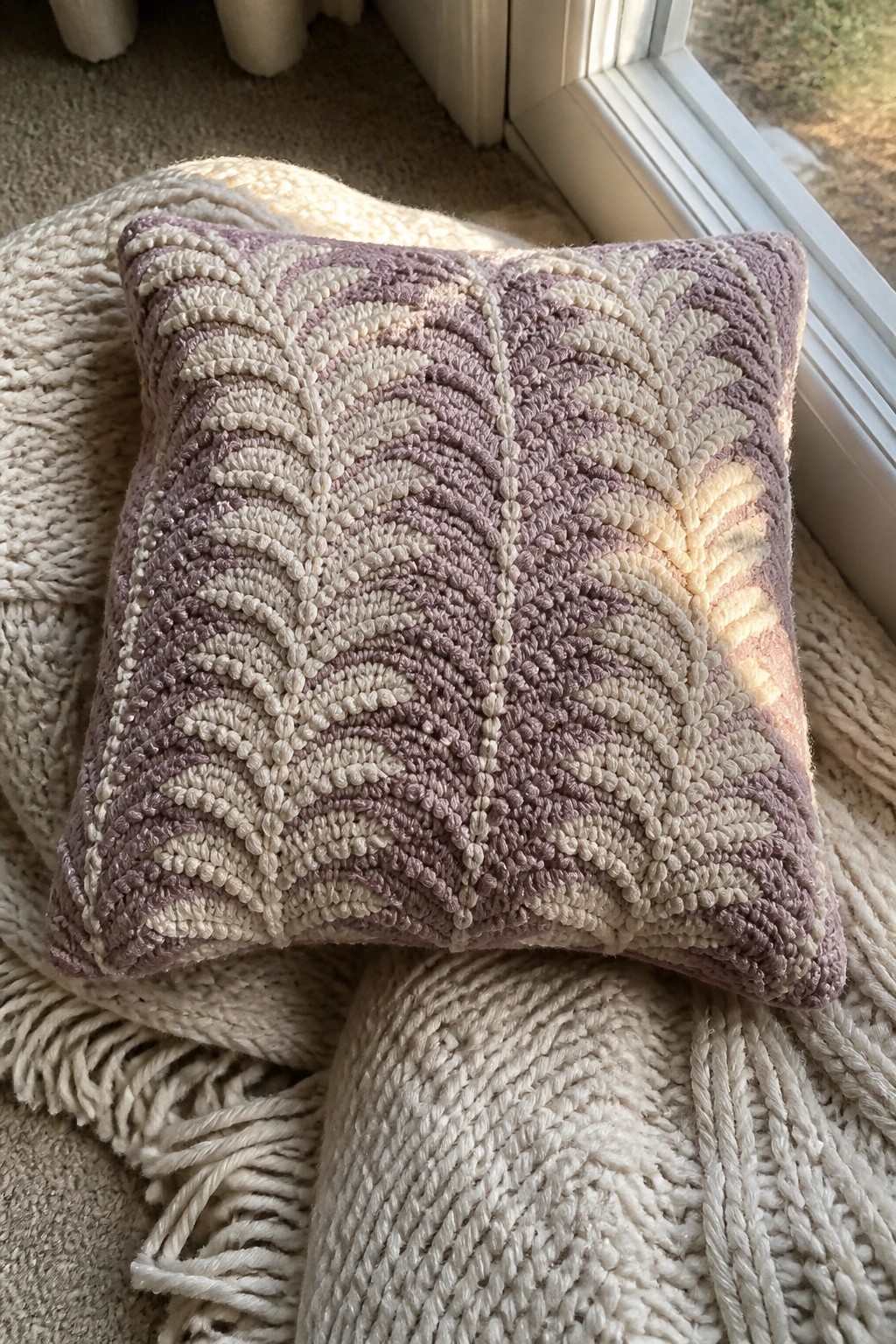
A square pillow cover built from repeating rows of raised leaf shapes creates a flowing wave effect across the surface. The pattern uses a soft shift from cream to lavender yarn to highlight the texture without needing extra colorwork. This fits neatly into fall decor as a textured accent for a couch or chair.
What makes this idea useful is the way the leaf repeats adapt to any pillow size by simply adjusting the starting chain. You could swap in deeper rust or olive tones for a richer seasonal look or keep the neutral palette for year-round use. A project like this works especially well as a fast cover to refresh existing inserts.
Textured Leaf Pillow in Two Colors
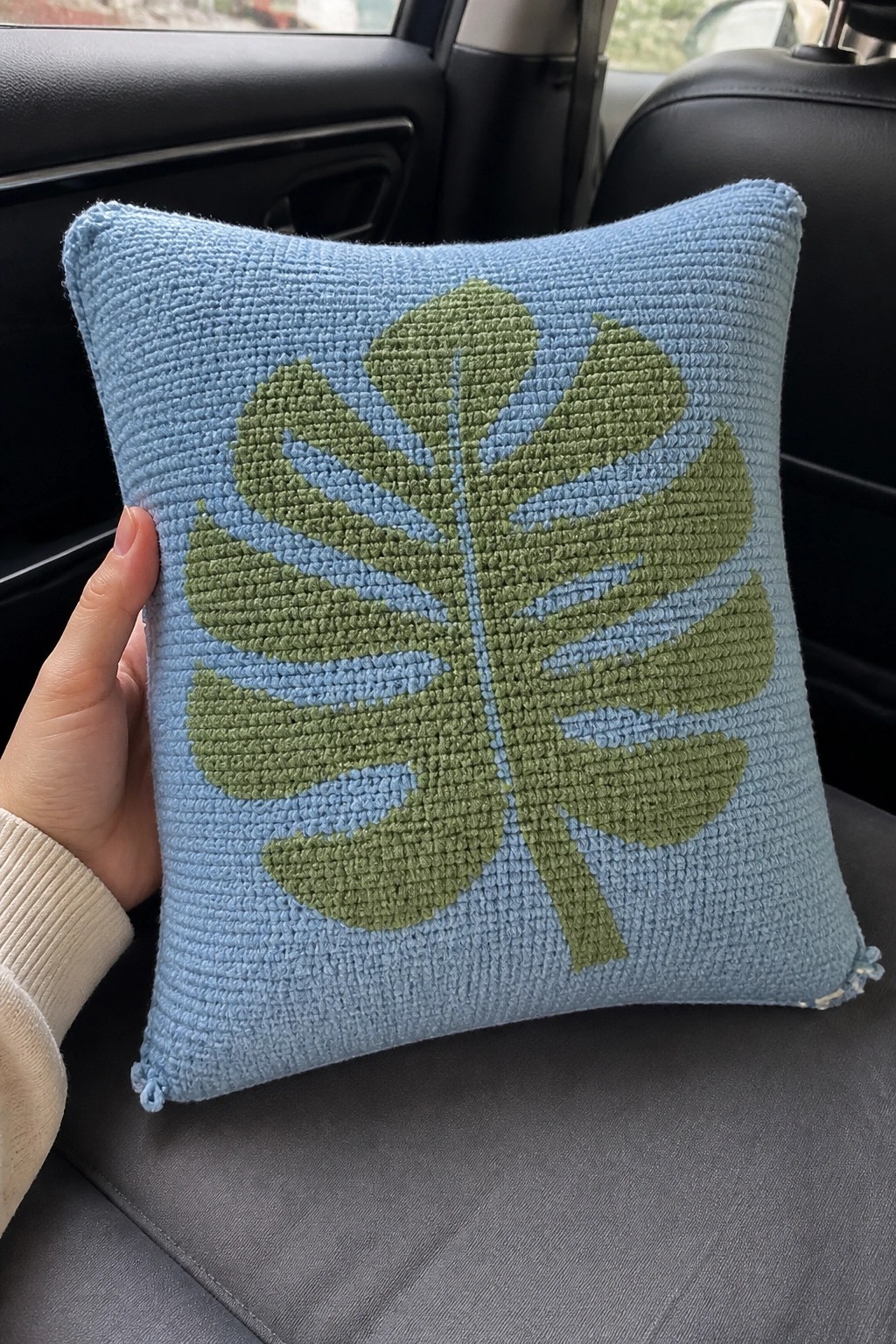
A square pillow cover uses a dense, even crochet stitch to create a solid base in light blue, with a large multi-lobed leaf worked in green yarn across the front. The leaf shape is formed by leaving sections of the background color to define the lobes and central vein, producing clear outlines without extra outlining stitches. This method keeps the design simple while making the motif the clear focal point on a standard throw pillow size.
What makes this idea useful is the straightforward color blocking that highlights the leaf shape with minimal yarn changes. You can swap the blue base for any neutral or autumn tone to fit seasonal decor, or shrink the leaf pattern for a set of smaller cushions. The finished size works well as a quick accent piece for a sofa or chair, and the same motif could be repeated on a blanket or wall hanging if you want to expand the project.
Circular Motif Border on a Round Pillow

Small crocheted circles and leaf shapes in rust, sage, and cream are arranged in a loose ring around the edge of a plain round pillow cover. The motifs sit flat against the fabric base and leave the center open, which keeps the focus on the stitched texture and color shifts. This approach fits into fall decor projects where you want seasonal detail without working a full patterned cover.
What makes this idea useful is that you only need to make about twenty motifs to complete the ring, so the project stays manageable even with heavier yarn. You can change the motif count or swap leaf shapes for simpler rounds to adjust the density. For decor, this kind of layout works especially well on chairs or benches where the circular placement stays visible from above. A project like this also translates easily to square pillows if you line the motifs along two or three edges instead.
Vertical Leaf Vines on a Textured Bolster Pillow

A long rectangular pillow cover works up in a dense textured stitch using an olive green yarn as the base. Vertical rows of small orange leaf motifs run the full length on the front, spaced evenly to form repeating vine lines. The slim bolster shape suits placement along a bench, window seat, or sofa back where a standard square would feel too wide. The contrast between the raised leaves and the background stitch gives the pattern clear definition without needing extra color changes.
What makes this idea useful is how the narrow proportions let you use up smaller yarn amounts while still making a visible accent piece. You can easily change the length to fit an existing pillow form or repeat fewer vine rows for a quicker version. The leaf placement stays simple to adapt by shifting the spacing or trying a different background texture. For decor, this kind of shape stands out in photos because the vertical lines draw the eye along the full height.
Textured Leaf Motif Pillow in Muted Tones

A square pillow cover features several leaf shapes worked in a raised stitch and attached to a plain base fabric. The leaves use two soft colors placed at different angles with thin stems connecting some of them. This arrangement creates clear contrast through both color and texture on the neutral background. The result is a straightforward decor piece that suits beds, sofas, or benches.
What makes this idea useful is the repeat leaf shape that can be made in any number or size to match different pillow forms. You can swap the two accent colors for deeper fall shades without changing the layout. The structure makes this a smart option for updating plain covers you already own instead of crocheting an entire new piece. For gifts, a design like this finishes quickly once the motifs are ready.
Two-Tone Leaf Motif as Pillow Appliqué

A leaf-shaped crochet motif built around a long central stem uses radiating rows of stitches to create surface texture that reads as natural veins. The main section sits in muted green while a contrasting cream border adds a scalloped edge and a short stem extension. This motif works as an appliqué for pillows because the defined shape and two-color contrast stand out clearly on solid fabric. It belongs in the decor category and scales easily for different pillow sizes.
The structure makes this a smart option for fall pillows since the finished motif attaches quickly to an existing cover without needing a full pillow remake. You can adjust the overall size by changing hook or yarn to fit square, rectangular, or round cushions, and the border color can shift to match other room textiles. For gifts, a design like this keeps the project small enough to finish in one sitting while still giving a seasonal accent.
Heart Pillow with Layered Leaf Headband

A heart-shaped pillow works well here because the rounded form gives plenty of surface area for a wide band of overlapping leaf motifs. The leaves sit across the top half in staggered rows, mixing three or four fall shades so the texture stands out against the plain beige base. Simple embroidered eyes, a curved mouth, and small spiral cheeks sit below the leaves to keep the front balanced without competing with the motif work.
What makes this idea useful is the way the leaf band can be made separately and sewn on after the pillow is finished, so you can test color order before attaching anything. Swap the coral and mustard for deeper rusts or add a few more gray leaves if you want a quieter palette. For decor, this kind of shape sits nicely on a bench or sofa arm without taking much space, and the same leaf layout can be shortened to fit a round or square pillow if you prefer. The structure makes this a smart option for using up small leftover skeins since each leaf takes very little yarn.
Bold Color Blocked Leaf Pillow

A square pillow cover uses a large central motif of repeating leaf shapes formed through color blocking in teal, mustard yellow, and rose pink. The design relies on dense textured stitches that create raised sections, letting the leaf outlines stand out clearly without extra outlining or embroidery. This style works as a straightforward decor piece that adds a graphic element to a sofa or bed.
What makes this idea useful is the color blocking, which keeps the motif simple to follow while producing a strong shape. You could swap the palette for deeper fall shades or reduce the leaf size to fit a smaller pillow. The square format and clear lines make the finished piece easy to photograph and share as a finished project. For decor, the same layout adapts quickly to different yarn weights if you adjust the hook size to maintain the texture.
Leaf Pillow with Raised Vein Pattern

A leaf-shaped pillow can be made by crocheting a flat oval that tapers into a stem, then adding surface stitches in a second color to form the central vein and side branches. The contrast between the rust base and cream veins makes the motif stand out without extra embellishment. This style fits fall decor because the simple shape layers well on a sofa or bench and uses only basic increases and decreases to hold the outline.
What makes this idea useful is that the same leaf can be scaled up or down by changing hook size and yarn weight. For decor, this kind of shape works especially well as a single accent piece or in a group of three with slight color shifts. The structure makes this a smart option for using up partial skeins since most of the work stays in one color. You can also turn the finished leaf into a seat cushion by adding a fabric back.
Overlapping Leaves on a Ridged Pillow Cover

A square pillow cover in a single color uses a ridged stitch pattern to add surface texture without extra colorwork. Crocheted leaves in several sizes are arranged in overlapping rows to form a diagonal cluster along one side. The leaves shift through muted greens into purples and pinks, creating depth through placement and color rather than intricate shaping.
What makes this idea useful is how the leaf cluster can be made separately and sewn on after the cover is finished. You could change the base color to a warm neutral and swap the leaf shades to match other fall palettes. For gifts, a design like this works especially well because the individual leaves are quick to repeat and can be adjusted in number or size. The narrow vertical placement also leaves most of the pillow surface free for simpler stitching if you want to keep the project small.
Textured Leaf Appliqués Arranged on a Round Base

A solid round pillow worked in continuous rounds forms the base, then separate leaf motifs are added on top using raised stitches that create visible texture and dimension. The leaves sit in a repeating radial layout that covers part of the surface without crowding it. This approach keeps the main body simple while letting the appliqués supply the pattern and seasonal interest. The high contrast between the orange base and cream leaves makes the shapes stand out clearly.
What makes this idea useful is that the base can be sized up or down easily by adding or removing rounds. The leaf motifs are worked separately, so you can change their number, color, or placement without redoing the whole pillow. A project like this works especially well as a floor cushion or sofa accent because the sturdy structure holds its shape. You can swap the leaf color for other seasons or repeat the same leaf pattern on smaller squares for matching throw pillows.
Frequently Asked Questions
What supplies are needed to start these projects?
To begin crocheting elegant fall pillows with textured leaf motifs you will need a medium weight yarn in autumn shades such as deep greens browns and golds a 4 millimeter hook for good stitch definition polyester fiberfill or a pillow insert for the base and basic tools like scissors a yarn needle and stitch markers. Choose a soft acrylic or wool blend yarn that holds texture well without stretching out of shape during use.
Which crochet stitches work best for the leaf textures?
Textured leaf motifs often rely on a mix of front post double crochets popcorn stitches and cluster stitches to create raised veins and edges. Start with a chain ring for the leaf center then build outward using increases and these raised stitches to mimic natural leaf shapes. Practice on a small swatch first to ensure the texture pops without puckering the fabric.
How do I attach the motifs to the pillow base?
Once the leaf motifs are complete sew them onto a simple crocheted square or rectangle base using a yarn needle and matching thread in a whipstitch or slip stitch seam. Position the leaves in clusters or scattered patterns for visual interest then crochet the front and back panels together around the edges leaving an opening to insert the pillow form before closing the seam.
Are there ways to make these ideas suitable for different skill levels?
Many of the 19 designs can be adapted by simplifying the leaf motifs for beginners with basic single and double crochets or by adding more intricate layers like picot edges for advanced crocheters. Beginners might start with one or two large leaves per pillow while experienced makers can combine multiple motif sizes and color changes to match the full elegant fall theme.
What maintenance tips help keep the pillows looking elegant?
Spot clean the pillows with a damp cloth and mild detergent to preserve the textured leaves then air dry flat to avoid distorting the stitches. Store them in a cool dry place away from direct sunlight to prevent fading and fluff the motifs gently by hand every few weeks to maintain their three dimensional appearance over time.
