


I have been crocheting cardigans and sweaters for a few years now and they have become some of my favorite projects.
They are easy to wear with almost anything and they keep you warm without feeling too heavy.
Over time I have collected quite a few patterns that I think work well for different seasons.
Some of them are simple enough for beginners while others add a bit more detail.
I hope these ideas give you something new to try in your own crochet time.
Baby Cardigan with Heart Appliqués

A crocheted cardigan sized for a baby or toddler uses a gray main body with pink trim along the hem, cuffs, and front bands. Small heart shapes are added in a row across the upper chest and front opening, while round buttons close the front. The sleeves are worked in the round and finished with a contrasting cuff. This wearable project combines a basic cardigan shape with simple surface details to create a finished garment.
What makes this idea useful is how the small scale lets you finish the whole piece quickly while practicing a few techniques at once. You can swap the heart shapes for other motifs or change the pink to any accent color that matches the yarn you already have. A project like this works especially well as a gift because the size stays manageable and the button front makes it practical for everyday wear. The length and sleeve width are easy to adjust if you want to size it up for an older child.
Granny Square Patchwork Cardigan
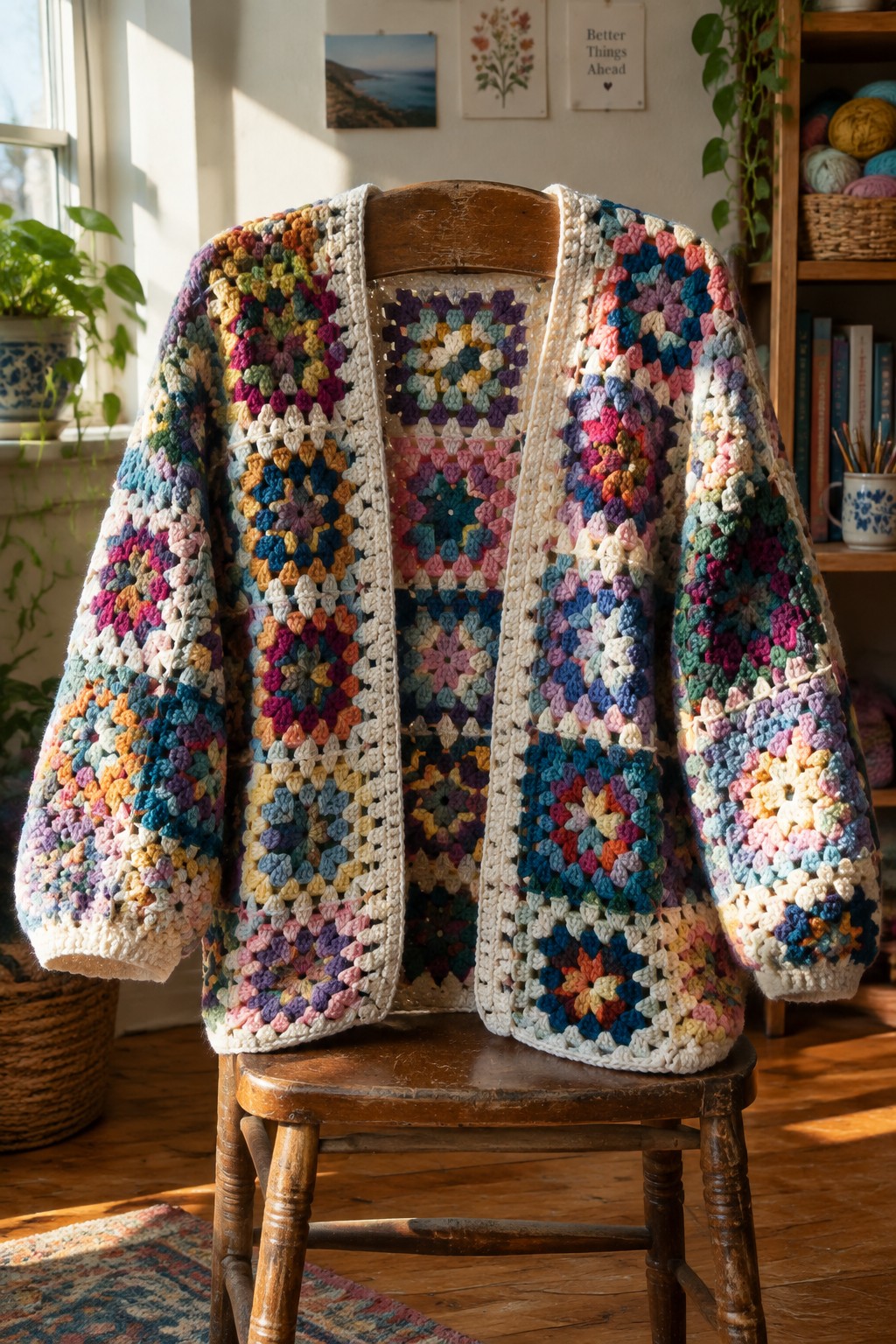
A cardigan made from joined granny squares forms a loose open-front layer with long sleeves and a solid border along the front edges. The squares use a mix of bright and muted colors arranged so no single shade dominates, which keeps the overall pattern lively but wearable. This approach fits the wearable crochet category and works as a lightweight outer piece over basic tops. The square construction means the body and sleeves are built in blocks rather than shaped rows.
What makes this idea useful is how simple it is to change the fit by adding or subtracting squares before seaming. You can shift the color range toward cooler tones or pastels without changing the pattern structure at all. A project like this works especially well as a transitional layer for cooler mornings or evenings. For gifts, you can adjust the square count to match different sizes and still finish the piece in a reasonable amount of time.
Hooded Cardigan with Braided Ties and Pom-Poms

A hooded cardigan built from a textured stitch creates a warm outer layer that works for casual wear. The main body stays in one solid color while the hood, front edges, cuffs, and hem use a lighter shade in a repeated scalloped border. Long braided ties finished with two large pom-poms give the jacket a simple closure that also draws the eye down the front.
What makes this idea useful is how the contrast trim defines the shape without needing complicated colorwork. The length and hood make it practical for cooler days, and the pom-pom ties can be shortened or lengthened depending on the wearer’s size. You can easily swap the main color or change the border shade to match existing clothes. For gifts, this kind of cardigan stands out because the pom-poms and braided detail give it a clear handmade look that photographs well.
Short-Sleeved Lacy Bolero Cardigan

A short-sleeved bolero uses open lace stitches to build a cropped layer that stops at the waist and fastens with no closure. Scalloped edges run along the front opening, hem, and sleeve cuffs to finish the shape without added trim. The design sits in the wearable clothing category and layers easily over tanks or simple dresses for light coverage.
What makes this idea useful is how the open stitch pattern lets you change the overall length by adding or removing rows without affecting the fit. The small scale makes it a fast project that still produces a full garment. This would be easy to turn into a longer version by extending the body or switching to a different yarn color for each section. For everyday wear, the cropped cut keeps it from feeling heavy while still offering a handmade layer option.
Cat Ear Hooded Cardigan
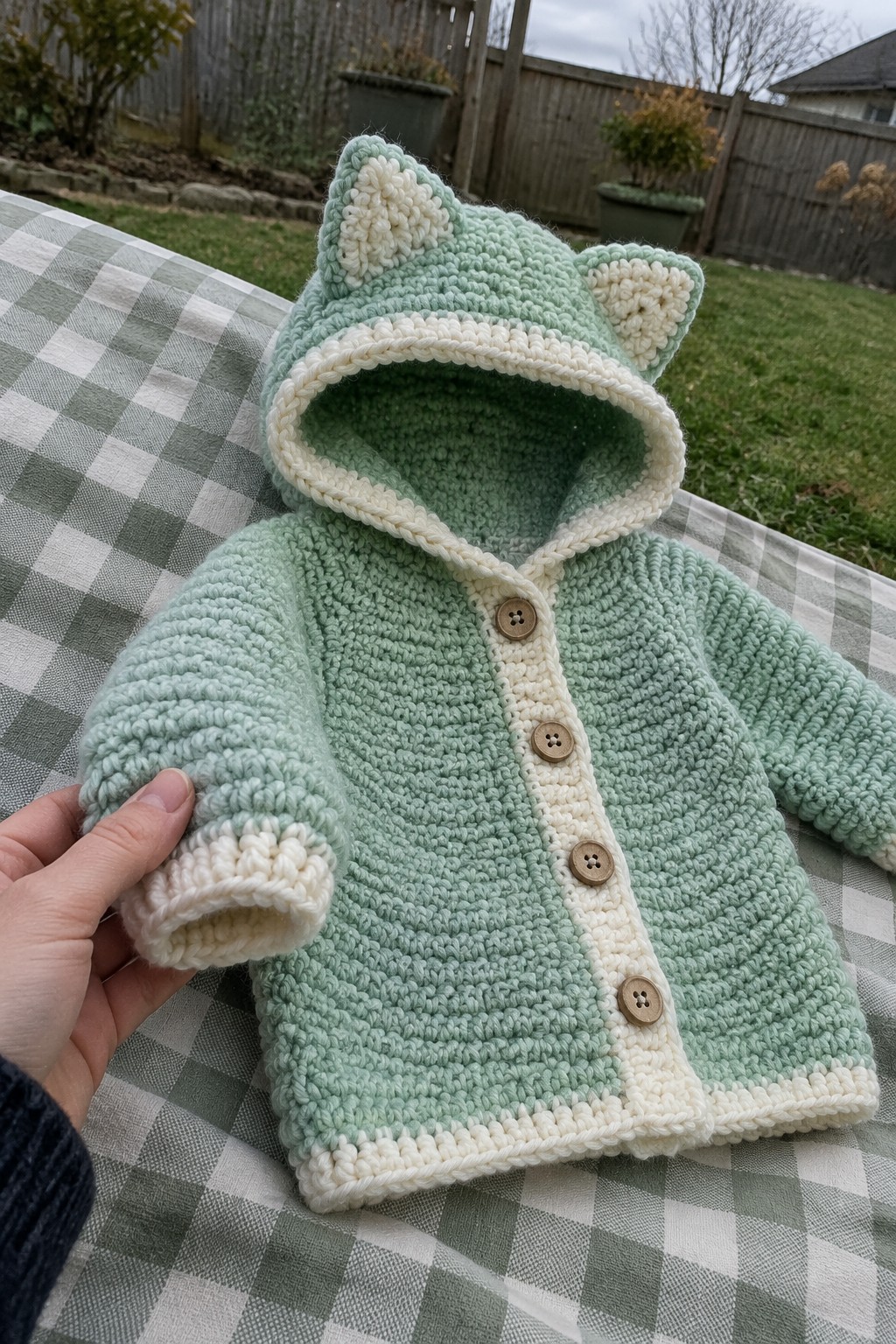
A hooded cardigan can be shaped at the top to create two small peaks that read as cat ears while keeping the hood functional. The mint green body uses a dense textured stitch and gets finished with white edging along the hood, front placket, hem, and cuffs plus a straight row of buttons for closure. This turns a basic wearable into a simple themed layer sized for a child or baby.
What makes this idea useful is how the ear shaping can be changed in height or width just by adjusting the hood pattern rows. The contrast trim does most of the visual work and helps the piece photograph clearly for pattern notes or sales. A project like this works especially well as a gift because the size stays small and the color can be swapped to match a child’s other clothes. The button front also makes it practical for everyday wear instead of a pullover style.
Lacy Openwork Crocheted Sweater
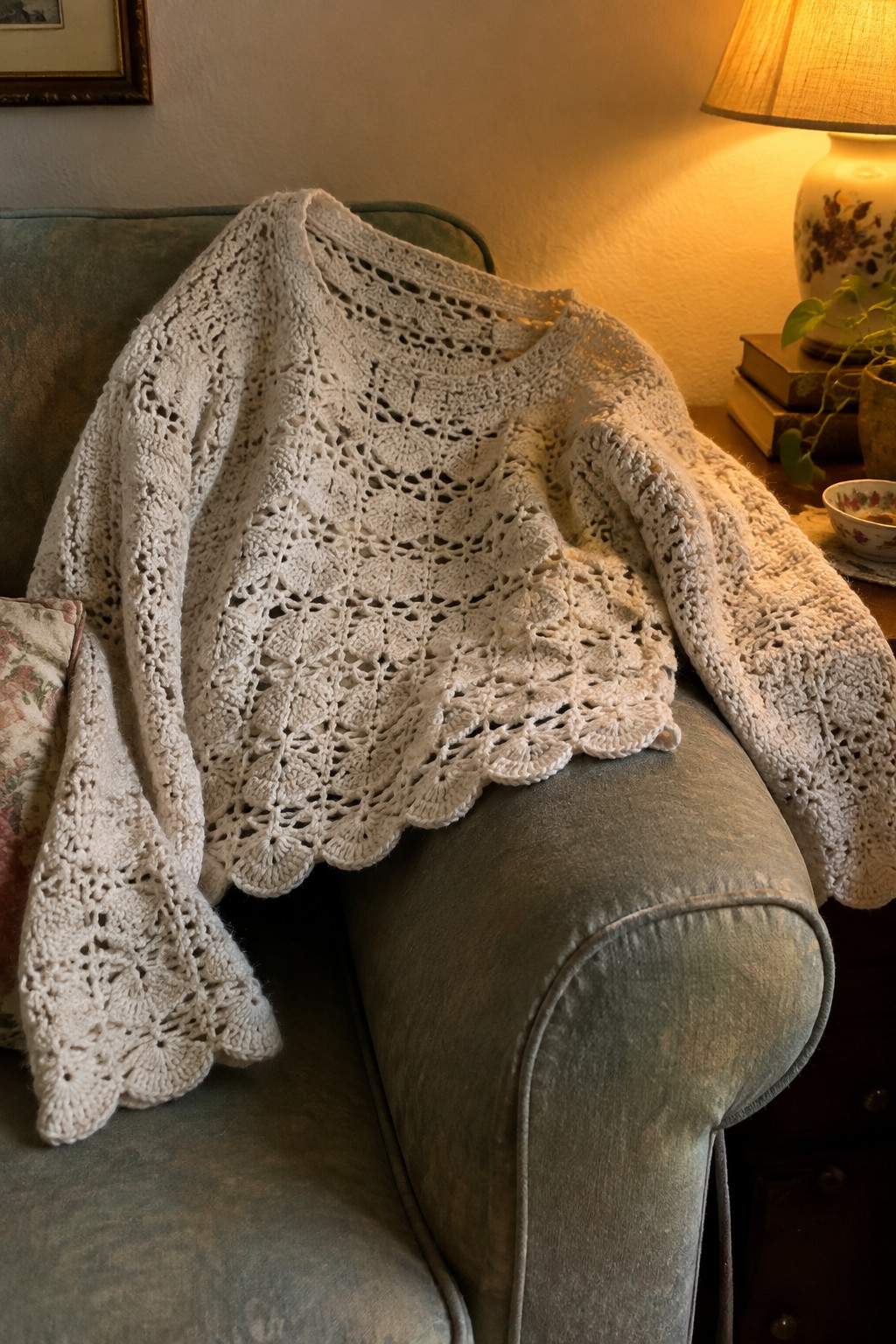
A crocheted sweater worked in open lace stitches with repeating circular motifs creates a lightweight layer that drapes easily over other tops. The scalloped edges along the hem and cuffs give the piece a finished shape without adding bulk. This style fits the wearable category and works best when the open sections are balanced with enough solid areas to maintain structure.
What makes this idea useful is how the same motif pattern can be repeated to change the overall length or sleeve width. You could shorten it into a cropped style or widen the neckline for a different fit. A project like this works especially well as a transitional piece because the openwork keeps it from feeling heavy while still covering the arms.
Granny Square Cardigan with Solid Border
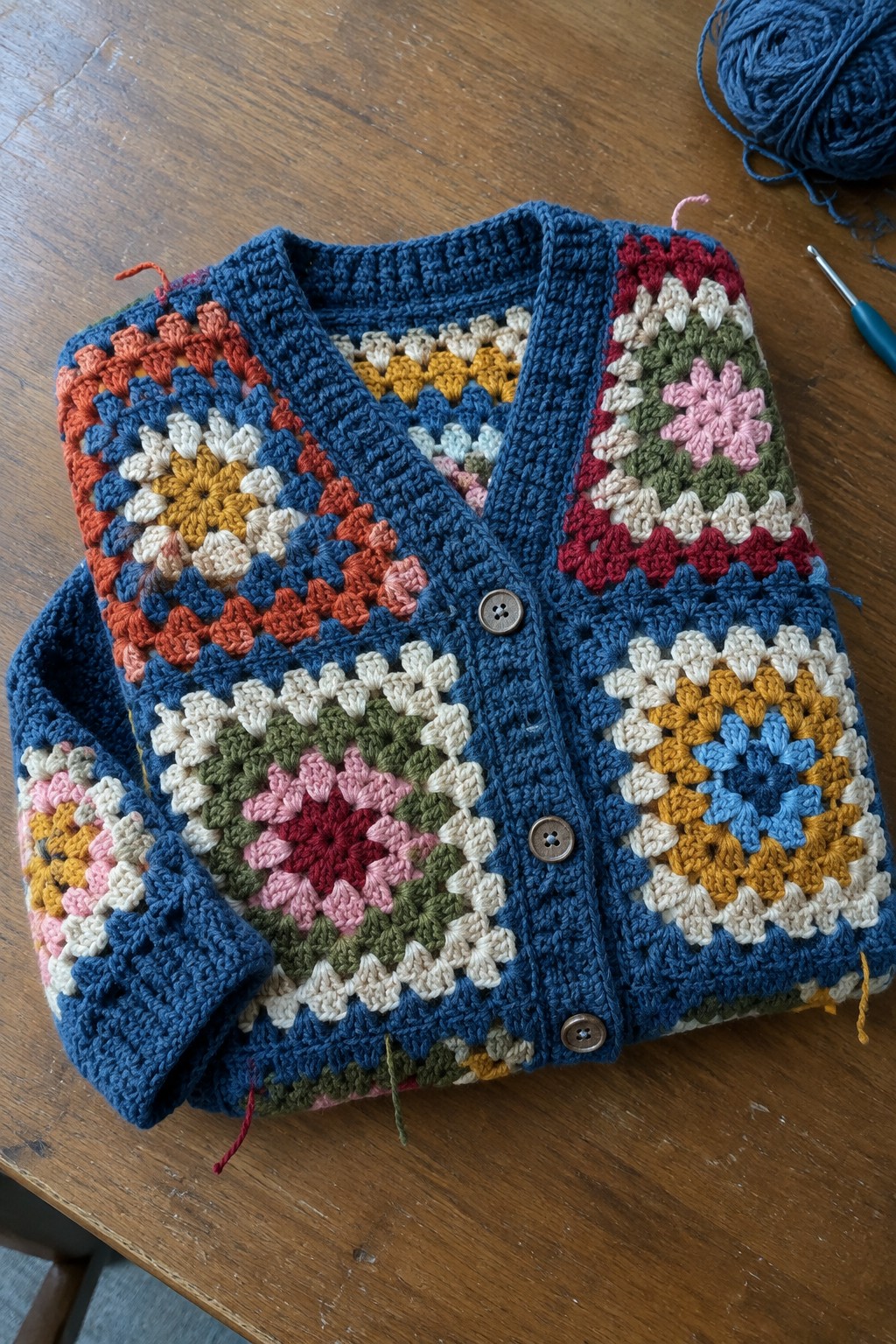
A granny square cardigan is built by joining individual square motifs into front panels, back, and sleeves before adding a solid border around the edges. The squares use repeating color rounds that create a patchwork effect, while the blue border forms the neckline, button bands, and hem for a clean finish. Buttons are added along one front edge to turn the open shape into a wearable layer.
What makes this idea useful is that you can change the cardigan length or width simply by adding or removing squares instead of adjusting a full pattern. The solid border hides uneven joins and gives a more finished look than an all-motif design. For gifts, a design like this works well because you can match the recipient’s colors and swap button styles without changing the construction. Scaling the squares down makes a lighter layer while keeping the same assembly method.
Striped Pullover with Bobble Sleeves
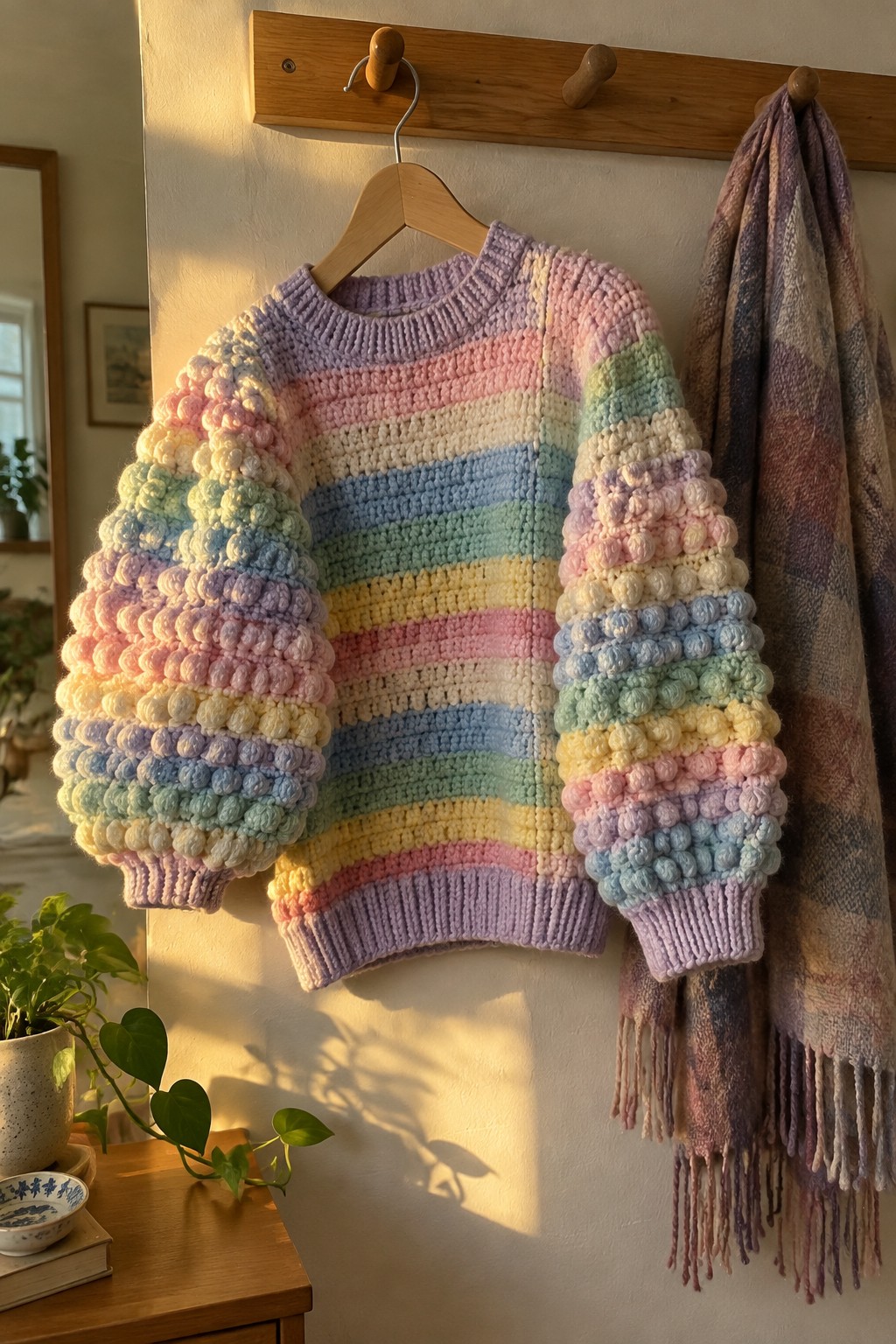
A cropped sweater worked in wide horizontal stripes of soft pastel rainbow colors creates a simple wearable. The body uses basic stitches to keep the stripes flat and clean while the sleeves switch to dense bobbles in matching color order. This mix of smooth stripes and raised texture on the sleeves gives the design its main visual interest. The project belongs in the wearable category and works as a lightweight top for layering.
What makes this idea useful is the straightforward stripe repeat that makes it easy to adjust length or swap colors without changing the pattern. The cropped fit and oversized sleeves can be lengthened or slimmed by adding or removing rows and bobble sections. A project like this works especially well for using leftover yarn from other rainbow projects. You can change the pastel palette to any color set to match existing clothes or seasonal wardrobes.
Oversized Pullover with Vertical Raised Panels

A crocheted sweater made in chunky yarn features vertical panels of raised looped stitches that run from hem to neckline. The design creates an oversized silhouette with dropped shoulders, a simple round neck, and ribbed bands at the cuffs and hem. These repeating texture lines add visual interest while keeping the body mostly solid, so the project stays approachable even in a bulky weight.
What makes this idea useful is the panel-based structure that lets you adjust width or spacing without changing the overall fit. You could shorten the body for a cropped version or widen the panels for a bolder look in a different color. The strong vertical lines photograph well, which helps the finished piece stand out in project shares or pattern roundups.
Baby Cardigan with a Smiley Face Pocket

A basic crochet cardigan for a baby gains a fun detail when a small square pocket is worked separately in a contrasting color and sewn onto the front. The pocket uses a simple spiral center with added black embroidery for eyes and a mouth, turning an ordinary storage spot into a small face motif. This keeps the main garment in a standard raglan or top-down shape while the pocket serves as both decoration and a practical place to tuck small items.
What makes this idea useful is how the pocket size can be scaled up or down to fit cardigans for different ages without rewriting the whole pattern. Change the pocket yarn to match the buttons or trim already on the piece, or swap the face for stars or shapes if you want a different look. For gifts, a design like this stands out because most people make plain cardigans, so the added pocket gives it a clear handmade twist that still photographs cleanly for sharing.
Sunflower Appliqué Cardigan

A basic cardigan in a light neutral yarn becomes more interesting when sunflower appliqués are added down the front in two columns. Each flower has a dense brown center with yellow petals layered around it, positioned along the button band for even spacing. The textured body stitch keeps the overall look simple so the motifs provide the main visual detail without extra patterning.
What makes this idea useful is how simple it is to add the same appliqués to any cardigan pattern you already have. You can change the number of flowers to fit different sizes or swap the petal colors to match other yarn you own. For gifts, a design like this works especially well because the flowers give a clear focal point that still leaves room for the maker to adjust placement or scale.
Open Mesh Cardigan

A loose open-mesh crochet sweater gives you a lightweight layer that drapes over the arms and torso without adding weight. The long sleeves and relaxed fit make it easy to wear over a tank or tee, and the see-through stitch pattern keeps it breathable for mild weather. This type of project fits the wearable category and works as a simple cardigan or pullover shape.
What makes this idea useful is how quickly the mesh builds once you have the repeat down. You can change the sleeve length or body width without altering the overall structure, and a different yarn color shifts it from summer cover-up to fall layering piece. For gifts, a design like this works well because it uses less yarn than a dense sweater while still looking finished.
Rainbow Bobble Tank Dress
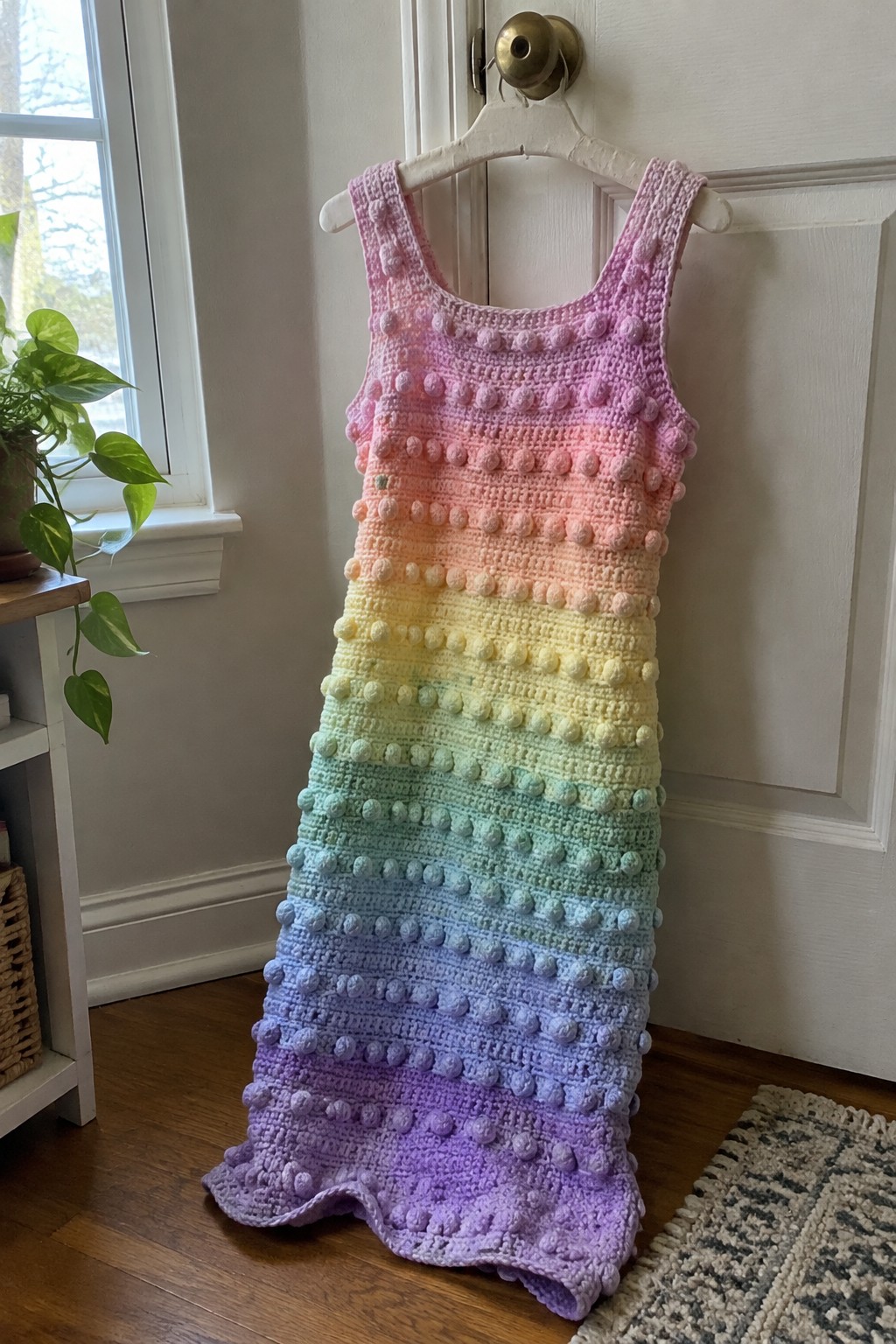
A sleeveless crochet dress in a full rainbow gradient uses rows of bobbles spaced evenly across the fabric to create a dotted texture from top to bottom. The tank shape stays simple with a scooped neck and slight flare at the hem, letting the color changes and raised dots carry the design. This approach turns a basic wearable into a longer garment without needing complicated stitch patterns or shaping.
The repeating bobble placement makes the dress easy to adjust in length or to recolor for a two-tone version instead of a full gradient. It works well as a light summer layer or beach cover because the open structure and smooth color flow keep it from feeling heavy. You could also stop the bobble pattern at the waist to create a smoother fit through the hips if preferred.
Granny Square Vest With Neutral Border
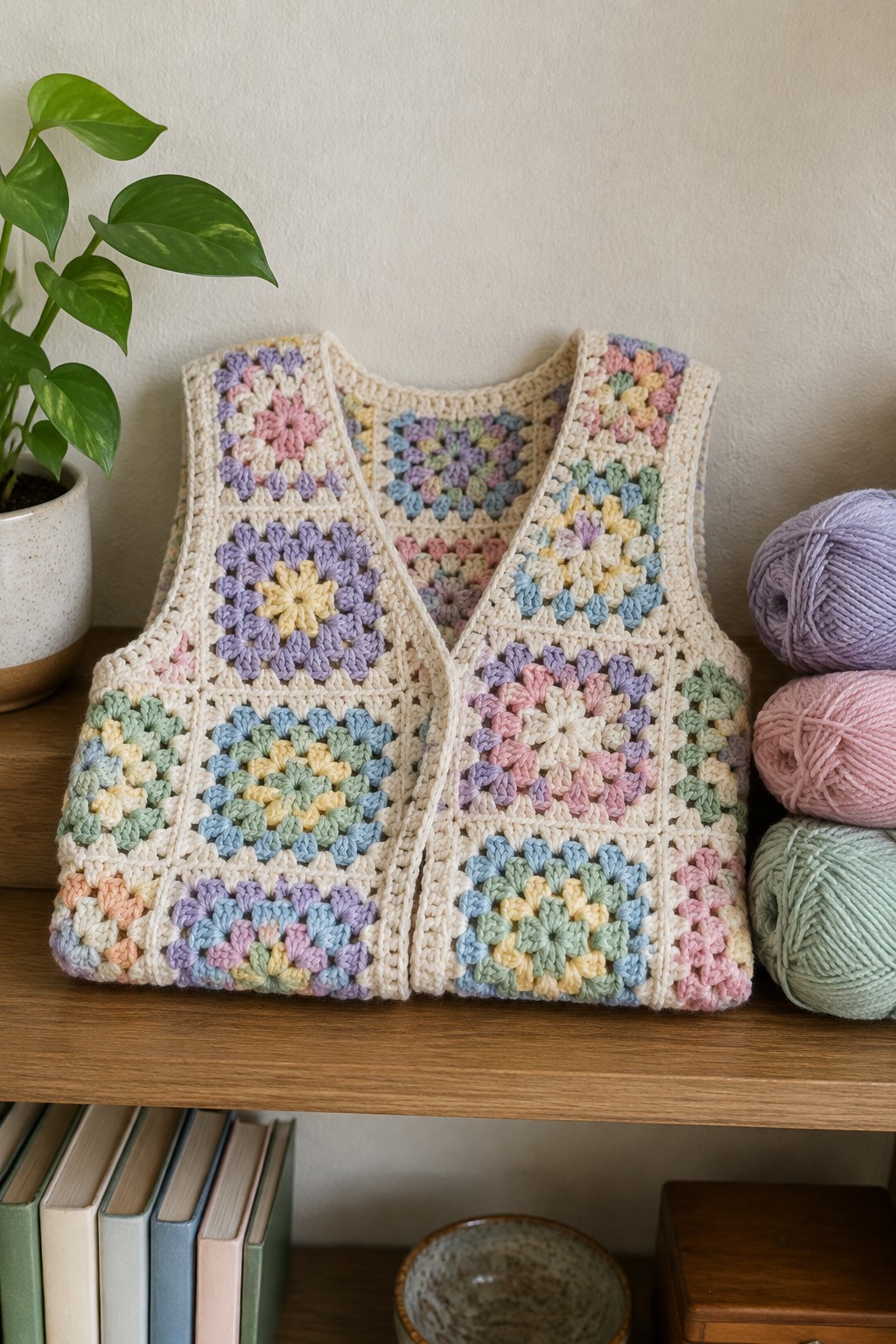
A granny square vest is built from individual floral squares joined into a sleeveless top, then finished with a solid cream border along the neckline, armholes, and front edges. The squares use repeating rounds of soft pink, blue, yellow, green, and lavender that stand out against the off-white background. This structure keeps the color mix from looking scattered while the border gives the piece clean lines and structure. It works as a wearable layer that can be worn open or closed.
What makes this idea useful is how simple it is to change the size by adding or removing squares before joining. You can shift the color palette toward brighter tones for summer or softer shades for cooler months without changing the pattern. For gifts, a design like this works especially well because the squares can be made in batches and assembled later. The open front and sides also make it easy to layer over different tops without extra fitting adjustments.
Crocheted Cardigan for Dolls

A small cardigan worked in light green yarn fits over a doll as a simple button-front layer. The construction uses a basic rectangle shape for the body with added sleeves and a few buttons for closure. A slightly scalloped lower edge gives the piece a finished look while keeping the overall shape easy to replicate. This belongs in the doll clothing category of crochet projects.
What makes this idea useful is how little yarn it requires, so it works well for using up scraps. You can adjust the fit by changing the number of starting chains or switching to a different hook size for other dolls. The plain button style leaves room to customize with whatever buttons you have on hand. A finished example like this photographs clearly for pattern sharing or inspiration boards.
Lacy Openwork Throw with Scalloped Border

A rectangular crochet blanket worked in a repeating open lace pattern creates an airy fabric full of small floral motifs and negative space. The scalloped edge runs along all four sides and gives the piece a clean, finished shape without extra framing. This design sits in the home accessory category but works equally well as a large wrap when the scale is adjusted.
What makes this idea useful is how the open stitch keeps the fabric lightweight even at a generous size. The same lace repeat can be shortened into a rectangular shawl or lengthened into a full bed throw by changing hook size and yarn. A project like this works especially well as a quick gift because the border is built into the pattern and needs no separate finishing. The neutral tone also makes it simple to match existing decor or clothing without extra dyeing steps.
Bobble Yoke Pullover
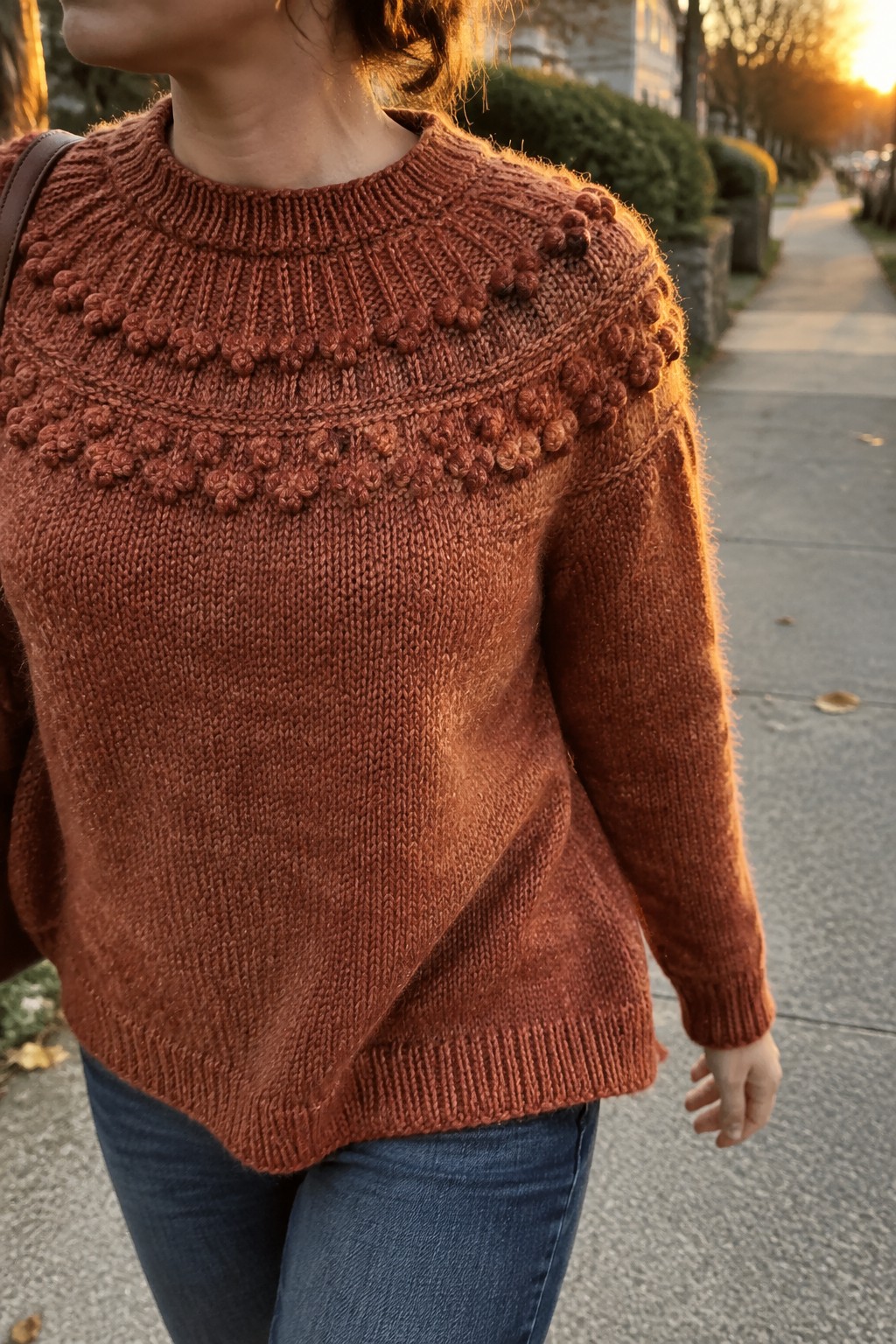
A sweater with a decorated yoke uses rows of bobbles to create a patterned band around the neck and shoulders while the body and sleeves stay plain. This approach adds texture and shape through the placement of the bobbles without requiring complex shaping or colorwork across the whole piece. The design works well as a wearable because the decorative section sits at the top where it shows clearly when worn. It fits the category of a finished garment rather than an accessory or decor item.
What makes this idea useful is that the bobble yoke can be adjusted in width or number of rows to match different body sizes or yarn weights. You could swap the solid color for a variegated yarn on the yoke only or move the bobbles to the cuffs for a different look. A project like this works especially well as an everyday layer because the simple lower section makes it quick to finish once the yoke is done. For gifts, the contrast between the textured top and smooth body gives it a polished result without extra finishing steps.
Mushroom Appliqué Cardigan
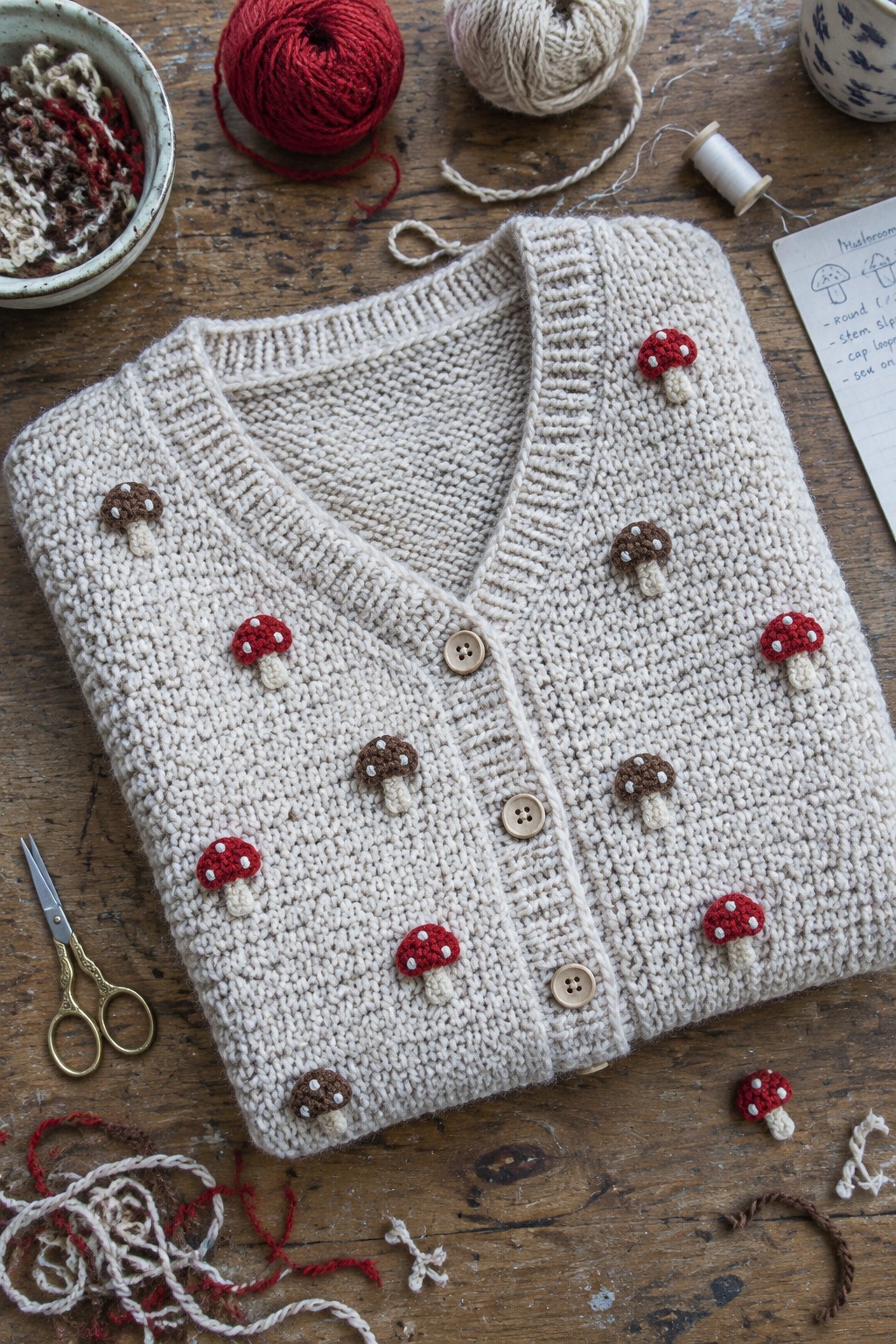
Crochet small mushroom shapes as appliqués and attach them to a plain cardigan for a scattered pattern across the front. The red and brown versions create contrast against the light base, while their compact size keeps the overall look balanced rather than overwhelming. This method uses appliqué on a wearable to add detail without changing the garment’s basic structure.
What makes this idea useful is how quickly it updates a plain cardigan you already own or find secondhand. You can vary the number of mushrooms or switch their colors to suit different seasons or personal tastes. A project like this works especially well as a gift because the motifs finish fast and use small amounts of yarn. The structure makes this a smart option for anyone who wants visible detail without committing to a full colorwork pattern.
Paw Print Sweater with Raised Motifs

A sweater covered in scattered paw print motifs offers a straightforward way to add interest to a basic pullover. The prints are built from small clusters of stitches that sit slightly off the surface, creating visible texture without complicated shaping. This style fits easily into the wearable category and works on both adult and child sizes since the motif repeats across the front panel.
What makes this idea useful is how simply the paw shapes can be repositioned or reduced in number to change the look. You can swap the main color or try the same motif on a cardigan front instead. For gifts, a design like this appeals to pet owners and stays small enough to complete without a big time commitment. The repeat pattern also translates well to different yarn weights if you want a lighter or heavier version.
Lacy Open-Stitch Cardigan

A cardigan worked in an open lace pattern creates a light, breathable layer that shows off the stitch detail without adding weight. The fluffy yarn softens the openwork so the fabric still feels substantial while remaining easy to wear over a tank or tee. A plain button band down the front keeps construction simple and lets the lace do the visual work. This fits the wearable category as a layering piece rather than a heavy sweater.
What makes this idea useful is how the open pattern reduces yarn use while still producing a full garment. You can easily change the length to hit at the hip or crop it shorter depending on your style. The same lace repeat would work for a pullover or even a lightweight wrap, and the neutral tone keeps it versatile across seasons. For gifts, a design like this stands out because it looks detailed but relies on a repeatable stitch sequence rather than complex shaping.
Striped Crochet Vest for Easy Layering
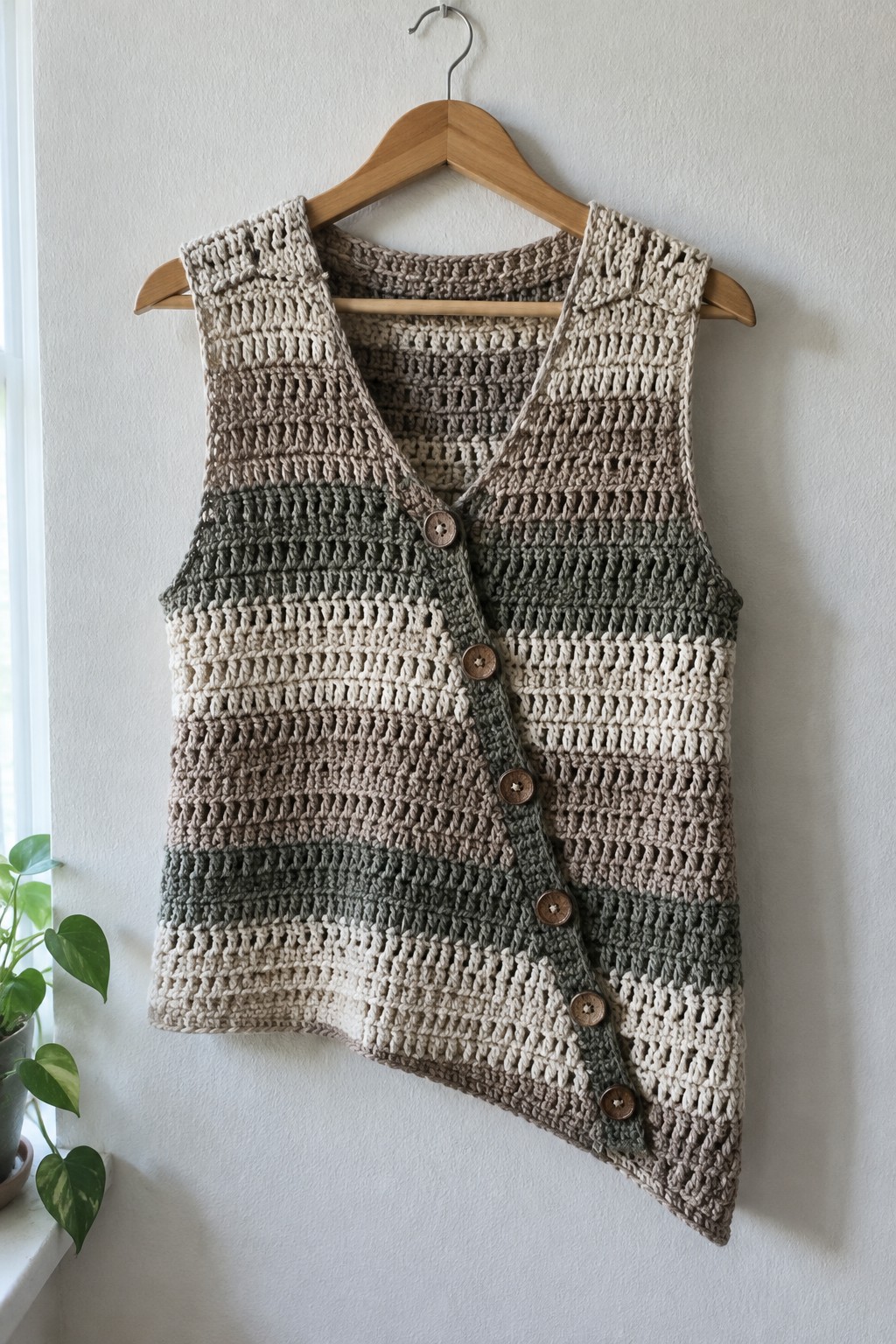
This project is a sleeveless V-neck vest crocheted in horizontal stripes that gradually shift through neutral shades. The button band runs down the front, turning the piece into a practical layering item that can be worn open or closed. The solid stitch texture gives the vest enough structure to keep its shape without feeling stiff.
What makes this idea useful is how the stripe pattern can be swapped out for any leftover yarn you have on hand. The simple shape works well over tees or dresses and can be lengthened or cropped depending on the look you want. For gifts, a design like this is easy to size up or down since the construction stays straightforward.
Geometric Mosaic Crochet Sweater
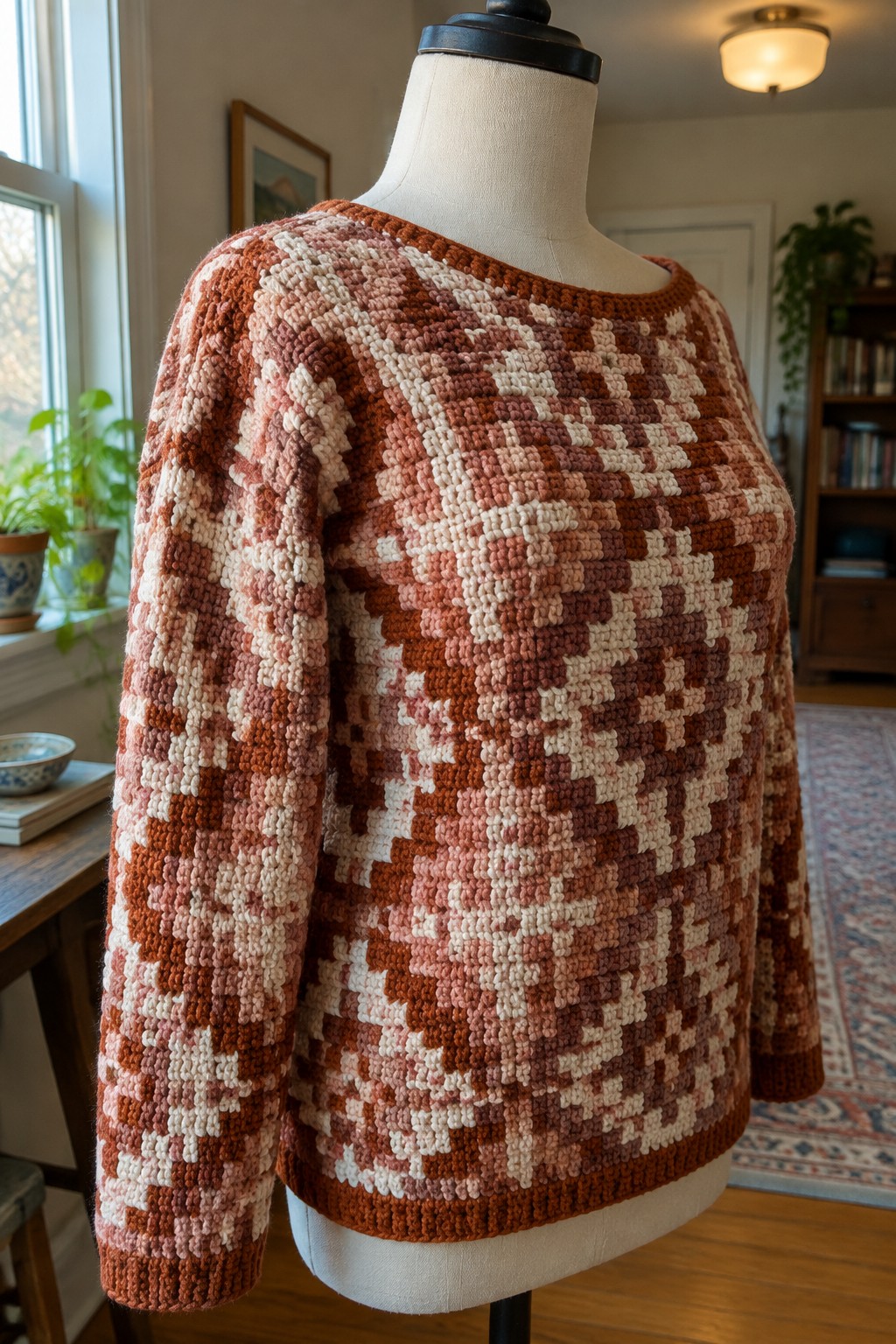
A mosaic crochet sweater builds a grid-based pattern by switching colors every few stitches to form large blocks and shapes across the fabric. This version is worked as a pullover with a round neck, long sleeves, and solid ribbed hems that frame the main design. The motif uses a limited palette of warm browns, rust, and cream to keep the blocks readable while the slightly oversized fit gives the finished piece an easy, wearable shape.
What makes this idea useful is that the repeating block pattern can be resized or recolored without changing the overall construction. The straight body and set-in sleeves make it simple to adjust length or width for different sizes. A project like this works especially well in neutral yarns because the color changes add interest without needing complex shaping or extra details.
Circular Motif Cardigan

A cardigan made from joined circular motifs builds the body and sleeves from separate rounds that form scalloped edges at the hem and cuffs. Buttons are sewn along the center front opening, and the motifs are arranged in a simple grid so the circles line up evenly across the front and back. Variegated yarn shifts through lavender, mint, and soft blue tones within each circle, which removes the need for color changes while still creating visual movement. This construction works well for a light layering piece sized for a child or small adult.
What makes this idea useful is how simple it is to change the finished size by adding or removing rounds on each motif before joining. The same circle pattern can be used to make a matching hat or scarf set without learning new stitches. Because the front closes with buttons, the cardigan stays practical for daily wear rather than just decoration. The motif layout also photographs clearly for sharing, which helps it gain attention when posted with the finished measurements.
Frequently Asked Questions
What materials are best suited for crocheting cardigans and sweaters from these ideas?
Soft, medium-weight yarns like acrylic blends or cotton work well for most projects because they provide good drape and warmth without being too heavy. For lighter summer styles, choose bamboo or linen yarns. Always check the pattern for recommended hook sizes, usually between 4mm and 6mm, to achieve the right stitch tension.
How can I customize the fit of a crochet cardigan or sweater pattern?
Start by taking accurate body measurements for bust, waist, and arm length, then compare them to the pattern’s sizing chart. Add or subtract rows in the body or sleeves as needed, and test fit as you work. Many patterns include notes on making adjustments for different shapes, such as adding extra stitches for a looser fit around the hips.
What are some tips for beginners tackling these crochet clothing projects?
Choose simpler designs like basic granny square cardigans first, and practice basic stitches such as single crochet and double crochet before starting. Work in sections to avoid overwhelm, and use stitch markers to track rows. If a pattern seems complex, look for similar free tutorials online that break down the same techniques step by step.
How long does it typically take to complete one of these crochet sweaters?
A simple cardigan might take 15 to 25 hours spread over a few weeks, depending on your skill level and how much time you dedicate each day. More intricate sweaters with color changes or detailed patterns can require 30 hours or more. Breaking the project into small daily goals helps keep progress steady.
What is the best way to care for finished crochet clothing items?
Hand wash in cool water with a gentle detergent, then lay flat to dry to maintain shape and prevent stretching. Avoid wringing or machine drying unless the yarn label specifies otherwise. Store folded rather than on hangers to keep the fabric from distorting over time.
