

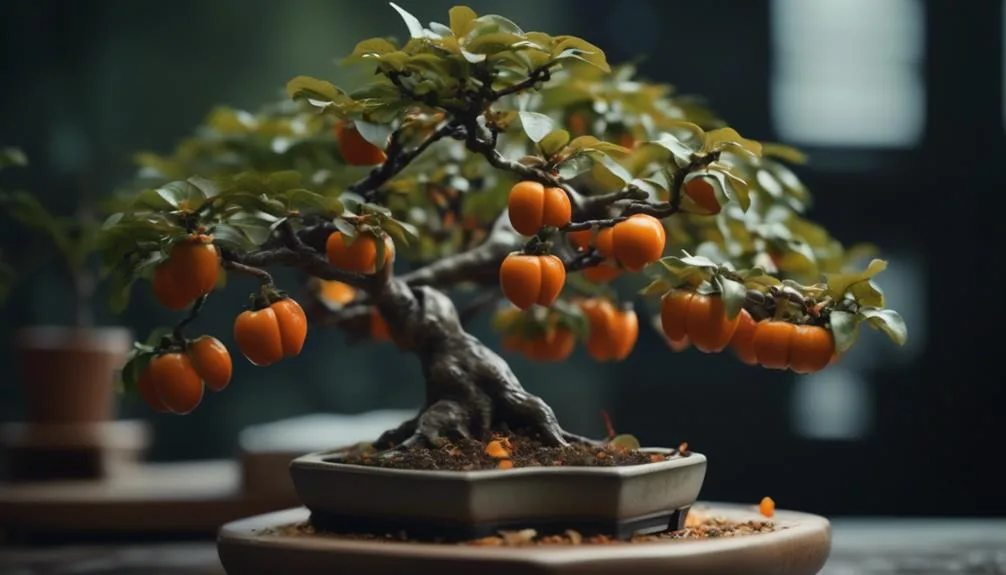
Transforming a persimmon tree into a bonsai is a challenging but rewarding task. It involves choosing the right tree variety, and using precise pruning and wiring techniques. Understanding the tree's soil and watering needs is also crucial.
Can it be done successfully? Let's explore the process of training persimmon trees into bonsai and appreciate the patience and skill it requires.
Key Takeaways
- Choosing suitable persimmon varieties with small leaves and gnarled trunk tendencies is important for creating bonsai trees.
- Fuyu, Hachiya, and American persimmons are recommended varieties for bonsai.
- Propagation of persimmon bonsai can be done through air layering, cuttings, or grafting.
- Winter protection is necessary to shield persimmon bonsai from freezing temperatures, strong winds, and excessive moisture.
Suitable Persimmon Varieties for Bonsai
When selecting persimmon varieties for bonsai, it's important to choose those with small leaves and a natural tendency to develop a gnarled trunk and interesting branching structure. Some suitable varieties for bonsai include the Fuyu, Hachiya, and American persimmons. These varieties have small leaves and are well-suited for the art of bonsai.
Propagation methods for these varieties can include air layering, cuttings, and grafting, allowing you to create new trees with desirable traits.
Seasonal care, especially winter protection, is crucial for persimmon bonsai. During winter, it's essential to protect the trees from freezing temperatures, strong winds, and excessive moisture. This can be achieved by moving the bonsai to a sheltered location, using mulch to insulate the roots, and employing protective coverings when necessary.
Pruning Techniques for Persimmon Bonsai
To achieve the desired shape and size for your persimmon bonsai, employing proper pruning techniques is essential.
Branch positioning plays a crucial role in creating an aesthetically pleasing bonsai. Regular pruning helps guide the growth of branches, ensuring they're well-distributed and balanced.
When pruning, focus on maintaining a harmonious structure by removing any unwanted or crossing branches. This encourages the development of a well-defined and balanced canopy.
Additionally, pruning aids in trunk thickening by directing the tree's energy to the desired areas. By selectively trimming the branches and controlling the growth, the trunk gradually thickens, contributing to the overall bonsai aesthetics.
Remember to use sharp, clean tools and to prune with purpose, always considering the long-term vision for your persimmon bonsai.
Recommended Products
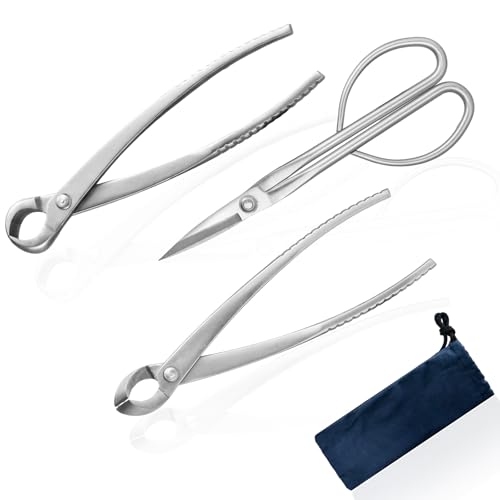
【Complete Bonsai Tools Set】 This bonsai tool kit includes the 3 essential tools for professional care: a bonsai shear (leaf bud trimmer), a knob cutter (ball joint shear), and a diagonal cutter. This complete bonsai tools set is lightweight (1.5 pounds) and portable, making it the perfect bonsai tool set for both beginners and experts to achieve precise shaping and effortless maintenance without needing any other bonsai tools.

REDUCE HAND STRESS- This scissors was made to eliminate the day to day stress that comes from long time pruning with our soft grip handles, sharp stainless steel blades and springless design to allow free movement
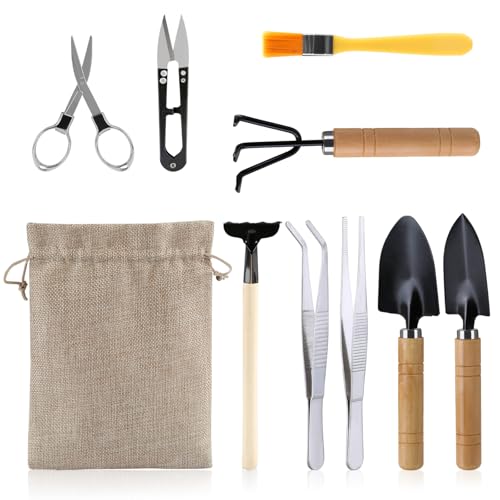
Basic Bonsai Kit - Provide the basic bonsai tools needed for each level of expertise at a savings over buying individual pieces
Wiring and Shaping Persimmon Bonsai
If you want to create captivating and unique shapes in your persimmon bonsai, mastering the art of wiring and shaping is crucial. Achieve stunning results with these essential shaping techniques and wiring methods:
- Principles of Wiring: Learn the fundamental principles of wiring, such as using the right gauge of wire, positioning, and anchoring to guide the growth of branches.
- Wiring Techniques: Explore different wiring techniques like the single-wire and double-wire methods to shape the branches of your persimmon bonsai with precision.
- Branch Placement: Understand how to strategically position and shape branches to create a balanced and visually appealing composition.
- Patience and Precision: Emphasize the importance of patience and precision in the wiring and shaping process to achieve the desired aesthetic for your persimmon bonsai.
Mastering these techniques will enable you to sculpt your persimmon bonsai into a work of art.
Recommended Products

【Complete Starter Kit with Wire Cutter】Get everything you need: 1 wire cutter and 6 rolls of bonsai training wire (over 160 ft total). Begin shaping and styling your bonsai right away—no extra tools required.

Package includes: 1 piece of wire cutter and 5 rolls of bonsai wires in different colors and sizes, includes 3 rolls of black aluminum wires, 1 roll of green wires, 1 roll of brown wires, different color looks appropriate for display, each roll has 32 feet, 160 ft in total

Package Includes: 1 piece of wire cutter and 5 rolls of bonsai wires in brown colors have different sizes, includes 1 roll 32 feet 1mm aluminum wire, 1 roll 32 feet 1.5mm aluminum wire, 1 roll 32 feet 2.0mm aluminum wire, 1 roll 9.84 feet 2.5mm aluminum wire, 1 roll 9.84 feet 3mm aluminum wire, 118 ft in total
Soil and Watering for Persimmon Bonsai
To ensure the continued health and vibrant growth of your persimmon bonsai, the composition and management of soil, as well as the watering practices, play a crucial role in sustaining its sculpted beauty.
When it comes to soil composition, a well-draining mix is essential to prevent waterlogging, ensuring oxygen reaches the roots. A blend of akadama, pumice, and lava rock provides excellent aeration and moisture retention.
As for watering frequency, it's vital to strike a balance. During the growing season, check the soil moisture daily and water when the top layer feels slightly dry. In winter, reduce watering but don't let the soil completely dry out.
Maintenance and Care for Persimmon Bonsai
Regularly inspecting the foliage and branches of your persimmon bonsai for signs of pests or disease is essential for maintaining its health and beauty. Here are some important maintenance and care tips to keep your persimmon bonsai thriving:
- Fertilizing Schedule: Feed your persimmon bonsai with a balanced, slow-release fertilizer every four weeks during the growing season to ensure it receives the necessary nutrients for healthy growth.
- Pest and Disease Management: Keep a close eye on your bonsai for any signs of pests or diseases, and promptly address any issues that arise to prevent them from spreading.
- Pruning and Training: Regularly prune and train your persimmon bonsai to maintain its desired shape and encourage balanced growth.
- Overwintering Techniques: Protect your persimmon bonsai from frost by overwintering it in a cool but frost-free location, ensuring it receives adequate light and moisture.
Conclusion
In summary, with the right care and attention, persimmon trees can be transformed into exquisite bonsai.
By selecting the appropriate variety, employing precise pruning methods, and nurturing the tree with proper maintenance, you can cultivate a captivating miniature tree that not only bears fruit but also brings a sense of refinement to any environment.
Consider the significance of this artful practice as you embark on your bonsai journey, and may your persimmon bonsai thrive and inspire for years to come.
Happy bonsai gardening!
