

Have you ever thought about transforming your front yard into a mini orchard? Planting fruit trees not only adds beauty but also provides fresh produce right at your doorstep. Imagine stepping outside to pick ripe apples or juicy peaches without having to go to the store.
But before you grab a shovel, you might wonder if it’s even possible to plant fruit trees in your front yard. This article will guide you through the key considerations, from local regulations to the best tree varieties for your space. By the end, you’ll have the knowledge to make your front yard a fruitful haven.
Key Takeaways
- Aesthetic and Environmental Benefits: Planting fruit trees enhances your yard’s beauty while improving air quality and promoting biodiversity.
- Space and Sunlight Considerations: Ensure adequate space (8-30 feet depending on tree type) and at least 6-8 hours of sunlight for optimal growth.
- Low-Maintenance Options: Dwarf varieties of apple, pear, and mulberry trees are ideal for minimal upkeep and can thrive in various conditions.
- Small Space Varieties: Consider compact fruit trees like dwarf cherry, columnar apples, and fig trees to fit limited spaces without compromising on fruit production.
- Soil Preparation is Key: Test and enrich soil with organic matter, ensuring it’s well-drained and weed-free for successful planting.
- Proper Watering and Fertilizing: Regular watering and early spring fertilization are crucial for healthy growth, with adjustments based on weather conditions to prevent over-fertilization.
Benefits Of Planting Fruit Trees In Your Front Yard
Planting fruit trees in your front yard offers numerous advantages, from visual appeal to environmental benefits. Here are some key benefits to consider.
Aesthetic Appeal
Fruit trees enhance your landscape with vibrant colors and interesting shapes. Blossoms in spring create a beautiful display, while ripe fruits in summer add visual interest. You can choose trees that fit your style, such as flowering cherries or citrus trees. Incorporating different varieties creates a stunning focal point and draws attention to your home.
Environmental Impact
Fruit trees contribute positively to the environment. They improve air quality by absorbing carbon dioxide and releasing oxygen. Trees also provide habitats for wildlife, including birds and insects. Additionally, planting trees helps with soil erosion and water retention, contributing to a healthier ecosystem. By choosing native species, you further enhance local biodiversity and support pollinators.
Considerations Before Planting
Before planting fruit trees in your front yard, consider several important factors to ensure success.
Recommended Products

Product Quantity: 180+ premium bonsai fruit seeds across 5 varieties; Individual packs contain 40+ apple, 40+ lemon, 40+ orange, 20+ blueberry, and 40+ cherry seeds; Perfect for starting a diverse miniature orchard
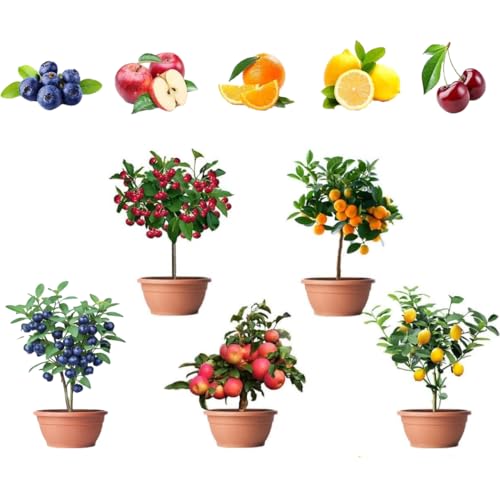
Variety Pack of 5 Fruits: Includes 40 Lemon seeds, 40 Orange seeds, 40 Apple seeds, 20 Cherry seeds, and 20 Blueberry seeds for a colorful and diverse home garden

4 kinds of the most popular fruits, individually packaged, 50pcs Lemon seeds 50pcs Cherry seeds 50pcs Orange seeds 50pcs Apple seeds Fresh seeds, all fruit seeds are packed in tear and moisture resistant zipper sealed bags for your long term storage.
Space Requirements
Space impacts tree growth and health. Each fruit tree needs room for its roots and canopy. For example, a dwarf tree requires about 8 to 10 feet of space, while a standard tree needs 20 to 30 feet. Assess your yard’s dimensions to avoid overcrowding and ensure proper air circulation. Use a measuring tape to mark the potential locations for trees, ensuring each tree can thrive without competing for nutrients or light.
Sunlight Needs
Sunlight plays a crucial role in fruit production. Most fruit trees require at least 6 to 8 hours of direct sunlight daily. Observe your yard throughout the day to identify sunny spots. Avoid planting near large structures or tall trees that could cast shade. If sunlight is limited, consider planting varieties that tolerate partial shade, like certain apple or pear trees, to maximize your gardening success.
Best Fruit Trees For Front Yards
When considering fruit trees for your front yard, certain varieties fit well in aesthetics and practicality. Here are some excellent choices to enhance your outdoor space while delivering fresh produce.
Recommended Products

🌳 3-Pack Fruit Tree Bundle Includes live apple, blueberry, blackberry trees—perfectly paired for a diverse and productive backyard orchard.


Package: 5 Individual Packs, 40+ Lemon Tree Seeds 40+ Cherry Tree Seeds 40+ Orange Tree Seeds 40+ Apple Seeds 20+ Blueberry Seeds
Low Maintenance Options
Opt for low-maintenance fruit trees that require minimal care. These trees thrive in various conditions, making them suitable for busy homeowners. Some great options include:
- Apple Trees: Certain dwarf apple varieties, like ‘Honeycrisp,’ are resilient and productive with occasional pruning.
- Pear Trees: ‘Harrow Sweet’ and ‘Bartlett’ pears perform well with little fuss. Expect lovely blooms in spring along with delicious fruit.
- Mulberry Trees: ‘Illinois Everbearing’ mulberries are fast-growing and drought-tolerant. They produce sweet berries without the need for extensive maintenance.
Small Space Varieties
For those with limited yard space, select fruit trees that fit comfortably without overtaking your landscape. Consider these small-space varieties:
- Dwarf Cherry Trees: Varieties such as ‘Stella’ or ‘North Star’ reach about 4-6 feet tall, offering vibrant blossoms and tasty cherries.
- Columnar Apples: Trees like ‘Espaliered Apple’ or ‘Honeycrisp’ can be planted in tight spaces, reaching heights of only 4-5 feet while still producing abundant fruit.
- Fig Trees: Dwarf fig varieties like ‘Petite Negra’ grow 3-4 feet tall, giving you access to fresh figs without consuming too much room.
By selecting the right fruit trees, you can create a fruitful and aesthetically pleasing environment in your front yard.
Planting And Care Tips
Planting and caring for fruit trees in your front yard requires specific steps to ensure healthy growth and a bountiful harvest. Here’s how to prepare and maintain your trees effectively.
Recommended Products

Comprehensive Soil Analysis: Liquid soil test kits offer a comprehensive analysis of essential soil parameters, including pH, ammonia, nitrogen, phosphorus, and potassium. Having all these measurements in one kit provides a holistic understanding of the soil's fertility and health.

Quick, at home results for Soil pH, Nitrogen, Phosphorous and Potash Innovative and inexpensive soil test kit features an easy-to-use capsule system and patented color comparators

KNOW BEFORE YOU GROW | Grow the healthiest, sustainable lawn and garden with the most accurate and easy to use professional soil test kit on the market
Soil Preparation
Soil preparation is crucial for successful fruit tree planting. Start by testing your soil’s pH, which should range between 6.0 and 7.0 for most fruit trees. You can purchase a soil testing kit or send a sample to a local extension service.
Next, improve the soil structure. Mix in organic matter like compost or well-rotted manure to enhance nutrients and drainage.
When digging holes, create a space that’s twice as wide as the root ball and just as deep. This allows roots to spread easily. Ensure the planting area is free from weeds or grass, which can compete for nutrients.
Watering And Fertilizing
Watering and fertilizing stimulate growth and fruit production. During the first year, water your fruit trees deeply and regularly, ensuring the soil stays moist but not soggy. Use a soil moisture meter to help gauge when to water.
After the first year, adjust your routine based on rainfall. Aim for watering once every 1-2 weeks, increasing the frequency during dry spells.
Fertilize your trees in early spring just before new growth starts. Use a balanced fertilizer like a 10-10-10 or one specifically formulated for fruit trees. Follow the instructions for application rates according to tree age and size.
In the growing season, monitor your trees for symptoms of nutrient deficiencies such as yellowing leaves, and adjust your fertilization accordingly. Keep in mind that over-fertilizing can cause more harm than good, leading to excessive foliage growth rather than fruit.
Conclusion
Planting fruit trees in your front yard can be a rewarding endeavor that brings beauty and fresh produce right to your doorstep. With the right planning and care you can create a vibrant space that not only enhances your landscape but also benefits the environment.
By considering local regulations and choosing suitable varieties you’ll set yourself up for success. Just remember to give your trees the space and sunlight they need to thrive.
So go ahead and start envisioning your mini orchard. You’ll love the joy of watching your trees grow and enjoying the fruits of your labor. Happy planting!
Frequently Asked Questions
What are the benefits of planting fruit trees in my front yard?
Planting fruit trees offers fresh produce, enhances your landscape’s aesthetic, and improves air quality. They support local wildlife habitats and biodiversity, adding beauty and functionality to your outdoor space.
How much space do I need for fruit trees?
Fruit trees require varying space depending on the type. Dwarf trees need around 8 to 10 feet, while standard varieties require 20 to 30 feet. Assess your yard dimensions to prevent overcrowding.
How many hours of sunlight do fruit trees need?
Most fruit trees need at least 6 to 8 hours of direct sunlight daily for optimal fruit production. If your yard has limited sunlight, consider shade-tolerant varieties to ensure healthy growth.
What are some low-maintenance fruit tree options?
For busy homeowners, low-maintenance options include ‘Honeycrisp’ apple, ‘Harrow Sweet’ pear, and ‘Illinois Everbearing’ mulberry. These varieties require less care while still producing delicious fruit.
What is the ideal soil pH for planting fruit trees?
The ideal soil pH for fruit trees is between 6.0 and 7.0. Enhancing soil quality with organic matter is also recommended to support healthy tree growth and fruit production.
How should I care for my fruit trees after planting?
After planting, ensure proper watering—deep watering during the first year and then based on rainfall. Fertilize with a balanced fertilizer in early spring and monitor for nutrient deficiencies throughout the growing season.
