

Curious about which gardening tool suits your needs best? Picture this: you’re in the midst of pruning your overgrown bushes, but you can’t decide between a bypass lopper and an anvil lopper. Which one should you choose for a clean cut every time? In this article, we’ll help you navigate the world of loppers to find the perfect fit for your gardening adventures.
Are you tired of struggling with tools that don’t quite measure up to your expectations? Whether you’re a seasoned gardener or just starting, knowing the differences between a bypass lopper and an anvil lopper can make a world of difference in your pruning tasks. Stay tuned as we break down the pros and cons of each tool, so you can make an informed decision and achieve those beautifully trimmed hedges effortlessly.
What is a Bypass Lopper?
In your gardening toolkit, bypass loppers are versatile tools designed for precision cutting. The uniquely shaped blades of a bypass lopper work much like scissors, with one blade passing by the other. This mechanism allows for clean cuts on live and green wood, minimizing damage to plants.
Here’s why a bypass lopper might be your tool of choice:
- Ideal for live branches: The design of bypass loppers enables them to deliver smooth, precise cuts on live branches up to a certain diameter.
- Protects plant health: By making clean cuts that heal quickly, bypass loppers help maintain the overall health of your plants.
- Enhances accuracy: Bypass loppers are great for tight spaces or dense foliage where a high level of precision is required.
Remember, when selecting a lopper for your gardening tasks, understanding the unique features of a bypass lopper can help you achieve optimal results in your pruning endeavors.
What is an Anvil Lopper?
If you’re wondering about anvil loppers, they have a different design compared to bypass loppers. Anvil loppers feature a sharp blade that closes against a flat edge, similar to a knife cutting on a chopping board.
When you use an anvil lopper, the blade presses the material against the anvil or flat surface, which can provide more power for cutting through thicker branches.
Anvil loppers are great for cutting deadwood or dry branches that don’t require the precision of a bypass lopper. The crushing action of anvil loppers can make them less ideal for live branches, as it can cause damage to the plant if not used correctly.
Key Differences Between Bypass and Anvil Loppers
When comparing bypass loppers with anvil loppers, it’s essential to understand their unique features to determine the right tool for your pruning needs.
- Cutting Mechanism:
- Bypass loppers use a scissor-like cutting action where the blades pass by each other, making clean cuts ideal for live branches to promote healthy plant growth.
- Anvil loppers have a single blade that closes against a flat edge, suitable for cutting dead or dry branches with more cutting power but can potentially crush live branches if not used properly.
- Precision vs. Power:
- Bypass loppers offer precision cutting, making them suitable for precise pruning tasks such as shaping shrubs and delicate plants.
- Anvil loppers focus on cutting power, making them ideal for thicker branches or tougher pruning jobs that require more force.
- Branch Protection:
- Bypass loppers provide gentler cuts that help in maintaining plant health by reducing the risk of infection and promoting faster healing.
- Anvil loppers, due to their crushing action, may cause damage to live branches if not used correctly, potentially leaving plants vulnerable to diseases.
- Versatility:
- Bypass loppers are versatile and gentle, making them a go-to choice for a wide range of pruning tasks in your garden.
- Anvil loppers, with their added cutting power, excel in handling thicker branches and tougher pruning jobs that require more force.
Understanding these key differences between bypass and anvil loppers will help you choose the right tool for the specific pruning tasks in your garden.
Pros and Cons of Bypass Loppers
When it comes to bypass loppers, there are several advantages and disadvantages to consider before making your choice. Here’s a breakdown for you:
Recommended Products

IDEAL BRANCH TRIMMER: Fiskars 28-Inch Power-Lever Bypass Garden Lopper glides through branches up to 1.75" thick for easy cuts; Works well for trimming tree branches to maintain your yard and garden and encourage overall plant health and appearance
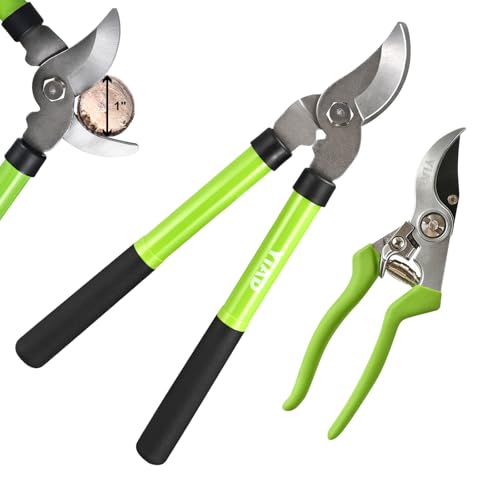
🌿【SK-5 Hardened Steel + Teflon Coating】: Blades forged from premium SK-5 high-carbon steel with multi-stage heat treatment—3X stronger cutting power than standard stainless steel. Teflon coating prevents sap buildup and rust, even in rain and humid conditions. Clean cuts through branches, limbs, trees, shrubs, hedges, and rose bushes without bark tearing. Perfect for detailed garden work and yard tasks—an excellent choice for both beginners and experienced gardeners.

IDEAL BRANCH TRIMMER: 28" Steel blade garden bypass lopper that glides through up to 1.5" thick branches for easy cuts; Works well for trimming tree branches to maintain your yard and garden, and to encourage overall plant health and appearance
Pros:
- Precision Cutting: Bypass loppers are great for live branches thanks to their cleaner cuts, promoting plant health.
- Gentler Cuts: The sharp blades of bypass loppers make them ideal for precision pruning tasks without damaging surrounding areas.
- Less Damage: By giving a clean flush cut, bypass loppers reduce the risk of leaving open wounds that can invite diseases.
- Not Ideal for Tough Branches: While great for live branches, bypass loppers might struggle with thicker, harder wood.
- Maintenance Intensive: Given their sharp blades, bypass loppers may require more frequent sharpening compared to anvil loppers.
- Higher Precision Needed: Due to their design, bypass loppers require more careful handling to ensure optimal cutting angles.
Remember, when choosing between bypass and anvil loppers, it all comes down to the specific pruning needs in your garden and the type of branches you’ll be dealing with.
Pros and Cons of Anvil Loppers
When it comes to anvil loppers, there are distinct advantages and disadvantages to consider before deciding if they are the right tool for your gardening needs.
Recommended Products

[4-GEAR RATCHET MECHANISM – EFFORTLESS CUTTING] The high-performance ratcheting lopper is engineered for effortless cutting. The innovative 4-step ratchet system allows you to slice through thick, dry branches up to 2.5 inches in diameter without straining your hands. This makes it ideal for hardwood, dead wood, and dense vegetation, significantly reducing hand fatigue and improving cutting efficiency.

Ratchet action gives easy cutting in short steps - ideal for cutting thicker, harder branches

Razor edge Bladed,Adopt High Quality SK5 Steel Blade, Which is Durable, High Hardness and Wear Resistance.Resists Sap Adhesion and Rust.
Pros of Anvil Loppers
- Ideal for cutting thick and dead branches that bypass loppers may struggle with.
- Less precise but easier to use compared to bypass loppers, making them more suitable for rough pruning tasks.
- Anvil loppers can deliver more power, requiring less effort from you to make cuts.
- Higher risk of crushing stems or branches due to their design, potentially causing damage to the plant.
- Increased chances of infection, as the crushing action leaves open wounds that may not heal as cleanly compared to the clean cuts made by bypass loppers.
- Regular maintenance is essential due to the bluntness that can develop on the cutting blade over time.
In the end, the choice between anvil loppers and bypass loppers depends on the specific requirements of your gardening tasks and the type of branches you’ll frequently be working with.
Conclusion
When deciding between anvil loppers and bypass loppers for your gardening needs, consider the trade-offs each option offers. Anvil loppers excel at cutting through thick and dead branches with ease, providing power and efficiency. However, they come with the risk of potentially damaging stems or branches if not used carefully. On the other hand, bypass loppers offer precision cutting, reducing the chances of crushing plant material. Your choice should be based on the type of gardening tasks you frequently encounter and the branches you typically work with. Remember to prioritize safety and maintenance to ensure your loppers remain effective and reliable tools in your gardening arsenal.
Frequently Asked Questions
What are anvil loppers good for in gardening?
Anvil loppers are ideal for cutting thick and dead branches efficiently. They provide more power for cutting and require less precision compared to bypass loppers.
What are the disadvantages of using anvil loppers?
Using anvil loppers can risk crushing stems or branches, potentially causing plant damage and increasing the chances of infection. Regular maintenance is necessary to avoid issues from blade bluntness over time.
How do anvil loppers differ from bypass loppers?
Anvil loppers exert force on a flat anvil surface, while bypass loppers cut with two sharpened blades passing each other. Anvil loppers are more suitable for tougher cuts.
Which factors should one consider when choosing between anvil and bypass loppers?
Consider the type of branches you typically work with and the level of precision needed. Anvil loppers excel in power cutting, while bypass loppers offer cleaner cuts for live branches.
