

Loquat trees can thrive alongside other fruit trees, offering a beautiful and productive addition to your orchard. Before planting, it's important to consider compatibility, ideal growing conditions, and potential challenges.
Understanding how loquat trees can coexist with other fruit trees is crucial for a successful and thriving orchard. Let's explore the potential benefits and possibilities of integrating loquat trees with other fruit trees.
Key Takeaways
- Compatibility is important when planting loquat trees near other fruit trees to ensure healthy growth and fruitful harvests.
- Consider the soil preferences of both loquat trees and other fruit tree varieties to avoid nutrient competition.
- Ensure compatible pollinators are nearby for cross-pollination to increase fruit yield and quality.
- Be mindful of the aggressive root systems of some fruit trees and plan for adequate spacing to avoid root competition.
Compatibility With Other Fruit Trees
When planting loquat trees with other fruit trees, it's important to consider their compatibility to ensure healthy growth and fruitful harvests. Loquat trees have specific soil requirements, preferring well-draining soil with a slightly acidic to neutral pH. When intercropping with other fruit trees, it's essential to choose varieties that have similar soil preferences to avoid competition for nutrients.
Additionally, considering pollination is crucial when planting different fruit trees together. Some trees may require cross-pollination, so it's important to ensure that compatible pollinators are nearby.
Moreover, be mindful of root competition when planting loquat trees with other fruit trees. Some fruit trees have aggressive root systems, which can compete with the loquat tree for water and nutrients.
Recommended Products

Includes 2 Yellow Loquat (Eriobotrya japonica) live plants, each measuring approximately 3–5 inches tall

Produces sweet, golden loquat fruits when mature, ideal for home gardens or patios
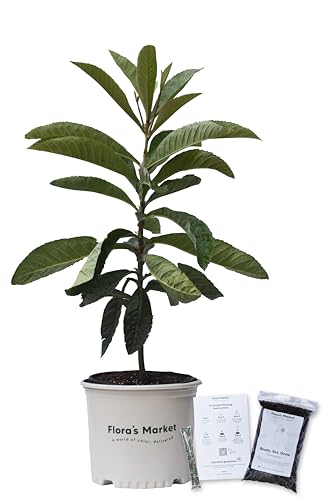
SWEET, TROPICAL FRUIT - Loquat trees produce juicy, pear-shaped fruit with a unique, tangy-sweet flavor, perfect for fresh eating or making jams
Ideal Growing Conditions for Loquat Trees
Considering the specific soil requirements and compatibility with other fruit trees, creating ideal growing conditions for loquat trees is essential for ensuring healthy growth and bountiful harvests.
To achieve optimal conditions for your loquat trees, follow these guidelines:
- Soil Requirements
- Loquat trees thrive in well-draining, slightly acidic soil with a pH range of 6.0 to 7.5.
- Ensure the soil is rich in organic matter to promote healthy root development and overall tree growth.
In addition to soil requirements, proper pruning techniques are essential for maintaining the health and productivity of your loquat trees.
Recommended Products

Kindly NOTE: This soil tester can not be applied to test pH value of any other liquid. If the soil is too dry the indicator will not move, and water it before testing.

【7-in-1 Features】This is a 7-in-1 multi-function soil tester. Our soil tester quickly measures soil moisture, pH, temperature and light intensity, and its fertility function helps you take better care of your plants. With this device you can measure the soil moisture, pH, temperature and light intensity for your plants and with the EC and TDS functions you will know when it is time to water the soil.

Accurate pH and Moisture Measurement: Achieve optimum results with this pH and moisture meter; It provides accurate and reliable readings to determine the pH levels and moisture content of different types of soil
Considerations for Planting Loquat Trees Near Other Fruit Trees
To ensure successful coexistence, it's important to consider the specific needs and interactions of loquat trees when planting them near other fruit trees.
Firstly, assess soil compatibility to ensure that all the fruit trees in the vicinity thrive. Loquats prefer well-draining, slightly acidic soil, so ensure this aligns with the needs of the other fruit trees.
Additionally, consider tree spacing to avoid overcrowding and competition for resources. Adequate spacing allows each tree to access sufficient sunlight, nutrients, and water.
Furthermore, understand the pollination requirements of each fruit tree. Some trees may have specific pollination needs that differ from loquats, so it's essential to ensure compatibility.
Recommended Products

Quick, at home results for Soil pH, Nitrogen, Phosphorous and Potash Innovative and inexpensive soil test kit features an easy-to-use capsule system and patented color comparators

Comprehensive Soil Analysis: Liquid soil test kits offer a comprehensive analysis of essential soil parameters, including pH, ammonia, nitrogen, phosphorus, and potassium. Having all these measurements in one kit provides a holistic understanding of the soil's fertility and health.

Quick, at home results for Soil pH, Nitrogen, Phosphrous and Potash
Benefits of Growing Loquat Trees Alongside Other Fruit Trees
- Complementary Growth: Loquat trees have a relatively low canopy, allowing them to thrive alongside taller fruit trees without competing for sunlight. This maximizes space and sunlight utilization in your orchard.
- *Pollination Advantages*: Planting loquat trees near other fruit trees can enhance cross-pollination, leading to increased fruit yield and quality. Loquat blossoms attract pollinators, benefiting nearby fruit trees as well.
As you explore the benefits of growing loquat trees alongside other fruit trees, you'll discover how their compatible soil and spacing requirements can create a harmonious and productive orchard. Interplanting benefits include maximizing land use and optimizing resources. Here are some advantages to consider:
Potential Challenges of Growing Loquat Trees Next to Other Fruit Trees
You may encounter potential challenges when growing loquat trees alongside other fruit trees in your orchard.
One challenge to consider is the interference effects that can arise when different types of fruit trees are grown in close proximity. This interference can occur when the trees compete for resources such as sunlight, water, and nutrients.
Additionally, root competition may become an issue as the trees' roots spread and vie for space and sustenance in the soil. Loquat trees, in particular, have vigorous and extensive root systems that may encroach upon the root zones of other fruit trees, leading to decreased overall growth and productivity.
It's essential to carefully plan and manage the arrangement of fruit trees in your orchard to mitigate these potential challenges and ensure the healthy development of all trees.
Conclusion
In summary, planting loquat trees alongside other fruit trees can enhance cross-pollination and diversify your fruit harvest. However, it's crucial to consider the potential challenges of resource competition.
With careful planning and maintenance, the coexistence of loquat trees with other fruit trees can yield a fruitful and harmonious garden or orchard. Consider the compatibility and growing conditions while envisioning a thriving and diverse fruit landscape.
