

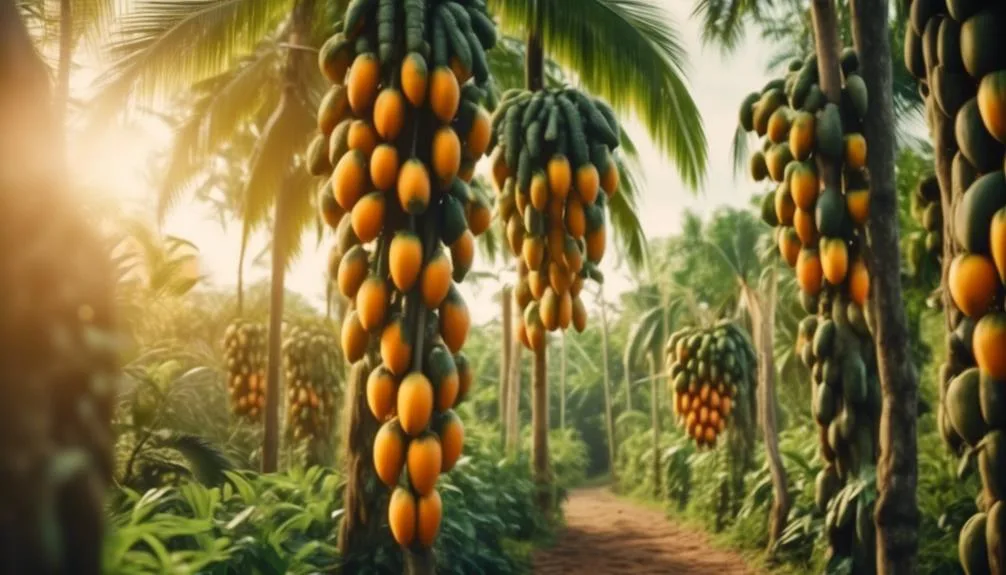
Papaya trees don't just need warm weather to thrive – they also require the right soil, sunlight, and water. Understanding the best conditions for papaya growth can help you cultivate healthy trees.
In this article, we'll explore the factors that contribute to successful papaya growth and discover the specific geographical locations where papaya trees flourish.
By the end, you'll have essential tips for growing papaya trees in optimal conditions.
Key Takeaways
- Papaya trees thrive in tropical regions with temperatures ranging from 70 to 90 degrees Fahrenheit.
- Sandy loam soil that is well-drained and slightly acidic, with a pH level between 6 and 6.5, is ideal for papaya trees.
- Papaya trees require at least 6 hours of direct sunlight daily and regular watering, but overwatering should be avoided.
- Choose locations with well-draining soil, consistent warmth, protection from strong winds, high humidity, and regular rainfall for successful papaya growth.
Ideal Climate for Papaya Trees
To successfully grow papaya trees, you need to find a location with a warm and tropical climate. Papaya trees thrive in tropical regions with temperatures ranging from 70 to 90 degrees Fahrenheit. These trees are sensitive to frost and can't withstand temperatures below 32 degrees Fahrenheit, so it's crucial to choose a location with a consistently warm climate.
The ideal temperature range ensures optimal growth and fruit production. In addition to warmth, papaya trees require well-drained soil and plenty of sunlight to flourish. If you live in a region with a tropical climate and meet the temperature requirements, you're well on your way to creating a suitable environment for papaya tree cultivation.
With the right conditions, you can enjoy an abundant harvest of delicious papayas.
Soil Requirements for Papaya Trees
For successful growth of papaya trees, selecting the right soil is essential to provide the necessary nutrients and drainage. Papaya trees thrive best in sandy loam soil that is well-drained and slightly acidic, with a pH level between 6 and 6.5. In tropical regions, this type of soil is commonly found and is ideal for cultivating papayas. Sandy loam allows for proper aeration and root development while preventing waterlogging, which can be detrimental to papaya trees. Proper irrigation techniques, such as drip irrigation, can help maintain soil moisture levels, while pruning methods can ensure adequate air circulation and sunlight penetration. Here's a comparison of soil types for papaya trees:
| Soil Type | Drainage | pH Level |
|---|---|---|
| Sandy Loam | Well-Drained | 6-6.5 |
| Clay | Poor Drainage | >7 |
| Peat Moss | Retains Water | <5.5 |
Sunlight and Water Needs for Papaya Trees
When cultivating papaya trees, it's crucial to ensure they receive ample sunlight and proper watering to support healthy growth and fruit production.
Papaya trees thrive in full sunlight, so it's essential to plant them in an area where they can receive at least 6 hours of direct sunlight daily.
As for watering frequency, papaya trees generally require regular watering, especially during dry periods, but it's important not to overwater as they're susceptible to root rot.
Pruning techniques can help maintain the tree's shape and promote air circulation, which is vital for preventing disease.
When it comes to fertilizer application, a balanced fertilizer with a higher potassium content can support fruit production.
Additionally, keeping an eye out for pests and implementing suitable pest control measures is essential for maintaining healthy papaya trees.
Geographical Locations for Successful Papaya Growth
Considering the ideal growing conditions for papaya trees, choose locations with well-draining soil, consistent warmth, and protection from strong winds.
When it comes to papaya tree cultivation, tropical regions are the most suitable due to the warm climate and abundant sunlight. Factors affecting papaya tree growth in different climates include temperature, humidity, and rainfall.
Papayas thrive in temperatures between 70°F and 90°F, making tropical climates ideal for their cultivation. High humidity and regular rainfall are also essential for healthy papaya growth.
Additionally, protection from strong winds is crucial as papaya trees have shallow root systems and can easily topple in windy conditions.
Therefore, when selecting a location for growing papaya trees, prioritize tropical regions that offer the necessary warmth, humidity, and protection from strong winds.
Tips for Growing Healthy Papaya Trees
To ensure healthy papaya tree growth, prioritize well-draining soil, consistent warmth, and protection from strong winds when selecting a location for cultivation. Once planted, regular pruning is essential to maintain the health and productivity of the papaya tree. When pruning, focus on removing dead or diseased branches and thinning out the canopy to allow for better air circulation and light penetration. Additionally, implementing effective pest control techniques is crucial for the optimal growth of papaya trees. This involves regularly inspecting the tree for signs of pests such as aphids or fruit flies and using appropriate organic or chemical control methods when necessary. By following these tips for papaya tree care, you can promote vigorous growth and ensure a bountiful harvest.
| Tips for Growing Healthy Papaya Trees | |
|---|---|
| Prioritize well-draining soil | Consistent warmth |
| Protection from strong winds | Regular pruning |
| Pest control techniques |
Conclusion
In tropical climates with well-draining soil, ample sunlight, and consistent water, papaya trees thrive. Whether in Hawaii, Florida, or other tropical regions, providing these conditions will yield healthy and fruitful papaya trees in your garden.
Mimicking their natural habitat is the key to successful papaya cultivation. Happy growing!
