

Over 95% of the world's olive oil comes from just 16 countries.
Harvesting olive fruit involves different methods, each with its own pros and cons. Factors like orchard size, terrain, and desired oil quality influence the best approach.
Understanding these methods and the right time to harvest is essential for maximizing yield and preserving olive quality.
So, how do you choose the best method for your olive grove?
Key Takeaways
- Handpicking method preserves the integrity of olives, resulting in a superior final product.
- Raking technique utilizes gentle and thorough approach to minimize damage to the tree and fruit.
- Shaking and beating approach can be done using machinery or traditional methods, but careful handling is important.
- Using harvesting machinery requires regular maintenance, cost evaluation, operator training, and staying updated with advancements.
Handpicking Method
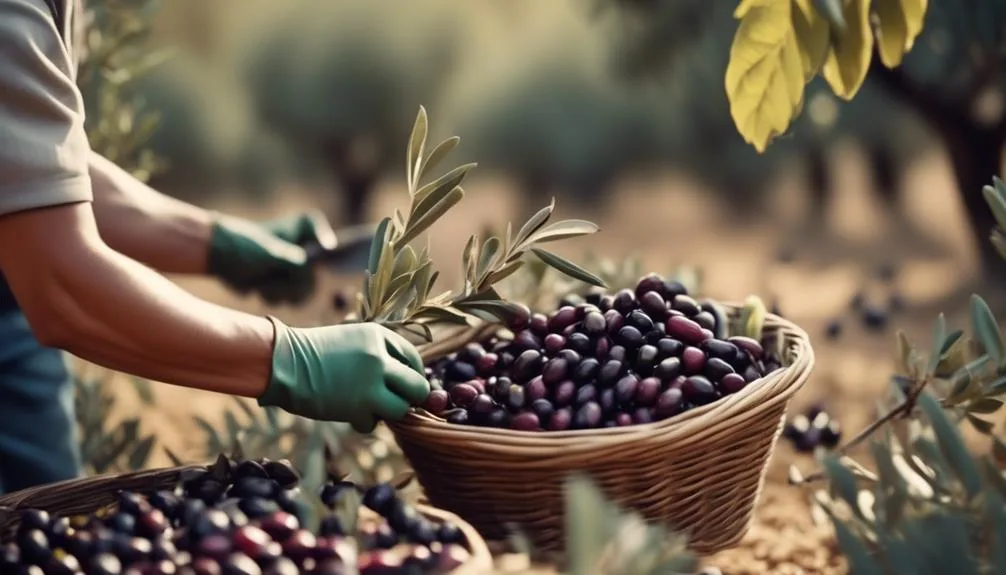
When harvesting olive fruit using the handpicking method, it's essential to carefully select only the ripest olives for the best quality yield. This method requires manual labor but ensures that only the highest quality olives are chosen.
Handpicking allows for a meticulous selection process, as workers can visually inspect each olive, ensuring that only the ripest ones are harvested. Mechanical assistance can be minimal in this method, with tools like handheld rakes or small hand-held machines assisting in the collection process, but the majority of the work is done by hand.
While handpicking can be more labor-intensive compared to mechanized harvesting, it offers the advantage of preserving the integrity of the olives, resulting in a superior final product.
Raking Technique
To effectively employ the raking technique for harvesting olive fruit, consider utilizing a gentle but thorough approach to ensure optimal yield and quality. Raking benefits include the ability to cover large areas efficiently, reducing the time and labor required for harvesting.
When using this method, choose a rake with soft, flexible tines to minimize damage to the tree and fruit. The gentle sweeping motion should start from the outermost branches, working inwards to dislodge the olives without causing harm to the tree.
Take care to avoid forcefully raking the branches, as this can lead to bruising and diminished fruit quality. While raking is effective, it's also essential to consider alternative tools, such as handheld combs or electric harvesters, depending on the size of the orchard and the specific olive varieties being harvested.
Shaking and Beating Approach
After employing the gentle raking technique for harvesting olive fruit, you can now explore the shaking and beating approach to further optimize your yield without causing harm to the trees. This method involves using machinery or traditional methods to shake the branches, causing the olives to fall onto collection nets or tarps. It's important to ensure that the shaking and beating are done carefully to avoid damaging the trees. Here's a comparison of the mechanical harvesters and traditional methods:
| Method | Description |
|---|---|
| Mechanical Harvesters | Utilizes machines to shake the tree or beat the branches, allowing for efficient and quick harvesting. |
| Traditional Methods | Involves hand-held tools such as sticks or poles to gently beat the branches, encouraging olives to drop without causing harm to the tree. |
When considering the shaking and beating approach, it's crucial to weigh the pros and cons of both mechanical harvesters and traditional methods to determine the most suitable approach for your olive orchard.
Recommended Products

FOLDING PRODUCE KNIFE: Ideal for clean, precise harvesting of smaller garden stalks and stems

Package Includes: Come with 24 pieces of fruit branch forms stronger branches. which can be used to pull the branches flat, and fruit trees can absorb sunlight, ventilation and fruitfulness.

✔【Pro Harvesting Power】: 2026 cordless electric olive picker machine with 250W/600W brushless motor provides a powerful speed of 6,500 RPM.Clamping-type picking head gently separates olives, walnuts,coffee beans,sea buckthorn and goji berries without damaging branches, achieving up to 100kg per hour per machine. Whether you're a hobbyist or commercial grower, quickly improve efficiency while protecting your trees.
Using Harvesting Machinery
For efficient olive fruit harvesting, consider employing machinery to optimize your yield and streamline the process. Using harvesting machinery can significantly increase efficiency and productivity. Here are some essential tips for utilizing harvesting machinery:
- Regular Maintenance: Keep your harvesting machinery well-maintained to ensure optimal performance and longevity. Regular cleaning, oiling, and inspections are crucial for smooth operations and to avoid breakdowns during the harvest season.
- Cost Efficiency: Evaluate the cost effectiveness of different machinery options. Consider factors such as fuel consumption, labor requirements, and overall productivity to determine the most cost-efficient solution for your olive orchard.
- Training: Ensure that operators are adequately trained to handle the machinery. Proper training not only enhances safety but also improves the efficiency of the harvesting process.
- Upgrades and Technology: Stay updated with the latest advancements in harvesting machinery. Upgrading to newer, more efficient equipment can often result in higher productivity and cost savings in the long run.
Timing and Ripeness Considerations
Considering the optimal timing and ripeness of your olive fruit is essential for maximizing the efficiency of your harvesting machinery and ensuring a high-quality yield. To achieve the best oil quality, it's crucial to harvest olives at the right stage of ripeness.
The color of the olives is a good indicator – for high-quality oil, aim to harvest when the olives are just beginning to change from green to purple. Factors such as climate impact the ripening process, so it's important to consider the specific conditions in your region. Warmer climates tend to cause olives to ripen faster, while cooler temperatures can delay ripening.
Conclusion
In the end, whether you opt for the traditional handpicking method or the efficiency of harvesting machinery, the key is to consider timing and ripeness.
Choose the method that best suits your olive orchard and enjoy a successful harvest.
Happy picking!
