

Ever wondered how to create a fruitful garden where your favorite fruits grow on the same tree? Picture this: you have limited space but dream of enjoying a variety of fruits right from your backyard. What if we told you that you could merge different fruit trees to make this vision a reality?
Key Takeaways
- Choose fruit trees for grafting that are of the same genus to ensure compatibility and successful grafting.
- Select fruit tree varieties with similar growth habits to promote harmonious growth after grafting.
- Pay attention to the compatibility between the rootstock and scion for healthy growth and optimal fruit production.
- Conduct grafting during the tree’s dormant season for increased chances of successful graft union formation.
- Consider the disease resistance properties of different fruit tree varieties before grafting to enhance overall tree health and reduce infection risks.
Choosing Compatible Fruit Trees for Grafting
When selecting fruit trees to graft together, it’s crucial to consider the compatibility of the trees to ensure successful grafting. Here’s a guide to help you choose compatible fruit trees for grafting:
Recommended Products

【Surgical-Precision Grafting Tools】 Crafted with Japanese SK5 High-Carbon Steel blades (HRC 58-60 hardness) and ergonomic ABS handles, our 2-in-1 pruner delivers clean cuts up to 1/2" diameter branches. Dual-edge Ω/U/V blades prevent stem crushing, boosting grafting success rates by 40%* (*lab test data).
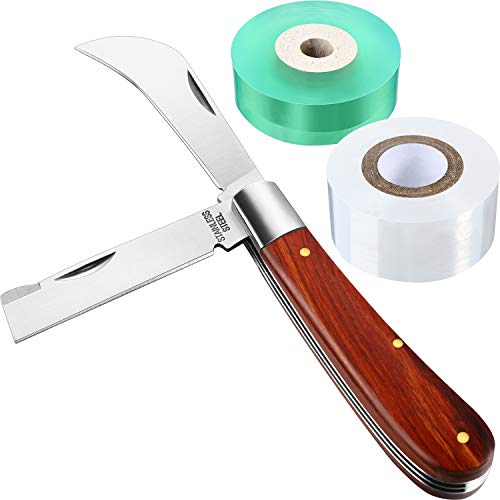
Package includes: you will get 1 double blades garden grafting knife and 2 rolls of grafting tapes in 2 sizes, ideal set for grafting budding, cutting, digging, sprouting, plants, weeding, cutting, sawing, etc.
Understanding Tree Compatibility
It’s essential to graft trees of the same genus for successful compatibility. For example, apple trees can be grafted onto other varieties of apple trees. This compatibility ensures that the graft union integrates seamlessly, leading to a healthy and productive tree.
Similar Growth Habits
Choose fruit tree varieties with similar growth habits for grafting. Trees with similar growth patterns are more likely to fuse successfully, leading to a harmonious growth of the grafted tree. For instance, grafting a fast-growing tree onto a slow-growing tree may result in an imbalance that affects the overall health of the tree.
Consider the Rootstock
When grafting fruit trees, pay attention to the rootstock compatibility. The rootstock significantly influences the tree’s growth, vigor, and ultimate fruit production. Ensure that the rootstock is compatible with the scion (the upper part of the graft) to promote healthy growth and optimal fruit quality.
Seasonal Considerations
Timing is crucial when grafting fruit trees. Conduct grafting during the tree’s dormant season to increase the chances of successful graft union formation. The dormant season allows the tree to focus its energy on healing the graft rather than on other growth activities.
Disease Resistance
Select fruit tree varieties with similar disease resistance properties for grafting. Grafting disease-resistant varieties can help enhance the overall health of the tree and reduce the risk of infections. It’s important to research the disease resistance of different fruit tree varieties before grafting them together.
By considering tree compatibility, growth habits, rootstock, seasonal timing, and disease resistance, you can increase the likelihood of successful grafting when merging different fruit trees. Following these guidelines will help you create a diverse and thriving fruit tree in your garden.
Factors to Consider Before Grafting Fruit Trees
When choosing fruit trees to graft together in your garden, there are several essential factors to consider to ensure successful outcomes.
Recommended Products

TREE GRAFTING TOOL - Efficiently prepare scion shoots and understock for grafting with our handy garden tool. This standard manual grafting tool can be used to cut stock up to 1/2” in diameter and comes with an excellent illustrated instruction manual.

Professional Grafting Tool: This gardening grafting tool kit includes 2 in 1 grafting pruning tool and 3 replaceable blades. The 3 replaceable graft cutting blades (Ω-Cut & U-Cut & V-Cut) for cutting fruit branches with diameters from 5 mm to 12 mm. Precise and perfect cutting improves survival rate.

PROFESSIONAL GARDENING GRAFTING TOOLS: Including 2 in 1 grafting pruning tools, 3 replaceable blades, a grafting knife, a screwdriver, a wrench, 2 grafting films, 160 rubber bands, 40 wide rubber bands, and 50 colorful tag cards
Tree Compatibility
Select fruit tree varieties that are compatible for grafting. Compatibility ensures that the grafted trees will grow together harmoniously, sharing nutrients and supporting each other’s growth.
Growth Habits
Choose fruit trees with similar growth habits. Trees with comparable growth patterns will integrate more effectively, reducing the risk of structural conflicts as they mature.
Rootstock Considerations
Pay attention to the rootstock of the fruit trees you plan to graft. Ensure that the rootstock is suitable for the graft and provides necessary support for the desired fruit variety.
Seasonal Timing
Timing is crucial when grafting fruit trees. Optimal grafting times vary depending on the fruit tree species, so it’s essential to research the ideal season for each specific tree before attempting the graft.
Disease Resistance
Consider the disease resistance of the fruit tree varieties you plan to graft. Choosing trees with natural resistance to common diseases can help protect your graft from infections and enhance the overall health of the tree.
By carefully assessing these factors before grafting fruit trees in your garden, you can increase the likelihood of successful grafting outcomes and enjoy a bountiful harvest of diverse fruits from a single tree.
Popular Combinations of Fruit Trees for Successful Grafting
When it comes to grafting fruit trees successfully, choosing the right combinations is essential. Here are some popular combinations that have a high likelihood of successful grafting:
Recommended Products

6-Piece Grafting Tool Set: Includes one SK5 steel grafting cutter, one 2CR13 steel grafting knife, three rolls of tape (1 white, 2 green), and one twist tie for complete propagation

UPGRAFE PROFESSIONAL GARDENING GRAFTING TOOLS: Professional grafting set, including 2 in 1 grafting pruning tools, 3 replaceable blades, a grafting knife, a pruning shears, a screwdriver, a wrench, 3 grafting films, and 45 colorful tag cards

★ 1. What you get: Professional convenient grafting tool set including a dual-use grafting pruner tool contain 2 extra replaceable blades, a wrench and a screwdriver, along with 36pcs wide rubber bands, 150 thick rubber bands and 1 grafting tape, packed in a black wallet to meet all your needs
Apple Trees
- Apple onto Apple: This is one of the most common grafting combinations. You can graft different apple varieties onto an apple tree to have multiple types of apples on a single tree.
- Apple onto Crabapple: Grafting apple varieties onto a crabapple tree is another successful combination. Crabapples are often used as rootstocks for regular apple varieties.
Citrus Trees
- Lemon onto Orange: Grafting a lemon branch onto an orange tree can create a tree that produces both lemons and oranges.
- Grapefruit onto Pomelo: Combining these two citrus fruits through grafting can result in a tree that bears both grapefruits and pomelos.
Stone Fruit Trees
- Plum onto Peach: Grafting a plum branch onto a peach tree can lead to a tree producing both plums and peaches.
- Apricot onto Plum: By grafting an apricot branch onto a plum tree, you can enjoy a mix of apricots and plums from a single tree.
- European Pear onto Asian Pear: Combining European and Asian pear varieties through grafting can give you a tree with different types of pears.
- Pear onto Quince: Grafting pears onto quince rootstocks is a successful method that can result in a tree bearing both pears and quinces.
Tips for Successful Grafting of Fruit Trees
Timing Is Crucial
Start grafting in late winter or early spring when the trees are still dormant. This period ensures that the grafts have enough time to heal before the growing season begins. It’s best to graft when the tree is not under stress to increase the chances of successful grafting.
Select Healthy Scions and Rootstocks
Choose disease-free scions (the upper part of the graft) and rootstocks (the lower part of the graft) from reputable sources. Healthy plant material increases the likelihood of successful grafting and the long-term health of the grafted tree.
Use the Right Tools
Ensure your grafting knife is sharp and clean to make precise cuts. A dull knife can damage the graft, while a dirty knife may introduce pathogens. Additionally, have grafting tape or rubber bands on hand to secure the graft in place.
Match Cambium Layers
Align the cambium layers of the scion and rootstock when making the graft. The cambium is the thin layer just below the bark where growth occurs. Proper alignment helps promote successful graft union and nutrient flow between the scion and rootstock.
Protect the Graft
After grafting, protect the graft union by applying grafting compound or sealing wax to prevent drying out and entry of pathogens. This step is crucial for the healing process and overall success of the graft.
Monitor and Care for the Grafted Tree
Regularly monitor the grafted tree for any signs of stress, disease, or failed grafts. Provide adequate water and nutrients to support the graft’s healing process and overall growth. Pruning may also be necessary to shape the tree and ensure proper fruit production.
Conclusion
Grafting fruit trees opens up a world of possibilities for creating unique and diverse fruit varieties in your garden. By carefully selecting compatible varieties and following the tips provided, you can increase the success rate of your grafting endeavors. Remember to consider factors like tree compatibility, timing, and proper care to ensure the health and productivity of your grafted tree. Experiment with different combinations and enjoy the satisfaction of growing your customized fruit tree. Happy grafting!
Frequently Asked Questions
Q: Why is selecting compatible fruit tree varieties crucial for successful grafting?
A: Selecting compatible fruit tree varieties is crucial for successful grafting to ensure that the graft will take and grow, leading to a healthy and productive tree.
Q: What factors should be considered when choosing fruit tree varieties for grafting?
A: Factors to consider when choosing fruit tree varieties for grafting include tree compatibility, growth habits, rootstock suitability, seasonal timing, and disease resistance.
Q: What are the benefits of creating a diverse fruit tree through grafting?
A: Creating a diverse fruit tree through grafting allows for multiple fruit varieties on one tree, maximizing space and variety in the garden or orchard.
Q: Can you provide examples of successful grafting combinations?
A: Successful grafting combinations include grafting different apple varieties onto an apple tree, combining lemon and orange branches, and mixing plum and peach branches.
Q: What are some tips for successful grafting?
A: Tips for successful grafting include timing the graft correctly, selecting healthy scions and rootstocks, using the right tools, matching cambium layers, protecting the graft, and monitoring and caring for the grafted tree.
