


I started crocheting little plants a couple years ago when I wanted something green in my apartment but kept forgetting to water real ones.
Over time I tried different patterns for succulents and cacti in pots.
Some turned out better than others but they all added a nice touch to my shelves.
I put together some of my favorites here along with a few new ones I tested recently.
These projects are simple enough that I can work on them while watching shows in the evening.
Crochet Succulents with Layered Variegated Petals

A crocheted succulent built from stacked rounds of petals in mint green and pink creates a tight rosette that stands in for a real plant. The project works as a small decor piece or a filler for a larger arrangement inside a pot. Each petal uses gentle color shifts to suggest natural variation, and the compact size keeps the finished item under four inches across. It belongs in the handmade decor or giftable plant category.
The small scale makes this easy to adapt into clusters of different sizes or colors to fill a single pot. You can swap the pink for deeper tones or add a second round of outer petals if you want more spread. For gifts, a design like this needs no water or light and stays intact in a box. The structure also lets you turn one into a magnet or brooch without changing the basic pattern.
Potted Crochet Succulents and Cacti in Varied Shapes

Crochet succulents and cacti work as tabletop decor when each plant is made as a separate motif and set into a real pot. One uses a stacked rosette shape in gradient peach tones, another builds spiky leaves in light blue, and the third forms a rounded body with small bumps in lavender. The pots hold the pieces upright and add a finished look without extra construction. This approach fits the home decor category since the finished pieces require no watering or maintenance.
What makes this idea useful is that each shape can be crocheted on its own and arranged in any number or color combination. The small size lets you place them on shelves, desks, or windowsills where real plants might struggle. You can swap yarn colors to match existing room tones or use different pot styles for a custom set. For gifts, these take up little space and work well as low-commitment projects that still look complete once potted.
Crochet Cactus in a Separate Rust Pot

A crocheted cactus forms a low-maintenance stand-in for real succulents. The oval body uses raised clusters to suggest the typical cactus ribs and spines, while the separate pot in a contrasting rust tone keeps the piece stable and gives it a finished look. A small flower placed off-center on top adds a single point of color without complicating the overall shape. This type of project falls into the home decor category and works as a tabletop or shelf piece.
What makes this idea useful is that the plant and pot are worked as two pieces, so you can easily change the pot color or height to match different rooms or seasons. The small scale means it uses little yarn and fits on a desk, windowsill, or side table. For gifts, a design like this works well because you can finish it in an evening and swap the flower color to suit the recipient. You could also add a second arm or adjust the bump placement if you want to create a small collection of variations.
Crocheted String of Pearls Plant

Crocheting small round beads and joining them into long chains produces a trailing succulent that mimics string of pearls. The chains drape from a central pot resting on a wooden platform inside a macrame hanger. Consistent bead size and even spacing create the clean, repetitive look that makes the design read as a plant rather than loose yarn pieces. This type of project fits the decor category and serves as a yarn version of a hanging succulent.
The small scale makes this easy to adapt by shortening the chains for a compact hanger or adding more strands for fuller coverage. You can swap bead colors or mix in a few variegated ones to match other plants in a group. A project like this works especially well in spots with poor natural light where real succulents would fail. The separate chains also store flat and reassemble quickly when needed.
Crochet Plant Keychains

Crochet plant keychains shape small succulents and cacti into compact accessories that clip onto keyrings or bags. The designs feature a layered rosette form, a multi-arm cactus with a top flower, and a trailing cluster of rounded segments, each set into a short pot base. These pieces fit the accessory category because the finished size stays light and detailed enough for daily carry without adding weight.
A project like this works especially well as quick gifts since each keychain uses small amounts of yarn and finishes fast. You can change the green shades or add different top flowers to match specific plant types people already own. The structure makes this a smart option for selling because the shapes hold up well in photos and appeal to anyone who wants plant decor they cannot kill.
Potted Aloe Plant with Layered Leaves

A crocheted aloe plant uses pointed leaves worked in graduated sizes and shades of green to build a realistic rosette shape. Each leaf sits in a round beige pot that matches the scale of the plant, creating a self-contained decor piece that needs no soil or light. The tight stitch texture gives the leaves enough structure to stand upright without wire or stuffing, which keeps the whole project simple and stable.
What makes this idea useful is how the fixed size works on narrow shelves or desks where live succulents often get crowded. You can change the pot color or shorten a few outer leaves to fit a different container you already own. For gifts, a design like this travels well and stays looking fresh without any care instructions.
Crochet Cacti in Striped Yarn Pots

Crochet projects like these produce small potted cacti meant for windowsills or shelves where real plants might struggle. Each one uses basic rounds and textured stitches to build a solid barrel shape or a branched form, then adds a small flower on top and a separate pot cover worked in stripes or solid colors. The finished pieces sit in a row and function purely as decor since the pots hide any base and keep everything upright without extra supports.
The small scale makes this easy to adapt by switching pot colors to match a room or stretching the same pattern into a larger group for a table display. For decor, this kind of shape works especially well because the pots look like real planters from a distance while staying completely yarn-based. You could turn the idea into quick gifts by varying the flower colors or adding a few more cacti in different heights.
Crocheted Cacti in Matching Pots for Shelf Styling

These projects are small amigurumi cacti worked in different shapes and placed inside separate crocheted pots. The tall one uses a columnar body with added arms, the round one builds a compact cluster form, and the third tapers to a point, all finished with simple embroidered faces and small crocheted flowers. The matching brown pots give each piece a complete plant look while keeping the overall scale small enough for shelves or tabletops. This approach falls squarely into the decor category as a no-care alternative to real succulents.
What makes this idea useful is the way the three distinct shapes let you fill a small surface without repeating the same silhouette. You can swap the flower colors or skip the faces entirely if you want a cleaner version for adult spaces. The compact size also means they work as quick gifts or as filler pieces in a larger plant-themed setup. For Pinterest, the combination of varied forms in matching containers tends to photograph cleanly and translate well into collection-style pins.
Crochet Cactus Pins for Jackets and Bags

Crochet small cactus motifs in varied shapes like tall ovals, round pads, and two-armed forms, then top them with simple flower accents in contrasting colors. These pieces get finished as pins or brooches that attach directly to fabric surfaces. The smooth stitch texture and compact scale let the shapes read clearly even from a distance, while the green tones paired with soft pink or yellow blooms create contrast against denim or other neutral backgrounds. This fits the accessory and appliqué category for projects that stay small and portable.
What makes this idea useful is how the same cactus patterns can be made in different sizes to suit pins, bag patches, or even hair clips. You can change the flower colors or add surface details like small dots to match different outfits or seasons without starting over. For gifts, a design like this works especially well because each piece uses minimal yarn and finishes in an evening. The structure makes this a smart option for testing plant patterns before moving on to larger items like pillows or baskets.
Crocheted Succulents and Cacti in a Teacup

Small crocheted succulents and cacti can be grouped inside a single crocheted teacup to create a finished tabletop piece that needs no soil or watering. The mix of rounded rosette shapes, taller ribbed forms, and a few simple flower accents on top gives the arrangement enough variety to hold attention while staying compact. This approach fits the decor category and lets you build a plant-style display that keeps its size and color without any ongoing maintenance.
What makes this idea useful is how the contained format lets you move the whole piece easily between rooms or shelves. You can swap individual plant colors or change the cup shade to match new bedding or wall tones without starting over. For gifts, a design like this packs flat and stays intact during travel. The same base structure also works if you want to scale it down to fit a smaller mug or expand it into a larger bowl for a different surface.
Crocheted Saguaro Cactus Plush

This project is a tall, freestanding cactus shape crocheted in green yarn with two side arms and a dense stitch texture that holds its form when stuffed. Small beige circles are added across the surface to suggest natural markings. The design falls into the plushie or decor category and works as a low-maintenance stand-in for real succulents because the shape stays upright without a pot or base.
What makes this idea useful is how the basic tube-and-arm structure can be resized for different heights or turned into a set of smaller versions. The neutral spine details keep the look simple while still readable as a cactus. A project like this works especially well as shelf decor in low-light rooms or as a quick gift that does not require plant care. You can change the arm length or add more arms to match other cactus types without changing the overall pattern.
Cloud Basket Crochet Planter for Succulents
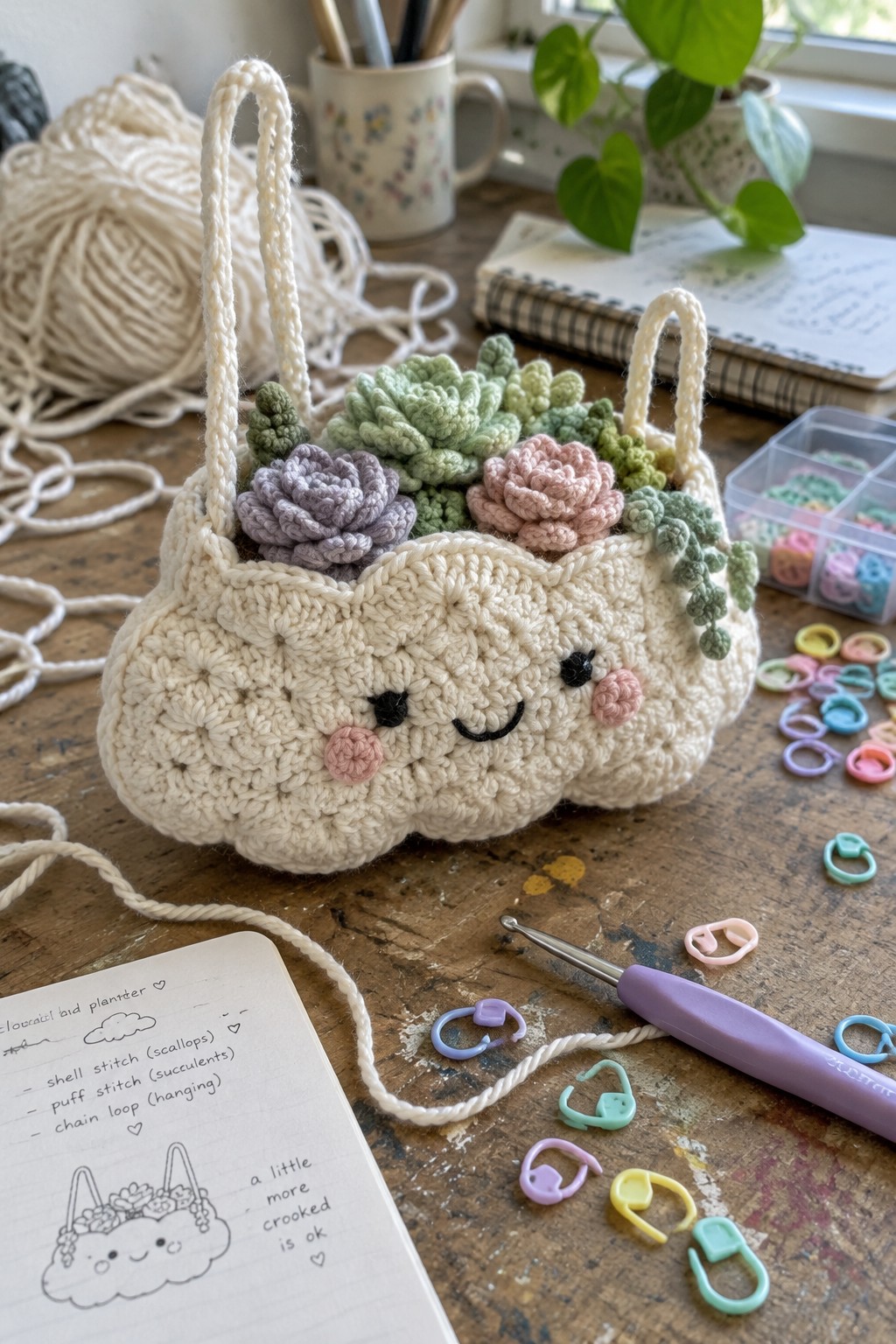
A crocheted cloud-shaped basket holds a cluster of small succulent motifs in its open top. The rounded body uses basic stitches to create soft scalloped edges, and two simple looped handles allow it to sit on a surface or hang from a hook. A stitched face with black eyes, a curved mouth, and pink cheek circles adds a clear front without extra layers. This style fits the decor basket category and stays small enough for a desk, shelf, or windowsill.
The small scale makes this easy to adapt by widening the cloud or shortening the handles for different spaces. It works especially well as a low-maintenance desk piece since the succulents never need water. You can swap the face colors or change the succulent shades to match leftover yarn from other projects. For gifts, a design like this finishes quickly and photographs clearly for sharing.
Crocheted Prickly Pear with Flower Accents
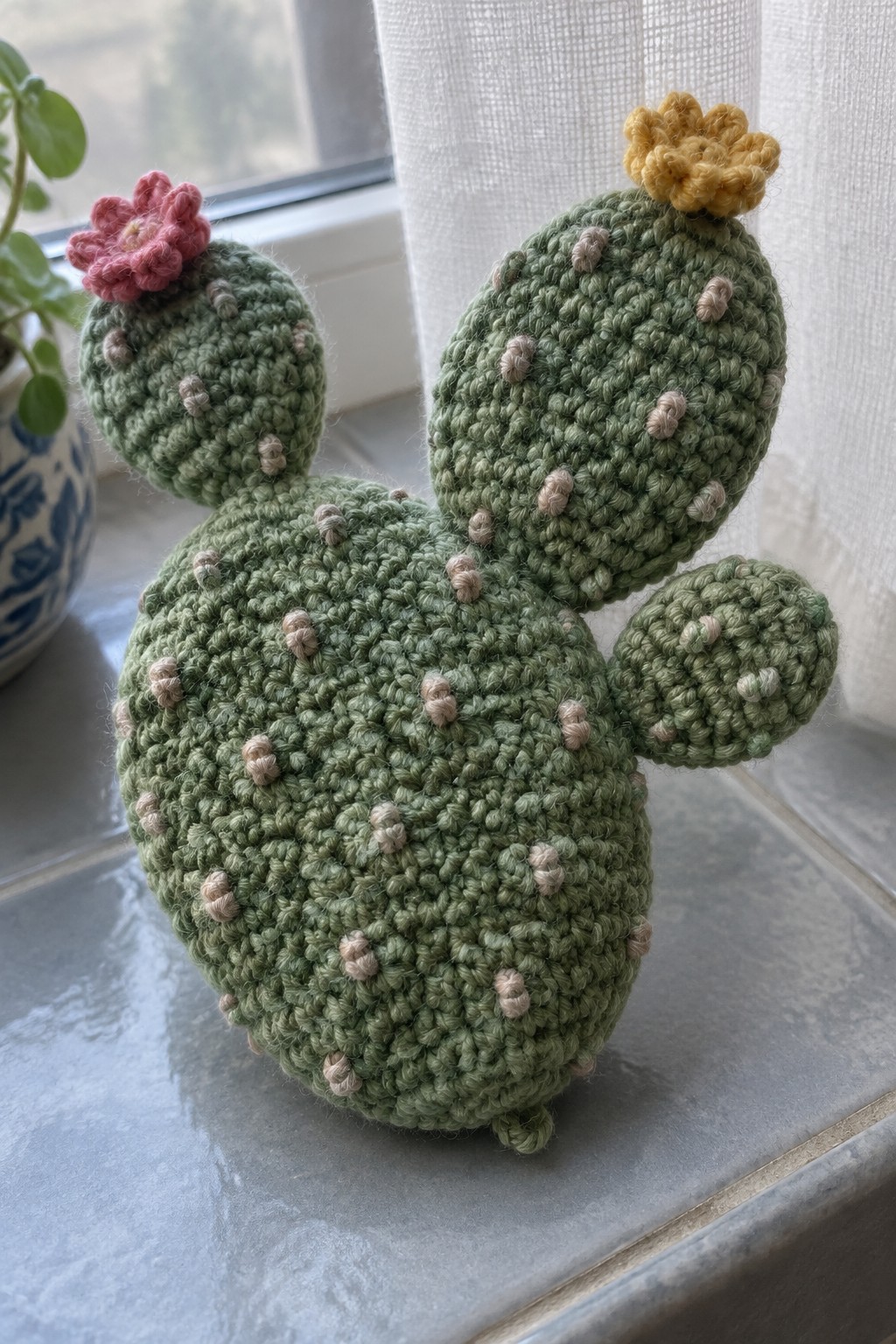
A crocheted cactus made from joined oval pads forms a compact prickly pear shape that stands on its own. Small beige stitches placed across the green surface create the look of spines while keeping the piece soft. Pink and yellow flowers attached to separate pads add color contrast and break up the solid green. This fits the potted succulent decor category and works as a finished piece that needs no real plant care.
What makes this idea useful is how easily the number of pads can be adjusted to change the overall height or width. The same base pattern can be worked in different greens or with different flower colors to suit various rooms or seasons. For gifts, a design like this appeals to people who like plants but struggle to keep them alive. The rounded pad structure also makes it simple to add or remove flowers later if you want to update the look.
Toy Train Display with Crochet Succulents and Cacti

Small crocheted succulents and cacti are worked in separate pieces then placed into tiny pots that sit inside the cars of a wooden toy train. The round rosette shapes and trailing stems create variety while the soft yarn covers keep the plants lightweight and stable on the track. This turns an existing toy into a rotating display piece rather than a one-time decoration. The project falls into the decor category and works best when the pots are sized to match the train cars exactly.
The small scale makes this easy to adapt to other wooden vehicles or even a set of blocks. You can swap the plant styles seasonally or change the pot colors to match different rooms without starting over. For gifts, a design like this pairs well with a plain train set so the recipient gets both the toy and the removable plants. The structure also lets you add or remove cars as needed for different shelf lengths.
Crocheted Succulent Mobile with Wooden Ring

Crocheted succulents in miniature pots create a hanging mobile when attached to cords and suspended from a wooden ring. This project works as lightweight decor that can hang near a window or in a corner. The design uses several different succulent shapes and soft pot colors to build interest through repetition and contrast rather than matching sets. It fits the hanging decor category as a finished piece that stays in place once assembled.
What makes this idea useful is how each succulent and pot can be made separately then joined at the end. The small scale makes this easy to adapt by changing the ring size or using fewer strands for a simpler version. For decor, this kind of shape works especially well in apartments where real plants need more light. A project like this stands out on Pinterest when the pots are shown in a row of pastel tones against a plain wall.
Crocheted Barrel Cactus for Flat Surfaces
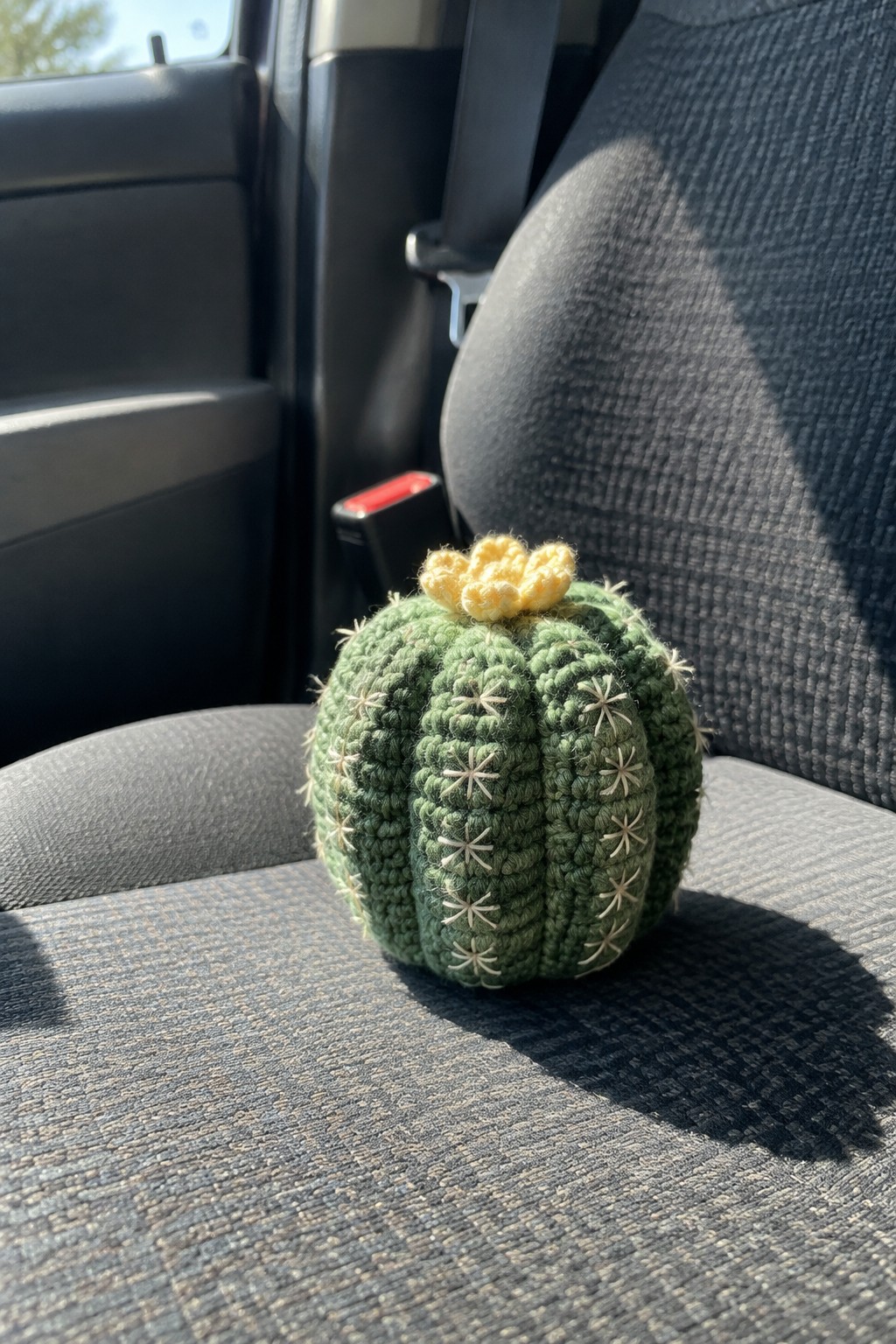
A crocheted cactus forms a compact decorative object that holds its shape without a pot or soil. The body uses a rounded structure with vertical ribbing and small white star stitches to suggest spines, while a separate yellow flower piece attaches at the top. This approach works as a simple decor item that fits on shelves, desks, or car seats where a real plant might slide or need care.
The small scale makes this easy to adapt by adjusting the number of ribs or trying different flower colors to match other crochet plants. A project like this works especially well as a quick gift because it packs flat and stays put on surfaces. The structure makes this a smart option for anyone who wants plant-style decor without ongoing maintenance.
Layered Crochet Succulent Rosettes for Small Pots

A crocheted succulent rosette builds from the center out through stacked rounds that mimic the tight leaf clusters of real succulents. Color shifts from the middle outward create the look of different leaf layers without extra shaping. The finished motif fits inside a small pot or sits on its own as a shelf accent. It belongs in the decor category as a low-maintenance plant stand-in.
What makes this idea useful is how the compact size lets you make several to group in one container for more impact. You can change the yarn colors to copy specific succulent types or match room colors. For gifts, a design like this drops straight into a pot with a tag and needs no extra packaging. The structure makes this a smart option for quick projects that still read as thoughtful plant decor.
Frequently Asked Questions
What materials work best for crocheting potted succulents and cacti? Use medium weight cotton or acrylic yarn in shades of green, with a 3.5 mm or 4 mm hook for tight stitches that hold shape. Stuff with polyester fiberfill and add a small terracotta or plastic pot filled with gravel or air dry clay for the base. These choices create sturdy, realistic textures without sagging.
Are the projects in the article suitable for beginners? Many of the 19 ideas use basic stitches like single crochet and increases, so beginners can start with simpler round shapes for cacti. More complex patterns with color changes or spines require practice with increases and decreases. Follow photo tutorials step by step and practice on one small succulent first before moving to detailed designs.
How do I clean and maintain finished crochet plants? Dust them gently with a soft brush or lint roller every few weeks. For deeper cleaning, spot treat with a damp cloth and mild soap, then air dry completely. Keep them away from direct sunlight to prevent fading, and store in a cool dry place when not displayed to avoid dust buildup.
Where can I find patterns for all 19 ideas? Search crochet blogs, Ravelry, or Etsy using keywords like crochet succulent patterns or potted cactus amigurumi. Some designers offer free versions on their sites while others sell detailed PDFs with stitch charts. Check the article references for direct links to the featured creators.
Can I customize the sizes or add real plants to these designs? Yes, adjust hook size and yarn weight to scale projects up or down. For mixed displays, place a small live succulent in a separate inner pot inside the crochet holder so the real plant can be watered without soaking the yarn. This keeps both elements looking fresh and allows easy swaps.
