

Mango trees are generally very easy to care for and do not require a lot of pruning. However, there are a few reasons why you may want to prune your mango tree. If you notice that the tree is producing too many fruits, pruning can help to reduce the number of fruits. This can help the tree to put more energy into producing fewer, but larger and better-quality fruits. Additionally, pruning can help to improve the shape of the tree and make it easier to harvest the fruits.
Mango trees do not need to be pruned in order to fruit. Pruning may be done to manage the size and shape of the tree.
When should mango trees be pruned?
The best time to prune is immediately after fruit harvest and no later than mid-December. First, remove any branches that are dead, crossing/rubbing together, or touching the ground. Fruit is produced on horizontal branches—vertical branches are unproductive and should be removed.
Pruning is an important part of tree care. It helps the tree to maintain its shape and encourages new growth. Each time the branches reach 20 inches in length, repeat the heading cut to encourage branching. Remove vertical branches in favor of horizontal branches, which help the tree to maintain its height. Keep pruning in this manner for 2-3 years until the tree has a strong scaffold and open frame.
Recommended Products

Perfect Tree Staking Kit: Our tree stake straight kits set includes 3 PCS tree strap ties for staking, 3 PCS steel tree stakes, and a 31.2 feet length rope for anchoring. Detailed instructions are included in the product packaging. This is a complete kit that you don't need to buy any other related accessories.
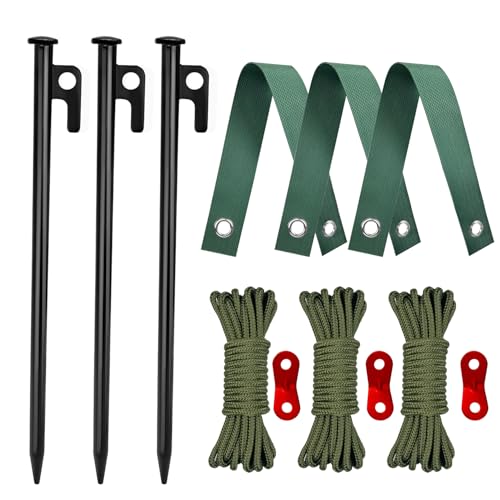
【Value Package】Package comes with 3pcs tree stakes,3pcs tree straps for staking and 3pcs ropes (each 13ft) with 3pcs aluminium tensioners. Complete tree stake kit enable your saplings to grow straight and healthy even in windy conditions

Protect Young Trees from Bad Weather: Tree stake kits are typically used when planting young trees, particularly those with small or shallow root systems, in order to provide support and promote healthy growth. Young trees are more susceptible to wind damage than mature trees, FCENDS tree stake kit can help to support the tree and prevent it from leaning or tipping over in high winds.
How much can you prune a mango tree
Mango trees can tolerate moderate to even severe pruning, but it may reduce production for one to several seasons. Pruning is often done to reduce the canopy height or width of large mango trees.
Pruning and shaping are important for maintaining a tree’s size and form. Without proper pruning and shaping, a tree can become too big to manage. One way to achieve a low, bush form is by staking branches to be horizontal with the ground. Staking mango trees or other tropical fruit tree branches is a great way to train the tree to grow out instead of up.
How do you increase the yield of a mango?
Early pruning can improve uniformity of shoot growth and subsequent uniformity of flowering, especially after a heavy crop. Mangoes flower from the tips of branches so pruning to give more terminal branches can lead to more flowers.
Pruning is a horticultural practice that involves the selective removal of certain parts of a plant, such as branches, buds, or roots.
Pruning is usually carried out to shape trees and open up the centres, allowing free movement of air and sunlight into the tree. This facilitates the penetration of sprays through the trees making control of pests and diseases much more efficient.
How do you make a mango tree bushy?
Pruning a mango tree when it is young is the best way to ensure that it will stay a manageable size. Ideally, you should prune it to a height of six to ten inches. This will allow you to control its growth and keep it from getting too big.
If you recently planted a mango tree, it’s important to water it once a day for the first few weeks. This will help the soil to stay moist and will encourage the tree to grow. Once the tree is established, you can water it every week or two. However, during periods of drought, it’s important to water your tree more often to ensure that it stays healthy.
Recommended Products

4-Hole Side Design: This high-performance tree watering spike makes it easy to deliver water and fertilizer directly to the root zone. The upgraded side-hole design helps improve watering efficiency, while the sharp tip makes it easy to push into hard or compact soil. The 4 side outlets help reduce clogging and distribute water more evenly for deep root watering and feeding.

Adds a sleek, modern look to your home

Bring the tropics to your home or office
When should I stop watering my mango tree
It is important to irrigation during the winter months in order to obtain good flowering. However, too much irrigation during this period can promote vegetative growth, which can be detrimental to flowering.
A mango tree grown from a seed will take at least five to eight years to produce fruit, while a nursery sapling should bear fruit in four years. The mango fruit takes three to five months to ripen after the tree has flowered, and the color of the ripe fruit will depend on the variety.
What is the best food for mango tree?
These fertilizers are essential for mango tree growth, as they provide the tree with key nutrients. Manganese, zinc, and iron help to promote healthy leaves and fruit, while phosphorus and potassium help to promote strong root growth.
Mango fruit set can be reduced by several factors, including low temperatures during flowering in spring and wet weather during flowering. These conditions can lead to anthracnose infection, which can cause fruit not to set.
Recommended Products
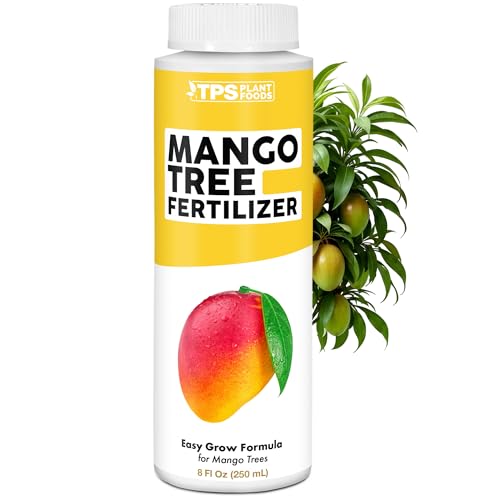
Made for Mango Trees – Formulated to support healthy growth in mango and tropical fruit trees.

2X MORE VALUE: The 16 oz of Mango Liquid Plant Fertilizer makes 16 gallons of liquid fertilizer, while the bigger size 32 oz bottle makes 32 gallons, ensuring long-lasting care for all mangoes.
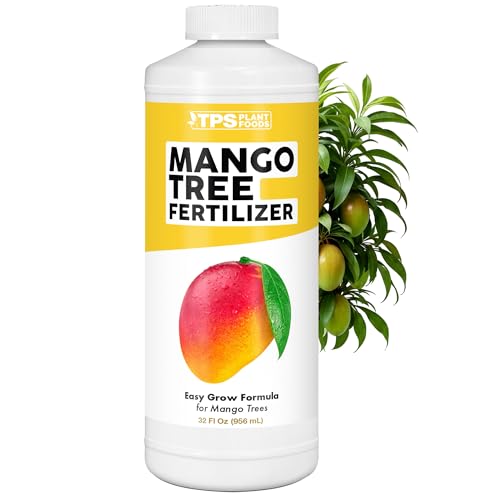
Made for Mango Trees – Formulated to support healthy growth in mango and tropical fruit trees.
How do I keep my mango tree small
Pruning mango trees is an important part of their care, since it helps to keep them healthy and compact. The best time to prune them is after they have finished fruiting, but you can remove diseased branches at any time of the year.
Sansar Agro Garden King™ Npk is a essential npk fertilizer that helps in the fast growth of mango plants. It is also responsible for the health of the mango plant. This fertilizer is available in the form of granules and powder. It is to be applied after mixing it with water.
What is the best liquid fertilizer for mango trees?
The recommended dose of IFFCO complex is 4 kg and Urea is 0.22 Kg/tree.
Mango farms are a great place to grow a variety of plants as intercrops. Coconut, areca, lemon, guava, papaya, fig, banana, jack, and pepper can all be grown together in harmony. This not only provides a more diverse and interesting landscape, but also allows each plant to benefit from the company of the others.
How do I increase flowering in my mango tree
The use of synthetic florigenic promoters may help to induce flowers in mango trees. Pruning the tips of the shoots may also help to start the process of flowering.
Applying coffee grounds to the base of your fruit tree during its growing season can help to improve its health and yield. Just make sure to avoid direct contact with the tree’s bark, as wet coffee grounds can make it more vulnerable to pests.
Do mango trees need fertilizer
It is important to fertilize mango trees three times a year in order to maintain their health and promote growth. Use a light fertilizer application in the spring, a heavier application in the summer, and a moderate application in the fall. Apply the fertilizer around the tree’s drip line, gradually increasing the amount as the tree grows.
Pruning is a necessary step in maintaining a healthy mango tree. By pruning back the tree, you stimulate new shoot growth, which in turn results in a more vigorous and regrowth. If you cut the tree back too severely, however, you may delay fruiting for 2-3 years. Pruning also helps to shape the tree and keep the center open, allowing for better air and light circulation.
Can a mango tree get too much sun
Sunburn occurs when the skin is exposed to too much ultraviolet (UV) radiation from the sun. Ultraviolet radiation is a type of electromagnetic radiation that is invisible to the human eye but can be harmful to the skin. Sunburn can cause damage to the skin, including premature aging, wrinkling, and an increased risk of skin cancer.
Mango trees are particularly susceptible to sunburn damage because they are grown in areas with high temperatures. The combination of moisture and high sun and heat can cause the fruit to split and the leaves to scorch.
To prevent sunburn damage to mango trees, it is important to provide adequate shelter from the sun and to water the trees regularly. Mulching around the base of the tree can also help to keep the roots cool and moist.
If your baby mango is ailing and overwatered, the first thing to consider is your soil. Trees that are transplanted require frequent irrigation until their root system is established in the new location, but, for a mango, it is essential that excess water drain away from the roots.
Do mango trees need full sun
Mangoes trees require a lot of sunlight to grow. Even if you put it in a pot near a window inside a room with lots of light, it won’t grow. To grow the mangoes you must have direct sunlight.
We recommend not applying nitrogen fertilizers. A light layer of mulch will protect the root system and as it decomposes, will provide enough nitrogen. After that, fertilize only when your tree is active, from April to September. Do not fertilize at all during the winter.
Warp Up
Mango trees need pruning to remove any dead or diseased branches, to stimulate new growth, and to encourage fruit production.
Mango trees do not need pruning except to remove broken or diseased branches, or to promote fruit production. Too much pruning can actually reduce fruit production.
