

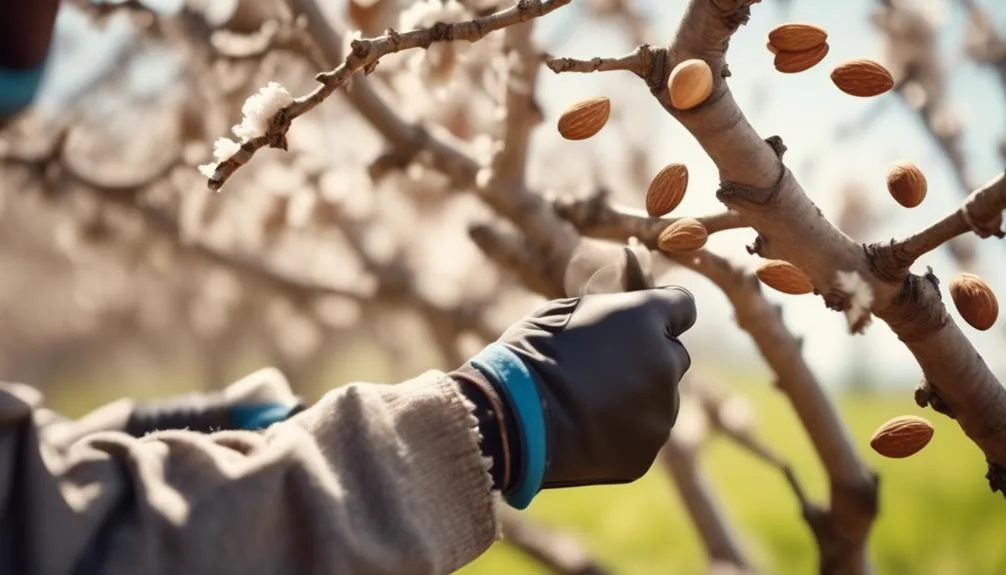
Harvesting almond nuts requires careful timing and technique. This article will cover the best practices for shaking almond trees, gathering the nuts, and ensuring their quality.
We'll discuss the optimal timing for harvesting almond nuts and efficient methods for shaking almond trees.
If you're looking to become a successful almond grower, this guide will help you get started.
Key Takeaways
- Harvest almond nuts when the hulls have split open but the shells aren't yet too hard.
- Use tractor-mounted mechanical shakers to efficiently shake almond trees.
- Gather almonds from the ground using a long-handled, wide-brimmed rake for efficient collection.
- Properly handle and dry harvested almond nuts to preserve their quality.
Optimal Timing for Harvesting Almond Nuts
To achieve the best flavor and quality, it's crucial to harvest almond nuts at the optimal time when the hulls have split open but the shells aren't yet too hard. Nut maturity is a key factor in determining the ideal timing for harvesting.
The nuts should be mature enough to have the hulls naturally split, indicating that they're ready to be harvested. Weather conditions also play a significant role in this process. It's essential to consider the weather to ensure that the nuts aren't exposed to excessive moisture, which can lead to mold and affect the overall quality.
Efficient Methods for Shaking Almond Trees
When shaking almond trees, utilize efficient methods to ensure a productive harvest without causing damage to the trees or nuts. Proper tree shaking techniques and equipment are crucial for efficient almond orchard maintenance.
Here are some tips to help you shake almond trees effectively:
- Use tractor-mounted mechanical shakers to gently vibrate the tree and dislodge the almonds without causing harm.
- Adjust shaking intensity based on the variety and age of the trees to prevent excessive stress on the branches.
- Coordinate shaking with catching frames or tarps placed beneath the trees to collect the almonds and minimize ground loss.
- Regularly maintain and calibrate shaking equipment to ensure optimal performance and minimize potential damage to the trees.
Best Practices for Collecting Almonds From the Ground
Consider utilizing a long-handled, wide-brimmed rake to efficiently gather almonds from the ground, minimizing manual labor and maximizing collection speed. Once the almonds have fallen from the trees, using a rake can help you gather them quickly and with less physical strain. When collecting almonds from the ground, it's important to have effective nut cracking and sorting techniques. The table below provides some useful techniques to assist with this process.
| Nut Cracking Techniques | Sorting Techniques |
|---|---|
| Use a nutcracker to crack open the shells | Sort almonds by size and discard damaged ones |
| Place almonds in a sturdy bag and gently tap with a mallet | Use water flotation method to remove debris |
| Utilize a vice grip to crack open the shells | Inspect for any foreign objects |
Using these techniques will help you efficiently crack open the shells and sort the almonds for further processing.
Recommended Products

Garden Leaf Rake: Easy to install, you can use the wrenches and the screw in the package to install. Handle is adjustable from 39.8"-68.9” to better accommodate your height and reach. The Angle of the pole and rake head conforms to the ergonomic principle, which can be used to use the rake with less effort, so that cleaning can be simple and convenient

Versatile for Land & Water: Whether leveling road edges, clearing leaves, tidying garden weeds, or even cleaning floating debris, our landscape rake performs well in all tasks.

【Heavy Duty and Anti-Rust】Features thick steel with an antirust and anticorrosion coating, the whole metal yard rakes are sturdy enough to collect leaves and loosen soil without collapsing or cracking.
Proper Handling and Drying of Harvested Almond Nuts
You can ensure the quality of your harvested almond nuts by carefully handling and drying them to preserve their flavor and nutritional value. Proper handling and drying are crucial steps in the almond harvesting process. Here are some essential tips to help you maintain the quality of your almonds:
- Gentle Handling: Avoid rough handling to prevent damage to the almonds.
- Nut Cracking: Use a nutcracker to carefully crack open the almond shells without damaging the nuts inside.
- Shell Removal: After cracking the shells, remove them gently to avoid breaking the almonds.
- Even Drying: Spread the almonds in a single layer on a flat surface to ensure even drying, and avoid moisture buildup.
Following these guidelines will help you maintain the integrity and quality of your harvested almond nuts.
Recommended Products
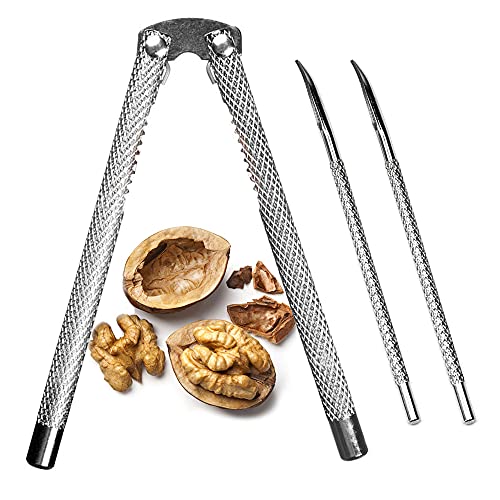
Constructed with heavy-duty all-metal zinc for exceptional strength and durability, this nutcracker tool is built to last and designed for cracking hard nuts, lobsters, crabs, and other tough shells. The sturdy zinc frame ensures you can rely on it for years of efficient use, whether you're cracking open walnuts, hazelnuts, or enjoying a seafood feast.

Multifunction: Heavy duty nut cracker can easily crack almost all kinds of nuts including pecan, walnut, hazelnuts, almonds, English walnut, Brazil nuts, etc. But Not suitable for black walnuts and macadamia. The adjustable thread cone fits the length of the nut, while the grooves trap the nut and prevent it from flying away.

SIMPLICITY: The simplest tool for a job is the best. Meet the Texan “York” Nut Sheller, a nut sheller that exudes simplicity
Storage Tips to Preserve Almond Nuts Quality
To maintain the quality and freshness of your harvested almond nuts, proper storage is essential.
After drying your almonds, store them in airtight containers to protect them from moisture and pests.
Place the containers in a cool, dark place such as a pantry or cellar to maintain their freshness.
If you prefer to store them in the refrigerator, use sealed plastic bags to prevent them from absorbing odors.
Another option is to freeze the almonds in airtight bags or containers to preserve their quality for an extended period.
Remember to label and date the containers to keep track of their freshness.
Conclusion
Incorporating these efficient harvesting methods will ensure that you enjoy high-quality almonds from your tree for months to come.
By timing your harvest, using proper shaking techniques, and handling and storing the almonds correctly, you can savor the delicious taste of freshly harvested almonds straight from your own backyard.
Happy harvesting!
