

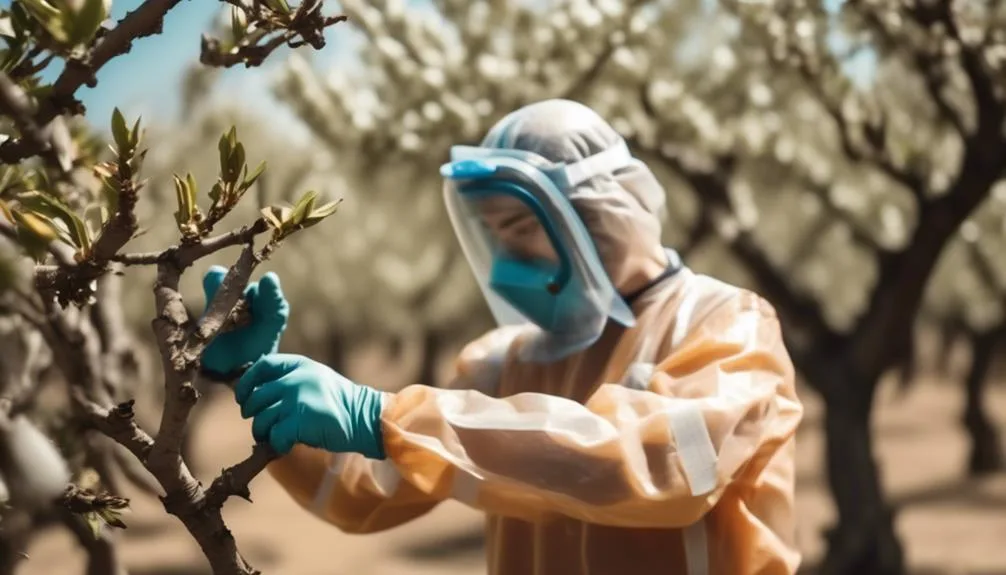
Pruning your almond trees is crucial for their health and productivity. Knowing the right time to prune and how to do it is important. With the right tools and techniques, you can give your trees the care they need to thrive.
Let's start by discussing when to prune and the essential tools you'll need to get the job done effectively.
Key Takeaways
- Prune almond trees during the dormant season, specifically late winter or early spring, for optimal growth and production.
- Use the appropriate tools such as sharp pruning shears, loppers, and a pruning saw to ensure clean cuts and minimize damage.
- Apply a combination of thinning cuts and heading cuts to encourage strong growth, remove dead or diseased wood, and shape the tree's canopy for better light distribution.
- Proper pruning techniques are essential for both young and mature almond trees to promote their overall health, prevent diseases, and maximize fruit-bearing potential.
Timing for Pruning Almond Trees
When pruning almond trees, it's crucial to do so during the dormant season to promote optimal growth and production. The best time for pruning almond trees is during the late winter or early spring while the trees are still dormant. This timing allows the wounds from pruning to heal quickly once the growing season begins.
Seasonal considerations are essential when planning the pruning of almond trees, as doing so at the wrong time can negatively impact the tree's productivity. By pruning during the dormant season, you can shape the tree, remove dead or diseased wood, and encourage new growth.
This timing also reduces the risk of disease transmission and ensures that the tree's energy is focused on producing high-quality almonds. So, remember to schedule your almond tree pruning during the dormant season for the best results.
Recommended Products

DUAL CUTTING POWER: VERSATILE PRUNING COMBO --- With both Pruning Shears and Pruning Snip, this combo delivers unmatched versatility. Whether you're delicately trimming flowers and shrubs, tackling thicker tree branches, or tending to your vegetable and fruit garden, our combo pack excels in all areas. They're also perfect for landscaping projects and maintaining the health and appearance of indoor plants. With this pack, you have a versatile tool that simplifies your gardening tasks.

ULTRA SHARP - Much less effort to cut branches with our pruning shears. Crafted from premium SK5 steel with titanium coating, our garden scissors and garden clippers boast exceptional durability and sharpness. A perfect pruning shears for gardening and a must-have garden tool, hedge clippers pruners for gardening

· ULTRA-SHARP SK5 STAINLESS STEEL - Engineered with premium SK5 stainless steel, these heavy duty pruning shears deliver razor-sharp precision and maximum hardness. The rust-resistant blades are designed to stay sharp longer, effortlessly resisting corrosion and sap buildup for smooth, friction-free garden shears performance year after year.
Tools Needed for Pruning
To properly prune your almond trees, it's important to have the right tools for the job to ensure the health and productivity of your trees. When selecting pruning tools, consider the following:
- Sharp Pruning Shears: Invest in high-quality, sharp pruning shears to make clean cuts without causing unnecessary damage to the tree.
- Loppers: For thicker branches, loppers are essential. Look for loppers with ratchet mechanisms to make cutting easier on your hands.
- Pruning Saw: A pruning saw is necessary for larger branches. Choose one with a comfortable grip and sharp teeth for efficient cutting.
- Safety Gear: Don't forget to prioritize safety with gloves, protective eyewear, and sturdy footwear to prevent accidents while pruning.
Selecting the proper pruning equipment is crucial to ensure that your almond trees receive the best care possible.
Recommended Products

PROFESSIONAL GARDENING GRAFTING TOOLS: Including 2 in 1 grafting pruning tools, 3 replaceable blades, a grafting knife, a screwdriver, a wrench, 2 grafting films, 160 rubber bands, 40 wide rubber bands, and 50 colorful tag cards

【An Essential Bonsai Kit】The Bonsai Trees Kit includes 1x Portable Gardening Mat(29.5"x29.5"), 4x Bonsai Wire with Cutter(Total 262 Feet), 1 x Big Bonsai Scissors, 1x Straight Scissors, 1x Pruning Shears, 2x Leaf Cutters, 1x Mini Wide Shovel, 1x Mini Shovel, 1x Mini Rake, 1x Brush, 4x Tweezers, 1x Bucket Shovel, 1x Organizer Bag. Owning this perfect bonsai tree kit is the beginning of your bonsai journey. Ideal gifts for women and men.

HUNTING PRUNING KIT - Ameristep brings you a quality Pruning Kit, perfect for clipping brush while you're in the wilderness; Be sure nothing will stop you from making that very shot to bring success to the hunt
Techniques for Pruning Almond Trees
Prune your almond trees using a combination of thinning cuts and heading cuts to encourage strong, healthy growth and maximize fruit production. When selecting branches to prune, prioritize those that are crossing, dead, or diseased to improve air circulation and sunlight penetration within the canopy. Additionally, focus on shaping the canopy to maintain an open center, allowing for better light distribution and easier harvest. Here's a helpful table to guide your almond tree pruning:
| Pruning Task | Best Time | Tools Needed |
|---|---|---|
| Branch Selection | Winter | Pruning Shears |
| Canopy Shaping | Late Winter/Early Spring | Loppers |
| Thinning Cuts | Late Winter/Early Spring | Hand Saw |
Recommended Products

AMBIDEXTROUS DESIGN: Pruner shape is designed for both right and left-handed use while pruning indoor & outdoor plants such as shrubs, ornamental trees, vines, & flowers like roses; SoftGrip handle reduces hand fatigue & enhances comfort and control

CONVENIENT 3-PACK WELL-ROUNDED GARDEN SHEARS SET -- including a 16.5’’ handy bypass tree loppers, a 17’’ professional hedge clippers, a 8’’ sharp pruning shears, this garden shears set offers everything you need for tree and shrub care, making trimming and pruning tasks easy & efficient. Made with the fully hardened carbon steel, these garden shears will stay sharp even after heavy use! With the weather warning up and plants coming to life, it's time to trim down some dead plants and branches, tidying up your garden in no time!

Adjustable and Durable Handle - Extendable Loppers: The lopping shears are adjustable from 16 inches to 24 inches, allowing you to handle tall branches easily. The iron arm is more sturdy and durable, and will not bend even when cutting large and thick branches.
Pruning Young Almond Trees
For young almond trees, employing proper pruning techniques is essential for fostering robust growth and ensuring abundant fruit production. Proper shaping of young almond trees is crucial for establishing a strong framework that will support future fruit production.
Additionally, pruning helps in disease prevention by allowing better air circulation and sunlight penetration, reducing the risk of fungal infections and other diseases. When you prune young almond trees, you also encourage the development of sturdy branches that can bear the weight of the fruit, preventing breakage and ensuring a healthy harvest.
Moreover, strategic pruning stimulates the growth of lateral branches, which are vital for maximizing fruit-bearing potential. By implementing these pruning techniques, you can set the stage for a thriving almond orchard.
Pruning Mature Almond Trees
As your almond trees mature, the pruning techniques shift to maintain their established framework and maximize fruit production.
It's crucial to establish a regular pruning schedule for mature almond trees to ensure optimal growth and fruit-bearing. Pruning should focus on maintaining the tree structure, removing dead or diseased wood, and thinning out crowded branches to allow better airflow and sunlight penetration.
Ideally, pruning should be carried out during the dormant season, in late winter or early spring, to minimize stress on the tree. When pruning mature almond trees, prioritize maintaining an open center to allow for improved light exposure and airflow, which are essential for fruit development.
Regularly assessing the tree's structure and making targeted pruning cuts will help sustain its health and productivity over the years.
Conclusion
Incorporating proper timing and techniques for pruning your almond trees is essential for their long-term health and productivity.
By using sharp, clean tools and following the right methods for both young and mature trees, you can ensure their vitality for years to come.
Happy pruning, and may your almond trees flourish with care and attention.
