


I knitted my first sweater last winter.
It was straightforward enough that I finished it without too much frustration.
Now I’m sharing 18 stylish patterns perfect for beginners like you were.
These are designed for that confident first garment you can actually wear.
Pick one that catches your eye and start knitting.
Oversized Raglan Knit Sweater

This raglan-sleeve sweater builds a boxy, dropped-shoulder shape from simple yoke shaping that extends into wide sleeves and a roomy body. The fuzzy yarn knits up into a soft, textured stockinette fabric that drapes loosely without cables or colorwork. That clean structure keeps the oversized fit balanced and easy to wear over jeans or skirts.
The loose proportions make this a smart base for layering in cool weather or sizing up for loungewear. Switch to a smoother worsted yarn to tone down the fuzz for year-round use, or add ribbed cuffs for a cropped version. On Pinterest, the minimalist oversized look pulls tons of saves from knitters tweaking it for custom fits.
Relaxed Chunky Raglan Sweater

An oversized crewneck sweater in chunky knit builds volume through wide raglan sleeves and a dropped shoulder line that create a soft drape. The textured stitch and ribbed edges at the cuffs, hem, and neck keep the shape structured without tight fits. This approach uses basic increases for the armholes and relies on yarn thickness for most of the style, slotting into simple sweater patterns.
The raglan shaping makes this a smart pick for beginners since it avoids set-in sleeves and seaming hassles. Scale it down for a cropped version or swap the chunky yarn for worsted weight to speed up the project. Neutral tones like this pair with jeans or skirts for daily wear, and it adapts easily to color blocks for gifting.
Mint Striped Raglan Baby Sweater

Horizontal stripes in pale mint green and off-white yarn shape this raglan baby sweater, with seam lines running smoothly from neck to cuffs for a clean, rounded fit. The crew neck and short sleeves use basic knit structure that hugs without bulk, while the fuzzy yarn texture softens the stripes visually. As a baby knit, it leans on simple color blocking to look polished fast.
The small scale keeps yarn needs low and finish time short, so it suits beginners testing stripes before bigger projects. You can size it up for toddlers by adding stitch counts or swap colors for holidays to make quick gifts. Stripes hide any tension slips, and the raglan style works year-round layered or solo on little ones.
Chunky Sleeveless Knit Vest

A sleeveless knitted vest worked in chunky yarn creates a boxy shape with clean ribbed edges at the neckline, armholes, and hem that give structure without extra seaming. The allover knit texture catches light to add depth to the solid mustard yellow color, keeping the focus on the yarn’s natural fuzz. This fits squarely in the sweater category as a vest-style top that’s easy to layer.
A knit like this works especially well for transitional weather since the open sides allow airflow while the knit blocks wind. You could adapt it by switching to a finer yarn for year-round wear or adding pockets for everyday utility. The straightforward shape scales down easily to a child size, making it a solid gift option that stands out on Pinterest for its no-fuss polish.
Pale Blue V-Neck Cardigan

A V-neck cardigan knitted in pale blue with a fuzzy stitch texture delivers a relaxed fit that layers easily over basics. Ribbing frames the deep V, cuffs, and hem for clean edges, while wooden buttons down the front add practical closure without extra fuss. This sweater design leans on straightforward shaping and seaming to build a wearable staple.
The loose shape works well for everyday layering under jackets or over shirts in cool weather. Adapt it by switching yarn colors for gender-neutral gifts or sizing it smaller for teens. A knit like this stands out on Pinterest for its simple updates to classic prep style.
Fuzzy Oversized Pullover Sweater
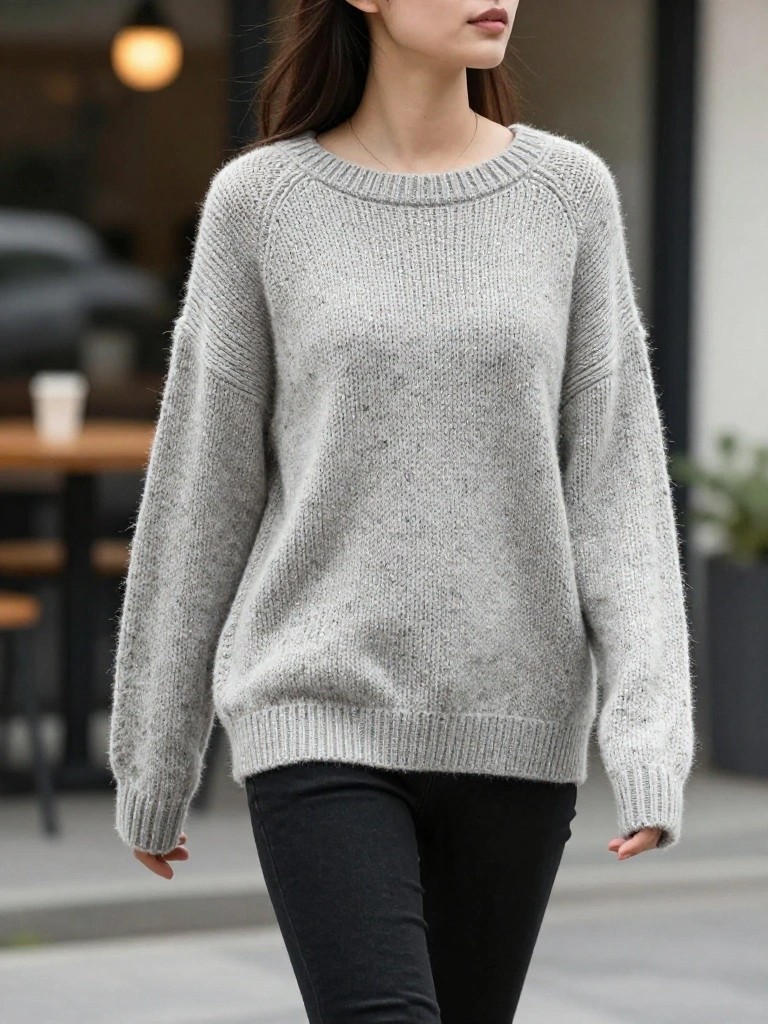
A fuzzy oversized pullover sweater knits up with chunky yarn that creates a soft halo texture around the drop-shoulder sleeves and body for an effortless, slouchy shape. The wide crew neck with ribbed trim anchors the loose fit without pulling tight, letting the yarn’s natural speckles add visual depth through simple stockinette sections. This approach keeps the construction straightforward while delivering a high-impact layered look.
The oversized silhouette works especially well for everyday wear over tees or tanks, holding up through multiple washes if you pick a durable fuzzy blend. Scale it down for a cropped version or swap in a solid color yarn to match seasonal wardrobes. Beginners can simplify by skipping seams for a seamless top-down knit that still photographs sharp on Instagram.
Breton Striped Crewneck Sweater

A crewneck pullover sweater worked in wide horizontal stripes of navy and off-white yarn delivers a classic nautical style that’s easy to recognize. The drop-shoulder shape and boxy fit keep the look relaxed and modern, with ribbing at the cuffs, hem, and neckline adding clean structure. Simple stockinette stripes form the bulk of the fabric, letting the color blocking carry the design.
The wide stripes build visual punch fast, so this stands out on Pinterest without needing fancy stitchwork. Beginners can simplify by picking just two yarns from their stash or swapping for vertical stripes on a cardigan. It layers well over tees for cooler days and adapts easily to smaller sizes for kids.
Relaxed Ombré Crewneck Sweater

A crewneck pullover sweater knits a smooth color fade from deep pink at the yoke down through orange tones to pale cream at the hem and cuffs. Subtle shoulder seams and wide dolman sleeves structure the oversized shape without extra bulk, while the fuzzy knit texture enhances drape on the body. This gradient technique fits beginner sweaters by relying on basic stockinette or garter for the color shifts.
The fade works especially well for stash-busting with partial skeins, swapping in stripes if yarn runs low. Its loose fit layers under coats in cold weather or stands alone in milder temps, and you could shorten it to a cropped top or resize for kids. On Pinterest, the sunset colors grab attention without needing complex cables.
Fuzzy Turtleneck Sweater

A fuzzy turtleneck sweater in light gray bulky yarn builds its appeal around plush texture and simple ribbing for the high collar, cuffs, and hem. Dropped shoulders and roomy sleeves create an easy oversized fit that drapes without bulk. The knit structure keeps stitches straightforward so the yarn’s loft handles most of the style.
A knit like this works especially well for everyday cold weather wear since the high neck blocks drafts and the loose shape layers over shirts. Make it your own by picking a solid color yarn in any weight or adding elbow patches for wear resistance. Beginners can scale down the size for faster finishing while keeping the same ribbed details.
Relaxed Fuzzy V-Neck Pullover

This V-neck pullover sweater knits up with a fuzzy yarn that gives the stockinette fabric a soft, brushed texture for instant visual interest. Dropped shoulders and gently flared sleeves create an oversized silhouette that skims the body without clinging. The deep V-neck and minimal ribbing at the cuffs and hem keep the shaping straightforward and the overall look modern.
The loose fit makes this a smart layering piece over tees or dresses for transitional weather. Switch to a smoother yarn or add stripes down the sleeves to personalize it for different wardrobes. Beginners can scale it down to a cropped version using bigger needles for faster results.
Green-and-White Striped Turtleneck Sweater

A turtleneck sweater with a wide white stripe across the chest creates clean color blocking against the green body and sleeves. The high folded collar adds structure, while ribbing at the cuffs and hem keeps the fit relaxed yet polished. This knitted pullover relies on horizontal stripes and chunky texture for impact without complex patterning.
The stripes pair well with jeans or skirts for everyday fall outfits, and the turtleneck works as a base layer under jackets. Knitters can adapt it by using scrap yarns for the white band or resizing for kids. Its graphic look grabs attention on Pinterest while staying simple enough for a first sweater project.
Cropped Boxy Sweater with Puffed Sleeves

A cropped boxy sweater knits up with straight sides for a relaxed oversized fit and puffed sleeves formed by extra fullness gathered at the cuffs and shoulders. The crew neck and even stockinette-style texture keep the focus on the simple shape and soft lavender color. This design slots into the sweater category as a modern take on a basic pullover.
The boxy cut works especially well for layering over tanks or high-waisted pants in transitional weather. Knitters can lengthen the body for a standard tunic or swap the color for neutrals to match any wardrobe. Puffed sleeves like these elevate a plain knit without fancy stitches, so it adapts easily to scrap yarn stashes or quick gift makes.
Button-Shoulder Baby Sweater

A button-shoulder baby sweater takes a basic pullover shape and elevates it with small tabs at the top of each sleeve that button neatly in place. The crewneck, short sleeves, and snug ribbing at the collar, cuffs, and hem create a fitted look on a tiny scale, while the even knit texture keeps the body simple and smooth. This design fits right into baby knits, blending everyday wearability with a touch of structure.
The small scale turns this into a fast win for beginner sweaters, perfect for gifting at baby showers or stocking a layette drawer. Switch the neutral shade to pastels or bold colors, or stretch the body longer for bigger kids without changing the shoulder gimmick. For everyday use, it layers smoothly under rompers or outerwear, and the button details make it pin-worthy among simple baby projects.
Chunky Raglan Crewneck Sweater

A raglan-sleeved crewneck pullover worked in bulky yarn builds visual punch through its pronounced seams that run from the deep neckline down the sleeves and sides. The knit texture creates subtle horizontal banding across the wide body and long arms, giving structure without extra techniques. This oversized shape keeps the focus on straightforward shaping and yarn carry.
The boxy fit layers easily under coats for cold days or over tanks in milder weather. Scale it down with worsted yarn for a cropped version, or swap gray for stripes in scrap yarn to use up odds and ends. A knit like this stands out on Pinterest for its modern slouch that photographs well from any angle.
Oversized Fuzzy Pullover Sweater
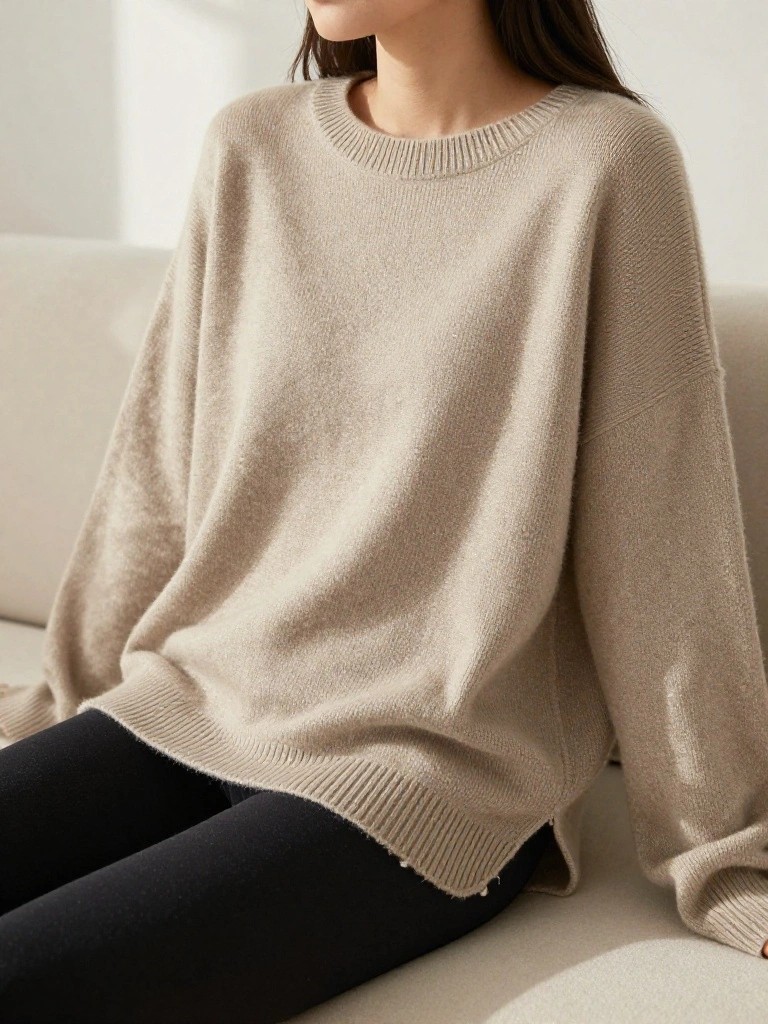
This oversized pullover sweater relies on dropped shoulders and extra-wide body shaping to drape loosely over the frame for an easy, slouchy fit. The fuzzy halo from brushed yarn gives it a soft, voluminous texture that hides any minor gauge inconsistencies. A simple ribbed or stockinette base keeps the construction straightforward while the wide crew neck adds a casual off-shoulder option.
The loose shape layers well over tees, dresses, or leggings for everyday fall wear without restricting movement. Switch to a smooth worsted yarn to make it beginner-friendly and easier to seam, or shorten the body for a cropped version that pairs with high-waisted pants. Neutral tones like this knit up fast and photograph sharply for social shares.
Diagonal Colorblock Crewneck Sweater

A crewneck sweater splits into light and charcoal gray with a bold diagonal panel running from the shoulder across the chest, giving it an asymmetrical edge that stands out without extra details. The knitted stockinette body drapes in a relaxed fit, with ribbed cuffs and hem that anchor the shape. This colorblock technique turns a basic pullover into something graphic and fresh.
The diagonal line does most of the visual work, so you can knit it by switching yarns mid-row on one side only. It fits everyday layering under denim jackets or over collared shirts, and the neutral tones adapt easily to add a pop of color for personalization. Scale it down to a cardigan or crop it for versatility across seasons.
Cropped Textured Button Cardigan

This cropped cardigan sweater uses a chunky textured knit to build structure and visual depth across the body and sleeves. A simple button placket shapes the front into a soft scoop neckline that meets the short puffed sleeves at relaxed raglan seams. The overall fit stays boxy yet flattering, making it a solid pick among beginner sweater knits.
The cropped length turns this into an easy layer over jeans or dresses for mild weather without overheating. Swap the peach yarn for neutrals to match any closet, or lengthen the body for cooler months while keeping the textured stitch for grip on layers underneath. Knitters can simplify by dropping the buttons for a pullover version that still stands out on social feeds.
Off-Shoulder Balloon Sleeve Sweater

An off-the-shoulder sweater starts with a wide, stretchy neckline that drapes casually over one shoulder, creating an effortless asymmetrical look through dropped shoulders and loose body shaping. The balloon sleeves add playful volume at the cuffs and upper arms, balanced by the straight hem for everyday wearability. Knitted in a smooth, chunky gauge, the even stitch texture keeps the focus on the silhouette rather than complicated patterns.
This style layers smoothly under jackets or over slim tees for cooler days without bulk. Scale it smaller for a cropped take or switch to brighter yarn for summer evenings. The simple construction makes it a quick win for building sweater confidence, and the slouchy shape photographs well for pattern shares.
Frequently Asked Questions
1. What skill level is truly required for these beginner sweater patterns? These patterns are designed for knitters who know the basics like casting on, knit stitch, purl stitch, binding off, and simple increases or decreases. No advanced techniques such as cables, colorwork, or short rows are needed. If you have completed a scarf or hat, you are ready. Each pattern includes clear charts, video links where available, and step-by-step photos to build confidence. Start with the simplest ones like the drop-shoulder styles to gain momentum.
2. What yarn weight and type should I use for these sweaters? Most patterns call for worsted or DK weight yarn, which is forgiving for beginners due to its even drape and stitch definition. Choose soft wool, wool-acrylic blends, or cotton for summer versions. Aim for yarns labeled “aran” or “worsted” with a gauge of 4-5 stitches per inch on US 8-10 needles. Buy a swatch kit first to check gauge; this prevents sizing issues. Popular affordable options include Lion Brand Wool-Ease or Paintbox Yarns Wool Mix, both machine-washable for easy care.
3. How do I select the right size and customize it if needed? Measure your body or use finished garment measurements provided in each pattern (bust, length, sleeve). Beginners should choose a size with 2-4 inches of positive ease for comfort. Schematics show flat measurements pre-blocking. To customize, adjust needle size slightly or add/subtract stitches in multiples of the stitch pattern repeat. Patterns include tips for grading up/down, and free calculators like Tin Can Knits’ are linked in many. Block your swatch and sweater to refine fit.
4. How much time will it take to knit one of these beginner sweaters? Expect 20-40 hours total, spread over 2-6 weeks at 1-2 hours daily. Simpler top-down raglan styles (like #3 or #7 in the list) take 20-25 hours, while seamed ones may add 5 hours for finishing. Factors include your speed, yarn weight, and size. Track progress with row counters or apps like KnitCompanion. Knit in short sessions to avoid fatigue, and celebrate milestones like finishing the body.
5. What tools do I need beyond yarn and needles, and any beginner finishing tips? Essentials: circular/straight needles in correct sizes, stitch markers, tapestry needle, row counter, tape measure, and blocking mats/pins. Optional but helpful: interchangeable needle set and wool wash. For finishing, weave in ends as you go to simplify. Seam with mattress stitch using matching yarn; practice on scraps first. Wet-block by soaking in cool water, squeezing gently (no wringing), pinning to measurements, and drying flat. This shapes your sweater perfectly and evens stitches.
