


I’ve been knitting on and off for a few years.
It was slow going at the start, but consistent practice helped.
I gathered these 21 tutorials because they kept me moving forward as a beginner.
They’re a step up from the basics but easy to follow.
Try one when you have a quiet afternoon.
Slouchy Ribbed Beanie

A ribbed beanie uses basic knit and purl stitches worked in the round to form vertical ridges that stretch easily over the head while holding shape. The extra length before the crown decreases creates a slouchy fit that drapes without slipping, and the allover texture stands out in a single solid color. As a knit accessory, it pairs naturally with sweaters or coats for a pulled-together look.
The small scale finishes fast, making it a smart pick for practicing circular needles without big commitments. Scale the ribbing wider for bigger slouch or narrower for a fitted cap, and swap colors to match seasonal outfits or team kits. For everyday cold weather, it layers under helmets or hoods while staying put, and the neutral knit translates easily to matching cowls or wrist warmers.
Chunky Ribbed Collar Cowl

This chunky ribbed collar cowl starts as a wide rectangle worked in bold horizontal ridges for a structured drape that sits high on the neck. The deep V-front opening lets it wrap securely without bulk, using just one neutral yarn for clean lines. As an accessory knit, it skips complex shaping to focus on texture that holds its form.
A knit like this works especially well for everyday layering under coats or sweaters in cool weather. Scale down the width for a tighter fit or lengthen it into a scarf for more coverage. The simple repeat makes it easy to personalize with stripes or scraps, and it finishes fast enough to stand out as a quick gift project.
Zigzag Striped Knit Socks

Crew-length knitted socks stand out with multicolored stripes in teal, pink, yellow, navy, and gray that fold into sharp zigzag patterns down the leg and foot. Ribbed cuffs at the top keep them secure while the fuzzy wool texture adds grip and warmth inside shoes. This accessory pulls off bold colorwork through clean stripe placement that creates movement without bulky seams.
The small scale turns these into a fast project that builds stripe skills for bigger knits like hats or sweaters. Swap colors to match scrap yarn or tone down to two shades for quicker finishes, and they layer under boots for cold days or show off with loafers. For gifts, the graphic stripes grab attention on Pinterest without needing fancy finishing.
Striped Fingerless Mitts

Knitted fingerless mitts wrap the hand and wrist in alternating wide gray and black stripes, with a ribbed cuff for stretch and a thumb gusset that keeps fingers free. The even stripe gauge creates clean lines across the stockinette body, making the accessory look polished yet straightforward to execute. This design slots into quick accessory knits that balance warmth with mobility.
The small scale makes this easy to adapt by swapping yarn colors for seasonal outfits or knitting a matching pair in under an evening. A knit like this works especially well for office workers or cyclists needing grip in cool weather. For everyday wear, shorten the cuff or add a flap for thumb coverage to customize fit without much extra work.
Ribbed Cuff Baby Booties

Knitted baby booties with a wide ribbed cuff that folds down over a fuzzy knit shaft give these a structured boot shape while keeping the sole soft and flexible for tiny feet. The all-over knit texture, from the dense ribbing to the plush body, creates a uniform look that holds up to baby wear. This fits squarely in the baby knit category, using basic shaping to mimic shearling boots.
The small scale keeps the project quick to finish, ideal for gifting to new parents or stocking a baby layette. Switch to brighter yarn colors or add stripes on the cuff to personalize for boys or girls, or scale up the pattern for toddler sizes. For cold weather layering under pants or onesies, the fuzzy knit traps warmth without bulk, and the clean lines make it pin-worthy among beginner baby knits.
Clean-Lined Knitted Tank Top
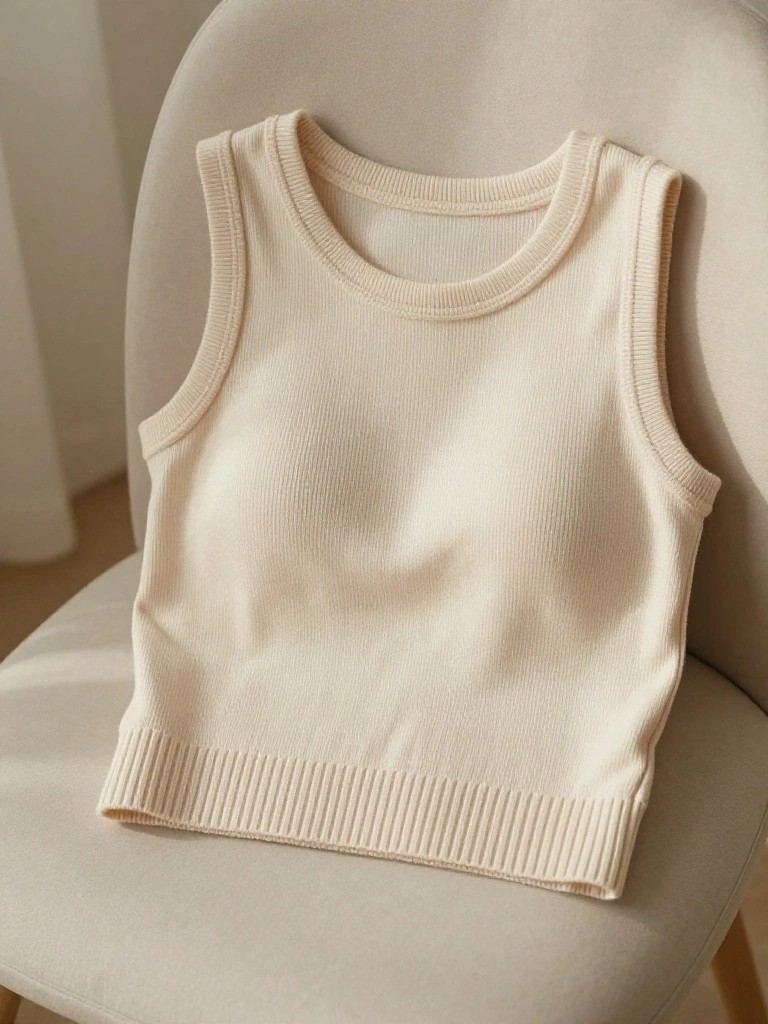
This knitted tank top uses a smooth body stitch with ribbed edges at the crew neck, armholes, and hem to frame a simple sleeveless shape. The wide straps and fitted silhouette give it a structured yet lightweight feel that elevates basic layering. As a top in the knitting category, the neutral knit keeps the focus on the tailored fit without extra details.
A knit like this works especially well for transitional weather as a layer under button-ups or over tees. The shape adapts easily by adjusting length for a tunic or scaling down for baby sizes. Its understated style stands out on Pinterest for quick makes that look store-bought.
Knitted Zippered Pouch

Knitting a zippered pouch creates a compact accessory that stores small essentials like keys or cosmetics. The rectangular shape knits flat for easy assembly, with smooth stocking stitch mimicking canvas for a structured hold. This bag project delivers clean functionality through its neutral tone and secure closure.
The small scale keeps it beginner-friendly while teaching zip insertion and seaming basics. Switch to brighter yarns or add pockets for customization into a wallet or tech sleeve. For everyday carry, its slim profile slips into totes or pockets without bulk.
Knitted Fox Plush Toy
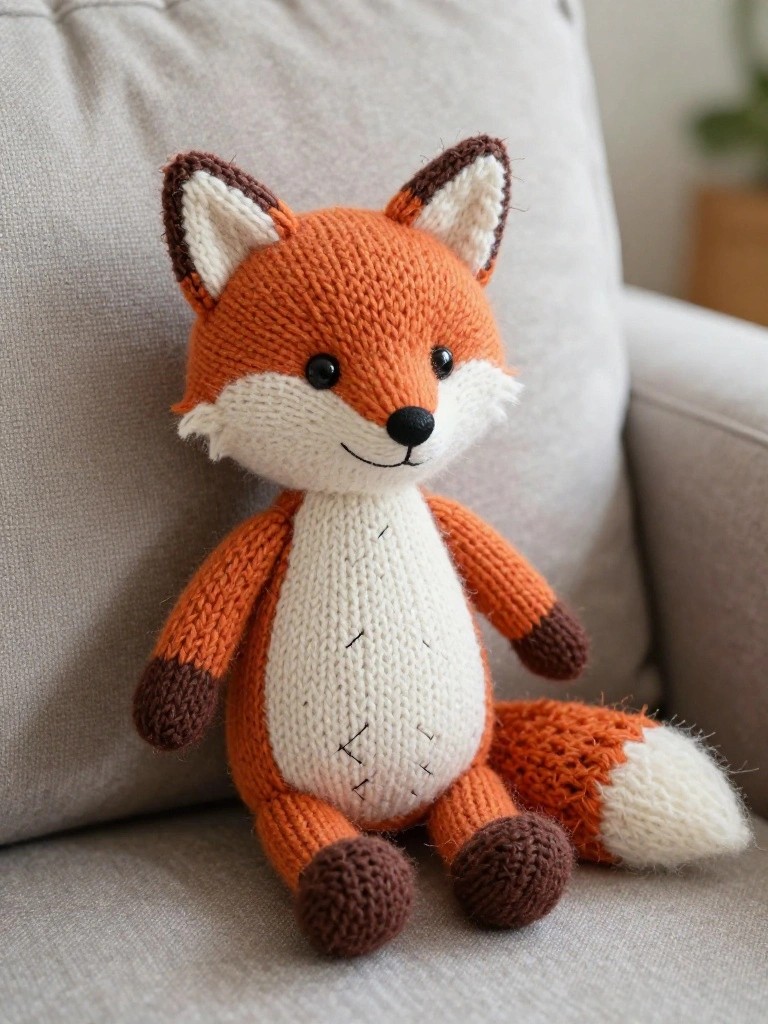
Knitting a fox plush like this builds a soft stuffed animal through basic shaping for the rounded head, chubby body, legs, and bushy tail. The orange knit fabric pairs with white panels on the belly and tail tip for clear animal features, plus brown paws and ears that pop against the main color. Simple seaming holds the pieces together into a sitting pose that stands upright on its own.
The small scale finishes fast, making it a smart pick for practicing toy construction without big yarn commitments. Switch the colors to make a bear, bunny, or cat, or scale it up for a larger lap buddy. For baby gifts or nursery decor, the knit texture grips well during play and holds up to gentle washing.
Twisted Chunky Knit Headband
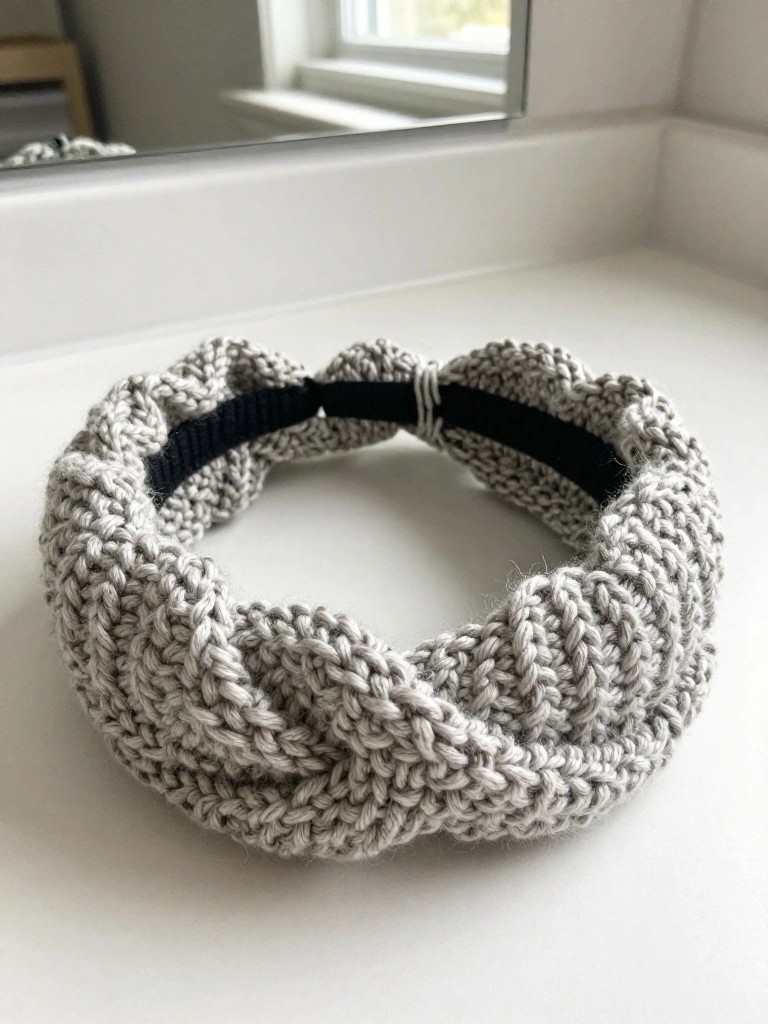
A twisted knit headband turns basic stockinette or garter stitches into a bulky, braided accessory that holds hair back with style. The design relies on a wide band of chunky textured knitting, folded and twisted for dimension, then secured with an elastic insert for stretch and fit. As an accessory project, it builds skills in seaming and simple shaping while delivering a polished look.
The small scale makes this easy to finish in an afternoon and adapt with scrap yarn in seasonal colors. It layers well under hats or stands alone for everyday wear, and the elastic keeps it secure without slipping. For gifts, knit a few in different sizes or add buttons for personalization.
Striped Knitted Tote Bag

Knitted tote bags like this one rely on vertical stripes in cream and pale blue to give a fresh, structured look without complex patterning. The rectangular body with gusseted corners creates depth and holding power, while the twisted handles knit right into the top edge keep everything seamless and strong. This design fits squarely in the bag category, turning basic stockinette into a durable everyday carrier.
The shape does a lot of the work here, making it stable for groceries or library runs without tipping over. Switch the stripes for seasonal colors or add a pocket for keys to customize it further. For gifts, something like this stands out on Pinterest as a practical upgrade from plain canvas totes.
Ribbed Forearm Warmers

Knitted ribbed forearm warmers slip over the lower arms to add warmth without covering the hands, perfect for gripping mugs or typing in cool spaces. The all-ribbed structure stretches to hug the contours from wrist to mid-forearm, creating a fitted look with built-in elasticity. This accessory category staple uses one continuous tube worked in the round for clean seams and a pro finish.
The small scale makes this easy to adapt by shortening for wristlets or lengthening for full arm coverage. For everyday wear, this kind of knit layers under jackets or pairs with fall outfits to fight desk chill. Neutral gray keeps it versatile for gifting, but swap yarns for stripes or bold colors to personalize.
Chunky Ribbed Leg Warmers
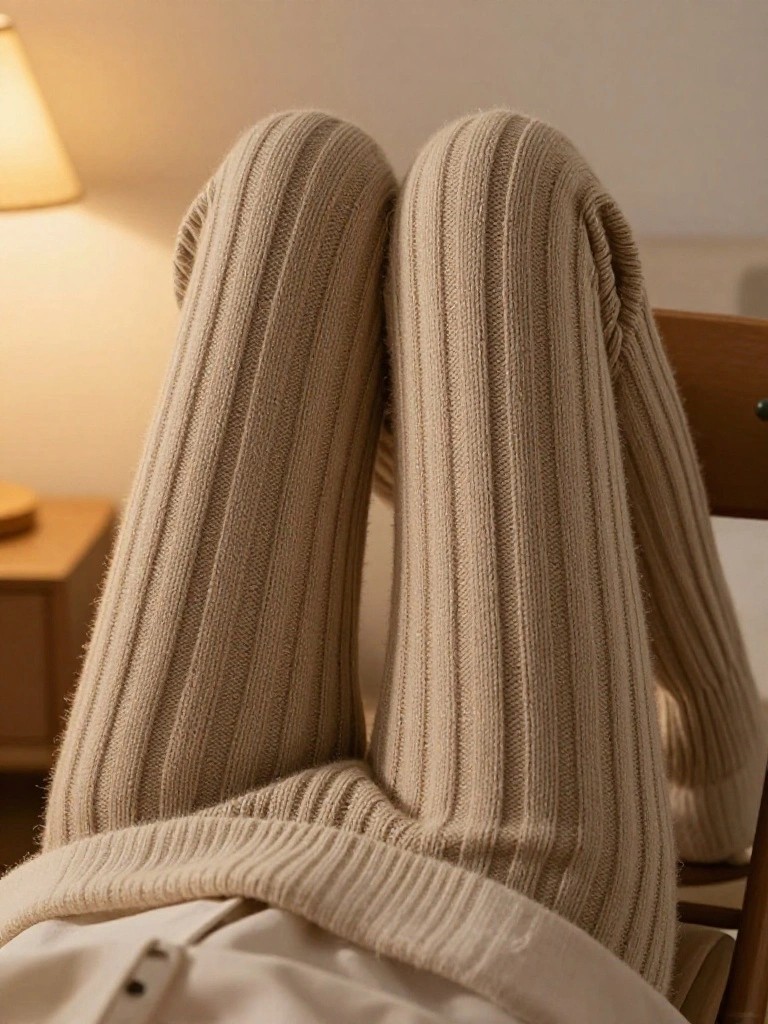
Knitted leg warmers in wide vertical ribs cling smoothly to the legs from thigh to ankle, using bulky yarn for a fuzzy surface and snug stretch. The all-rib construction delivers clean lines and elasticity without seams, turning a basic accessory into something that shapes and warms the lower body. This approach fits squarely in the accessory category, where texture and fit create visual pull.
The ribbed structure makes these a smart option for cold-weather layering under pants or skirts since they move with the legs and hold heat. Knit them shorter for boot toppers or longer for full coverage, and swap yarn colors to match wardrobes. Their no-fuss pattern scales down easily for beginners wanting a wearable project that finishes fast.
Pastel Striped Baby Blanket
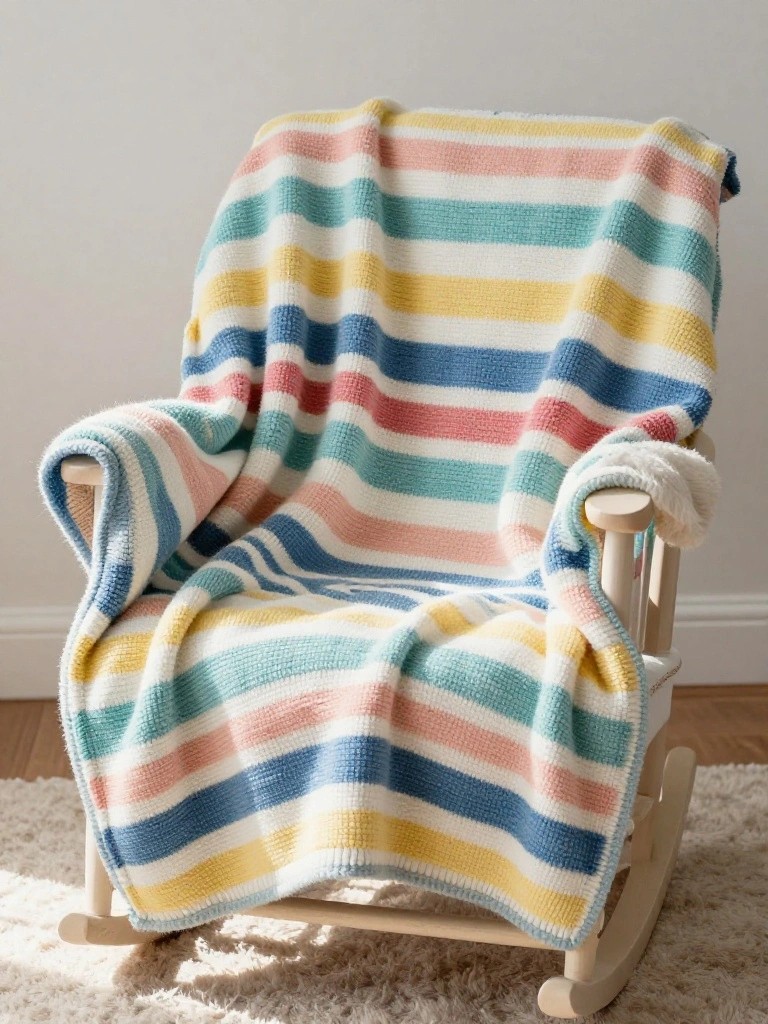
Horizontal stripes in soft pinks, yellows, teals, and blues build this knitted baby blanket, using a chunky textured stitch for added depth. The even width of each color band keeps the design balanced and eye-catching without needing fancy colorwork. As a baby knit staple, it wraps easily around a rocker or crib rail.
The small scale makes this easy to adapt for stroller covers or quick gifts. Stripes like these hide minor gauge slips, which helps beginners build confidence. Play with yarn scraps to personalize the colors for holidays or themes.
Chunky Textured Mug Cozy
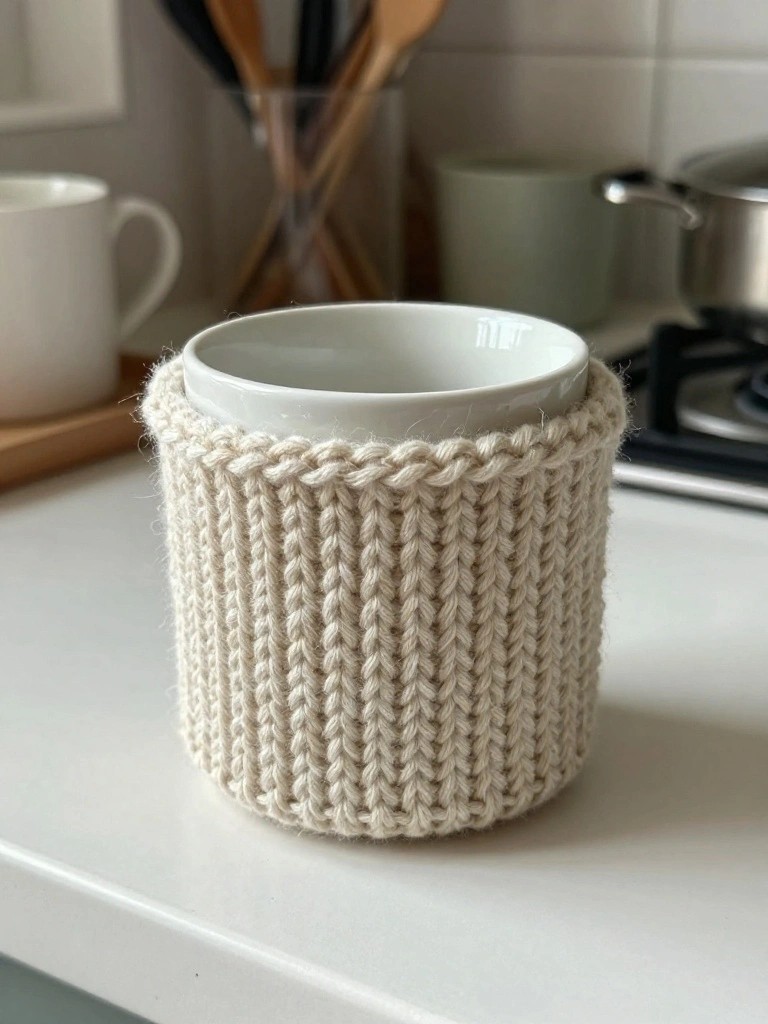
Knitted mug cozies transform plain ceramics into insulated holders with a plush sleeve worked in thick yarn. This version uses a bumpy, vertical-rib texture that hugs the mug’s curve securely and traps heat effectively. As an accessory knit, it scales to fit most standard cups without bulk.
The small scale makes this easy to adapt for travel mugs or personalize with scrap yarn colors. It suits everyday kitchen use or quick gifts for hot drink fans, since the texture adds grip on slick surfaces. Switch to thinner yarn for a sleeker look or knit multiples for a set.
Oversized Chunky V-Neck Sweater
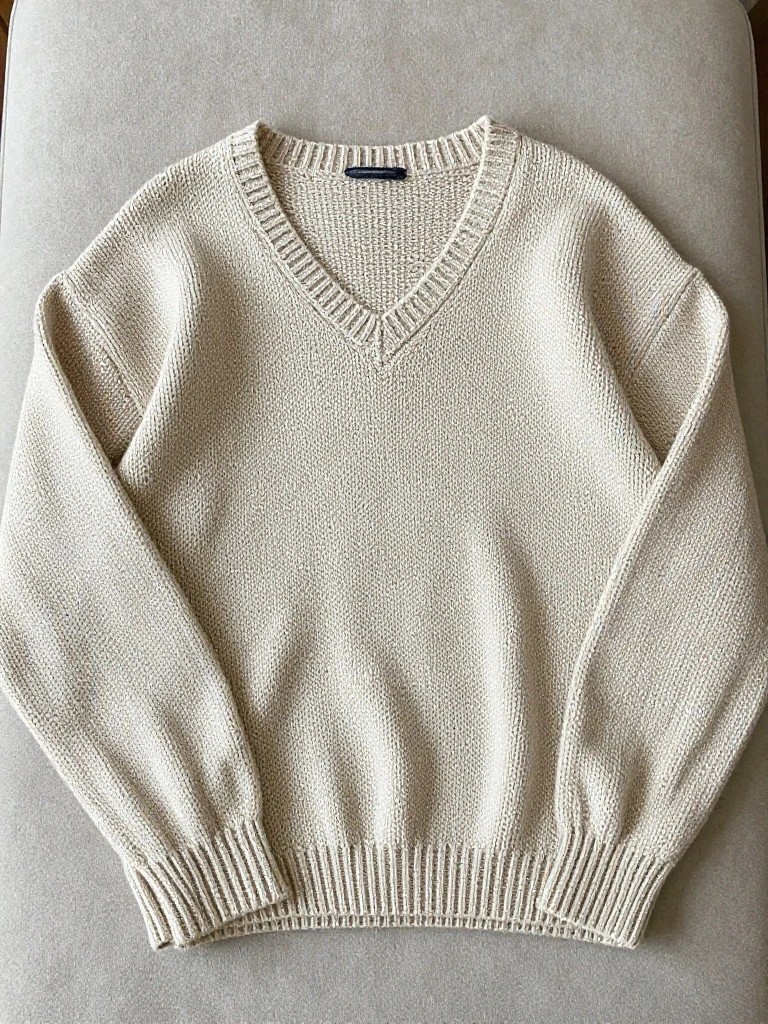
This oversized V-neck pullover sweater relies on a chunky knit for its soft, pebbled texture and boxy silhouette with dropped shoulders. Long sleeves and a relaxed body give it a modern slouch without extra seams, while fitted ribbing at the cuffs, hem, and neckline keeps the shape intact. It slots right into the sweater category as a straightforward knit that plays up volume for visual impact.
The boxy fit makes this a smart layer for fall outfits over jeans or leggings. Scale it smaller for a cropped take or swap the neutral yarn for bold stripes to personalize. Knits like this knit up fast in bulky yarn and photograph well for Pinterest shares.
Fuzzy Ribbed Crew Socks

Knitted crew socks with deep 2×2 ribbing at the cuffs create a snug, stretchy top that stays put during wear, paired with a smooth stockinette foot for easy shaping. The fuzzy yarn gives the whole sock a soft, brushed texture that boosts warmth without bulk. This accessory design turns basic foot coverage into something refined through yarn choice and fitted ribbing.
A knit like this works especially well for layering under boots in cold weather or as house socks on hardwood floors. The neutral gray adapts easily to any wardrobe, and you could rework the same ribbed cuff idea into leg warmers or mitts with minimal changes. For beginners, the tube-like foot construction simplifies fitting around heels and toes.
Ribbed Knit Scrunchie
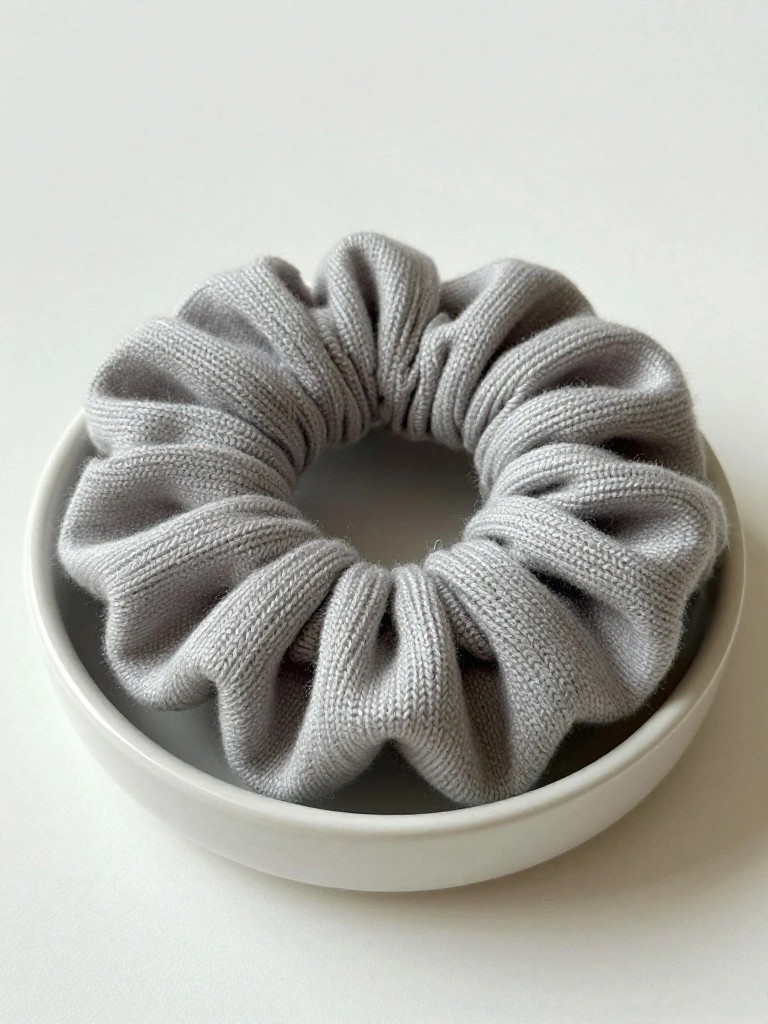
A ribbed knit scrunchie forms a full, gathered circle from a stretchy tube of knitted fabric slipped over elastic, creating a soft hair accessory that grips without pulling. The dense ribbing adds texture and bounce, making it bunch up just right for ponytails or buns. As an accessory, it turns basic elastics into something polished with minimal fabric.
The small scale keeps yarn use low and finishing quick, ideal for beginners building skills on small circles. Adapt the color to match outfits or knit multiples for gift sets with headbands. Its everyday grip works year-round, and the shape scales up easily for wrist cuffs.
Textured Knitted Sleeves

Knitted sleeves start with a basic tube shape worked in a bumpy textured stitch that adds grip and depth to the fabric. Ribbing at both ends keeps the fit snug around the wrist and upper arm without slipping. This accessory category project stays simple by skipping thumbs or shaping for a streamlined everyday cover-up.
The small scale makes these easy to knit up in an afternoon for personal use or quick gifts. Lengthen them into full arm warmers or shorten for wristlets, and swap the neutral yarn for bold colors to match outfits. They layer perfectly under coats for cold commutes without bulk.
Ribbed Striped Pillow Cover

This knitted pillow cover builds visual impact through wide horizontal bands of chunky ribbing in soft white and gray, forming clean color-blocked stripes that highlight the stitch texture. The central white panel crossed by a matching band adds structure without extra seams, while the gray edges frame it neatly. As a home accessory knit, the square shape and firm ribbing make it ideal for stuffing and daily use on a couch or chair.
The small scale keeps this project manageable for steady practice on ribbing and color changes. Adapt the stripes to bolder colors for a kid’s room or slim them down for a lumbar pillow. For layering in living spaces, the neutral tones pair with any throw blanket, and it knits up fast enough to make multiples as housewarming gifts.
Ribbed Knitted Baby Bib

This knitted baby bib relies on a dense vertical rib stitch for its main body, giving it stretch and a subtle texture that catches spills without adding weight. The shape tapers gently at the shoulders with scalloped edges along the bottom and sides, secured by simple snaps at the neck for a secure fit. As a baby knit accessory, it stands out through clean lines and practical form that prioritizes function over fuss.
The small scale makes this easy to adapt into a set of bibs by switching yarn colors for holidays or daily rotation. For baby use, the ribbed structure holds shape through repeated washes and provides just enough give around wriggly necks. Beginners can rework the same idea into matching burp cloths by extending the width.
Textured Square Baby Blanket

A square baby blanket worked in a dense, woven-style stitch creates subtle texture across the whole piece, paired with a tidy border that frames the edges neatly. The even, blocky shape keeps the focus on consistent knitting without tricky increases or shaping. This fits right into baby knits as a flat, practical layer.
The small scale makes this a quick win for steady practice on texture stitches before tackling bigger blankets. Scale it up slightly for a stroller cover or swap yarn colors to match nursery themes for gifts. Its neutral base adapts easily to stripes or pops of color while staying soft for baby skin.
Frequently Asked Questions
Q1: Do I need any prior knitting experience to start these elevated tutorials? A1: No prior experience is required, as these tutorials begin with foundational skills and gradually build complexity. They are designed for true beginners, starting with simple projects like basic scarves or dishcloths that teach essential stitches (knit and purl). Each tutorial includes video links, photo step-by-steps, and progress trackers. Tip: Spend 1-2 hours per session practicing the first three tutorials to build confidence before advancing. If you’re brand new, watch a 5-minute “hold the needles” video first for proper grip.
Q2: In what order should I complete the 21 tutorials for steady progress? A2: Follow the numbered sequence in the article for optimal skill-building: Tutorials 1-5 focus on basics (casting on, knit stitch, binding off); 6-10 introduce shaping and texture (purl, increases, decreases); 11-15 cover colorwork and cables; 16-21 tackle garments like hats and socks. This progression prevents overwhelm and ensures steady improvement. Track your progress in a notebook, noting what you mastered each week. Aim for 1-2 tutorials per week, adjusting based on your 5-10 hours of practice time.
Q3: What basic supplies do I need to get started with these tutorials? A3: Start with affordable essentials: Size US 8 (5mm) straight knitting needles (or circular for flexibility), 2-3 skeins of worsted-weight yarn in medium colors for visibility (acrylic or wool blend, about 200g total), stitch markers, tapestry needle, and scissors. Total cost under $30 at stores like Michaels or Amazon. For all 21 tutorials, add interchangeable needles later for variety. Download a free gauge ruler app to check tension. Pro tip: Buy a yarn needle set with cable projects in mind for Tutorials 11+.
Q4: How much time and practice is needed for steady progress through these tutorials? A4: Dedicate 30-60 minutes daily or 5 hours weekly for noticeable progress in 4-6 weeks. Simpler projects (1-5) take 2-4 hours total; advanced ones (16-21) span 10-20 hours. Steady progress means mastering one skill before the next, so review previous tutorials if stuck. Use timers for focused sessions and celebrate milestones, like finishing Tutorial 10 with a wearable item. Beginners often see “aha” moments by week 3; consistency beats speed.
Q5: What should I do if I encounter common beginner issues like dropped stitches or uneven tension? A5: Dropped stitches: Use a crochet hook to pick up the ladder and knit it back (tutorial video in most sections). Uneven tension: Practice swatching (knit a 4×4 inch square) and relax your hands; switch to larger needles if too tight. Other fixes: Tangled yarn (wind into a ball first), holes from yarn-overs (follow tutorial exactly), or tight cast-on (use long-tail method shown in Tutorial 1). Pause and rewind videos; join free Reddit communities like r/knitting for photos of your issue. These tutorials include troubleshooting sidebars for every project.
