
Close Menu
    Fruit Tree Hub
    • Home
    • Apple Trees
    • Lemon Trees
    • Mango Trees
    • Orange Trees
    • More Trees
      • Best Fruit Trees
      • Apricot Trees
      • Cherry Trees
      • Fig Trees
      • Lime Trees
      • Mulberry Trees
      • Peach Trees
      • Pear Trees
      • Plum Trees
      • Pomegranate Trees
    • Tips and Advice
      • Tools
    • About Us
      • Contact
      • Privacy Policy
    Fruit Tree Hub
    Home»Fruit Trees»Papaya Trees»Can Papaya Trees Grow in Cold Climates
    Papaya Trees

    Can Papaya Trees Grow in Cold Climates

    Lucy SmithBy Lucy SmithFebruary 12, 20244 Mins Read
    Share Facebook Twitter Pinterest WhatsApp Email
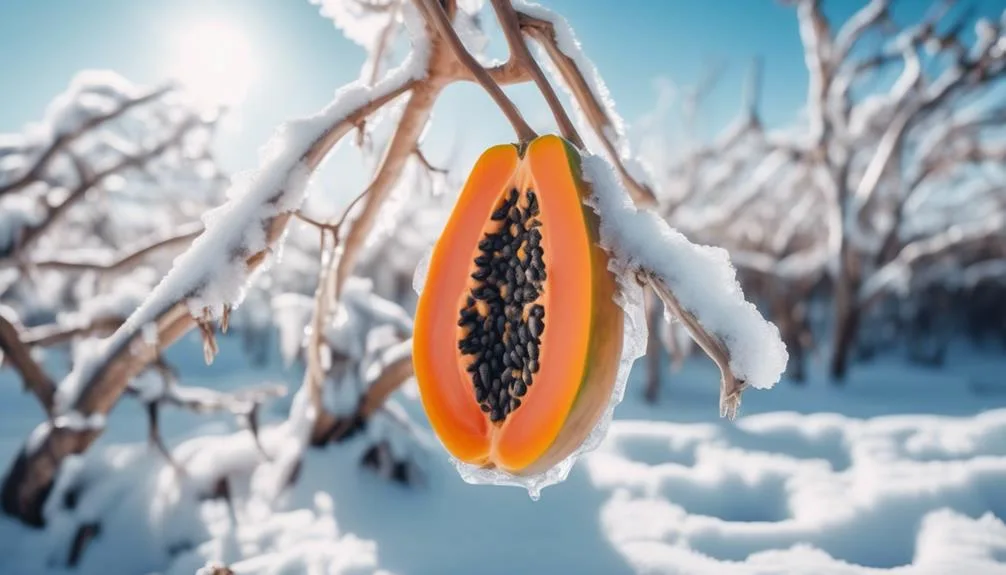
    papaya trees and cold climates
    Share
    Facebook Twitter LinkedIn Pinterest Telegram Email

    Papaya trees usually grow in warm, tropical areas, but can they survive in colder climates? It's not a simple yes or no. There are ways to potentially grow them in colder regions, but it's important to understand the factors that affect their growth in these conditions.

    Contents show
    1 Key Takeaways
    2 Climate Suitability for Papaya Trees
    3 Cold Tolerance of Papaya Trees
    4 Protecting Papaya Trees From Frost
    5 Growing Papaya Trees in Greenhouses
    6 Choosing Cold-Hardy Papaya Varieties
    7 Conclusion

    So, how can papaya trees adapt to colder climates, and what can be done to help them thrive?

    Key Takeaways

    • Papaya trees thrive in warm, tropical climates but can be cultivated in microclimates with slightly cooler temperatures.
    • Papaya trees are sensitive to cold temperatures and generally intolerant of freezing temperatures.
    • Methods for protecting papaya trees from frost include insulating methods like frost blankets and row covers, creating microclimates, and shielding from cold winds and frost.
    • Growing papaya trees in greenhouses can offer protection from extreme weather, pests, and diseases, but proper insulation, heating, ventilation, and shade cloth are essential.

    Climate Suitability for Papaya Trees

    When considering the climate suitability for papaya trees, it's essential to understand the specific environmental conditions that are optimal for their growth and fruit production. Papaya trees thrive in warm, tropical climates, but they can also be cultivated in microclimates with slightly cooler temperatures, provided they're protected from frost and cold winds.

    These trees require well-draining soil with a pH range of 5.5 to 6.7, rich in organic matter, and with good fertility. Sandy loam or loamy soils are ideal for papaya cultivation. Additionally, papaya trees are sensitive to waterlogging, so soil with good drainage is crucial.

    MUST READ
    Why Do Papaya Trees Have Large Leaves

    Understanding the microclimates and soil requirements for papaya trees is fundamental in creating an environment where these trees can flourish and produce an abundance of delicious, nutritious fruit.

    Cold Tolerance of Papaya Trees

    If you're eager to cultivate papaya trees in cooler climates, understanding their cold tolerance is essential for ensuring their successful growth and fruit production.

    Papaya trees are sensitive to cold temperatures and thrive in warm, tropical climates. They're generally intolerant of freezing temperatures and can suffer damage or die if exposed to prolonged cold.

    The temperature requirements for papaya trees typically range between 70°F and 90°F, making them vulnerable to frost and cold snaps.

    If you live in a region with cold winters, providing winter care for papaya trees is crucial. Consider using frost cloth or protective coverings to shield the trees from freezing temperatures.

    Additionally, planting papaya trees near a south-facing wall or in a sheltered area can offer some protection from cold winds and frost.

    Protecting Papaya Trees From Frost

    Wondering how to shield your papaya trees from frost and freezing temperatures? When it comes to protecting papaya trees from frost, insulating methods and microclimate creation are essential. Insulating methods, such as using frost blankets or row covers, can help trap ground heat and protect the trees from freezing temperatures. Additionally, creating a microclimate by placing the papaya trees near a south-facing wall or using thermal mass, like large rocks or water barrels, can absorb heat during the day and release it at night, preventing frost damage. Here's a helpful table summarizing these methods:

    MUST READ
    How to Identify Different Papaya Tree Varieties
    Insulating MethodsMicroclimate Creation
    Frost blanketsSouth-facing wall
    Row coversThermal mass

    Growing Papaya Trees in Greenhouses

    To successfully grow papaya trees in greenhouses, consider implementing key strategies for providing the optimal environment and care.

    Greenhouses offer benefits such as protection from extreme weather, pests, and diseases. However, they also present challenges in temperature regulation and humidity control.

    To address these challenges, invest in a greenhouse with good insulation and a reliable heating system to maintain the ideal temperature for papaya trees, which is around 75-85°F during the day and not lower than 60°F at night.

    Additionally, install a ventilation system to manage humidity levels and prevent moisture-related issues. Consider using shade cloth to diffuse intense sunlight and prevent overheating.

    Regular monitoring and adjustments are crucial to ensure that the greenhouse provides a stable and nurturing environment for your papaya trees.

    Choosing Cold-Hardy Papaya Varieties

    When considering growing papaya trees in cold climates, it's essential to select cold-hardy papaya varieties that can withstand lower temperatures and thrive in challenging environmental conditions. When choosing a papaya variety for cold climates, look for ones like 'Sunset', 'Waimanalo', or 'Kapoho' which are known for their ability to tolerate colder temperatures. These varieties are more likely to survive and produce fruit even in chilly conditions.

    It's important to prioritize winter care and choose a variety that can handle frost or near-freezing temperatures. By selecting a cold-hardy papaya variety, you can increase the chances of successfully growing papaya trees in colder climates. Remember to consider the specific climate and environmental conditions of your area when making your variety selection.

    MUST READ
    Why Do Papaya Trees Have Large Leaves

    Recommended Products

    Cold Hardy Avocado Tree Live Plant 6-12" Indoor Outdoor Growing Zones 5-11, Smooth and Sweet Tropical Fruit Trees
    Cold Hardy Avocado Tree Live Plant 6-12" Indoor Outdoor Growing Zones 5-11, Smooth and Sweet Tropical Fruit Trees

    Easy to Grow – Requires minimal care and thrives in full sun or partial shade
    VIEW LATEST PRICE

    As an affiliate, we earn on qualifying purchases.

    9-15" Pink Guava Plant Live Tree, Cold Hardy Live Guava Trees for Planting, Sweet Guava Tree Live Plant, No Pot
    9-15" Pink Guava Plant Live Tree, Cold Hardy Live Guava Trees for Planting, Sweet Guava Tree Live Plant, No Pot

    9-15" Pink Guava Plant Live Tree, Cold Hardy Live Guava Trees for Planting, Sweet Guava Tree Live Plant, No Pot

    VIEW LATEST PRICE

    As an affiliate, we earn on qualifying purchases.

    Papaya Tree Seedling (Carica Papaya) – Live Tropical Fruit Plant – Fast Growing – USDA Certified
    Papaya Tree Seedling (Carica Papaya) – Live Tropical Fruit Plant – Fast Growing – USDA Certified

    Imagine stepping into your garden and seeing a fast-growing tropical plant that transforms your outdoor space into something vibrant, productive, and full of life. This Papaya Tree Seedling gives you exactly that opportunity.

    VIEW LATEST PRICE

    As an affiliate, we earn on qualifying purchases.

    Conclusion

    In colder climates, growing papaya trees is possible with the right care and precautions. By selecting cold-hardy varieties, providing frost protection, and utilizing greenhouses, you can savor the tropical flavor of papayas even in chilly regions.

    With some effort and foresight, growing papaya trees in cold climates can be a rewarding experience, allowing you to enjoy their delightful fruit.

    Share. Facebook Twitter Pinterest LinkedIn Tumblr Email
    lucy smith
    Lucy Smith
    • Website

    Lucy Smith is a highly experienced horticulturist with a passion for fruit tree cultivation. She holds a degree in Horticulture from the University of California, Davis, and has worked in various roles in the industry. With over 10 years of experience, Lucy is dedicated to using eco-friendly methods for sustainable gardening practices.

    Related Posts

    Why Do Papaya Trees Produce Fruit Continuously

    February 19, 2024

    Can Papaya Trees Adapt to Climate Change

    February 19, 2024

    Creating a Wildlife Habitat With Papaya Trees

    February 19, 2024

    Where Are Papaya Trees Considered Invasive

    February 19, 2024

    Is Papaya Tree Pollen Allergenic

    February 19, 2024

    Can Papaya Trees Be Used in Traditional Medicine

    February 19, 2024
    Leave A Reply Cancel Reply

    Affiliate Disclosure

    As an Amazon Associate I earn from qualifying purchases.

    Recommended Reading

    When is the Best Time to Plant Raspberries: Tips for a Bountiful Harvest

    How to Use Persimmon Trees in Landscape Design

    What Do I Feed My Fruit Trees for Healthy Growth and Bountiful Harvests

    Fruit Trees for Wyoming: High-Altitude Success and Wind Protection

    Can Guava Trees Tolerate Air Pollution

    Can Pomegranate Trees Grow in a Pot in Kansas? Protection Strategies

    How Long Do Plum Trees Take to Fruit and Tips for Growing Them Faster

    How Many Years Apple Tree to Bear Fruit: Essential Factors That Influence Fruit Production

    When to Prune Grapefruit Tree for Optimal Health and Fruit Yield

    How to Trim Fruit Tree for Better Growth and Higher Yields in Your Backyard Garden

    Fruit Tree Hub

    Fruit Tree Hub is a website dedicated to providing you everything you need to grow fruit trees successfully at in your own yard.

    Contact us at: [email protected]

    - AFFILIATE DISCLOSURE: As an Amazon Associate I earn from qualifying purchases.

    Latest Posts

    Can Olive Trees Grow in New Jersey? Garden State Growth Tips

    Can Star Fruit Trees Grow in Missouri? Expert Variety Guide

    How to Grow Jujube Trees in Las Vegas, NV: Desert Growth

    Mango Trees in Illinois: Indoor and Greenhouse Growth Secrets

    Growing Papaya Trees in Oklahoma: High Heat Resilience

    Tamarind Trees in a Pot in Ohio (Complete Maintenance Manual)

    Can Fig Trees Grow in Long Beach, CA? Coastal Salt Tips

    Plum Trees in District of Columbia (Urban Microclimate Tips)

    Categories
    • Almond Trees
    • Apple Trees
    • Apricot Trees
    • Best Fruit Trees
    • Blackberry
    • Cantaloupe
    • Cherry Trees
    • Crochet Ideas
    • Crochet Ideas for Beginners
    • Cucamelon
    • Easy Crochet Ideas
    • Easy Knitting Projects
    • Fig Trees
    • Grapefruit Trees
    • Grapes
    • Guava Trees
    • Honeydew
    • Jujube Trees
    • Kiwi
    • Knitting For Beginners
    • Knitting Ideas
    • Knitting Inspiration
    • Lemon Trees
    • Lime Trees
    • Loquat Trees
    • Mango Trees
    • Mulberry Trees
    • Nectarine Trees
    • Olive Trees
    • Orange Trees
    • Papaya Trees
    • Peach Trees
    • Pear Trees
    • Persimmon Trees
    • Planting
    • Plum Trees
    • Pomegranate Trees
    • Quince Trees
    • Raspberry
    • Reviews
    • Small Crochet Ideas
    • Star Fruit Trees
    • Summer Crochet Ideas
    • Tamarind Trees
    • Tangerine Trees
    • Tips and Advice
    • Tools
    • Uncategorized
    • Walnut Trees
    © 2026 Fruit Tree Hub
    • Home
    • About Us
    • Contact
    • Privacy Policy
    • Terms and Conditions
    • Disclaimer
    • Editorial Policy
    • Affiliate Disclosure

    Type above and press Enter to search. Press Esc to cancel.