

Ever wondered how to effortlessly trim those overgrown branches in your garden without breaking a sweat? Picture this: you’re struggling with traditional pruners that just can’t handle the tough branches. Enter the anvil pruner – a game-changer in the world of gardening tools. So, what exactly is an anvil pruner and how can it revolutionize your pruning experience? You’re about to find out in this article.
Are you tired of struggling with flimsy pruners that leave your hands sore and the branches untouched? An anvil pruner might just be the solution you’ve been looking for. In this article, we’ll delve into the world of anvil pruners, exploring their unique design and highlighting the benefits they offer. Get ready to discover a new way to tackle your pruning tasks with ease.
What is an Anvil Pruner?
An anvil pruner is a type of pruning tool designed to make cutting through tough branches easier. It consists of a blade that closes against a flat edge, much like a knife cutting on a cutting board. This design distributes pressure evenly over the branch, making it ideal for dead wood or tough material.
Here are some key characteristics of an anvil pruner:
- Blade and Base: The blade of the pruner is sharp and does the cutting, while the base provides a stable surface for the blade to press against.
- Cutting Mechanism: When you squeeze the handles, the blade comes down and crushes the plant material against the base.
- Suitability: An anvil pruner is particularly useful for thicker branches that need extra force to cut through.
While anvil pruners have their advantages, it’s important to note that they may not be the best choice for live, green wood as the crushing action can cause damage. Regular sharpening of the blade is also essential to maintain cutting efficiency.
In the next section, we’ll explore how to choose the right anvil pruner for your gardening needs.
Advantages of Using an Anvil Pruner
An anvil pruner offers several advantages for your gardening needs:
- Efficiency: An anvil pruner requires less strength to use compared to other types, making it ideal for tough materials and thicker branches.
- Precision: The design of an anvil pruner allows for precise cuts on dead wood and branches without splintering, ensuring a clean finish.
- Versatility: You can use an anvil pruner for various pruning tasks, from shaping shrubs to cutting back overgrown branches.
- Durability: With proper care, an anvil pruner can last for years, providing consistent performance for your gardening projects.
Remember to regularly maintain and sharpen your anvil pruner to maximize its advantages and keep it in optimal working condition.
How Does an Anvil Pruner Work?
An anvil pruner operates like a knife cutting on a cutting board. It features a sharp blade that closes against a flat edge, the “anvil,” to slice through branches. Here’s how it works:
- Cutting Mechanism: When you squeeze the handles together, the blade pushes against the anvil, concentrating the force to sever the branch.
- Efficiency: Anvil pruners excel in cutting deadwood and tough branches, making them ideal for heavy-duty pruning tasks.
- Precision: By focusing pressure on one point, anvil pruners deliver clean cuts without splintering, promoting plant health.
- Maintenance: Keeping the blade sharp and the anvil clean ensures optimal cutting performance and extends the pruner’s lifespan.
Remember, understanding how an anvil pruner works enhances your pruning proficiency and the longevity of your gardening tools.
Choosing the Right Anvil Pruner for Your Needs
When selecting an anvil pruner, consider blade material, cutting capacity, and ergonomic design to find the best fit for your gardening tasks. Here’s how to choose the right one for your needs:
- Blade Material: Opt for high-quality steel blades, such as hardened carbon steel, for durability and precision cuts.
- Cutting Capacity: Assess the pruner’s cutting diameter to ensure it can handle the size of branches you typically prune.
- Ergonomic Design: Look for pruners with comfortable grips and a blade lock for ease of use and safety during extended pruning sessions.
Before making a purchase, evaluate your pruning requirements and match them to the features provided by different anvil pruners on the market for efficient and effective gardening.
Recommended Products
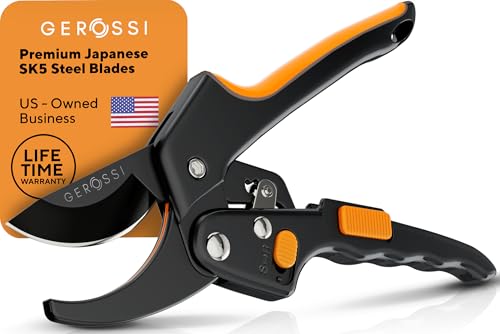
GARDEN SHEARS PRUNING - 2-in-1 Innovative Design. Our model stands out with its unique design, offering two distinct working modes – the traditional Single-Cut for everyday pruning tasks and an advanced Ratchet-Cut with a 3-step mechanism for dealing with thicker branches.

Ultra Sharp Blades: SK-5 steel Blades with black coating is ultra-strong, rust and corrosion resistant and sharp enough for most pruning projects, make pruning much more easier(Cutting capacity:0.75in/19mm).Anvil Groove design is better suited for dead and dried-out plants, stubborn tree branches.

【Excellent Cutting Capability & Durability】Experience precise and efficient cutting with LeafLux anvil pruning shears. Our shears feature blades crafted from SK5 high carbon steel, enhanced with a unique heat treatment technique to achieve a hardness rating of 58-60 HRC. A thin anti-friction lacquer provides corrosion protection and reduces friction, making it easy to cut hardwood branches, wet branches, and other objects up to 15mm in diameter, ideal for pruning shears for gardening.
Tips for Using an Anvil Pruner Effectively
When using an anvil pruner, follow these tips to ensure efficient and precise pruning:
- Start with Sharp Blades: Keep your anvil pruner blades sharp for clean cuts.
- Proper Cutting Technique: Place the anvil blade on the underside of the branch and the cutting blade on top before squeezing the handles.
- Mind the Cut Size: Be aware of the maximum cutting capacity of your pruner to avoid damage.
- Regular Maintenance: Clean your pruner after each use and oil the blades to keep them in top condition.
- Safety First: Always wear protective gloves and eye gear to prevent accidents.
- Practice Patience: Avoid rushing through cuts to maintain accuracy and minimize strain.
- Assess Your Grip: Ensure a firm yet comfortable grip on the pruner handles for better control.
- Know When to Stop: Don’t push your pruner beyond its limits; it’s okay to switch to a different tool for larger branches.
By incorporating these tips into your pruning routine, you’ll maximize the efficiency and performance of your anvil pruner.
Conclusion
You’ve now gained valuable insights into optimizing your use of an anvil pruner for your gardening tasks. Remember to keep those blades sharp, master the right cutting techniques, consider the size of your cuts, and maintain your pruner regularly. Safety should always be a priority, so gear up accordingly. Patience is key, along with a comfortable grip for smoother operations. And don’t forget, sometimes switching to a different tool for larger branches might be the way to go. By incorporating these tips, you’ll elevate the effectiveness and efficiency of your pruning endeavors with an anvil pruner. Happy gardening!
Frequently Asked Questions
How important is it to maintain sharp blades on an anvil pruner?
It is crucial to keep the blades of an anvil pruner sharp to ensure clean cuts and minimize damage to plants.
What are some proper cutting techniques to use with an anvil pruner?
Use a smooth and steady cutting motion, avoid twisting the tool, and position the blade properly before cutting to maximize effectiveness.
Why is it important to be mindful of cut sizes when using an anvil pruner?
Being aware of cut sizes prevents overexertion and strain on the tool, ensuring efficient operation and prolonging its lifespan.
How often should regular maintenance be performed on an anvil pruner?
Regular maintenance should be conducted after each use to clean the blades, oil moving parts, and inspect for any damage or issues.
Why is prioritizing safety with protective gear essential when using an anvil pruner?
Wearing protective gear, such as gloves and goggles, protects against potential injuries from sharp blades and flying debris during pruning tasks.
How does practicing patience contribute to effective pruning with an anvil pruner?
Patience allows for better precision and control while cutting, resulting in cleaner and more accurate pruning outcomes.
Why is ensuring a comfortable grip on an anvil pruner important?
A comfortable grip reduces hand fatigue and minimizes the risk of accidents by providing better handling and control during use.
When should a gardener consider switching to a different tool for larger branches instead of using an anvil pruner?
Switch to a different tool, like loppers or a pruning saw, for larger branches that are beyond the capacity of an anvil pruner to ensure efficient and safe pruning.
