

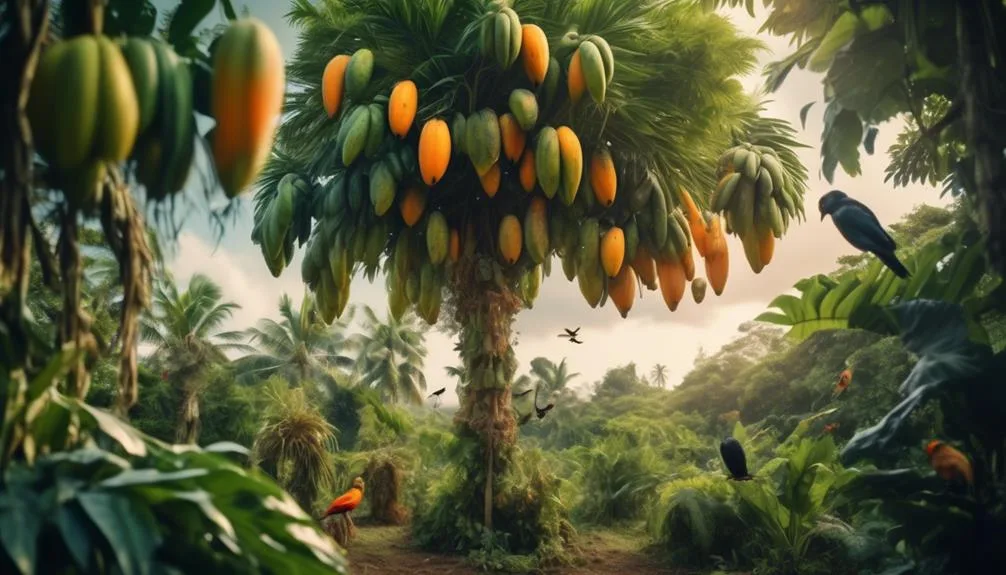
Papaya trees are important for the local ecosystem, providing shelter and food for many animals. They also enrich the soil with their leaves and contribute to biodiversity.
These tropical giants play a vital role in supporting various species. But there's still much more to learn about how papaya trees impact the environment.
Key Takeaways
- Papaya trees play a crucial role in supporting biodiversity by providing habitat, food, and breeding grounds for local wildlife.
- The deep roots and fallen leaves of papaya trees enrich the soil, improving its health and fertility and supporting the growth of other vegetation.
- Papaya fruits are not only important food sources for animals and humans but also contribute to food security and promote digestive health and immunity.
- Papaya trees actively contribute to carbon sequestration, helping mitigate climate change by absorbing carbon dioxide and reducing greenhouse gas levels in the atmosphere.
Papaya Trees as Habitat Providers
Papaya trees serve as vital habitat providers, offering shelter, food, and breeding grounds for a diverse array of local wildlife. The broad leaves and dense foliage provide ideal wildlife shelters, offering protection from predators and the elements.
Additionally, the sweet, fragrant flowers of the papaya tree attract various pollinators, contributing to ecosystem balance and natural regeneration. This interaction between the papaya tree and local wildlife creates a harmonious environment where different species rely on the tree for sustenance and refuge. Birds, insects, and small mammals find sanctuary among the branches and leaves, fostering a thriving ecosystem.
The presence of papaya trees not only enhances the biodiversity of the area but also ensures the continuation of various species through the provision of essential habitats and resources.
Soil Enrichment by Papaya Trees
Enriching the soil, papaya trees contribute to the overall health and fertility of the local ecosystem through their extensive root systems and nutrient-rich fallen leaves.
1) Their deep and wide-reaching roots break up compacted soil, improving aeration and water infiltration.
2) The fallen leaves decompose rapidly, releasing essential nutrients like nitrogen, potassium, and phosphorus into the soil, which enhances soil fertility.
3) This nutrient cycling supports the growth of other vegetation in the vicinity, creating a more diverse and resilient ecosystem.
4) The improved soil structure and nutrient availability also benefit soil microorganisms, promoting a healthy and balanced soil ecosystem.
As a result, papaya trees play a crucial role in maintaining the overall vitality and sustainability of the local environment.
Recommended Products

Not Available for Sell in WA, USA

Feed the soil not the plants - stimulate microbial activity in your soil and boost probability of success with all types of plants… like composting but faster

🌿 Papaya Paradise Unveiled: Elevate your Papaya plant care with Gardenera's meticulously crafted Papaya Potting Mix, designed to create an optimal environment for your plants to thrive.
Contribution to Biodiversity
By attracting a diverse array of pollinators and providing habitat for various wildlife, papaya trees significantly contribute to the overall biodiversity of the local ecosystem, fostering a rich and dynamic natural community.
The flowers of the papaya tree attract a wide range of pollinators, including bees, butterflies, and birds, enhancing the overall pollinator diversity in the area. This, in turn, supports the reproduction of numerous plant species, further enriching the ecosystem.
Additionally, papaya trees contribute to genetic diversity by providing a unique genetic makeup that supports the resilience of the local flora and fauna. This genetic diversity is essential for the long-term health and adaptability of the ecosystem, ensuring that it can withstand environmental changes and continue to thrive.
In essence, papaya trees play a crucial role in maintaining and enhancing the overall biodiversity of their local ecosystem.
Recommended Products


🥭 Produces Sweet Tropical Papayas – Enjoy flavorful, homegrown fruit with rich orange flesh.

Sweetest Papaya Variety: This Red Lady Variety is considered to be the sweetest papaya. It has red-orange flesh and a sweet fragrance. (Does not smell bad like other varieties) A dwarf papaya that is Fast and Easy to grow. Under good growing conditions it will fruit within 8 months
Papaya Trees as Food Sources
Attracting a diverse array of pollinators and providing habitat for various wildlife, papaya trees contribute not only to the biodiversity of the local ecosystem but also serve as valuable food sources for both animals and humans.
Here's why papaya trees are essential as food sources:
- Fruit for Wildlife: The sweet and nutritious papaya fruits are a vital food source for birds, bats, and insects, contributing to the overall health of the local wildlife population.
- Nutrient-Rich for Humans: Papayas are a rich source of vitamin C, antioxidants, and fiber, making them an essential part of a healthy diet for humans.
- Papaya Tree Cultivation: The cultivation of papaya trees provides a sustainable food source for communities, supporting local economies and food security.
- Nutritional Benefits: Consuming papaya fruits supports digestive health, boosts immunity, and aids in maintaining overall well-being.
Role in Carbon Sequestration
Playing a crucial role in the capture and storage of carbon dioxide, papaya trees actively contribute to the mitigation of climate change through the process of carbon sequestration. By absorbing carbon dioxide during photosynthesis and converting it into organic compounds, papaya trees help reduce the amount of this greenhouse gas in the atmosphere. This has a significant climate impact, as it helps to mitigate the effects of global warming.
Furthermore, the environmental impact of papaya trees in carbon sequestration can't be overstated. In addition to their role in regulating the climate, papaya trees also contribute to maintaining the balance of carbon in the soil, which is essential for the health of the local ecosystem.
Through their active participation in carbon sequestration, papaya trees play a vital role in preserving the environment and mitigating the impacts of climate change.
Conclusion
Papaya trees are vital for local ecosystems. They provide habitat, enrich soil, support biodiversity, and sequester carbon. They're more than just fruit bearers; they're essential for a healthy environment.
Next time you savor a juicy papaya, consider the profound impact these trees have on the local ecosystem.
