

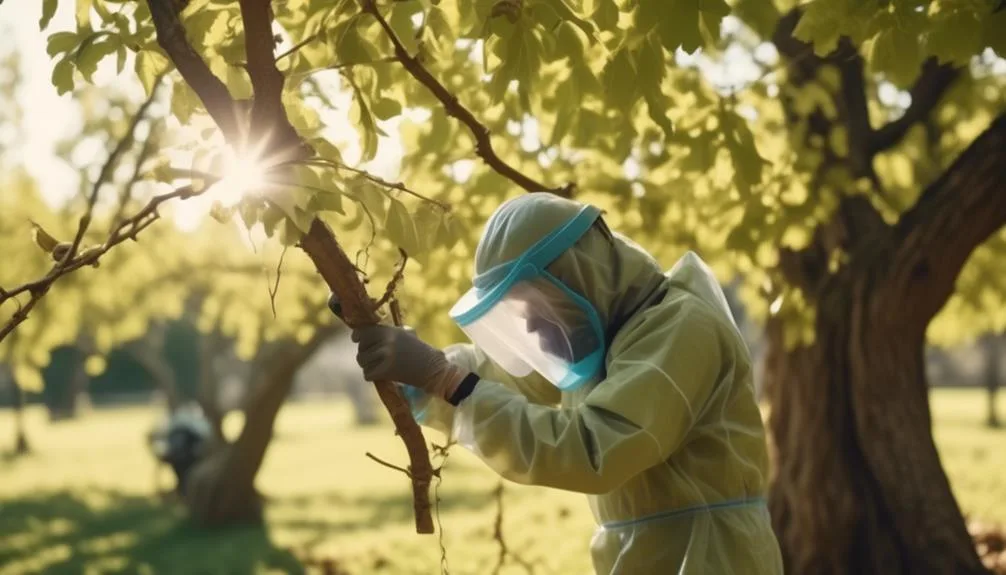
Pruning walnut trees is crucial for their health and productivity. But where do you start?
When to prune, what tools to use, and which techniques work best? Let's explore the key insights and strategies for effectively pruning walnut trees, so you can ensure a bountiful harvest and thriving trees.
Key Takeaways
- Prune walnut trees during the dormant season, late winter or early spring, to minimize stress and reduce disease transmission.
- Use the right tools, such as hand pruners, loppers, a pruning saw, and pole pruners, while wearing safety equipment like gloves, safety glasses, and a hard hat.
- Make clean cuts at a slight angle just above a bud or lateral branch, avoiding leaving stubs and making improper cuts to prevent disease or pest infestation.
- Prune to encourage growth by training the tree to develop a strong framework, removing competing or crossing branches, and stimulating the development of new shoots through strategic pruning techniques. Additionally, prune for tree health by removing dead or diseased branches, promoting airflow within the canopy, and maintaining a balanced structure.
Timing for Pruning Walnut Trees
Now is the ideal time to determine the best timing for pruning your walnut trees to ensure optimal growth and yield.
Best practices for pruning walnut trees include considering the seasonal aspects. It's generally recommended to prune walnut trees during the dormant season, which is typically late winter or early spring. This timing helps minimize stress to the trees and reduces the risk of disease transmission. Additionally, it allows the trees to focus on healing and new growth once the growing season begins.
By pruning during this period, you can shape the tree, remove dead or diseased branches, and improve light penetration and air circulation.
Being mindful of the seasonal considerations will contribute to the overall health and productivity of your walnut trees.
Recommended Products

Heat-Treated Serrated Saw Blade: 8" saw blade designed for efficient cutting of branches and tough materials, ensuring sharpness and durability.

Fast-Cutting RazorTOOTH Blade – Aggressive 7-inch RazorTOOTH blade cuts quickly through green wood and branches, delivering efficient pruning with less effort.

Razortooth saw technology removes more material in each pass
Tools Needed for Pruning
To effectively prune walnut trees, you'll need a set of specific tools designed to make the process efficient and successful. Essential pruning tools include hand pruners for smaller branches, loppers for branches up to 2 inches in diameter, a pruning saw for larger limbs, and pole pruners for reaching higher branches.
Safety equipment such as gloves, safety glasses, and a hard hat are crucial to protect yourself while pruning. When selecting your tools, ensure they're sharp and well-maintained to promote clean cuts and minimize damage to the tree.
Proper pruning techniques involve making cuts at a slight angle just above a bud or lateral branch to encourage healthy regrowth. Common mistakes to avoid include leaving behind stubs and making improper cuts that can lead to disease or pest infestation.
Recommended Products

【An Essential Bonsai Kit】The Bonsai Trees Kit includes 1x Portable Gardening Mat(29.5"x29.5"), 4x Bonsai Wire with Cutter(Total 262 Feet), 1 x Big Bonsai Scissors, 1x Straight Scissors, 1x Pruning Shears, 2x Leaf Cutters, 1x Mini Wide Shovel, 1x Mini Shovel, 1x Mini Rake, 1x Brush, 4x Tweezers, 1x Bucket Shovel, 1x Organizer Bag. Owning this perfect bonsai tree kit is the beginning of your bonsai journey. Ideal gifts for women and men.

HUNTING PRUNING KIT - Ameristep brings you a quality Pruning Kit, perfect for clipping brush while you're in the wilderness; Be sure nothing will stop you from making that very shot to bring success to the hunt

6-Piece Grafting Tool Set: Includes one SK5 steel grafting cutter, one 2CR13 steel grafting knife, three rolls of tape (1 white, 2 green), and one twist tie for complete propagation
Techniques for Pruning
Using precise cuts and proper techniques is essential for successful pruning of walnut trees. When pruning walnut trees, it's important to consider the overall branch structure, as well as the tree size and pruning for aesthetics. Here are three key techniques for effective walnut tree pruning:
- Thinning: Remove small, weak, or diseased branches to improve air circulation and allow sunlight to penetrate the canopy, promoting overall tree health and fruit production.
- Heading Back: Prune back the tips of branches to promote lateral growth and create a more compact tree structure. This technique helps control the tree's size and shape, making it easier to manage and harvest.
- Maintenance Pruning: Regularly inspect the tree for any dead, damaged, or crossing branches, and promptly remove them to maintain a strong and balanced branch structure.
Recommended Products

1️⃣ Extreme 2-Inch Cutting Capacity Cuts branches up to 2 inches thick with confidence. Ideal for mature hardwood, dry limbs, and heavy pruning jobs.

BYPASS LOPPERS FOR GREEN WOOD - These heavy-duty garden trimmers feature 6 pin-locked position stops and rubber grips. This style of garden cutter is designed for wet wood, great for trimming living branches and tree limbs.

CHOPS THROUGH 2-INCH BRANCHES EFFORTLESSLY: The compound action mechanism multiplies your cutting power for fast removal of dry, dead and woody growth. This anvil-style blade is built for the toughest preparatory cuts and cut-to-length work, making heavy-duty pruning dramatically easy through extra leverage.
Pruning to Encourage Growth
Encouraging growth in walnut trees can be achieved by utilizing specific pruning techniques. These techniques build upon the foundation established through thinning, heading back, and maintenance pruning.
To encourage branching and increase yield, focus on training the tree to develop a strong framework of scaffold branches. This will help support the weight of future fruit production.
When pruning for growth, it is important to remove any competing or crossing branches. This will allow better light penetration and air circulation within the canopy.
Additionally, pruning should be done to create a balanced structure. This will ensure that the tree can support the weight of future fruit production.
By strategically pruning to encourage growth, you can stimulate the development of new shoots and optimize the tree's potential for increased yield.
Pruning for Tree Health
Prune walnut trees for optimal health by removing dead or diseased branches and ensuring proper airflow within the canopy. This promotes disease resistance and structural integrity, helping the tree to thrive.
Consider the following preventive measures and techniques for maintaining tree health:
- Regular Inspections: Schedule regular inspections to identify and remove dead or diseased branches promptly, preventing the spread of potential diseases.
- Proper Branch Angles: Encourage the growth of strong, well-attached branches with proper angles to promote structural integrity and reduce the risk of breakage.
- Air Circulation: Prune the canopy to allow for adequate airflow, reducing the risk of fungal diseases and promoting overall tree health.
Conclusion
Pruning your walnut trees during the dormant season is essential for their health and productivity. Using sharp tools and proper techniques will help you achieve the best results. By pruning during this time, you can remove dead or diseased branches, promote airflow and sunlight penetration, and shape the tree for optimal growth. It's important to make clean cuts just above a bud or lateral branch, as this will encourage new growth and discourage the spread of disease. Remember to remove any suckers or water sprouts that may have formed at the base of the tree. Pruning also allows you to thin out overcrowded branches, improving overall tree structure and reducing the risk of broken limbs. With regular and proper pruning, your walnut trees will have a better chance of staying healthy and producing abundant harvests for many years to come. So grab your tools and get ready for some pruning – your walnut trees will thank you!
