

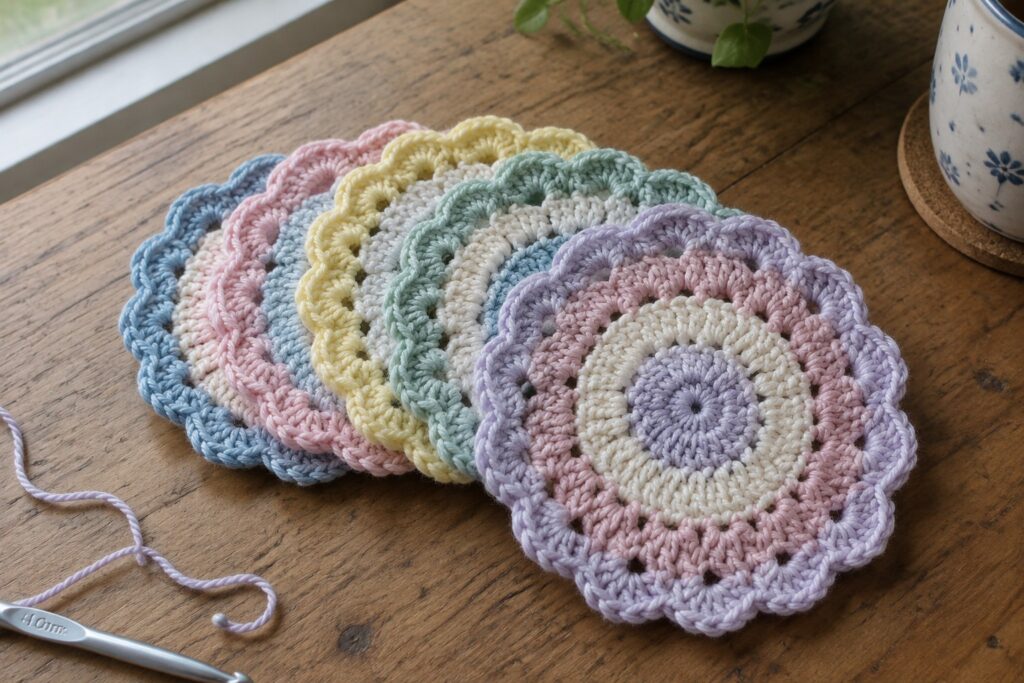
I like to make coasters because they are quick to finish and actually get used around the house.
I usually work with whatever yarn I have left and stick to shapes that do not require much counting.
Over time I put together some patterns that use simple motifs and basic forms so they stay practical.
These twenty one ideas came from trying different color combinations while keeping the stitches easy.
They add a little color to my tables without turning into a big project.
Pastel Concentric Circle Coasters
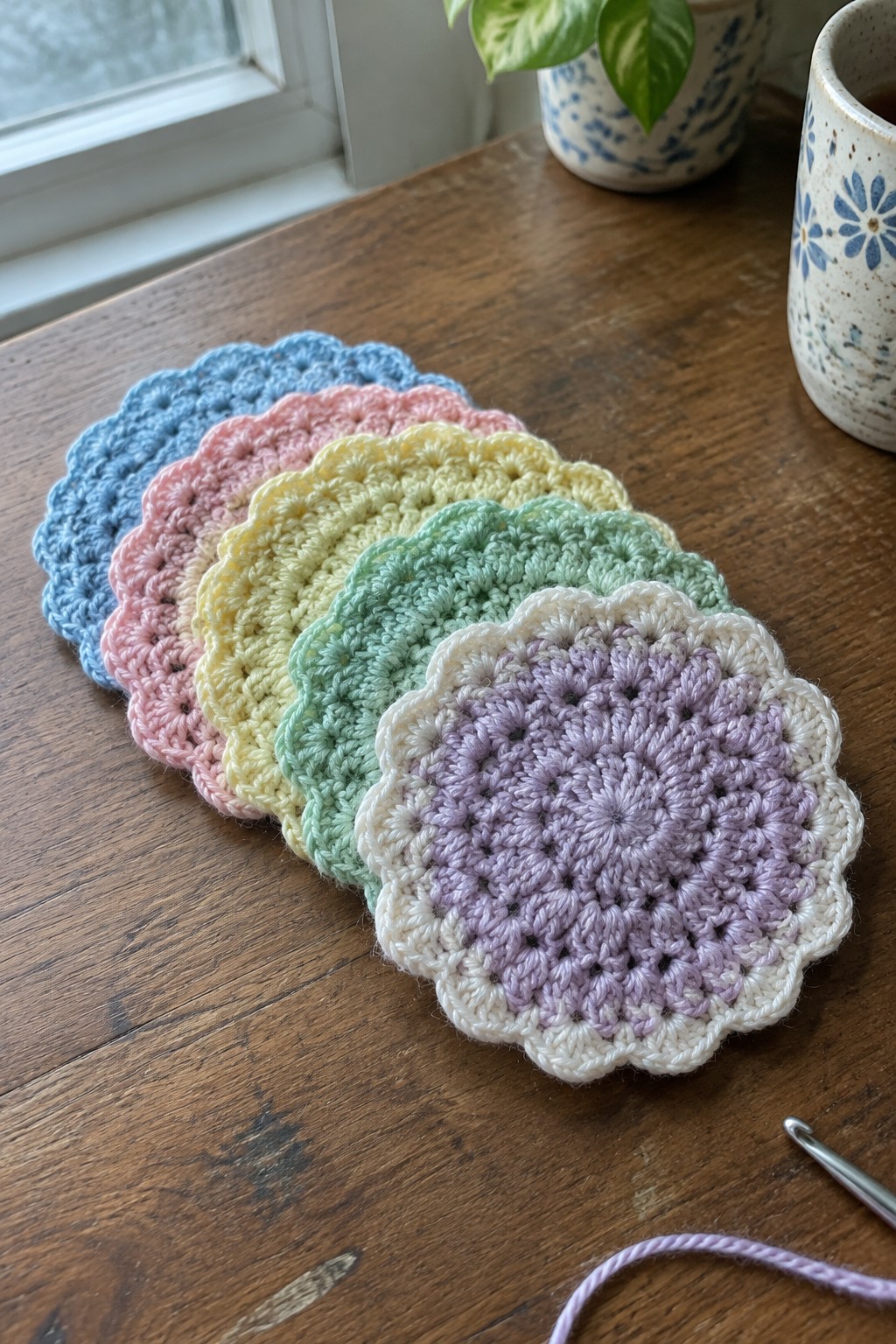
Crochet coasters built in rounds with color changes at each stage create clear bands that highlight the circular shape. The scalloped outer edge gives the finished piece a clean border without extra steps. This motif works well for small surface protectors or as a quick way to test out color combinations in a set.
What makes this idea useful is how simply the color order can be rearranged to suit different tables or seasons. The compact size lets you make a full set from leftover yarn without committing to a large project. For gifts, a design like this stacks flat and uses minimal materials while still looking complete as a group.
Donut-Shaped Coasters Built from Layered Rings
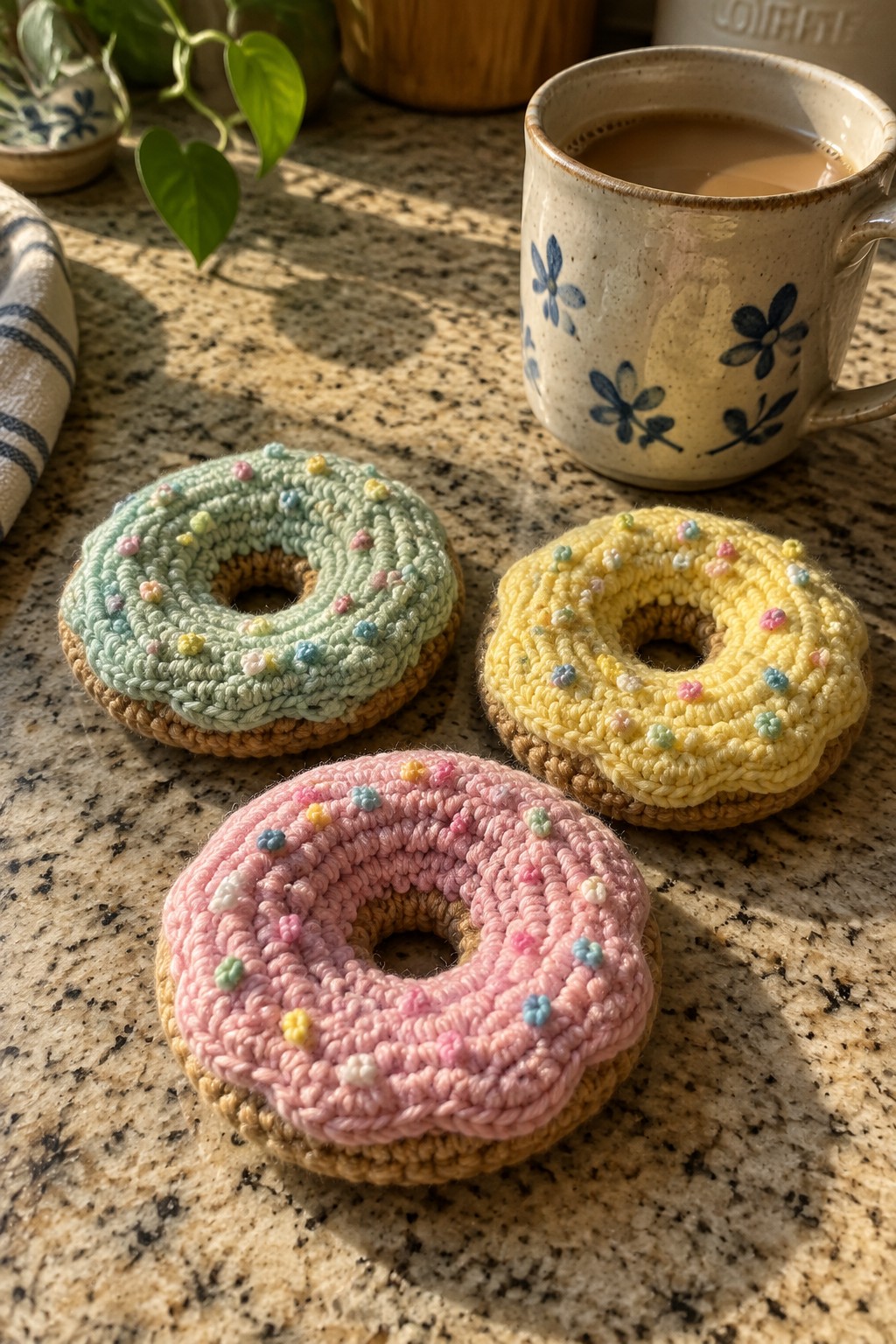
Crochet donut coasters are made by working two concentric rings that form a flat circle with an open center. A brown base layer sits under a pastel top layer, and small scattered stitches in multiple colors act as the only surface detail. The finished pieces stay thin enough to sit under a mug without tipping it while the ring shape keeps them stable on a table. This motif belongs in the coaster category and works as quick kitchen or desk accessories.
What makes this idea useful is how simple it is to change the ring width or outer diameter to fit larger or smaller drinkware. A project like this works especially well as a starter set because each coaster uses the same two-round pattern and can be finished in one sitting. The structure makes this a smart option for using up small yarn scraps since the sprinkle stitches require only tiny amounts of leftover colors. For gifts, a design like this can be made in sets of four with different pastel bases to match a recipient’s kitchen.
Lemon Slice Coasters

Crochet coasters in a lemon slice pattern use a flat circular base worked in yellow with white lines radiating from the center to create wedge sections. The finished pieces measure just right for holding glasses and stack neatly when not in use. This motif turns a basic coaster shape into something more specific while keeping the structure simple enough to repeat.
The small scale makes this easy to adapt by switching the yellow for other citrus colors or changing the number of segments. A project like this works especially well as a set for summer entertaining or as quick gifts that require little yarn. You can add a second border color or adjust the diameter if you want coasters that cover larger mugs.
Layered Macaron Coasters
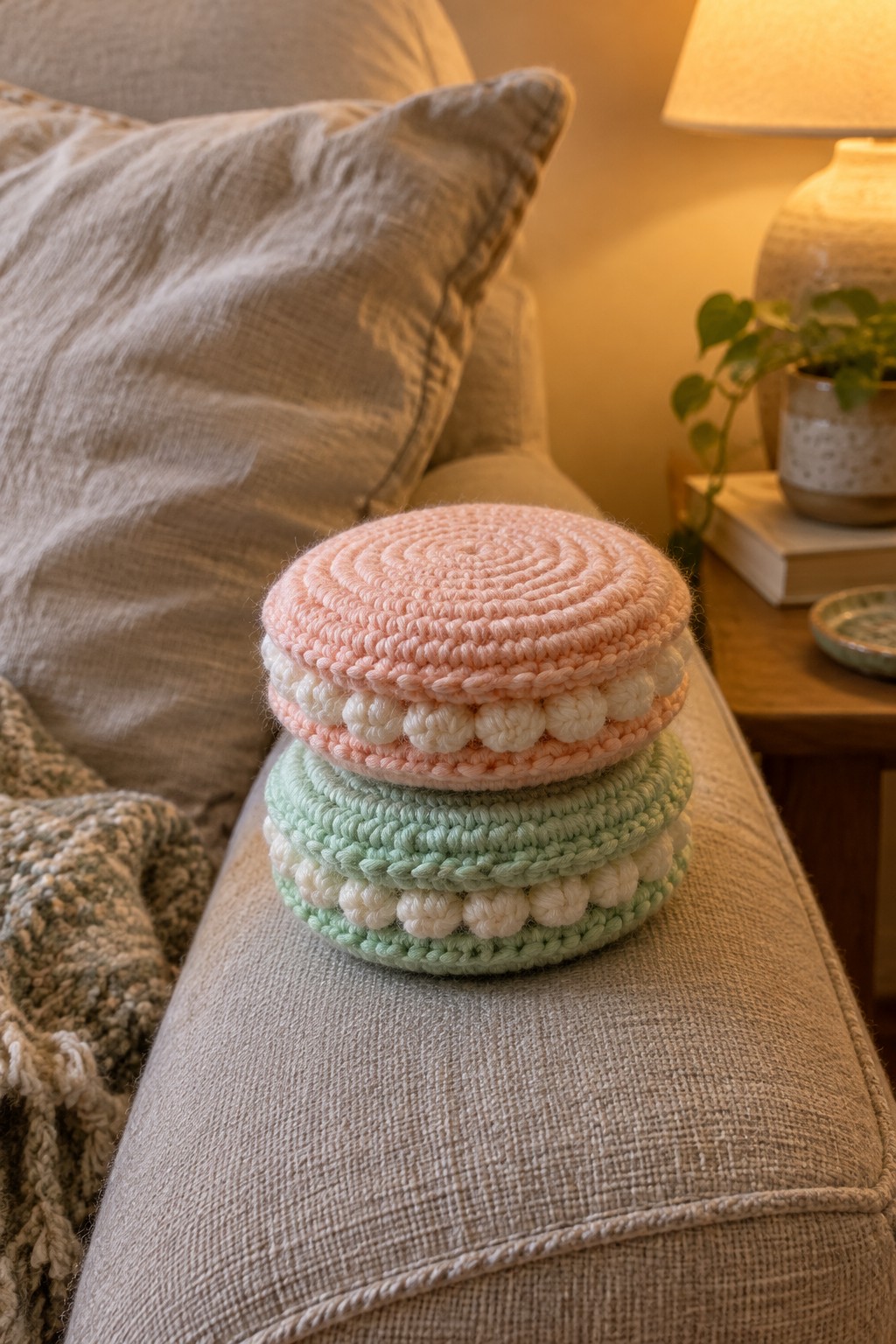
These coasters are made as flat rounds with a spiral center that forms the top shell. A band of raised white stitches sits between two colored layers to create the filling detail, and the finished pieces stack cleanly into a compact set. The simple circle shape and color changes keep the focus on the macaron look while still functioning as practical drink rests on a table or tray.
What makes this idea useful is how the round base and color blocking let you swap shades or adjust the middle texture without changing the overall pattern. You can make a full set in one afternoon using leftover yarn, then store them stacked to save space. For gifts, a design like this works especially well because the pieces travel flat and require no extra hardware or finishing beyond the basic rounds.
Star-Shaped Coasters with Gradient Coloring
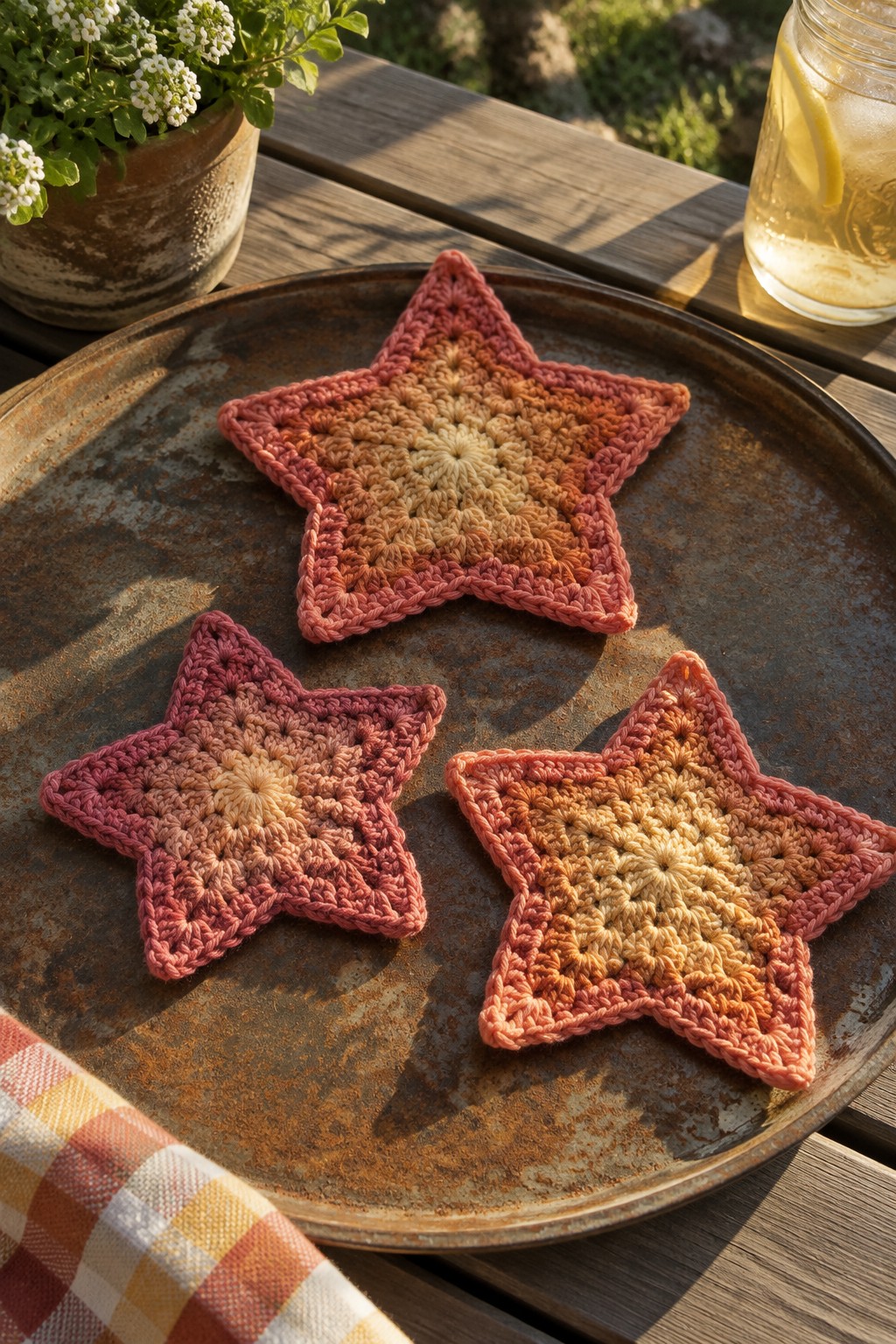
Star-shaped coasters offer a simple way to add geometric interest to a table while still protecting surfaces from condensation or heat. The motif starts from a center ring and builds outward in rounds to form five even points, with the color shifting gradually through several shades to highlight the shape. This approach keeps the project in the coaster category but also lets the finished pieces work as small trivets or accents on a tray.
The small scale makes this easy to adapt by adding or removing rounds to match different glass sizes or by switching to solid colors for a quicker finish. A project like this works especially well as a last-minute gift set since each coaster uses little yarn and can be made in an evening. For decor, the star outline stands out on Pinterest boards when the gradient moves from dark to light, giving the set a finished look without extra edging.
Mushroom Coasters Built from Layered Circles

Mushroom coasters are made by crocheting two separate circles, one larger for the cap and one smaller for the stem, then layering the cap on top. Small contrasting spots are added to the cap surface to suggest the mushroom pattern. The two-tone construction and simple round shapes keep the finished piece flat enough to hold a cup while giving it a clear mushroom outline.
What makes this idea useful is that the separate pieces let you use up small yarn scraps without matching a full skein. You can change the cap size or spot placement to create different mushroom styles from the same base pattern. The finished coasters stack flat and work well as quick gifts or seasonal table accents. A project like this also photographs clearly for pattern sharing because the shape reads from a distance.
Cloud Shaped Coasters with Minimal Faces
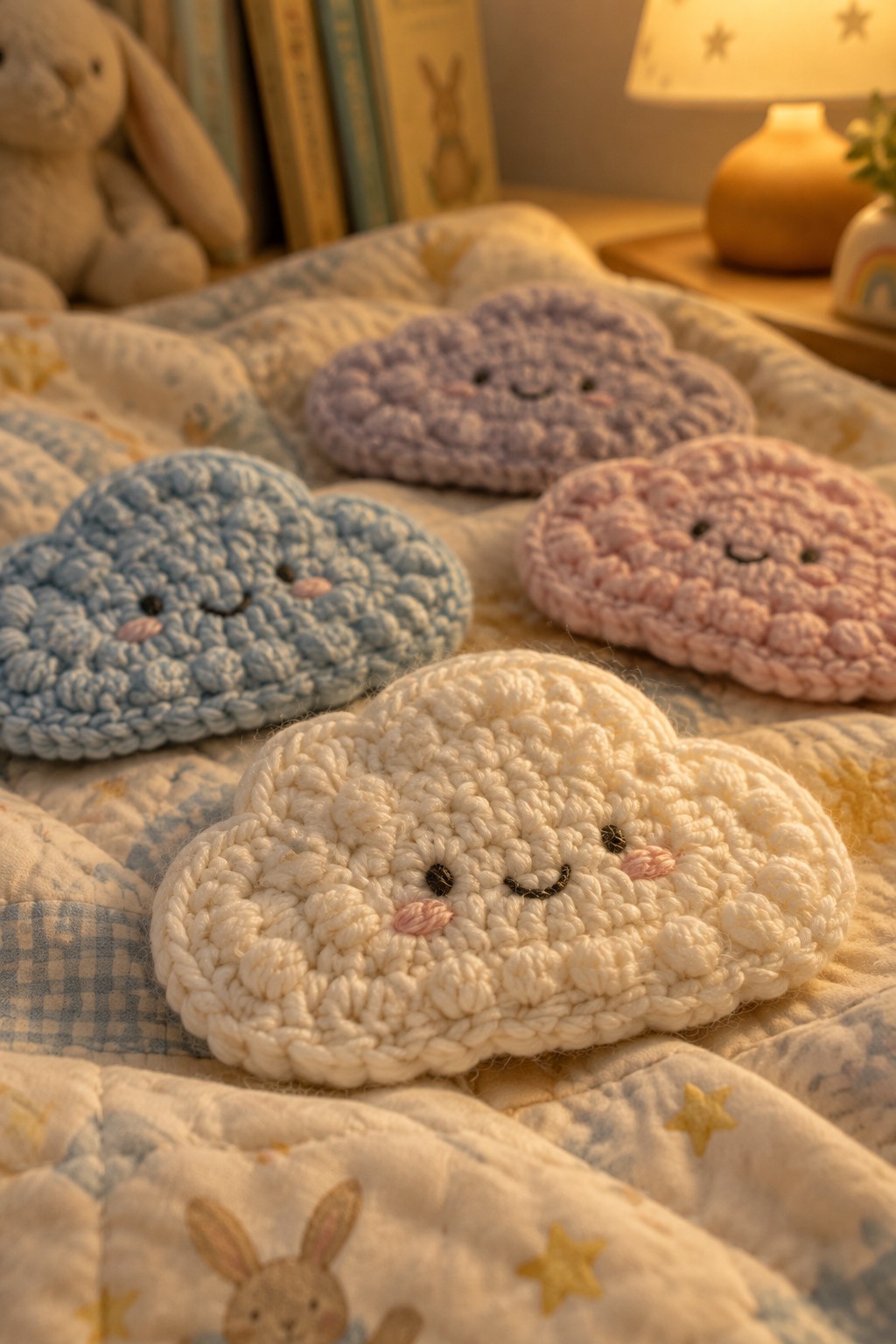
Cloud shaped coasters use a simple rounded outline that matches the curve of most mugs and glasses while the dense crochet texture helps absorb small spills. The flat construction keeps them stable on tables and quick to finish in one sitting. Adding just a few stitches for eyes and a mouth gives each piece a consistent look without extra shaping or pieces to sew on. This approach fits the coaster category but also works as a small decorative accent for desks or bedside tables.
What makes this idea useful is how the basic cloud template can be resized or repeated in any color to match existing room decor. For gifts, a design like this works well in sets of four or six using up scraps from other projects. The structure makes this a smart option for testing face embroidery on a flat surface before trying it on three-dimensional items. This would be easy to turn into matching keychains or a short garland if you want to use the same motif elsewhere.
Heart Motif Square Coasters
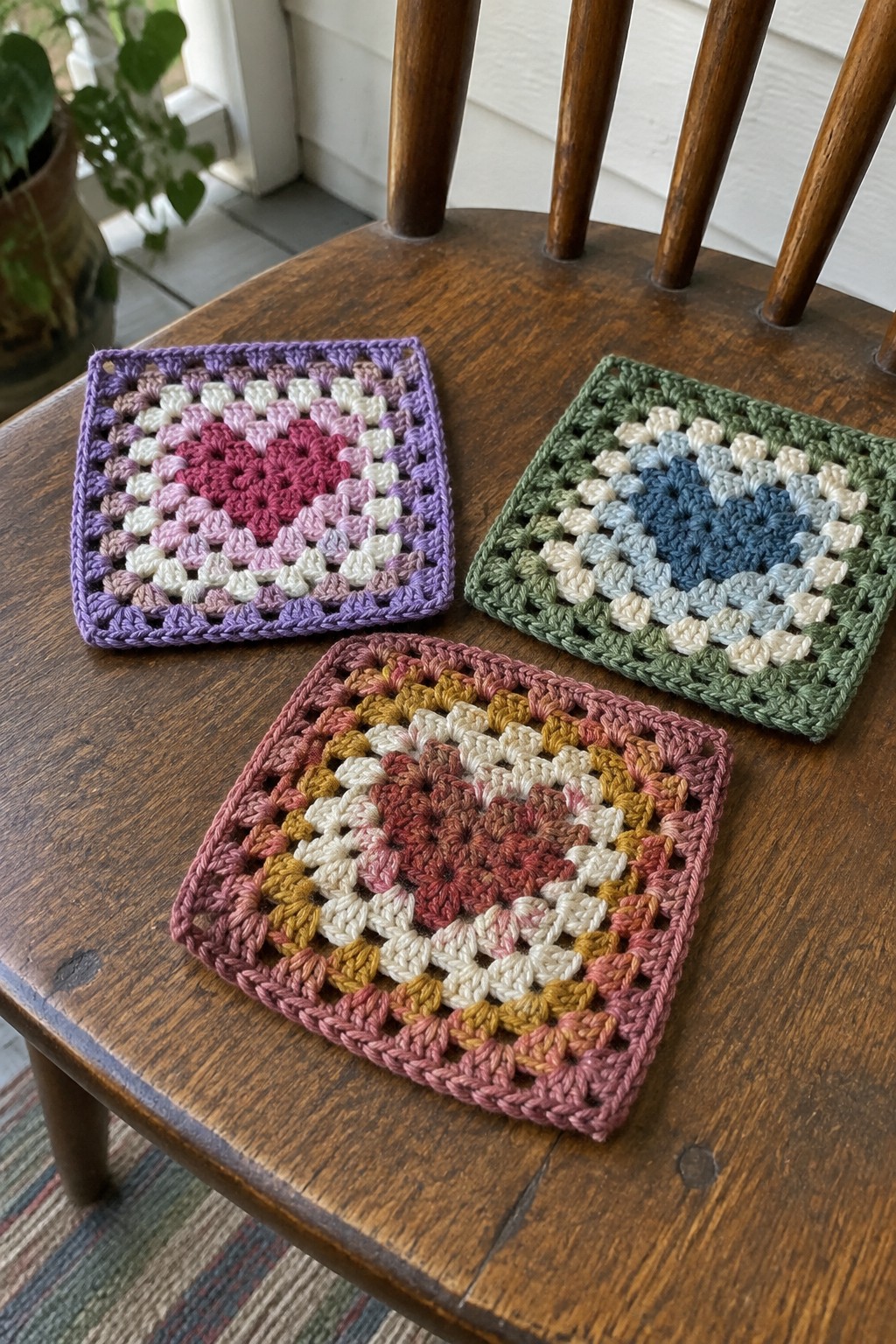
These coasters are built from a central heart motif worked in the round, then squared off with additional rounds to create a flat, usable surface. The color shifts move outward from the heart in planned bands, which keeps the design clear while using up small amounts of different yarns. This style suits the coaster category because the compact size and firm structure handle moisture and heat without curling.
What makes this idea useful is how the square format lets you mix and match color sets for different rooms or seasons without changing the pattern. You can swap the heart colors or outer rounds to use up scraps, and the finished size works for both standard mugs and larger glasses. For gifts, a set like this stands out on Pinterest because the heart adds interest without requiring complex stitches or large time commitments. The border rounds also give you an easy spot to adjust tension or add a simple edging if the squares need slight blocking.
Ice Cream Cone Coasters
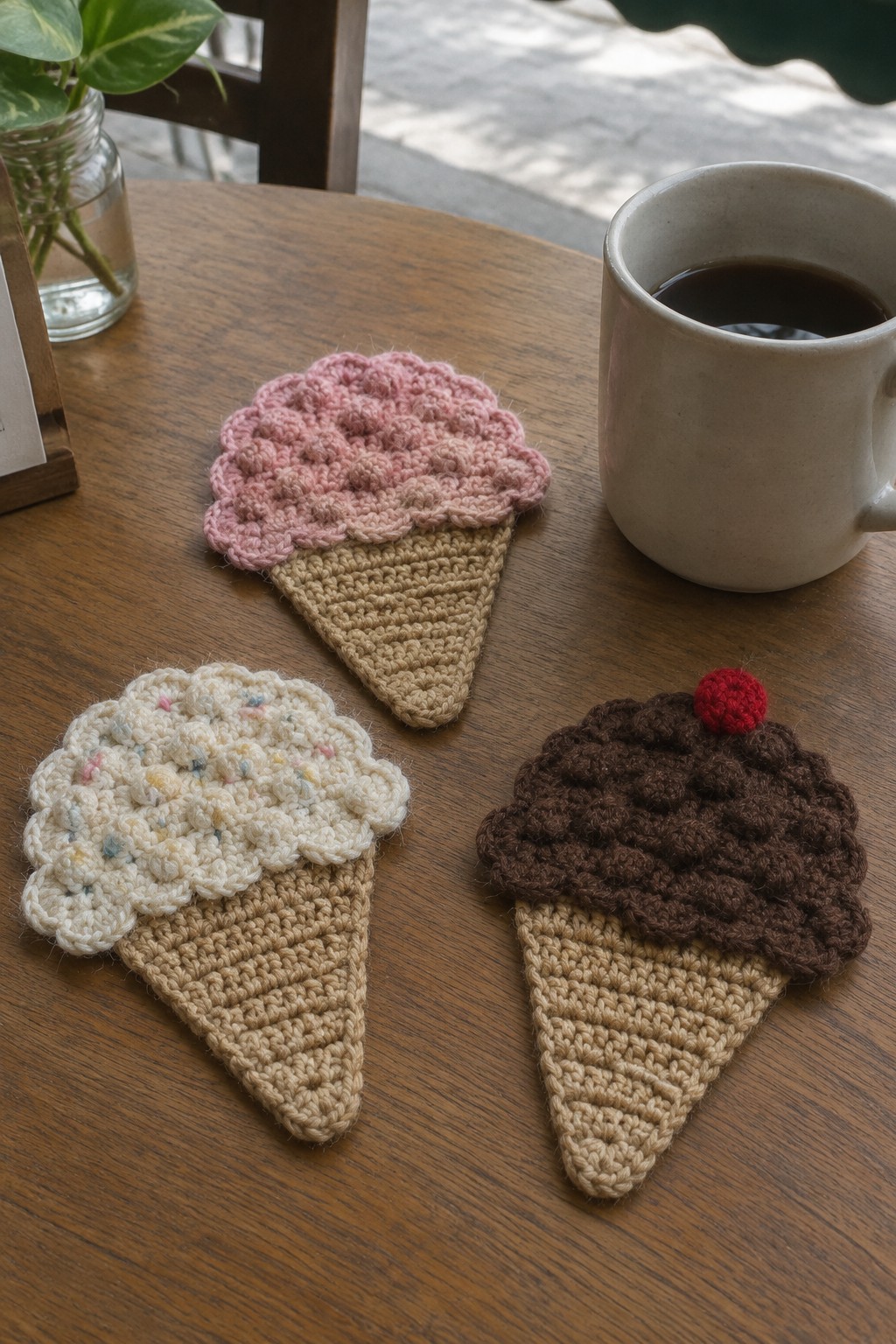
Ice cream cone coasters combine a pointed triangular base with a rounded top section worked in a raised stitch pattern to mimic a scoop. The design keeps the overall size small so it fits under standard mugs and glasses while the color change between the cone and scoop creates clear visual separation. This approach fits neatly into the coaster category because the shape stays flat enough to function but adds a recognizable motif through simple color blocking and texture.
What makes this idea useful is how the cone shape gives you an easy outline to follow without needing complex shaping. You can change the scoop colors to match a party theme or room palette and still keep the same pattern. A project like this works especially well as a quick gift set since the pieces are small, use little yarn, and stand out on a table without taking up much space.
Cactus Motif Coasters with Raised Dots

Cactus shaped coasters use a flat outline worked in rounds with color changes to create a gradient from dark to light green. The white dots sit on top as small raised stitches that add texture without changing the overall flat profile needed for coasters. This shape fits the coaster category because it stays compact, stacks easily, and gives a clear surface for glasses while the motif keeps the design simple to repeat.
The small scale makes this easy to adapt by swapping the green tones for any color scheme that matches existing decor. You can work the dots in a single contrasting color or use up scraps for a mixed look across a set. For gifts, a project like this works especially well because the finished pieces take little yarn and time yet look more finished than basic round coasters.
Pastel Round Coasters with Built-Up Flower Centers

Round coasters that start with a small flower motif and build outward in rings give you both a flat surface and a bit of texture in the middle. The example uses soft pastel shades for each layer, with the flower worked in cream and pink tones before the mint green border finishes the edge. Keeping the main body of each coaster in one solid color makes the stack easy to separate or recombine later. This style sits squarely in the everyday coaster category, where the raised center adds interest without changing the basic round shape.
What makes this idea useful is how little yarn each coaster needs, so you can finish a full set in an afternoon. The small diameter works well on coffee tables, nightstands, or even as mini plant mats. You can swap the flower for a simple circle or change the outer ring color to match existing kitchen linens. For gifts, a stack of five or six in different pastels packs flat and still looks complete without extra wrapping.
Avocado Coasters Made with Concentric Rounds
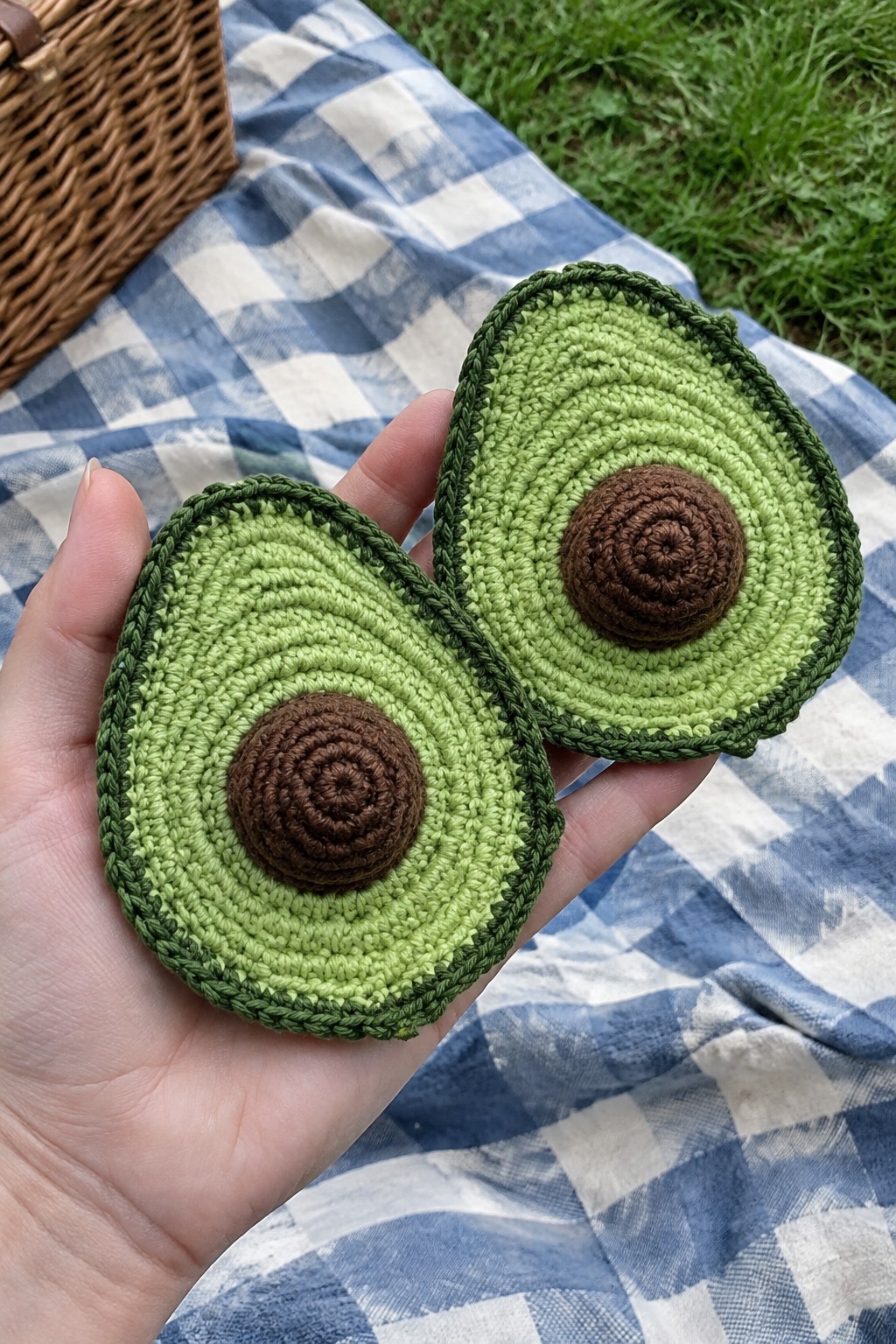
Crochet avocado coasters are worked in the round starting from a small brown center that forms the pit, then shifting through lighter green rounds to create the flesh before finishing with a darker green border. The oval shape and color changes turn a basic circular motif into a recognizable fruit slice that works well as a coaster. This approach keeps the project in the coaster category since the finished size and thickness provide enough surface area to catch drips while remaining flat. The layered rounds give the design enough visual definition to stand out without added embroidery or separate pieces.
What makes this idea useful is how the round construction lets you stop increasing at any point to match different cup or glass sizes. These coasters work especially well as a quick set for kitchen use or picnics because they require only small amounts of yarn and finish in one sitting. You can easily swap the brown center for yellow or red to create other fruit versions using the same pattern. The flat shape also makes them simple to stack and store or to package as gifts.
Sunflower Motif Coasters with Layered Petals

A sunflower motif makes an effective coaster because the round shape matches standard glass and mug sizes while the layered petals add enough structure to keep the piece flat. The brown center uses tight stitches for a solid base that handles condensation, and the yellow petals create a clear visual boundary around that center. This falls into the decorative coaster category, where the motif itself serves as both the functional surface and the table accent.
What makes this idea useful is how the two-color layout lets you swap shades quickly to match existing kitchen or dining colors. The small finished size means you can finish a full set in one evening using leftover yarn. For gifts, the motif works well because it looks complete without extra finishing steps like borders or buttons. The same pattern also adapts easily to other flower shapes if you adjust the petal count and center size.
Wedge Hexagon Coasters
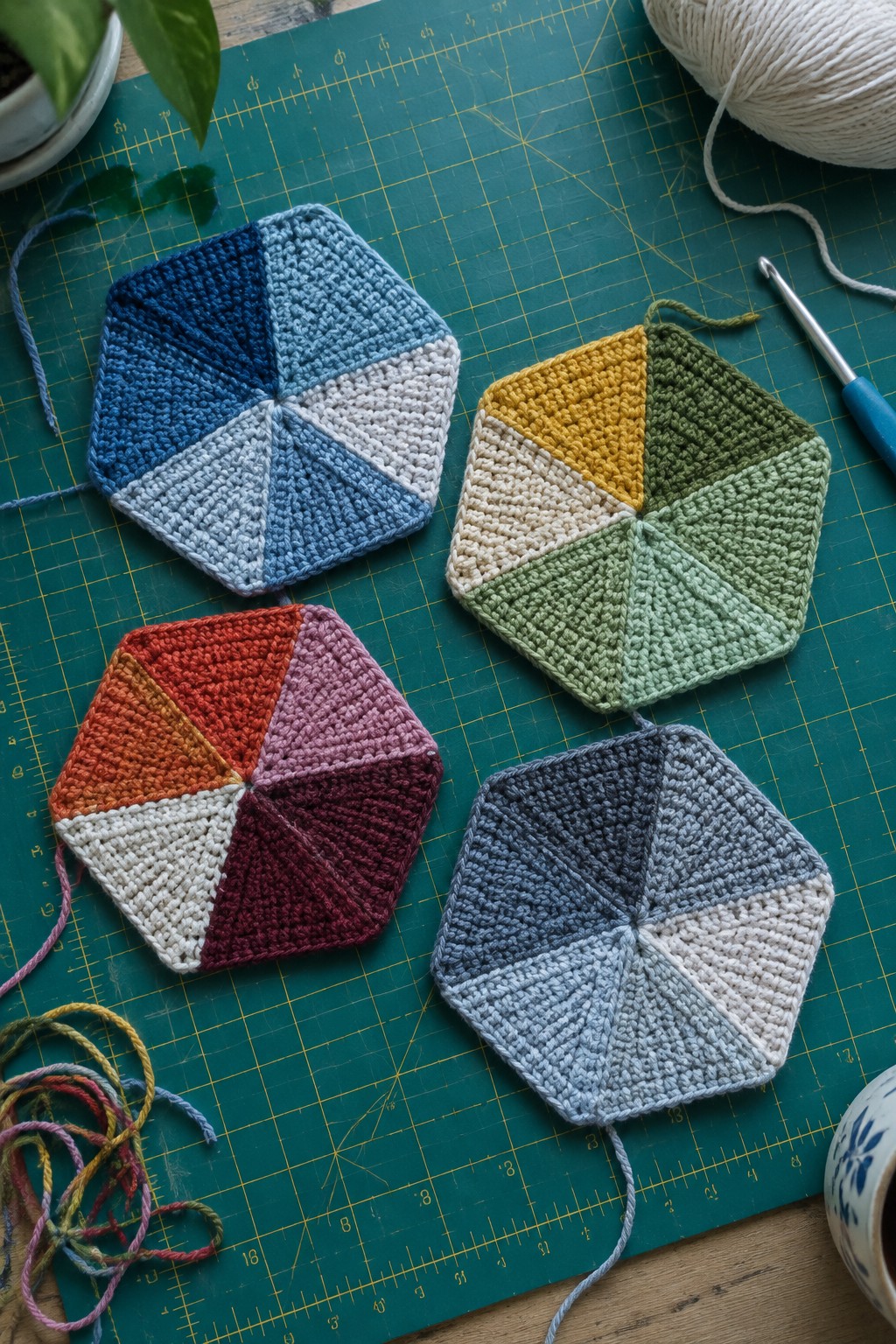
Hexagon coasters built from wedge-shaped color sections work by joining solid blocks of yarn at the center point and working outward in straight rounds. The flat, even shape holds its form well under a mug or glass while the radial layout keeps the pattern simple to track. This approach suits the coaster category because the finished size stays small and the structure needs no extra lining or backing. The design uses basic increases at the corners to keep the six sides straight without extra shaping.
What makes this idea useful is how quickly the wedges let you change colors without carrying yarn across rounds. The small scale makes this easy to adapt by adding or removing rounds to match larger or smaller drinkware. For gifts, a design like this can be worked in sets of four or six using leftover yarn from bigger projects. You can also repeat the same three colors across multiple coasters but shift their placement to create a matching set that still looks varied.
Fox Face Coasters

These coasters start with a flat circular base worked in continuous rounds, then add pointed ears and a face using two contrasting colors plus simple embroidery for the eyes and nose. The oval shape stays practical for holding drinks while the ears and color blocking turn it into a recognizable fox motif without extra bulk. This style belongs to motif coasters that layer a simple animal face onto a standard round form.
What makes this idea useful is how the ear placement and color split can be adjusted to create other animals like bears or cats using the same base pattern. The small finished size lets you use up scraps and finish a set in a few hours. For gifts, a design like this packs flat and appeals to both kids and adults when you swap the face details for different expressions.
Rainbow Gradient Coasters
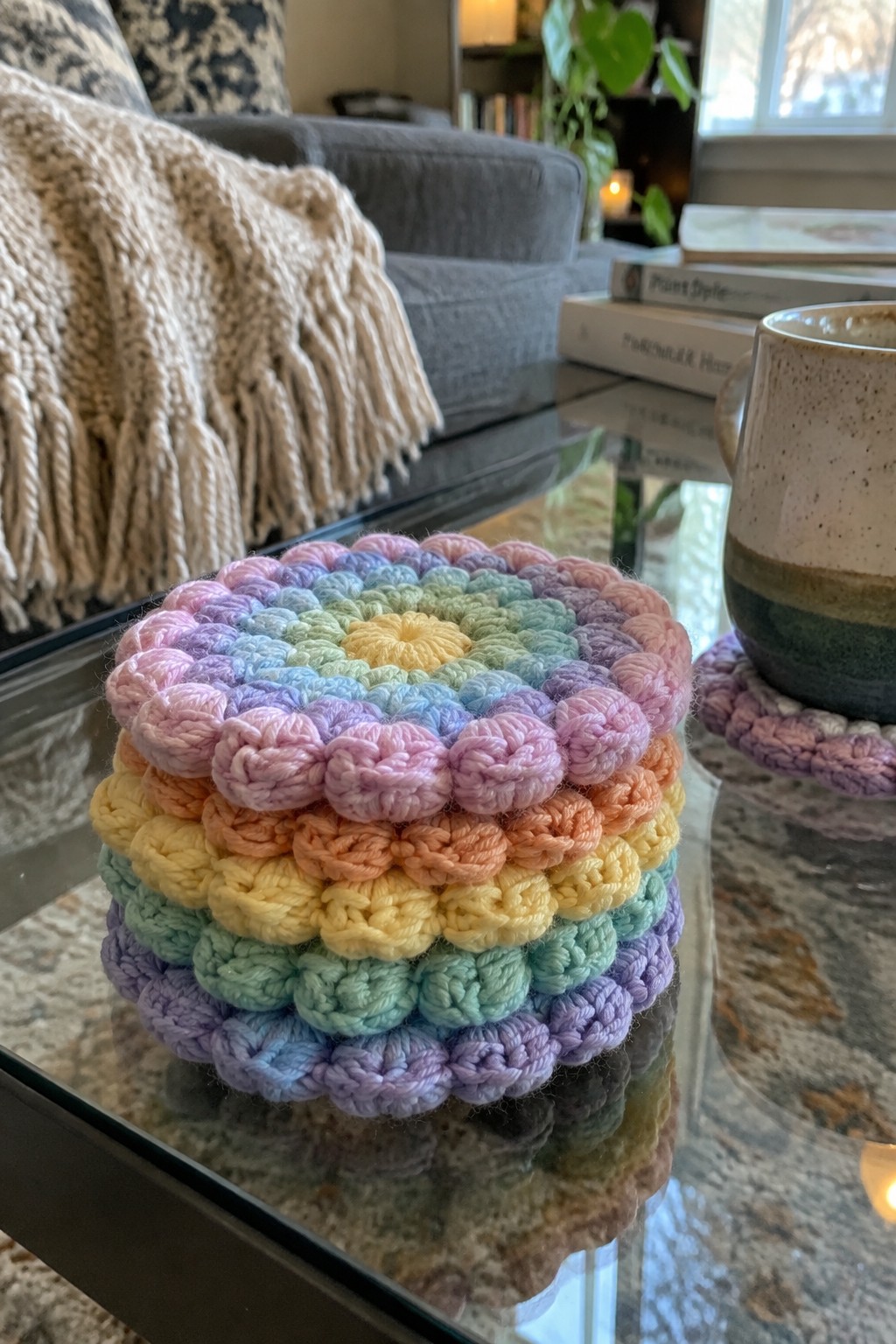
Circular coasters crocheted in expanding rings create a full rainbow spectrum that starts with yellow at the center and moves outward through green, orange, pink, and purple. Each coaster protects surfaces from condensation while serving as a compact pop of color on a table or desk. The raised stitch texture gives the rounds a bumpy finish that helps keep glasses from sliding. This design falls into the simple motif coaster category that works for both daily use and quick handmade sets.
The small scale makes this easy to adapt by swapping the rainbow sequence for any color palette or using up scrap yarn from larger projects. A project like this works especially well as a fast batch for gifts since each coaster takes little time and stacks flat for storage. The structure makes this a smart option for beginners who want visible progress without complex shaping, and the bright rings photograph clearly for sharing finished sets online.
Seashell Wave Coasters

Round coasters with a centered shell motif and horizontal wave stripes in graduated sea tones make a simple project that suits beach houses or summer tables. The design uses a flat circle base with the shell worked on top and the waves created through color changes and slight texture shifts. This keeps the piece functional as a coaster while giving it a clear theme that reads well from a distance. It fits the practical coaster category for daily use or small decor sets.
The small scale makes this easy to adapt by swapping the wave colors for any palette or adjusting the shell size to fit different drink glasses. A project like this works especially well as a quick gift when you make a set of four or six in matching tones. You can also change the outer border to a solid color if you want the waves to stand out more. For decor, this kind of shape holds up well on wooden tables or trays without slipping.
Hexagon Coasters with Layered Floral Motifs
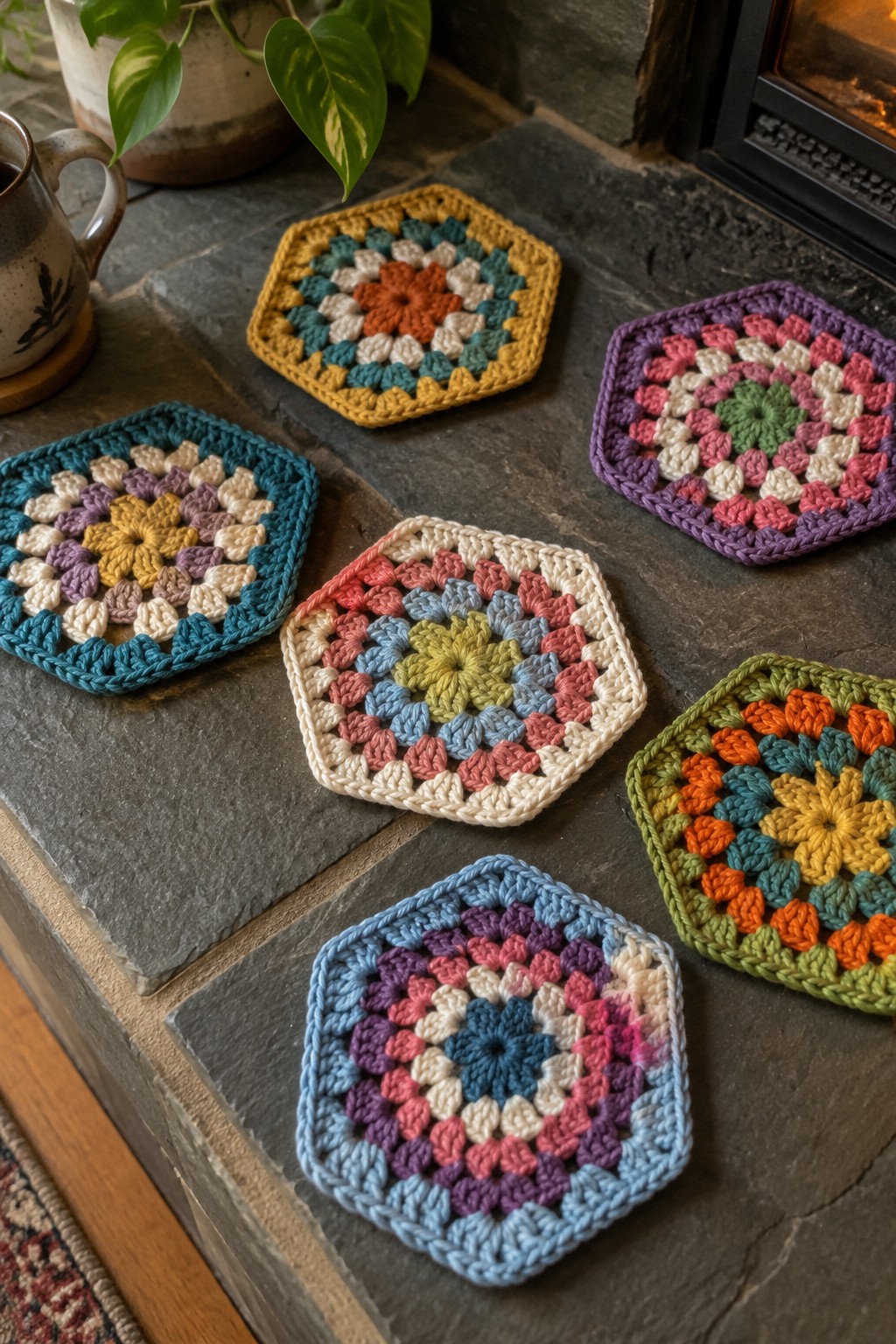
Hexagon coasters built from a central flower motif worked in successive rounds of color changes create a compact project that uses small amounts of yarn. The six-sided shape forms naturally from the stitch pattern and keeps each coaster flat for everyday use on tables or trays. Different color combinations across the set add variety while keeping the same basic structure.
What makes this idea useful is how quickly each coaster works up as a single motif without joining pieces. The small scale makes this easy to adapt by swapping in leftover yarn for each round or adjusting the number of rounds to change the finished size. A project like this works especially well as a set for gifting or for matching existing room colors without needing a large time commitment.
Planet Motif Crochet Coasters
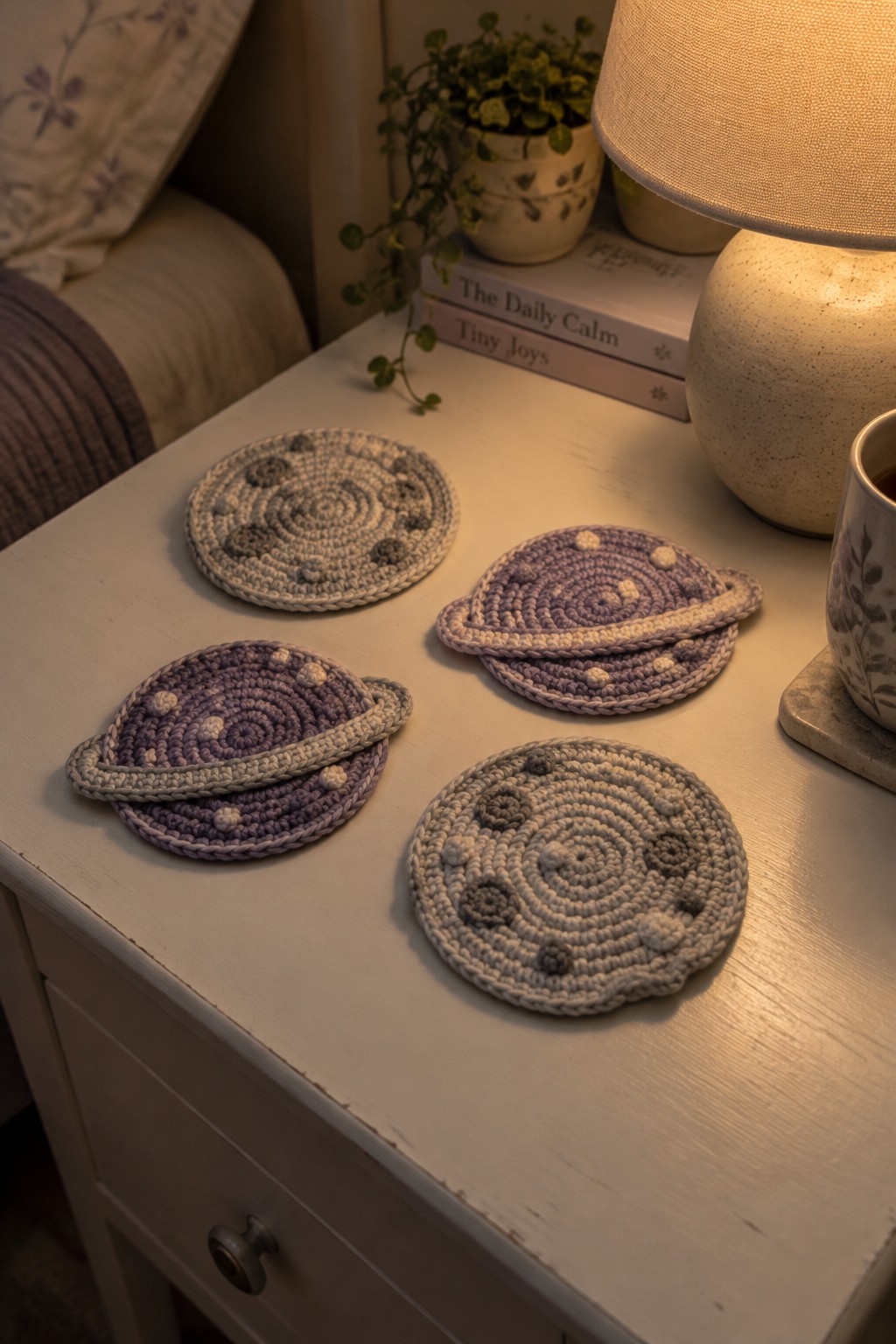
Crochet coasters built around planet shapes start with a flat circular base worked in tight rounds to form the planet body. A separate ring piece is then attached around the edge to create the Saturn-style band, giving the coaster both texture and a distinct outline. The concentric stitch patterns and small color changes between rings and body add depth without complicating the shape. This approach fits the motif coaster category, where simple rounds are adapted into themed decor items for tables or desks.
What makes this idea useful is how the small size lets you finish a full set quickly with leftover yarn. The ring detail can be adjusted wider or narrower depending on the yarn you have, and the same base pattern works for plain round coasters if you skip the rings. A project like this works especially well as a gift because the finished pieces stack flat and take up little space. You can swap in different neutral or muted tones to match existing room colors without buying new yarn.
Cupcake Coasters with Raised Frosting Tops

These coasters combine a flat brown base with a separate layer of clustered stitches worked on top to create the rounded, bumpy look of frosting. The small scale keeps the finished piece about the size of a standard drink coaster, while the red cherry accent and scattered dots add quick color without extra pieces. The design fits neatly into the coaster category and works as a fast project that uses small amounts of yarn in multiple shades.
What makes this idea useful is how easily the top layer can be swapped for different colors to match existing kitchen items or seasonal themes. The flat base stays functional for everyday use, and the whole piece takes little time to finish, so you can make a full set without much yarn. For gifts, a design like this stands out because the shape is recognizable but still simple enough to complete in one evening.
Crescent Moon Motif for Coasters

A crescent moon motif offers a simple curved shape that works as a coaster on its own or as an appliqué stitched onto a solid round base. The layered rows build a slight thickness that helps the piece hold its form while still lying flat. Metallic thread worked through the stitches adds light reflection without overpowering the texture. This shape belongs in the simple motifs group because it requires only basic increases and decreases to form the curve.
The small scale makes this easy to adapt by changing hook size or yarn weight to create either tiny accents or larger surface protectors. You can switch the metallic thread for solid colors to match existing tableware or room decor. For gifts, a set of these moons takes little yarn and finishes quickly in different sizes. The curved outline also stands out in a collection of round or square coasters because the negative space gives it a distinct profile.
Frequently Asked Questions
What materials work best for creating these colorful motif and shape coasters? Cotton yarn in medium weight provides good absorbency and structure for coasters while allowing bright colors to stand out clearly in motifs like flowers or geometric patterns. Pair it with a 4mm hook for tight stitches that hold their shape, and consider adding a fabric backing if you want extra stability. Always check the article patterns for specific yardage needs per design.
How long does it typically take to finish one of these coasters? Simple shape coasters like circles or squares can be completed in under an hour for most crocheters, while motif based ones with multiple color changes may take 90 minutes to two hours. Beginners should start with the easiest patterns listed to build speed, and batch crocheting several at once helps efficiency since the motifs repeat across the 21 designs.
Can the patterns be adjusted for different sizes or skill levels? Yes, increase the hook size or add extra rounds to enlarge basic shapes without altering the motif structure, and reduce color changes for simpler versions if you are new to crochet. The article includes a mix of beginner friendly and intermediate options, so review the difficulty notes before starting and use stitch markers to keep track during motif assembly.
What care steps keep these coasters looking fresh after repeated use? Hand wash in cool water with mild detergent to preserve colors, then lay flat to dry and reshape while damp to avoid distortion from the motifs. Avoid machine drying as it can cause shrinkage, and store them stacked neatly to maintain their form over time.
How can I make the finished coasters more practical for daily use on furniture? Add a layer of felt or rubber shelf liner to the back using fabric glue for better grip and to protect surfaces from moisture. Choose thicker yarns in the patterns for extra absorbency, and test a small swatch first to ensure the motifs do not unravel with handling.
