

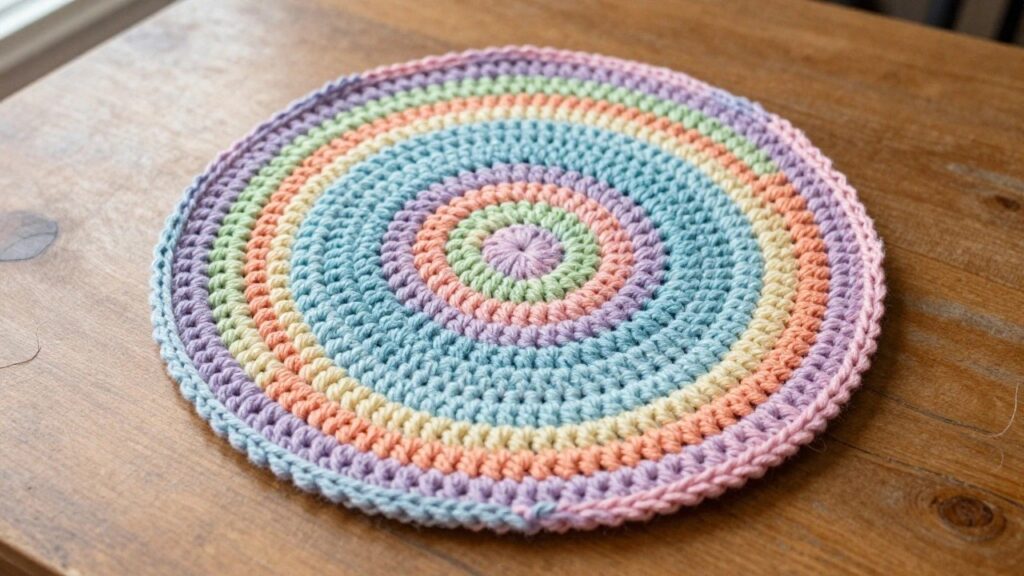
I like to crochet small things in the evenings because they help me relax without committing to a big project.
Coasters are practical and I often have a few scattered around my living room.
I have collected some easy patterns that beginners can try with basic stitches.
These ideas do not require much yarn or time so they are good for trying out new colors or textures.
Adding them to your home can make everyday moments feel a little warmer.
Spiral Pastel Coasters
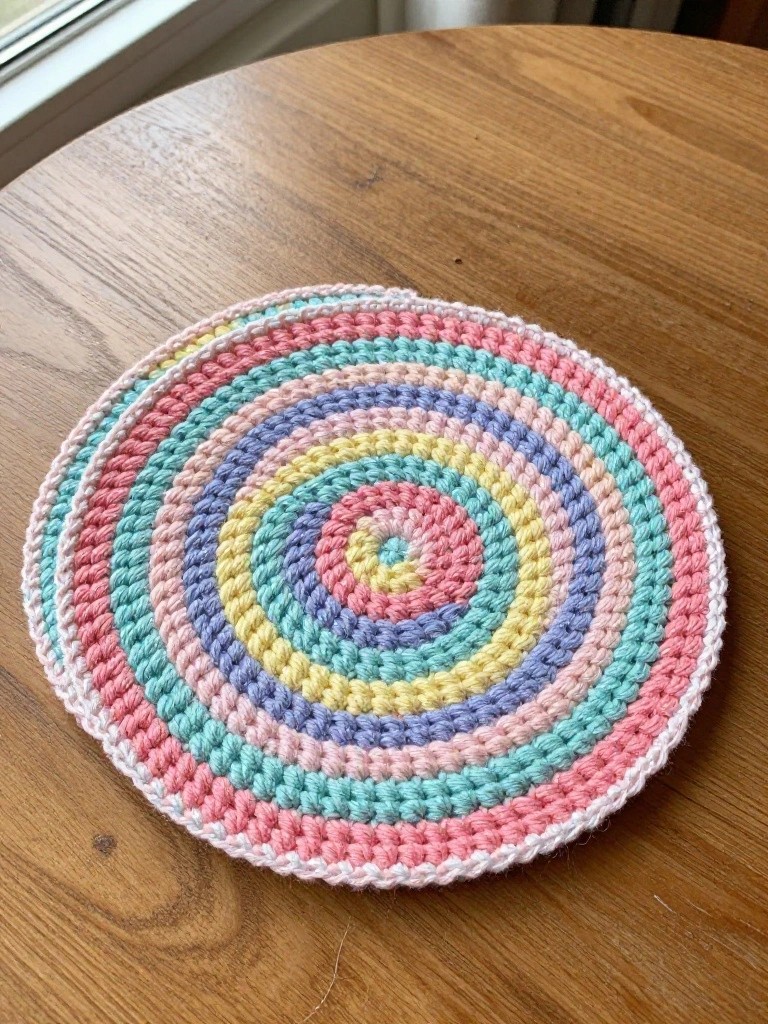
Round coasters built from continuous spiral rounds use simple increases to keep the shape flat while color changes create distinct rings. This approach suits everyday drink mats or small table protectors that fit standard cups and glasses. Switching colors every few rounds produces clear bands that stand out without needing fancy stitch patterns or extra borders.
What makes this idea useful is how fast each one works up from scraps in any color order. You can adjust the number of rounds to change the finished diameter for bigger mugs or small plant saucers. A project like this stacks neatly for gifting and looks clean in photos when you keep the rings bright against a neutral background. The flat circle also gives beginners an easy base to try different edge finishes later.
Cloud Shaped Coasters With Textured Edges
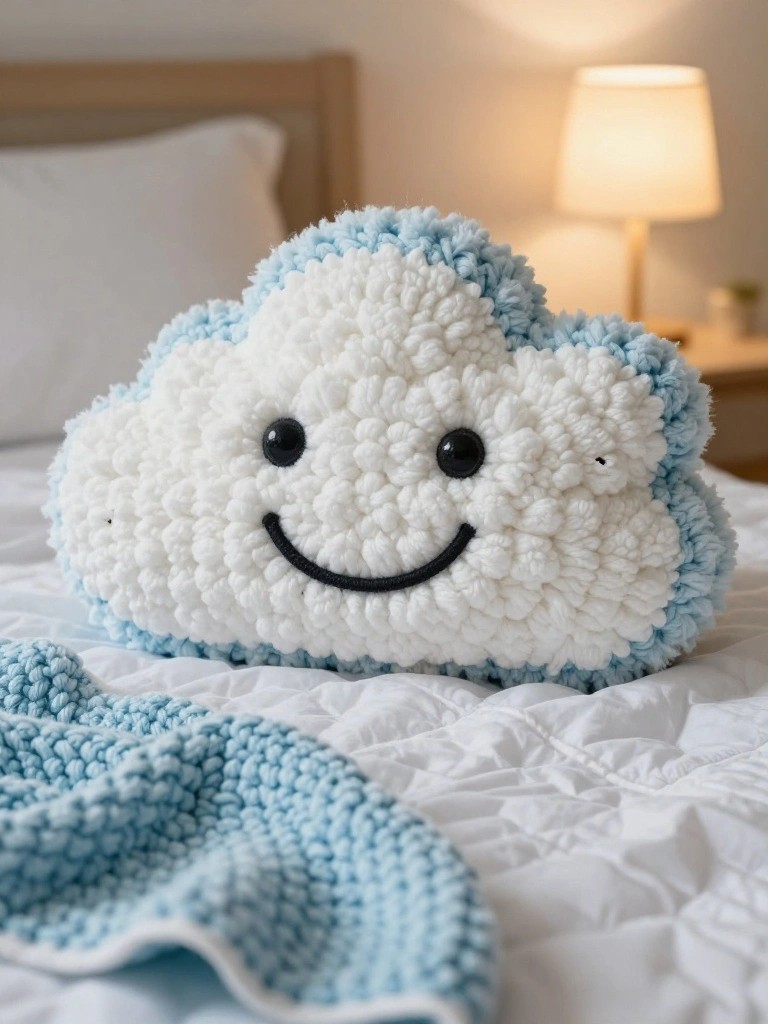
A cloud shaped coaster uses a simple oval or lobed outline worked in chunky textured stitches to create a soft raised surface. White yarn forms the main body while a light blue border adds definition to the edges. The small scale keeps the project quick to finish and easy to stack or store. This approach turns a basic motif into a practical item for protecting surfaces while adding a distinct shape to a set of coasters.
What makes this idea useful is the way the lobed outline stays recognizable even when reduced to coaster size. You can adapt the color pairing by swapping the blue border for another shade that matches your tableware. For gifts, a set of these works well because they require little yarn and finish in an afternoon. The shape photographs clearly against wood or fabric backgrounds, which helps it catch attention in a roundup of beginner projects.
Donut Ring Coasters
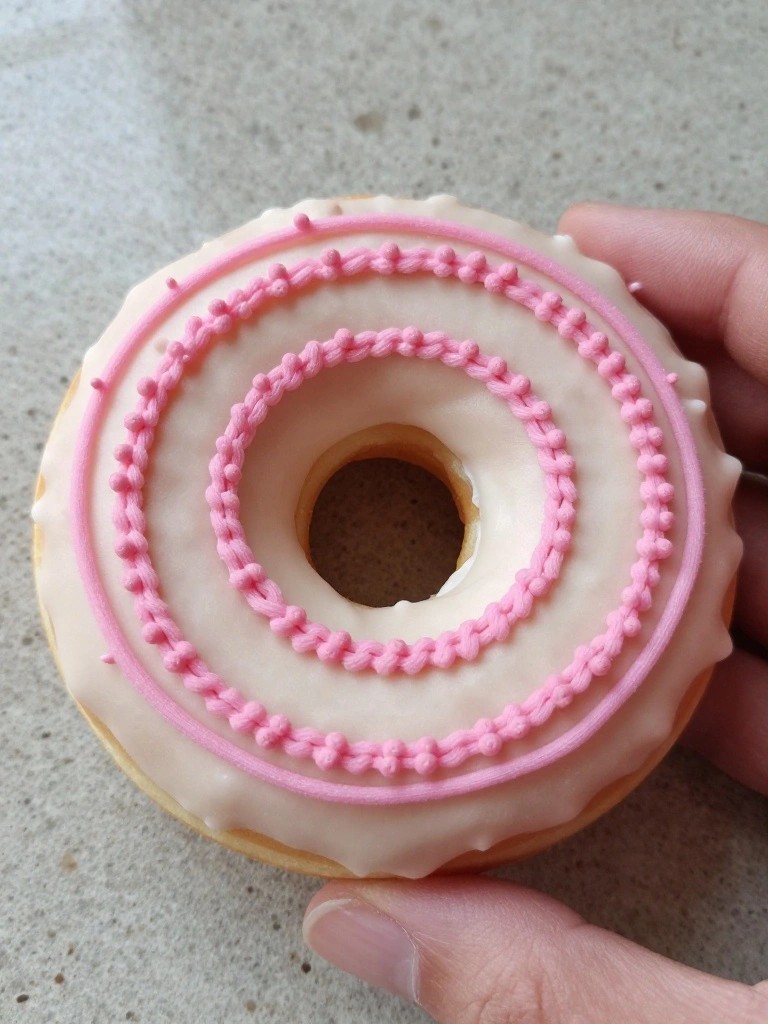
A round coaster with a central hole and several concentric pink rings creates a simple donut shape that works well on tables or desks. The rings can be made with basic chain or textured stitches over a solid off-white base to give the raised look without extra layers. This project fits the coaster category and stays flat for practical use while adding a themed detail to everyday items.
The small scale makes this easy to adapt by adjusting the ring count or swapping pink for other colors to match different rooms. A project like this works especially well as a quick beginner set for gifts or a coffee corner. You can personalize it further by varying the ring thickness or spacing to create different versions from the same pattern.
Leaf-Shaped Coasters with a Stem Detail
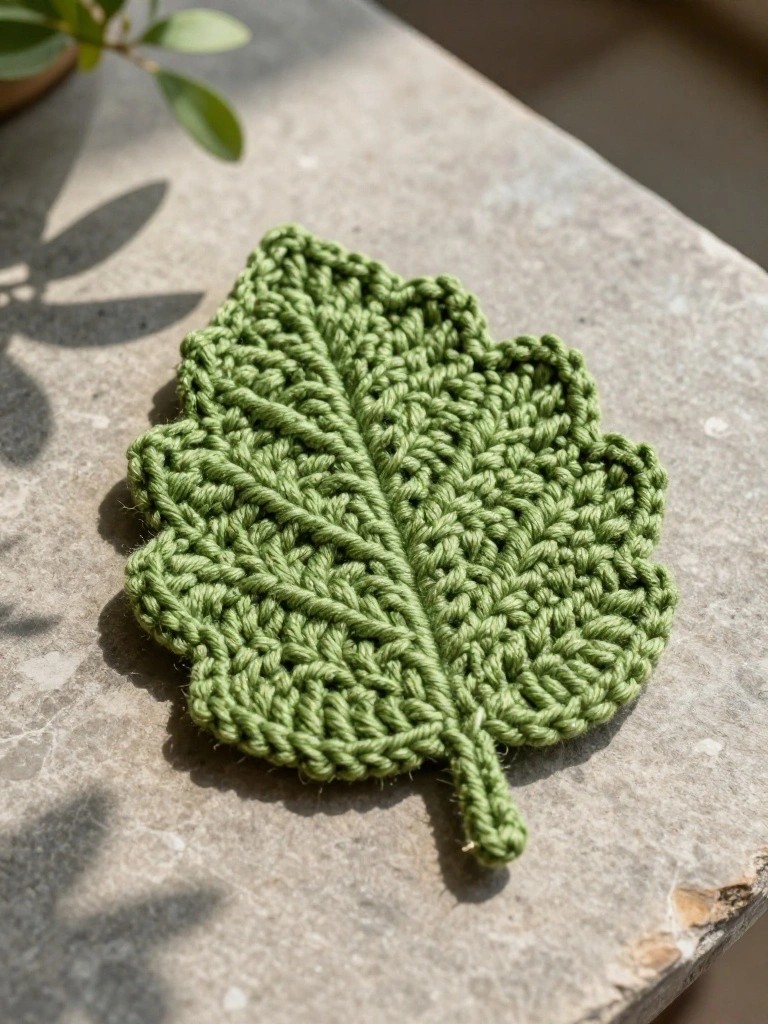
A leaf-shaped coaster gives a simple way to protect surfaces while adding a natural element to a table or desk. The design builds outward from a center line of stitches that suggest veins, then adds a short stem at the base for a finished look. It works as a functional coaster for mugs or glasses and sits flat without curling at the edges. This falls into the decor category and can be made quickly in one color for a clean result.
What makes this idea useful is the clear outline that makes it easy to recognize as a coaster even from a distance. You can change the yarn color to match different seasons or room styles without altering the pattern. For gifts, a set of four or six takes little space to store and looks more interesting than plain circles. The small size also lets you test new stitch patterns on a low-stakes project before trying them on larger pieces.
Octagonal Coasters with a Central Floral Motif
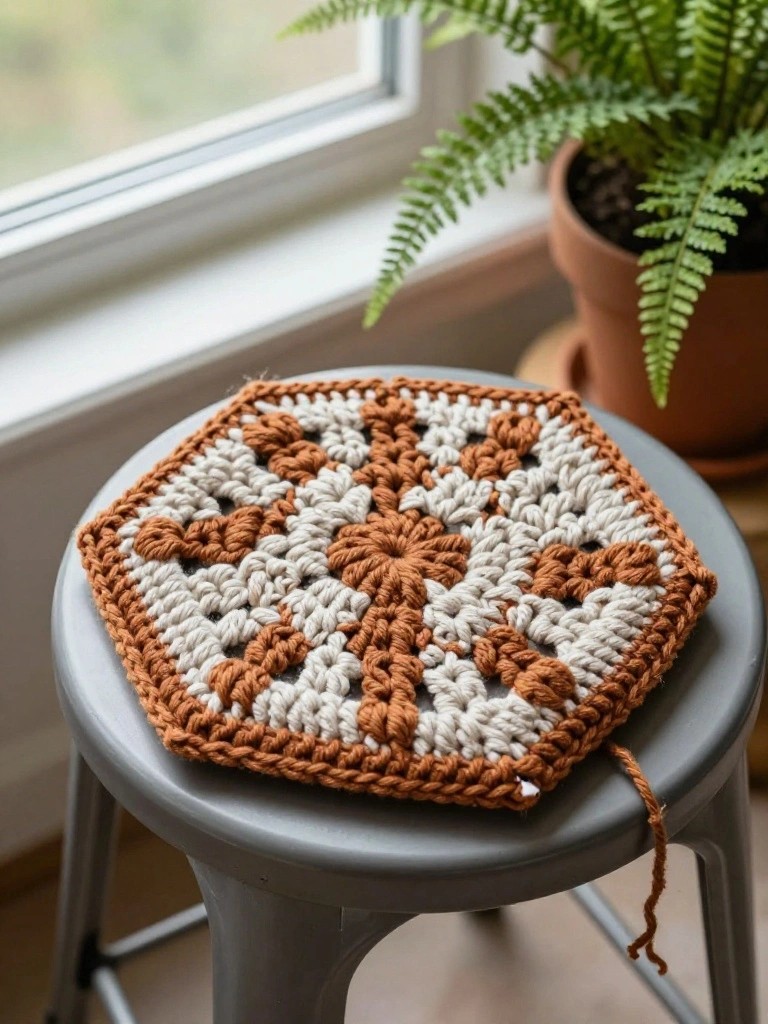
An octagonal coaster built from a central motif gives you a flat, stable surface that still shows off a clear repeating pattern. The design layers brown and cream sections around the middle to separate the shapes without extra stitches. This approach fits the coaster category because the rounds stay even and the final border keeps the edges straight for daily use on tables or desks.
The small scale makes this easy to adapt by adding or removing rounds to change the finished size. A project like this works especially well as a set for a coffee table or desk where you need several matching pieces. You can swap the two colors or add a third to create different looks while keeping the same motif structure.
Mushroom Coaster with a Spotted Cap
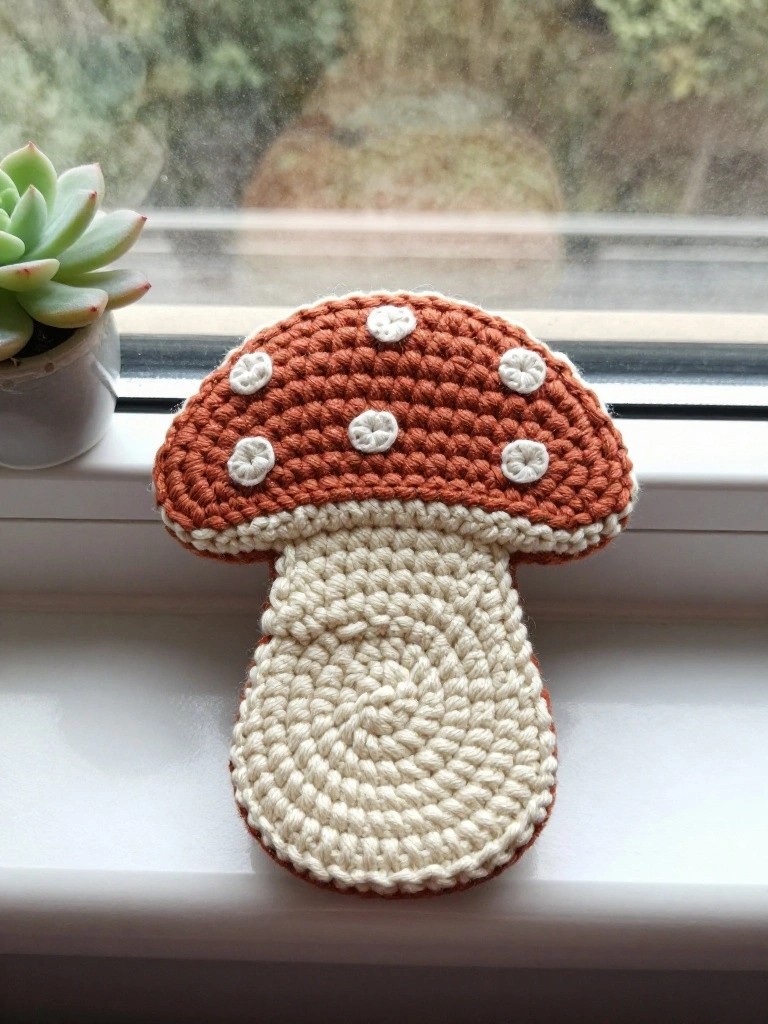
A mushroom coaster is built from a round cap worked in flat or slightly rounded rounds and a narrower stem section that forms the actual drinking surface. The cap sits on top with small white dots added as surface details, while the stem uses tighter rounds to create a solid oval base. This shape gives the coaster a clear silhouette that stands out on a table without needing extra layers or edging.
What makes this idea useful is how simple it is to resize the stem width or cap diameter to match different glass sizes. The two-tone color split does most of the visual work, so you can swap in leftover yarn without buying new shades. For gifts, a set of these works well because they pack flat and still look finished on their own.
Heart Shaped Coaster with Scalloped Border
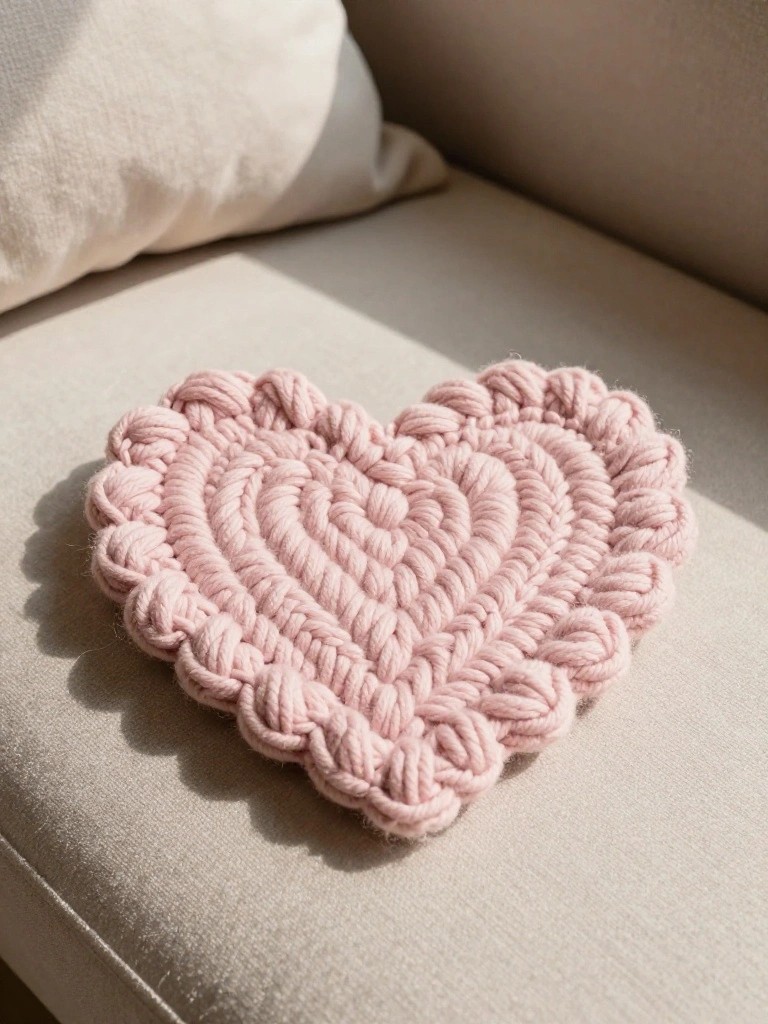
A heart shaped coaster builds from the center out in expanding rounds until the outline forms the familiar two lobes and point. Thick yarn creates a padded surface with visible texture that helps the piece sit flat and absorb moisture. The outer edge uses a simple repeating pattern to add a ruffled finish without extra layers. This type of project fits the coaster category but can also serve as a small trivet or decorative mat on a desk or nightstand.
The small scale makes this easy to adapt by switching to a lighter yarn for delicate coasters or a heavier one for larger trivets. A project like this works especially well as a set in matching colors to keep a table looking pulled together. For gifts, a design like this takes only a small amount of yarn and time so you can finish several in one evening. The structure makes this a smart option when you want to practice shaping without starting from a full pattern.
Avocado Shaped Coaster with Layered Greens

A round coaster built in the shape of an avocado half starts with a small brown circle that forms the pit. Concentric rounds in light green and teal create the flesh while a darker brown border finishes the outer edge. The simple color changes and oval outline turn a basic coaster into a recognizable food motif that suits kitchen tables or breakfast trays.
The small scale makes this easy to adapt by swapping the green tones for other produce colors or resizing the rounds to fit bigger mugs. A project like this works especially well as a fast make that stacks neatly in a drawer and protects surfaces from condensation. For gifts the shape can be personalized with a short embroidered word or paired with matching napkins to create a quick set.
Ice Cream Cone Coasters
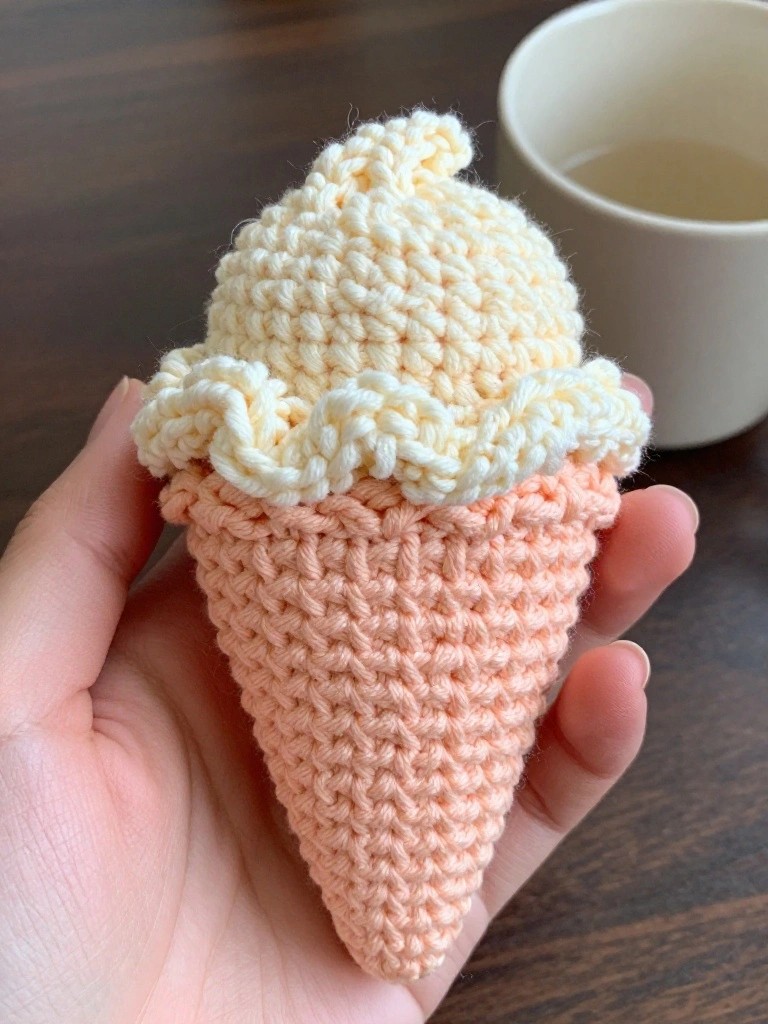
An ice cream cone motif translates well to a coaster when shaped as a flat, tapered triangle for the cone section topped with a rounded circle. The cone uses simple rows that narrow toward the bottom while the scoop adds a ruffled edge to suggest soft serve. This works as a coaster because the compact size sits neatly under a mug and the two-tone color split makes the cone shape stand out clearly against a table. The textured stitches in both sections give the surface enough grip to keep a glass from sliding.
What makes this idea useful is how simple it is to change the scoop color for different flavors and make a full set in one sitting. The small scale means it uses little yarn and finishes quickly so it suits last-minute gifts or market stock. For decor this shape adds a summer touch to a kitchen without needing much room. A few of these stacked in a basket would photograph well for a Pinterest board focused on beginner projects.
Sunflower Coaster With Layered Petals
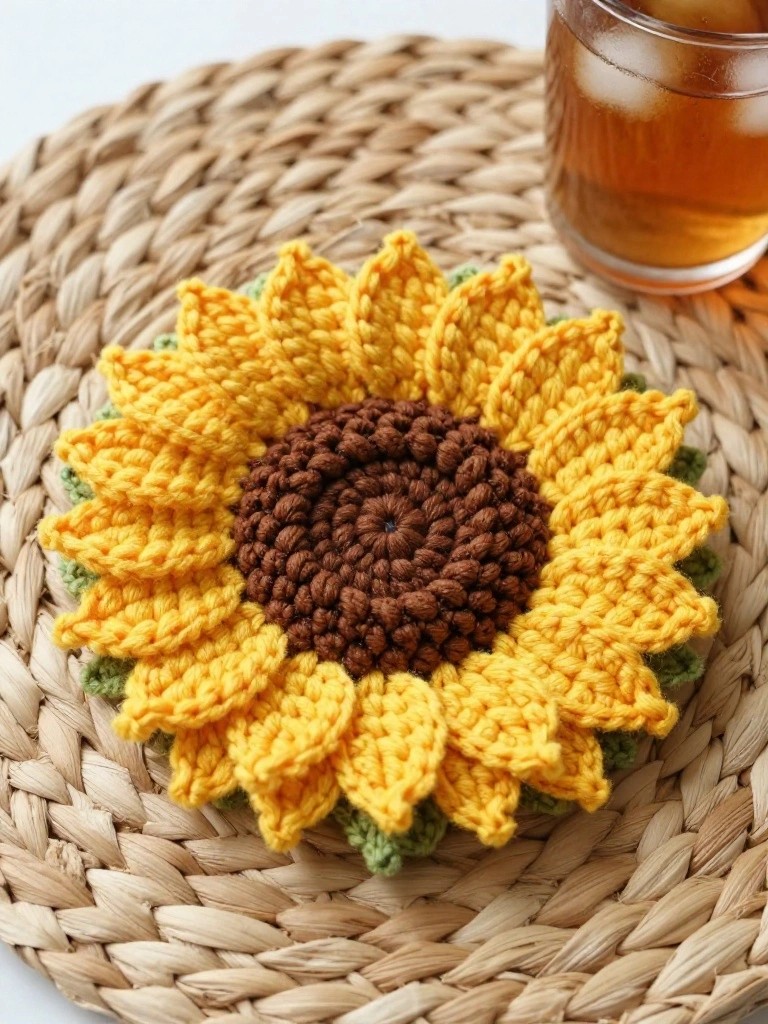
A sunflower motif turns a basic round coaster into something more interesting by building a brown center first and then adding rows of yellow petals around it. The flat structure suits cups and glasses while the green edge at the bottom suggests leaves without adding bulk. This approach keeps the project in the coaster category but uses simple color changes and shaping to create a clear flower shape that stands out on a table or tray.
What makes this idea useful is the way the round size matches standard drinkware without extra measuring. You can swap the yellow for other bright shades or shrink the center to fit a smaller mug. For decor, this kind of shape works well in sets of four or six to bring color to plain coasters. The structure also makes it easy to turn the same pattern into a matching keychain or magnet by adding a backing.
Star Coaster with Spiral Center
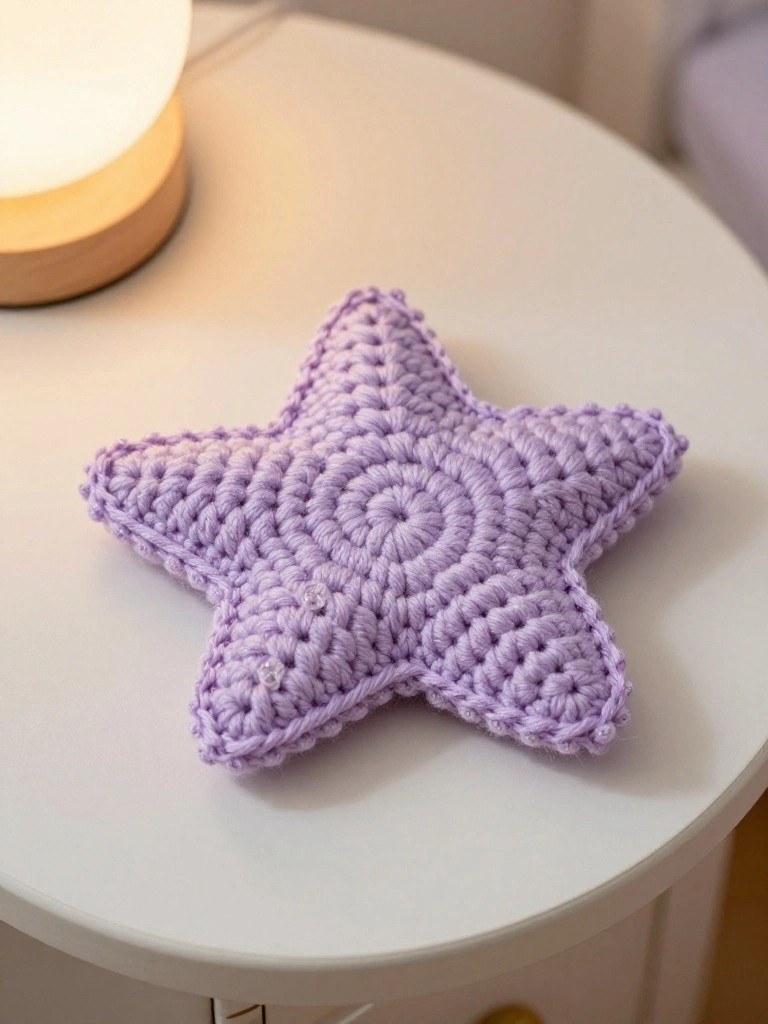
A star-shaped coaster built from a central spiral gives you a flat, functional piece that still has clear shape and structure. The spiral forms the base, then the work expands into five even points through steady increases that keep the edges neat. Light purple yarn keeps the whole thing soft and simple while the small scale makes it easy to finish in one sitting. This fits squarely in the coaster category but can double as a tiny trivet or decorative mat on a nightstand or desk.
What makes this idea useful is how quickly the shape comes together once the spiral is set. You can swap the color to match existing tableware or skip the beads if you want a faster, plainer version. The compact size means you can batch out a set in different shades without much yarn. For decor, this kind of shape works especially well on a white surface where the points stand out in photos.
Mini Rainbow Coasters
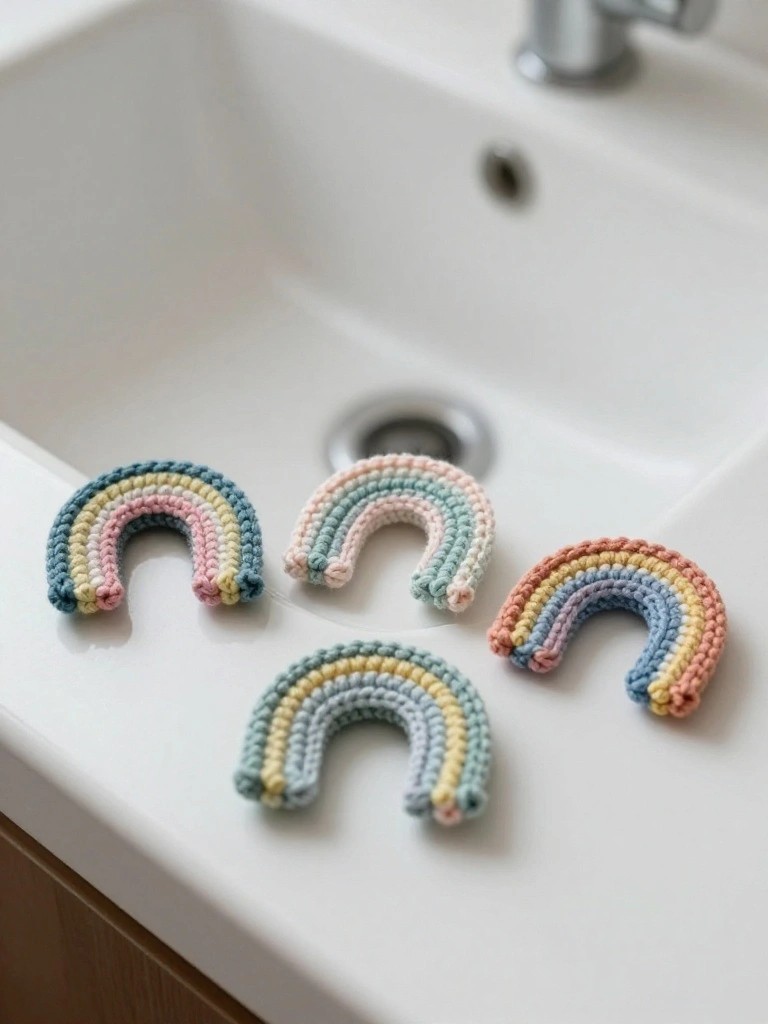
Mini rainbow coasters use a curved arch shape built from rows of basic stitches to form a compact holder for cups or glasses. The design layers soft pastel stripes across the curve so the colors stay visible even when the coaster sits flat on a surface. This shape fits neatly into the coaster category because the raised edges help keep condensation from spreading while the small scale keeps it simple for beginners to finish quickly.
The small scale makes these quick to finish in an evening and easy to adjust by changing stripe width or adding an extra row for larger mugs. You could swap the pastel order to match existing kitchen colors or make a set in brighter tones for a kids table. For gifts, a design like this stands out on Pinterest because the curved form photographs cleanly against plain backgrounds and uses little yarn per piece.
Pineapple Motif Coasters
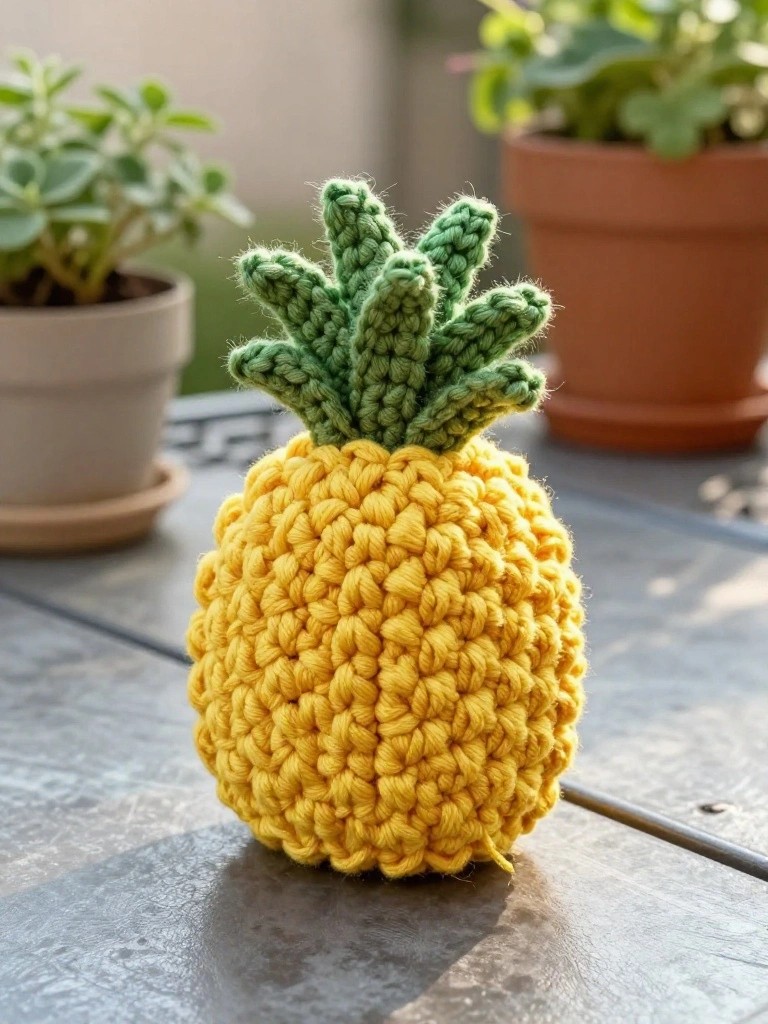
A pineapple shape works as a coaster when the yellow body is kept flat and round with the green top added as short layered stitches or a small attached piece. The color split between bright yellow and several shades of green makes the fruit shape easy to recognize even in a small size. Textured stitches in the main section help the coaster stay in place under a glass while the pointed leaves give it a distinct outline. This approach fits the decor category and turns a simple round into something more specific for a table setting.
What makes this idea useful is how the size can be changed with just a few extra rounds to fit different drink glasses. The color choice does a lot of the work here since yellow shows up well on most tabletops. For gifts, a set of four or six can be finished quickly by repeating the same pattern in slightly different greens. This would be easy to turn into a matching trivet by using thicker yarn and a larger hook.
Cat Face Coaster Motif
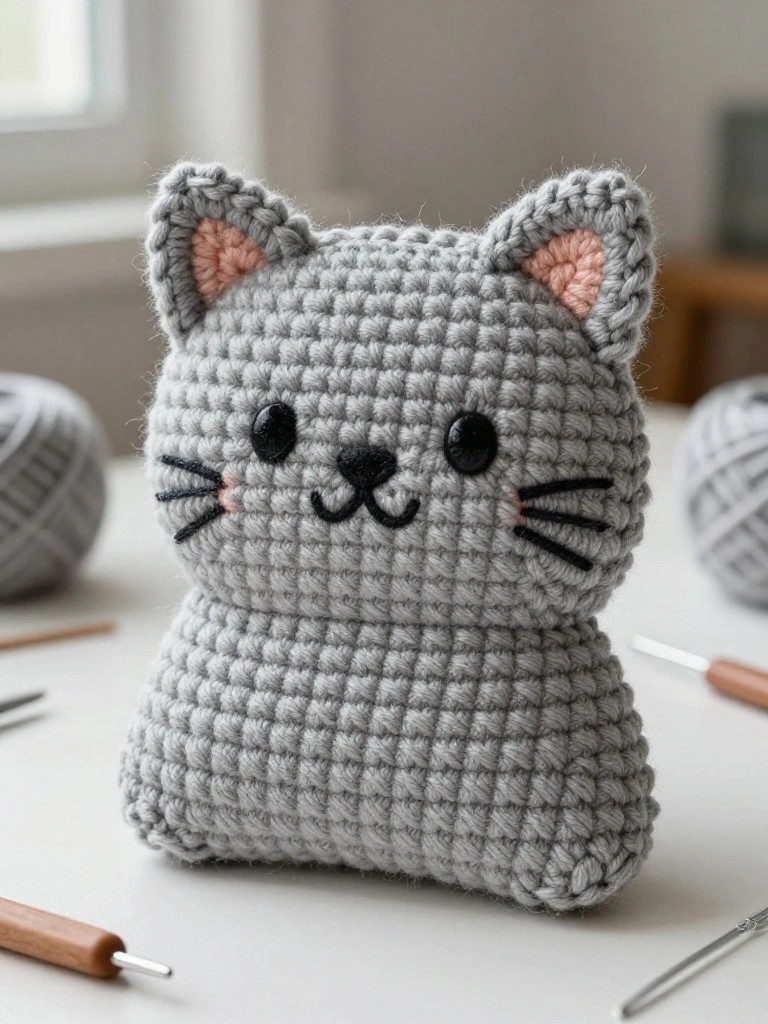
A round crocheted cat face makes a practical coaster when worked in a tight stitch to create a flat, sturdy surface. The basic circle forms the main body while two small triangles on top create the ears. Simple embroidered eyes, nose, and whiskers add the facial details without extra layers, and the pink inner ear sections provide a quick color contrast. This fits into the decor coaster category, where the motif turns an everyday item into something a bit more fun for daily use.
What makes this idea useful is how little yarn it takes to finish one, so you can easily make a matching set in different colors. The small size adapts well to standard mug bases and leaves room to adjust the ear shape or eye placement if you want a different expression. For gifts, a design like this stands out because it feels personal yet stays quick to complete. You could also work it in a single color and skip the embroidery if you prefer a simpler look for everyday coasters.
Scalloped Pastel Circle Coaster
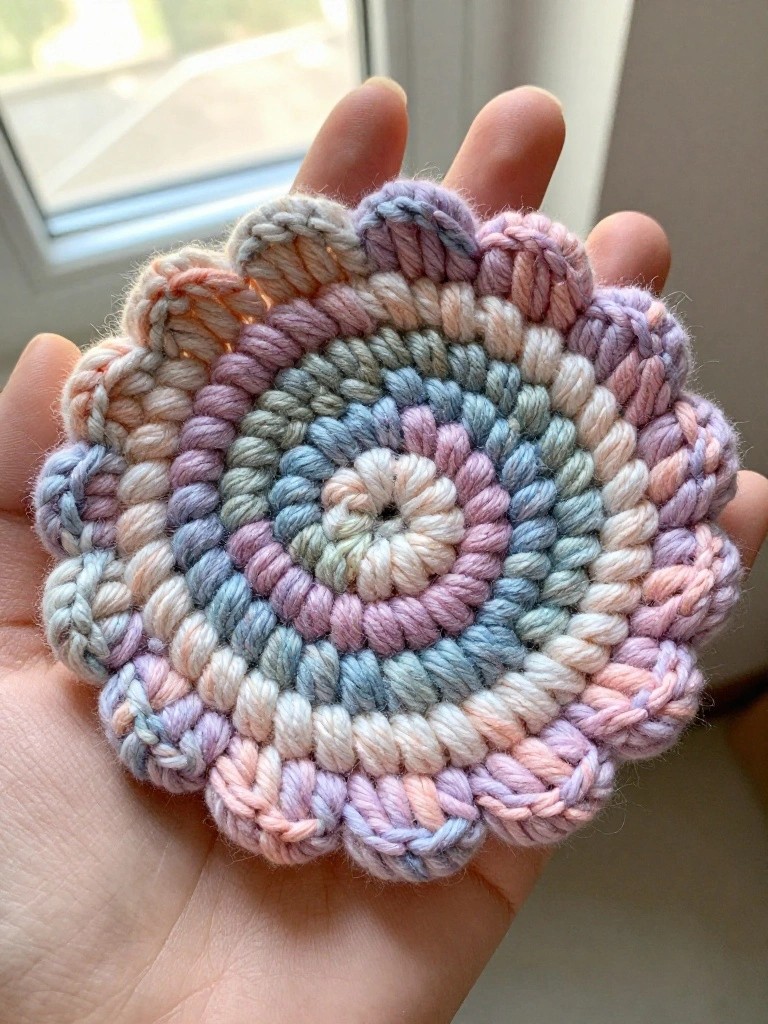
A round crochet coaster built from concentric rings of color and finished with a scalloped border gives you a simple motif that protects tabletops while showing off gentle color shifts. The layered rings keep the piece compact yet detailed enough to stand out on its own. This style falls into the basic coaster category and works best when made in light colors that highlight the stitch texture.
The small scale makes this easy to adapt by changing the number of rounds to adjust the final diameter for larger mugs or smaller glasses. You can swap in leftover yarn scraps for each ring to use up odds and ends without buying new skeins. For gifts, a design like this stacks neatly into sets of four or six and still looks finished with minimal edging. The structure also lets you add a hanging loop if you want to turn a few into ornaments or tags.
Crescent Moon Coasters
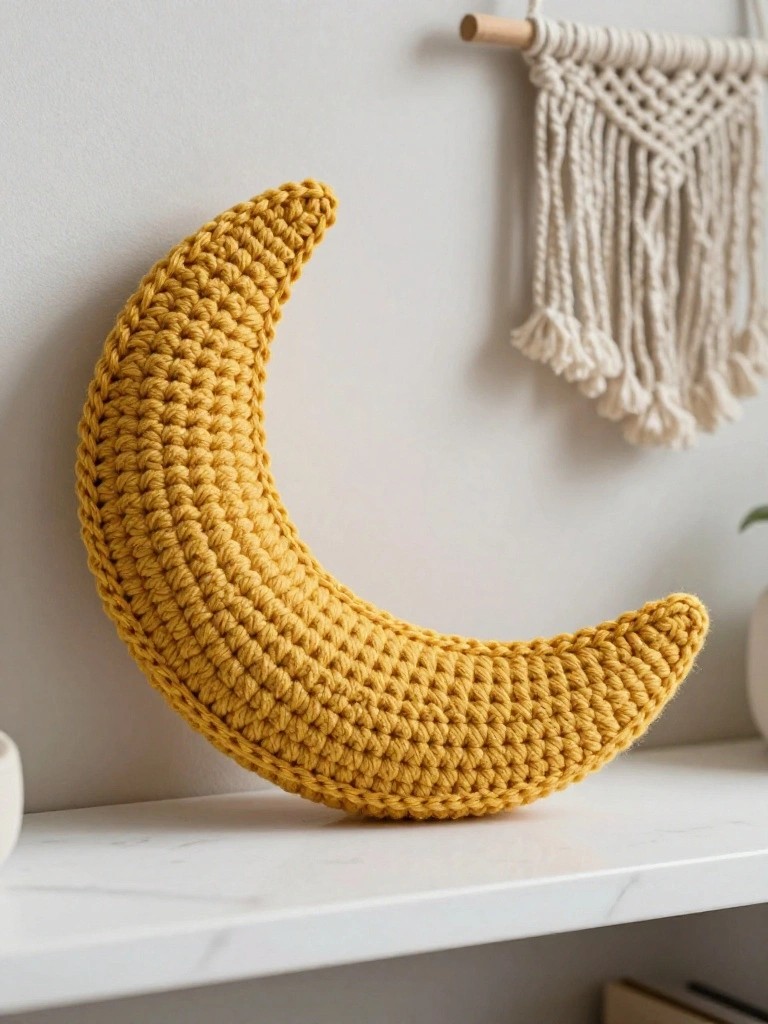
A crescent moon shape makes a simple motif for coasters when worked in tight rows that follow the curve. The project uses basic increases and decreases to keep the outline smooth while the dense stitch texture gives the piece enough body to sit flat on a table. Solid colors show off the form best and let the shape itself do the visual work without extra details.
What makes this idea useful is how easily the size can be adjusted by changing hook and yarn to create a full set of matching coasters. The curved edge adds interest compared with round or square options and still leaves room for a small border if you want more polish. You could switch colors for each piece in the set or keep them all one shade to match a room. The structure also works well for quick gifts since each coaster finishes fast and stacks neatly.
Paw Print Coasters
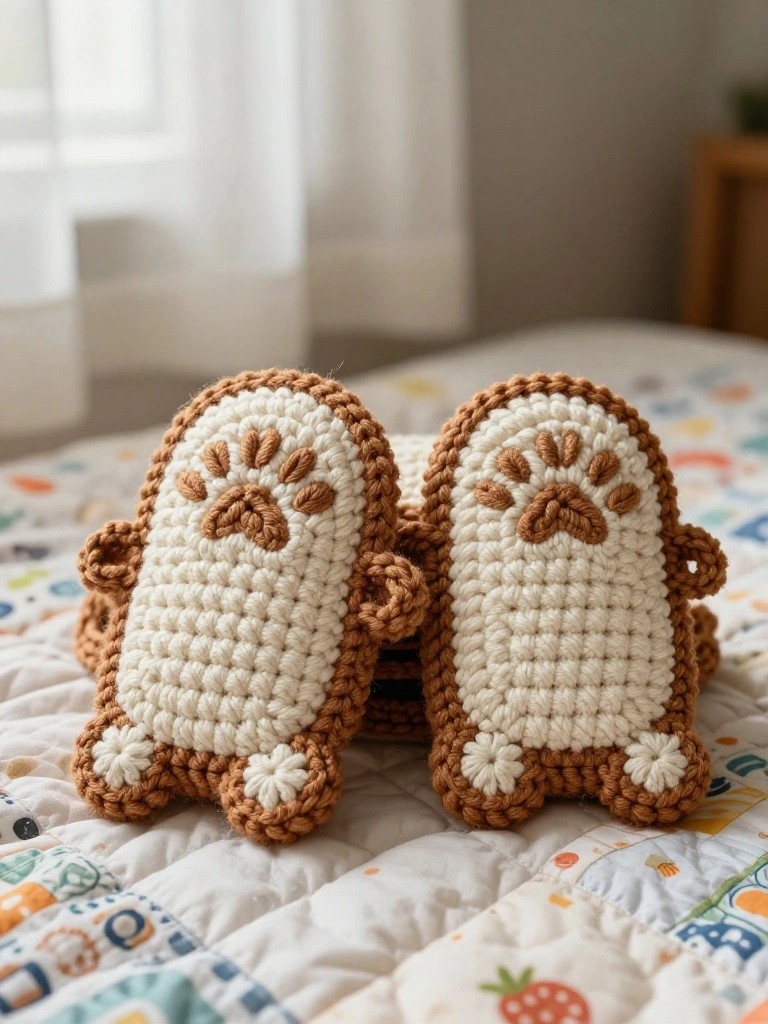
These coasters use an oval base with a raised border in a contrasting color and a simple paw print motif centered on the main section. The design keeps the surface flat and functional while the small paw accents at the bottom give it a distinct look without adding bulk. The stitch texture creates enough grip to hold a glass steady. This style fits neatly into the decor category as a beginner-friendly coaster that still feels a bit different from basic rounds.
The small scale makes this easy to adapt into sets of four or six using leftover yarn. You can swap the brown and white for any two colors that match a room or change the paw print to a heart or simple flower if you want variety. A project like this works especially well as a quick gift because the pieces stack flat and take little time to finish. The clear shape also photographs well for sharing ideas online.
Frequently Asked Questions
What basic supplies do beginners need for crocheting these coasters?
Start with a medium weight cotton yarn in colors that match your decor, a 4mm or 5mm crochet hook, a pair of scissors, and a yarn needle for weaving in ends. Cotton works well because it absorbs moisture and holds its shape after washing. Keep a stitch marker handy if you are working in rounds, and consider a small ruler to check your gauge as you follow the patterns in the article.
How do I select the best yarn and hook size for durable coasters?
Choose 100 percent cotton yarn in worsted weight for sturdiness and quick drying. Avoid acrylic if you want good absorbency. Pair it with a hook that matches the yarn label recommendation, usually 4mm to 5mm, to create a tight fabric that resists curling. Test a small swatch first so the finished coasters lie flat on your table.
Can you explain some simple stitches used in these beginner patterns?
Most of the ideas rely on the chain stitch to begin, single crochet for solid texture, and double crochet for quicker coverage. You will also see the magic ring for starting rounds without a hole in the center. Practice these three stitches on a practice square before starting a full coaster so your tension stays even throughout the project.
What tips help make the coasters look neat and professional?
Work in a consistent tension and count your stitches at the end of each round to avoid uneven edges. Block the finished pieces by pinning them to a towel and misting with water, then let them dry flat. Adding a border row of single crochet gives a clean finish and hides any small imperfections from the main pattern.
How should I care for and clean my finished crochet coasters?
Spot clean with mild soap and cool water when needed. For deeper cleaning, hand wash in a basin with gentle detergent, rinse thoroughly, and lay flat to dry. Avoid machine drying or high heat, which can shrink cotton and distort the shape. Store them stacked in a dry spot to keep them ready for daily use.
