


I started crocheting because I wanted to make a few useful things for around the house without buying new stuff all the time.
The basic stitches ended up being what actually helped me finish projects instead of giving up halfway.
I have gone back to those same steps whenever I try something new.
They keep things simple while still letting me build up to better results over time.
This list covers 21 of them in the order that made sense for me when I was starting out.
Amigurumi Avocado Plush for Quick Practice

A rounded avocado shape works well as a small plushie or desk toy because the simple oval body and attached brown seed create instant recognition. Light green yarn forms the main section while a slightly darker green edge suggests the outer skin without extra pieces. Brown limbs add just enough character to turn the form into a sitting figure that still stays compact. This project falls into the plushie category and gives practice with basic shaping and color changes in a single piece.
The small scale makes this easy to adapt into a keychain or larger pillow version by changing hook size. What makes this idea useful is how the seed placement and limb positions keep the design balanced without needing many separate parts. For gifts, a design like this can be changed with different eye styles or by adding a small scarf around the body. The clear color blocks help it photograph cleanly for project sharing.
Crochet a Donut Pillow with Basic Circles and Color Blocks

A donut pillow is a simple plushie project built from two flat circles joined together. One circle forms the tan dough base while the second gets stitched on top as pink icing. Short pieces of yarn in bright colors get added last to stand in for sprinkles. This shape works especially well as a small cushion or decorative accent for a couch or chair.
What makes this idea useful is how the round form lets beginners practice even increases without needing complex shaping. You can swap the icing shade or sprinkle colors to fit different spaces or match existing decor. For gifts, a design like this finishes fast and travels well as a lightweight item. The structure also scales easily if you want a larger floor version or a set of matching coasters.
Amigurumi Mushrooms for Practicing Rounds and Color Changes
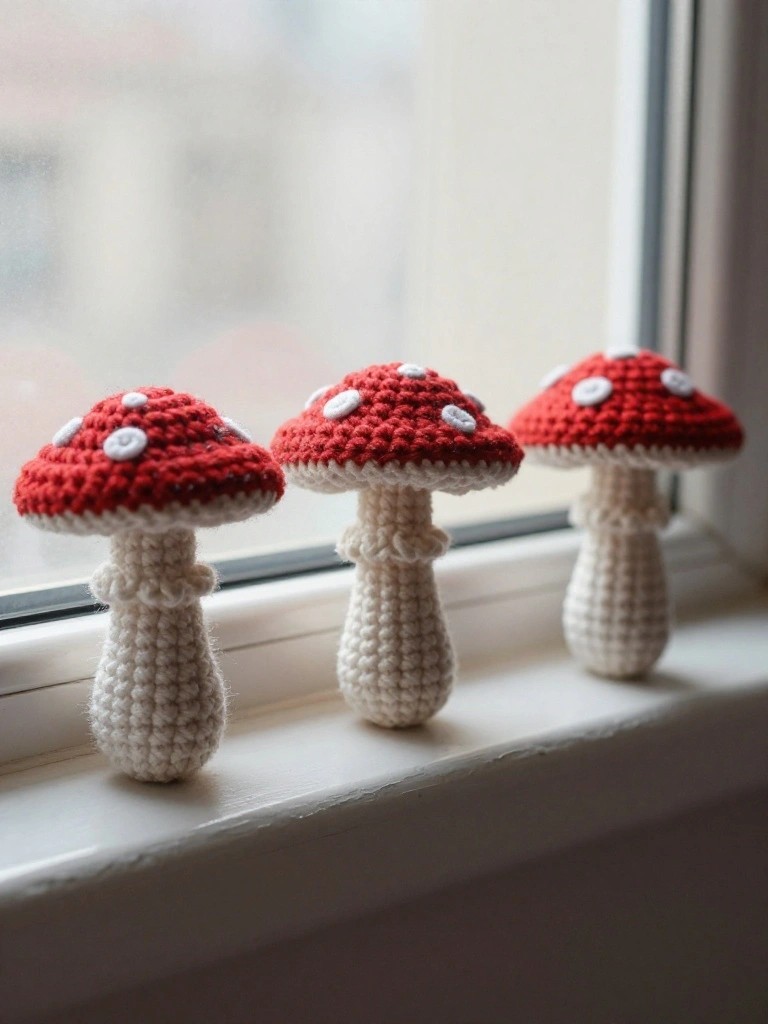
Small crocheted mushrooms use basic increases and decreases to form rounded caps and tapered stems that stand on their own. The red caps with scattered white spots create clear contrast against the off-white stems, making the finished shapes read instantly as mushrooms without extra details. This project category works well for decor accents or small giftable items since the pieces require only a few rounds each and assemble quickly from separate parts.
What makes this idea useful is the compact size that lets you finish one in an evening using scraps of worsted yarn. You can change the cap color or add more spots to match a room or season without altering the pattern. For decor, this kind of shape sits nicely on shelves, plant pots, or windowsills and can be scaled up slightly for a larger version. The structure makes this a smart option for beginners who want to practice joining pieces while ending up with something that actually gets used.
Crochet Scrunchie as a Wearable Accessory

A crocheted scrunchie forms a gathered fabric band that wraps around an elastic core to hold hair in place. The project builds a dense row of textured stitches that create natural ruffles and stretch without needing extra hardware. Subtle color shifts across the rounds add visual interest while keeping the overall look neutral and versatile. This type of item fits the accessory category and works as a quick project that turns small amounts of yarn into something ready to use.
What makes this idea useful is how the finished size can be adjusted by changing the starting chain length around the elastic. Different yarn shades or simple stripe patterns let you match the scrunchie to specific outfits or create sets for gifts. The compact shape also means it stores easily and photographs well for sharing finished results.
Mini Rainbow Keychain

A crocheted rainbow charm uses rows of single crochet worked in alternating pastel shades to form a compact arch. This design suits a keychain or bag accessory because the curved structure and clear color stripes give it definition while staying small enough to finish in one sitting. The simple attachment point at the top lets you add a jump ring without extra hardware.
What makes this idea useful is how easily you can change the number of stripes or swap in leftover yarn to match different color palettes. A project like this works especially well as a quick gift or market item since the rainbow shape is recognizable and the finished size fits on most key rings or zipper pulls. You could also lengthen the rows to turn it into a coaster or sew it onto a pouch for added color.
Lemon Slice Crochet Coaster

A lemon slice motif starts with rounds of yellow yarn worked in the round to build the fruit center, then switches to white for a raised outer border that mimics the rind. Small surface details in contrasting colors mark the segments and add a few seed spots without extra pieces. The flat circular shape and two-tone color scheme make it a natural fit for coasters or a simple kitchen motif that can be used on its own or attached to other items.
What makes this idea useful is how quickly the diameter changes with a different hook or yarn to suit mugs, small plates, or even plant pots. The color contrast does most of the visual work, so no extra stitching is needed for it to read clearly as a lemon. A project like this works especially well as a fast gift set when you make several in the same colors, or you can scale one up slightly to turn it into a trivet for hot dishes.
Crochet a Compact Amigurumi Fox Toy

A small amigurumi fox works well as a beginner project because it builds core skills in shaping, color changes, and simple assembly. The design uses an orange body with white accents on the chest, face, and tail tip, plus dark ear linings and paw details to create clear contrast without complex patterning. Rounded stitches form the head and body while the tail adds a bit of length that helps the piece sit upright on its own. This type of plushie fits into the giftable item category and stays small enough to finish in a few sessions.
A project like this works especially well as a quick handmade gift or desk decoration. You can swap the orange for other colors and adjust the ear shape to turn it into a different animal without changing the base pattern. The compact size also makes it easy to add a keyring or string for hanging. Designs with clear animal features tend to get saved often on Pinterest because they show a finished result that looks polished from basic techniques.
Colorful Square Motifs as Practical Coasters

Crochet square motifs built from concentric rounds of color create sturdy coasters or small trivets that protect surfaces from cups and glasses. The central flower-like pattern with shifting rings around it keeps the design simple yet bold, and the clean border finishes each piece neatly. These work as everyday kitchen items or quick decor accents that can be made in batches. The flat, layered structure makes them easy to store in a stack when not in use.
What makes this idea useful is how fast each square comes together on a small hook, so you can complete a whole set in one sitting. Change the color order or border shade to match different rooms or seasons without altering the basic layout. For gifts, a design like this packs flat and travels well, and the same motif can be scaled up slightly if you want matching hot pads later. The stacked look also photographs clearly for project boards when you want to show options side by side.
Cloud-Shaped Clip-On Pouch

A cloud-shaped crochet pouch in white yarn creates a compact holder that clips onto bags or keyrings for carrying earbuds or small items. The puffy rounded sections form the main body while a simple face adds just enough detail to keep the shape recognizable. This project fits the accessory and giftable category because the clip and enclosed space turn basic shaping into something functional.
What makes this idea useful is the clip that lets the pouch hang in reach without taking up pocket space. You could scale the size up or down to hold lip balm, cash, or charging cables instead. For gifts, a design like this works well because the shape stays simple to crochet while the finished piece has clear everyday use.
Crocheted Zipper Pouch for Small Essentials
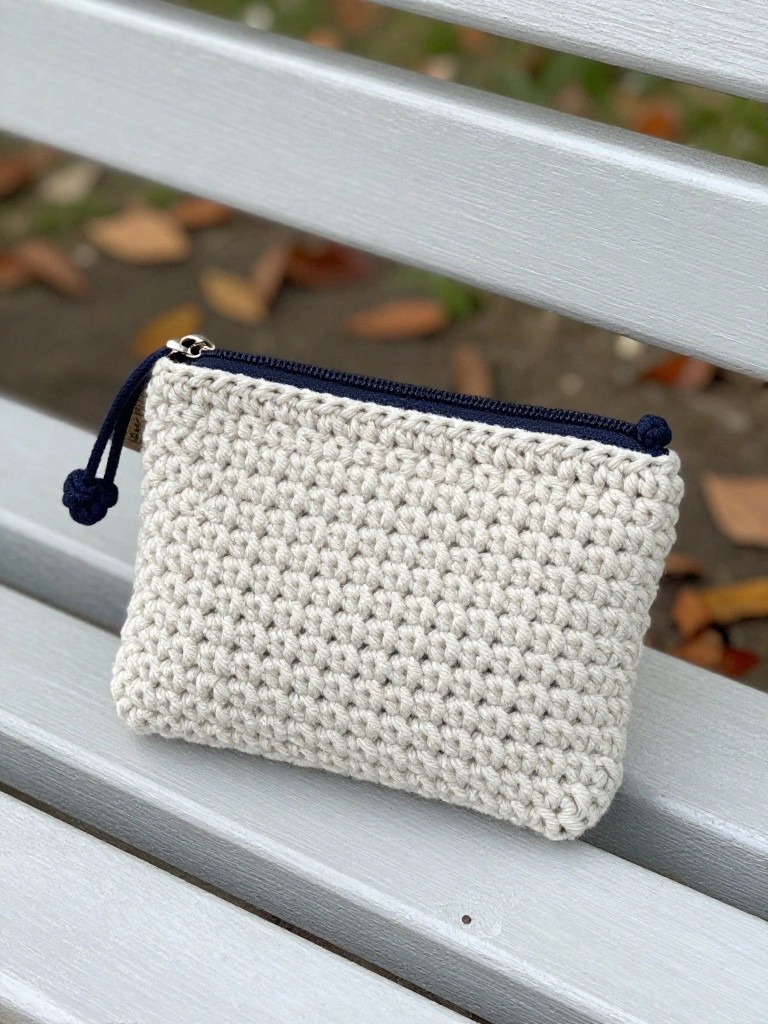
A zippered pouch made in single crochet rows creates a firm rectangular shape that keeps small items contained without stretching out of form. The even stitch texture gives the sides enough structure to stand upright when filled, while the zipper closure keeps everything secure. This style of project falls into the practical accessory category and works well for holding cards, keys, or earbuds.
The small finished size means it takes little yarn and time, so you can finish one quickly and adjust the dimensions for different uses. Change the color to match a favorite bag or add a fabric lining if you want extra strength for daily carry. A project like this fits easily into gift sets or market displays because it solves a common need for simple organizers.
Sushi Roll Keychain for Colorwork Practice

A sushi roll keychain uses simple color blocking and textured stitches to shape a small food form that works as a bag charm or key fob. The white portion builds volume with tight, bumpy stitches while the black strip creates contrast and a place to add scattered seed details. Metal rings attached at each end turn the finished piece into a functional accessory without extra hardware. This type of project falls into the giftable accessory category and keeps the scale small enough for quick completion.
What makes this idea useful is its compact size that lets you practice color changes and basic shaping in one short session. You can swap the black strip for other colors to represent different sushi styles or adjust the length to fit a zipper pull instead. For gifts, a design like this works especially well because it finishes fast and uses only scraps of yarn. The structure also makes it easy to add a loop or clip if you want to turn it into a backpack tag.
Simple Amigurumi Owls for Toy Practice

Small crocheted owls work well as beginner projects because they rely on basic rounds and simple shaping to create a recognizable animal shape. The design pairs a solid gray body with a lighter belly section that uses a gradual color shift to form a spiral effect, while the large eyes and small wings keep the focus on attaching separate pieces rather than fancy stitches. These owls fit the plushie category and make compact toys or shelf accents that do not require much yarn or time. The scale stays small enough that the finished pieces sit comfortably in the hand.
What makes this idea useful is how easily the size and colors can change to match different yarn scraps on hand. A project like this works especially well as quick gifts for children or as test pieces when learning to stuff and close rounds evenly. The shape holds up without extra supports, so it adapts to variations like different eye sizes or added ear tufts. For decor, this kind of shape turns into a set of matching owls in seasonal colors without much extra planning.
Crochet a Quick Striped Band for Plant Pots

A narrow crocheted band in horizontal stripes slips over the rim of a terracotta pot to add color without covering the whole surface. You make it as a simple rectangle in basic rows, join the short ends, and position it so the top edge sits just below the lip. The repeating stripes in bright colors give the pot a clean, updated look that works on a windowsill or shelf.
What makes this idea useful is how easily you can change the starting chain to fit any pot diameter. Use up small leftover yarn balls for each stripe so the project costs almost nothing. This kind of band also makes a fast gift for anyone who keeps plants, since it adds interest to plain pots without extra hardware or glue.
Star Garland Using Basic Motifs

A crocheted star garland is made by working multiple flat star motifs and then threading them onto string or wire. This type of project suits lightweight home decor and can be draped over baskets, shelves, or furniture edges. The repeating star shape keeps the design simple while the neutral tone helps it fit into many room styles without overpowering other items. It falls into the garland category of crochet decor, where individual motifs are connected rather than worked as one large piece.
What makes this idea useful is how quickly you can change the length by adding or removing stars. You can switch colors for different seasons or scale the motif size up or down depending on where you plan to hang it. A project like this works especially well as a starter garland because each star is small and repeatable, so you can practice the same stitches without committing to a big item. It also photographs clearly for sharing, which helps when you want to show off a finished string of motifs.
Textured Crochet Dish Scrubber

A dense bobble or loop stitch builds a raised, bumpy surface that grips food residue during dishwashing. The rectangular shape stays compact enough to fit in one hand while the thick texture adds scrubbing power without needing harsh materials. This project fits the reusable kitchen tool category and works best in cotton or similar durable yarn that holds up to repeated washing.
What makes this idea useful is how fast it comes together in a small size, letting you batch out several in an afternoon. You can adjust the width to fit your sink sponge holder or switch to a softer yarn for a gentler face or body version. The neutral color keeps it practical for daily use, but changing the shade lets it match towels or other kitchen linens without extra effort.
Crochet a Small Sloth Plushie as a Beginner Toy Project

A crocheted sloth plushie uses basic amigurumi shaping to create a seated toy with a rounded body and separate limbs. The two-tone color scheme places lighter yarn on the belly and foot pads while keeping the rest in a darker shade, which helps define the shape without extra stitching. This design sits upright on its own because the legs and arms are positioned to balance the weight. It belongs in the plushie category and works as a quick toy or gift item once you know how to increase and decrease stitches in the round.
What makes this idea useful is the compact size that lets you practice joining parts without needing a large finished piece. You can swap the colors or shorten the limbs to make different animals from the same pattern. A project like this works especially well as a gift because it fits easily in a bag and requires only basic safety eyes or embroidered features. The structure makes this a smart option for testing how well your stitches hold tension when the toy is stuffed.
Hanging Mushroom House Ornament
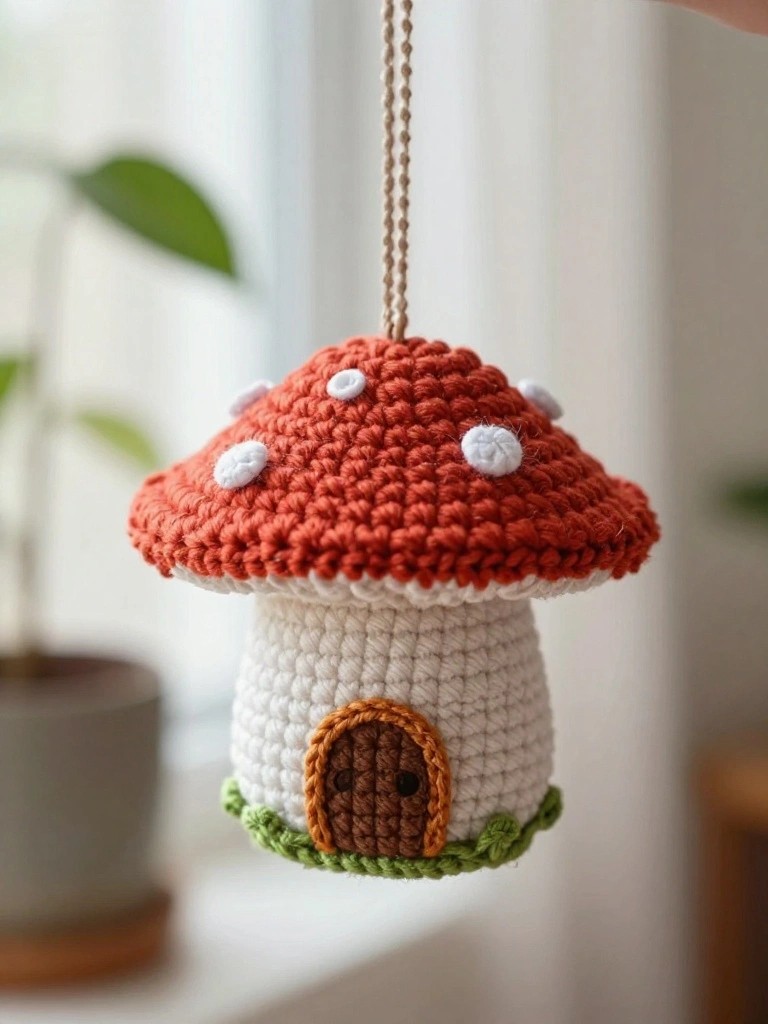
A crocheted mushroom house works well as a small hanging decoration for windows or plant hooks. The design uses a domed cap in one color over a straight stem in another, with a simple arched door and a few spots added for detail. A short green edge at the bottom gives the piece a finished base while the cord loop at the top keeps it easy to display. This type of project falls into the decor and giftable item category because it stays compact and quick to finish.
What makes this idea useful is how the basic shape lets you swap colors or spot patterns without changing the pattern much. You can make several in different cap shades to hang as a short garland or use one as a package topper during the holidays. The small scale also means it works from scraps and finishes fast enough to repeat for multiple gifts. For decor, this kind of shape hangs neatly without taking up shelf space.
Striped Booties with Circle Motifs
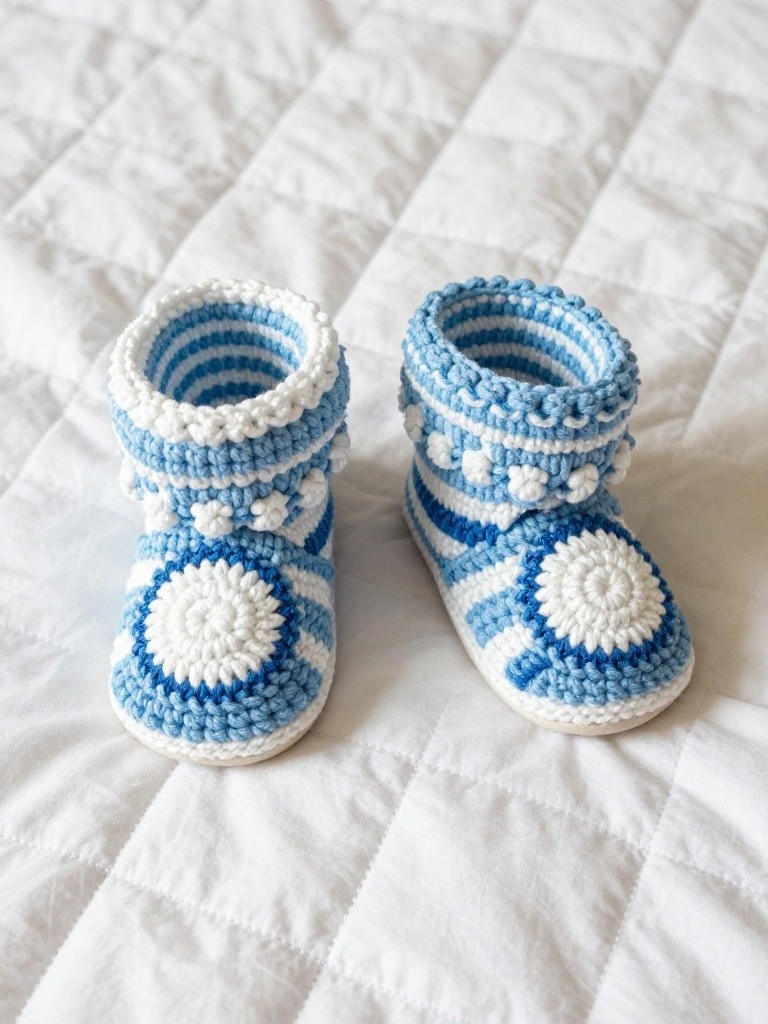
Baby booties built from alternating stripes of blue and white create a simple way to practice color changes on a small wearable item. The rounded toe starts with a flat circle that gives the front a clean shape, while extra white circles are added afterward as separate motifs on the sides. A folded cuff at the top finishes the piece and keeps the focus on the stripe pattern rather than complicated shaping.
What makes this idea useful is that the small scale lets you finish a full pair in a few hours using scraps from bigger projects. You can swap the stripe width or motif placement to match different yarn leftovers without changing the overall structure. For gifts, a design like this stands out because booties are quick to make in multiples and easy to size up or down by adjusting the starting circle. The clear contrast between the stripes and the added circles also helps new crocheters see how separate pieces can be joined for extra detail.
Crocheted Tote with Wavy Stripes

A basic tote bag built from rows of single crochet forms a sturdy rectangular shape that holds its structure well. Horizontal wavy stripes in a contrasting color are worked in as separate bands around the lower half, creating a simple decorative border without extra shaping. The placement of these stripes breaks up the solid field while keeping the overall design balanced and easy to repeat.
What makes this idea useful is how the stripe pattern can be added to any existing tote pattern at whatever height you prefer. You could change the stripe colors to match different seasons or swap the wavy rows for straight ones if you want a cleaner look. The finished bag works well for grocery runs or library trips because the solid body stays practical while the borders give it more presence. For Pinterest saves this kind of project stands out when the contrast colors are bold enough to show up in a thumbnail.
Crochet Heart Motifs for Simple Appliqué Projects

Crochet heart motifs like these serve as flat, compact shapes that work well for appliqué on bags, hats, or blankets. Their rounded outline and even stitch density create a balanced look that stands out without needing extra edging or borders. The small scale keeps them quick to finish and easy to arrange in groups or alone depending on the item they decorate.
What makes this idea useful is how easily the size can be adjusted by changing hook size or yarn thickness. You can turn the same pattern into larger coasters or smaller tags for gift wrapping. A project like this works especially well when you need fast practice with increases and decreases to build shaping skills. The structure makes this a smart option for using leftover yarn while still producing something that looks finished on its own.
Layered Rounds for a Pancake Stack

A stack of crocheted pancakes gives beginners repeated practice making flat circles and joining them into a stable form. The rounds use two shades to suggest the cooked edge and soft center, then get topped with a small square piece and simple stitched lettering. This approach fits the food motif category and works well as a play item, photo prop, or light kitchen decoration because the layers add height without needing complex shaping or stuffing.
What makes this idea useful is the quick repeat of the same circle pattern, so you can finish the whole stack in a few short sessions. You can change the diameter of the rounds to turn the same idea into coasters, a trivet, or even a small cushion. For gifts, a design like this stands out when you swap the topping for different colors or add a simple face to make it more toy-like. The flat construction also means it stores easily and travels well if you sell at craft fairs.
Frequently Asked Questions
What supplies do I need to get started with these crochet basics?
Begin with a medium weight yarn such as worsted weight in a light color so stitches show clearly and a 5 mm hook for comfortable handling. Add a pair of scissors, a yarn needle for weaving ends, and stitch markers to track your progress through the foundational techniques.
How can I practice the skills from the 21 basics without feeling overwhelmed?
Focus on one or two techniques per session such as chaining and single crochet before combining them. Set aside short daily practice times and work on small swatches to build muscle memory while reviewing each step from the article.
What are common mistakes beginners make with these basics and how can I avoid them?
Many new crocheters pull stitches too tightly or skip the first chain which leads to uneven edges. Count your stitches at the end of each row and use a looser grip on the yarn to keep tension even as you work through the listed skills.
How do I know when I am ready to try simple projects using these basics?
Once you can complete a consistent chain a row of single crochet and a row of double crochet without stopping to check instructions you can move on. Start with items like dishcloths or scarves that use repetition of the core stitches.
What should I do if my work starts to look uneven after practicing these techniques?
Check your hook position and yarn tension first since inconsistent pulling often causes this issue. Take a break to relax your hands then restart the row while focusing on even loops and refer back to the article tips for steady progress.
