

Taking care of your guava tree is important if you want to enjoy its delicious fruit. But are you giving it the right amount of water? Properly watering guava trees is crucial for their growth and fruit production. Understanding the right watering frequency and recognizing signs of overwatering are key.
So, how can you make sure your guava tree gets the perfect amount of water to thrive? Let's explore the essential techniques to help you achieve this goal.
Key Takeaways
- Water guava trees regularly on a consistent schedule, taking into account temperature, rainfall, and soil type.
- Guava trees have a shallow root system, so avoid overwatering or underwatering by checking the soil moisture up to the second knuckle.
- Choose an irrigation method that suits your needs, such as drip irrigation or sprinkler systems, and encourage deep root growth.
- Watch out for signs of overwatering, such as yellowing or wilting leaves, foul odor, or mold/fungus growth, and adjust the watering schedule accordingly. Improve soil drainage and air circulation to prevent overwatering.
Watering Frequency
To ensure healthy growth, water your guava trees regularly, aiming for a consistent schedule that suits your specific climate and soil conditions.
Guava trees have a shallow root depth, typically extending only 25-30 inches into the soil. This means that regular, deep watering is crucial to reach the entire root system.
Mulching benefits guava trees by helping to retain moisture in the soil, reducing the frequency of watering needed. A 3-4 inch layer of organic mulch around the base of the tree can significantly improve the soil's water retention capacity.
When establishing a watering schedule, consider factors such as temperature, rainfall, and soil type. In warmer months, guava trees may require more frequent watering, while in cooler periods, less watering is necessary.
Observing your tree's response to watering will help you fine-tune the schedule for optimal growth.
Soil Moisture Requirements
Maintain optimal soil moisture for your guava trees by regularly checking the moisture level in the soil and adjusting your watering schedule accordingly. It's crucial to understand that guava trees have a shallow root system, which makes them sensitive to both overwatering and underwatering. Proper soil moisture is essential for the roots to uptake nutrients effectively. Check the soil moisture by inserting your finger into the soil up to the second knuckle. If the soil feels dry at that depth, it's time to water your guava tree. To help you understand the soil moisture requirements better, here's a table outlining the ideal soil moisture levels for guava trees:
| Soil Moisture Level | Description |
|---|---|
| Dry | Water the tree |
| Moist | Ideal moisture level |
| Wet | Stop watering |
Maintaining the right soil moisture is vital for the healthy growth of your guava trees.
Recommended Products

Accurate Soil Moisture Detection: The XLUX Soil Moisture Meter can tell you if the soil deep inside your pot or garden is dry, moist or wet; whereas your eyes and fingers can only determine the moisture level of the soil surface. The probe is 5.5 inches (14 cm) longer than regular styles, allowing it to measure the soil moisture at the bottom of larger and deeper flower pots.

Accurate Soil Moisture Detection: The XLUX Soil Moisture Meter can tell you if the soil deep inside your pot or garden is dry, moist or wet; whereas your eyes and fingers can only determine the moisture level of the soil surface. The probe is 5.5 inches (14 cm) longer than regular styles, allowing it to measure the soil moisture at the bottom of larger and deeper flower pots.

Kindly NOTE: This soil tester can not be applied to test pH value of any other liquid. If the soil is too dry the indicator will not move, and water it before testing.
Irrigation Methods
Consider implementing efficient irrigation methods to ensure optimal soil moisture for your guava trees while conserving water resources. When it comes to watering your guava trees, the right irrigation method can make a significant difference in the health and productivity of your trees. Here are some irrigation methods to consider:
- Drip irrigation: This method delivers water directly to the base of the trees, minimizing water loss through evaporation and ensuring that the roots receive a consistent supply of moisture.
- Sprinkler systems: While not as water-efficient as drip irrigation, modern sprinkler systems can still provide adequate moisture if used properly.
- Deep watering, surface watering: Deep watering encourages deep root growth, while surface watering is suitable for young trees with shallow roots.
Recommended Products
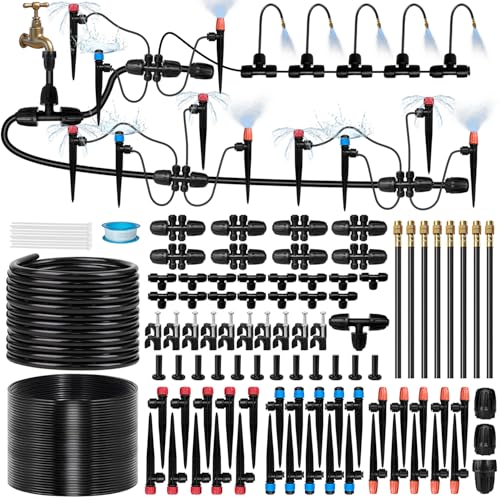
【Upgraded Tube Design & Water Saving】 Our garden watering system is upgraded to 1/2” diameter to support high water pressure. The 1/2” tee connector allows seamless splitting into 2 independent zones for customized watering schedules. By delivering moisture directly to root zones, this drip Irrigation system significantly reduces evaporation and runoff—saving more water compared to conventional sprinklers while eliminating the need for manual watering.

💧 Complete All-in-One Irrigation Kit – Everything You Need in One Box : Includes 40 ft of 1/2” main tubing, 200 ft of 1/4” distribution tubing, 30 precision sprayers (stream drippers, vortex emitters & mist nozzles), plus all connectors and fittings. Easily covers up to 250 sq. ft. in a single line or two 120 sq. ft. zones—perfect for gardens, raised beds, and greenhouses.

【Upgraded Tube Design & Water Saving】 Our adjustable garden watering system is upgraded to 1/2” diameter to support high water pressure. The 1/2” tee connector in the package so you can easily set up 2 drip irrigation systems as needed. Garden watering systems minimize stage water loss by recharging water directly to plant roots. While traditional irrigation often results in wasted water, this drip irrigation system saves up to 70% of water, no need for manual watering, saves water.
Signs of Overwatering
If you notice your guava trees showing signs of overwatering, it's essential to address this issue promptly to ensure their continued health and productivity. Overwatering can lead to root rot and other detrimental effects on your guava trees. To help you identify if your trees are being overwatered, here are some common signs to look out for:
| Signs of Overwatering | Description | Action |
|---|---|---|
| Yellowing or wilting leaves | Leaves turning yellow or wilting, even though the soil is moist. | Adjust watering schedule. |
| Foul odor | A musty or rotten smell emanating from the soil, indicating root rot. | Reduce watering frequency and improve soil drainage. |
| Mold or fungus growth | Presence of mold or fungus on the soil surface or around the base of the tree. | Reduce watering and improve air circulation around the tree. |
Watering Tips
To ensure your guava trees receive the right amount of water, it's important to understand some effective watering tips that will promote their health and growth. Here are some essential tips to help you properly water your guava trees:
- Root Depth: Understand the depth at which the guava tree roots are located. Water deeply to encourage deep root growth, which makes the tree more resilient during dry periods.
- Drip System: Consider installing a drip irrigation system to provide a slow, steady supply of water directly to the root zone. This helps prevent water wastage and ensures efficient water delivery to the trees.
- Mulching: Apply a layer of organic mulch around the base of the tree to help retain soil moisture, regulate soil temperature, and suppress weed growth.
These tips will help you establish a healthy watering routine for your guava trees, promoting their overall well-being and productivity.
Conclusion
Incorporate these watering tips to ensure the health of your guava trees.
- Monitor soil moisture
- Consider drip irrigation
- Watch for signs of overwatering
By following these guidelines, you can cultivate thriving guava trees that bear delicious fruit.
Happy gardening!
