

Gardening in California can be a rewarding experience, and growing pears is no exception. Have you ever wanted to grow your own pears in the Golden State? If so, you’re in luck! In this article, we’ll discuss the care and maintenance of pear trees in California, as well as how to choose the right variety for your climate. We’ll also cover how to care for and harvest your pears so that you can enjoy a delicious and nutritious harvest. With the right information and a little bit of effort, you can have a fruitful pear tree in your backyard!
Yes, pears can be grown in California. California’s climate and soil are well suited to growing a variety of pear trees, including Asian, European, and hybrid varieties.
Types of Pears Suitable for California
California is home to a variety of different pears, each with its own unique flavor and texture. Bartlett pears are one of the most popular varieties, as they are sweet and highly versatile. These pears are great for cooking with, as they can be poached, grilled, or even made into jams and jellies. Bosc pears have a slightly firmer texture and a more complex flavor than Bartlett pears. They make excellent pies and tarts due to their firm texture, but can also be eaten raw or cooked in savory dishes. Anjou pears have a sweet-tart flavor that is often described as “pear-y”. They are good for eating raw or poaching, as they hold their shape when cooked. Comice pears have a tender flesh that is very juicy and sweet. They are perfect for eating raw or adding to salads, but can also be used in baking and poaching recipes. Finally, Seckel pears are small in size but big in flavor. They make excellent additions to salads or desserts due to their sweet-tart flavor.
No matter what type of pear you choose, it’s important to remember that all varieties need plenty of sun exposure and adequate water during the growing season for optimal growth and production of fruit. With proper care, these delicious fruits will reward you with several harvests every year!
Soil Requirements for Growing Pears in California
Pear trees need well-draining, fertile soil to produce healthy fruit. In California, the ideal soil for growing pears should be slightly acidic with a pH between 6.0 and 7.0. The soil should also be loamy and enriched with organic matter such as compost or manure. If the soil is too sandy or clay-like, it should be amended with organic matter to improve drainage and aeration. Additionally, pear trees require a steady supply of nutrients for optimal growth and fruit production, so fertilizers should be added as needed. Applying compost or a balanced fertilizer every spring is recommended for best results. It is important to check the soil pH periodically to ensure it remains within the ideal range for growing pears in California.
Pears are also very vulnerable to drought stress, so irrigation may be necessary during dry periods to keep them healthy and productive. During periods of heavy rain or flooding, the soil should be tested to assess drainage levels and potential damage caused by excess moisture. If poorly drained soils are not amended properly, they can lead to root rot and other issues that can severely affect tree health and productivity.
Climate Requirements for Growing Pears in California
Pears are a popular fruit in California, and many agriculturalists choose to grow them. In order to successfully grow pears in California, it is important to understand the climate requirements. Pears are a temperate crop and require mild temperatures throughout their growing season. They need abundant sunshine and cool nights to produce high quality fruit. The ideal temperature range for pears is between 50°F (10°C) and 85°F (29°C) during the day, and 40°F (4°C) and 65°F (18°C) at night.
California’s Mediterranean climate is well-suited to the needs of pears, with warm and dry summers, cool winters, and plenty of sunshine year-round. However, pears can also be grown in other parts of the state that have a milder climate, such as coastal areas or mountain valleys. It is important to choose a location that has well-drained soil with adequate moisture. In areas where there is not enough rain, additional irrigation may be necessary.
Pears also require protection from strong winds which can damage the trees and reduce fruit production. Planting windbreaks or using wind protection netting can help protect the trees from strong winds, while also providing shade from hot summer sun when needed.
Overall, understanding the climate requirements for growing pears in California is key to producing high quality fruit. With adequate sunlight, mild temperatures, well-drained soil with adequate moisture, and protection from strong winds, California has all of the necessary conditions for growing pears successfully.
The Best Time of Year to Plant Pears in California
The best time of year to plant pears in California is during the fall season. This is because the cool temperatures and shorter days during this time are ideal for establishing the root systems of newly planted trees. The mild temperatures also reduce stress on young trees, allowing them to better adapt to their new environment and build up a strong root system. Additionally, fall is when soils are still relatively warm and moist, making it easier for pear trees to take up the necessary nutrients they need for growth.
Pear trees should be planted as soon as possible after purchase in order to give them the best chance at success. Planting should occur between August and October, with October being the ideal month for planting in most areas of California due to its milder temperatures and longer days. It’s important to note that if you’re planting a grafted tree, you should wait until after the first frost before planting as this will help protect against frost damage.
When planting pears in California, it’s important to choose a site that has well-drained soil that receives at least 8 hours of sunlight per day. Planting in raised beds can also help reduce soil compaction and improve drainage. Once planted, pear trees should be watered deeply once every two weeks throughout their first year and mulched around the base with organic material such as wood chips or straw. This will help retain water and prevent weeds from growing around the tree’s base which can compete with the tree for nutrients.
Overall, planting pears in California during fall season offers an excellent opportunity for successful tree establishment and growth due to its mild temperatures and longer days which allow young trees to better adapt to their new environment while building up a strong root system.

Recommended Products

Light: Thrives in full sun for best fruit production.

35 Premium Pear Tree Seeds: Start your own home orchard with our collection of 35 premium pear seeds. Grow these classic fruit trees that will provide delicious, sweet pears for fresh eating, canning, and baking
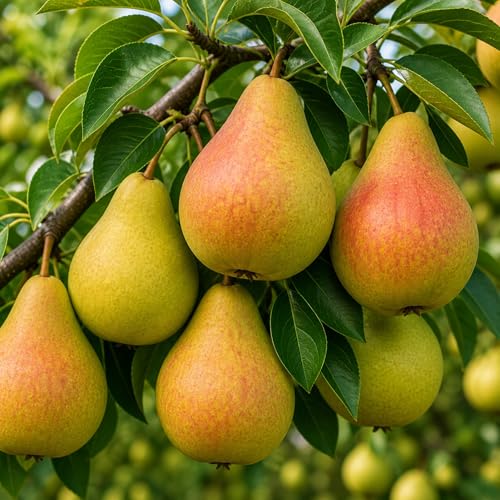
🍐 Grow Your Own Sweet Pears Enjoy fresh, homegrown pears right from your backyard or patio. These saplings are selected for healthy growth and reliable fruit production. Ships bare root and dormant (no leafs)
Care and Maintenance of Pear Trees in California
Pear trees are an important part of California’s fruit industry, and properly caring for these trees is essential for maintaining a healthy crop. In order to ensure the healthiest pear harvest, there are some important care and maintenance guidelines that should be followed. Here we will discuss some of the basic steps to take when caring for pear trees in California.
The first step in caring for pear trees is to make sure that they are planted in an area with well-draining soil and plenty of sunlight. The roots should have access to plenty of water so that the tree can thrive. If planting more than one tree, be sure to leave enough space between each one so that they can receive adequate sunlight and not compete for resources.
It is also important to prune your pear trees regularly. Pruning helps keep the branches strong and encourages new growth by removing dead or diseased branches. It also helps keep the shape of the tree uniform, which makes harvesting easier when the time comes.
Fertilizing your pear trees can also help improve their health and productivity. Fertilizers provide essential nutrients that help promote healthy growth and increase yields during harvest season. Be sure to follow package instructions when applying fertilizer as too much can be damaging to your tree’s health.
Finally, it is important to monitor your pear trees throughout the growing season for signs of disease or pests. Common pests like aphids or coddling moths can cause serious damage if left untreated, so be sure to check your trees regularly for any signs of infestation or disease.
Caring for pear trees in California requires dedication and patience, but with proper care they can produce a bountiful harvest each year. By following these simple tips you can ensure that your pear trees remain healthy and productive for many years to come!
Recommended Products

Down to Earth Fruit Tree is a five pound box of all natural fertilizer with 6-2-4 formula and is listed by the Organic Materials Review Institute (OMRI) for use in organic production

FORMULATED FOR CITRUS AND FRUIT TREES: Use these citrus fertilizer spikes on apple, orange, lemon, lime, and avocado trees; this formula is also great for feeding palm trees
Supports Fruit Production & Growth – Helps promote consistent fruit development, healthy foliage, and overall tree performance.
Watering Needs of Pear Trees in California
Watering is an essential part of caring for pear trees in California. The state’s warm, dry climate and sandy soils can lead to dehydration during hot summer days, which can cause stress on the tree and limit its growth. To prevent this from happening, it is important to water pear trees regularly and deeply. This will ensure that the tree has enough moisture to survive the hot weather and sustain its health. It is also important to maintain a consistent watering schedule, as frequent, shallow watering can lead to shallow root systems that are more susceptible to disease and pests.
When watering pear trees in California, it is best to do it in the morning so that the water has time to soak into the soil before nighttime temperatures drop. Water should be applied slowly and evenly around the tree’s base until it reaches a depth of 8-10 inches. After watering, check for any standing water or puddles at the base of the tree; if present, these should be drained away so that they do not cause root rot or other issues.
In general, pear trees in California need approximately 1 inch of water per week during their growing season (April-September). During especially hot or dry periods, additional irrigation may be needed. It is also important to mulch around the base of your tree; this helps retain moisture and prevents weeds from competing with your tree for resources. If you live in an area with frequent rainfall during summer months (particularly coastal areas), supplemental irrigation may not be necessary.
Overall, proper watering is essential for successful pear production in California; deep yet infrequent irrigations are key for long-term success with these trees. Establishing a consistent watering schedule and ensuring that your tree receives enough moisture is essential for healthy growth and fruit production!
Recommended Products

【Universal 1/4 Inch Size Set】- Designed for US market compatibility,MIXC new drip irrigation system set uses 1/4 inch (6mm) components to address potential mismatches with standard hoses, unlike some 5/16 inch systems. It includes 2-way connectors, tubing, and 3-way connectors to help users set up DIY garden irrigation more conveniently.

2.0 gallon per hour pressure-compensating emitter delivers same uniform flow rate from beginning to end of tubing runs

Be a Gardening Master with the help of our superior and complete Drip Irrigation Kit: 10 Drip Irrigation Emitters Vortex + 20 Drip Emitters Spray + 50ft flexible & durable 5/16 irrigation tubing + 50ft 1/4 inch Drip Irrigation Tubing + 12 tubing coupler + 5 ¼ Tubing Tee Splitter + Tubing End Plugs + Water Connector + 1 x Complete Instructions Guide Hard Copy + 2 Grow your Own Vegetables & Fruits Guide full with pieces of advice and practical tips Digital Format.
Pruning Pear Trees in California
Pruning pear trees in California is an important part of maintaining the health of the tree and ensuring good fruit production. Pruning is the removal of dead, damaged, or diseased branches and stems from a plant. This helps promote new healthy growth, and encourages better fruit production. Pruning should be done in early spring when the tree is dormant, this will reduce shock to the tree and help it heal more quickly.
When pruning pear trees, it is important to prune selectively and leave some of the older branches. This will ensure that there is enough foliage to support future growth and production. It is also important to make sure that all cuts are clean and precise, as this will help prevent disease from spreading throughout the tree.
It is also important to prune away any branch or stem that has already died from disease or damage. Doing this can help limit any further damage to the tree. Additionally, it can help prevent disease from spreading throughout the tree by removing infected areas before they can spread further.
Finally, it is important to remember that pear trees require regular pruning in order for them to produce good quality fruit for a long period of time. By properly pruning your pear trees in California you can ensure that you have healthy fruit production for many years to come!

Conclusion
Pears are a favorite fruit for many people and fortunately for Californians, it is possible to grow pears in the state. The climate and soil conditions in California make it an ideal place to grow pears as long as you choose the right variety. Planting bare-root trees is the best way to start, and they should be planted in winter or early spring. Additionally, make sure to prune your pear trees regularly and water them deeply during dry periods. With some effort and care, you can have a bumper crop of pears from your own backyard.
In conclusion, growing pears in California is not difficult provided that you select the right variety for your area and provide regular maintenance. Pears are a delicious fruit that can add flavor to any meal, so why not give them a try?
