

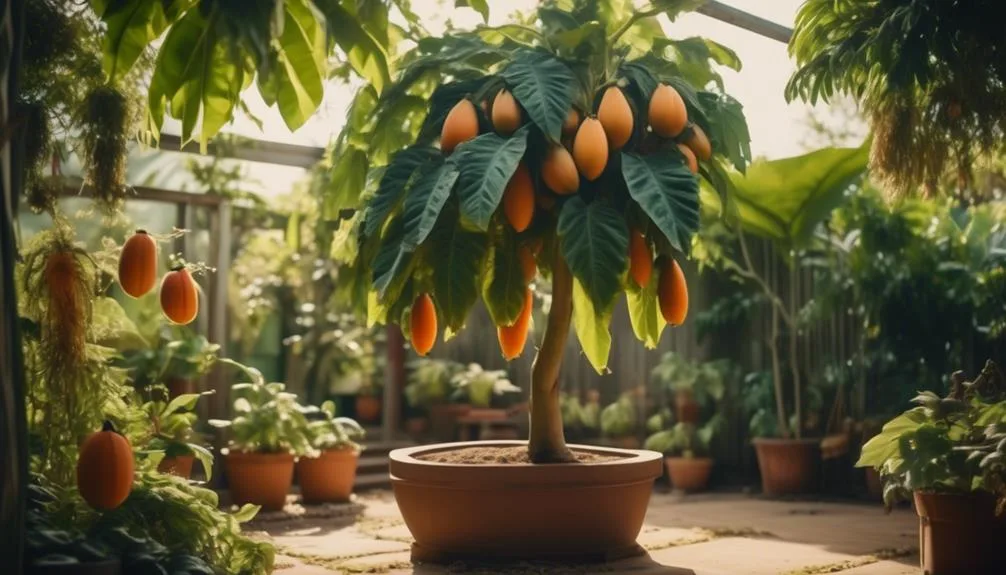
Thinking about adding a taste of the tropics to your small garden? Growing your own papaya tree might sound exciting, but there are important things to think about first.
Consider the size and space it needs, as well as the climate and location. Understanding what papaya trees need will help you decide if they're right for your garden.
Key Takeaways
- Papaya trees can be grown in small gardens using space-saving techniques like container gardening and vertical growing methods.
- Regular pruning and use of large containers can help control the size and growth of papaya trees.
- Planting a variety of papaya trees and ensuring cross-pollination is essential for maximizing fruit production.
- Papaya trees thrive in warm, tropical climates and require well-draining soil, full sunlight, and regular watering and fertilization for healthy growth.
Size and Space Requirements
To successfully grow papaya trees in a small garden, it's essential to consider their size and space requirements. Space-saving techniques like container gardening are ideal for smaller areas. Papaya trees can thrive in large containers, allowing you to control their growth and maximize space.
Vertical growing is another efficient method, utilizing trellises or stakes to support the plants and save ground space. Pruning techniques are crucial for managing papaya tree size in a confined area. Regular pruning not only controls the height and spread of the tree but also promotes better fruit production.
Growth and Maintenance
For optimal growth and maintenance of papaya trees in a small garden, regularly assess the soil moisture and provide balanced fertilization.
Papaya trees require well-drained soil, so ensure that the soil is consistently moist but not waterlogged. Consider using a moisture meter to monitor the soil moisture levels.
When it comes to fertilizer application, a balanced fertilizer with a ratio such as 10-10-10 can be beneficial. Apply the fertilizer every 2-3 months, following the instructions on the packaging.
Additionally, consider implementing pruning techniques to maintain the papaya tree in a small garden. Pruning can help manage the size of the tree and promote better fruit production.
Remove any dead or damaged branches and thin out the canopy to allow for better air circulation and sunlight penetration.
Recommended Products

Kindly NOTE: This soil tester can not be applied to test pH value of any other liquid. If the soil is too dry the indicator will not move, and water it before testing.

4-in-1 Accurate Soil Testing for All Plants Our soil tester quickly measures moisture, pH, Light/fertility with a clear oversized dial. Get real-time results to adjust water/fertilizer, keep your garden/lawn/potted plants healthy and vigorous.

Pollination and Fruit Production
Consider planting a variety of papaya trees to ensure adequate cross-pollination and maximize fruit production in your small garden. Papaya trees rely on cross-pollination to produce fruit, so having both male and female trees is essential. Bees are the primary pollinators, so planting flowers nearby can attract them and enhance pollination. Additionally, hand pollination can be done by transferring pollen from the male flowers to the female flowers using a soft brush. When it comes to fruit production, ensuring proper pest control and tree health is crucial. Regularly inspect your trees for signs of pests or disease, and promptly address any issues to maintain optimal fruit production. Here's a table to illustrate different papaya tree varieties and their pollination compatibility:
| Variety | Male Tree | Female Tree |
|---|---|---|
| Solo | No | Yes |
| Kapoho | Yes | Yes |
| Waimanalo | Yes | Yes |
Recommended Products

Core Functionality: This pollinator tool set includes 8 pollinating brushes designed for hand pollination of fruit trees, vegetables, and flowers, offering a practical solution to increase crop yields especially when natural pollinators are scarce

8 Sizes Set for Varied Plants: this pollinator tool set includes 8 different tip sizes to meet your specific garden needs, allowing you to easily match the brush head to tiny succulent blossoms or large flowers without causing damage

Manual Pollination Support: This pollinator tool is designed for hand pollination of fruit trees, vegetables, succulents, and flowers, helping transfer pollen when bees pollinating flowers or other natural pollinators are limited, and supporting fruit tree pollination in home gardens and orchards
Climate and Location Considerations
Papaya trees thrive in warm, tropical climates, so choosing the right location for your small garden is crucial to ensure optimal growth and fruit production. When selecting a location, consider the soil and sunlight.
Papaya trees prefer well-draining, nutrient-rich soil and full sunlight for at least six hours a day. Ensure that your chosen spot provides these conditions for your papaya tree to flourish.
Additionally, consider the watering and fertilization needs. Papaya trees require regular watering, especially during dry periods, to keep the soil consistently moist but not waterlogged. Fertilize the tree every few months with a balanced fertilizer to support healthy growth.
Potential Benefits and Drawbacks
Are there any potential drawbacks to growing papaya trees in a small garden, and what benefits can you expect from this tropical fruit tree?
Papaya trees offer several benefits for small gardens. They're relatively fast-growing and can provide a tropical ambiance with their lush, large leaves and exotic fruits. Papayas are also rich in vitamins and antioxidants, making them a nutritious addition to your home garden.
However, there are some potential drawbacks to consider. Papaya trees have specific soil and water requirements, needing well-draining soil and regular watering. Additionally, they're susceptible to certain pests and diseases, such as fruit flies and powdery mildew. To ensure successful growth, it's important to monitor and manage these factors carefully.
Conclusion
In small gardens, papaya trees can thrive with proper space, maintenance, and consideration of climate and location.
They offer the potential for delicious fruit and a tropical aesthetic, adding a unique touch to your outdoor space.
With the right care, papaya trees can be a rewarding addition, providing a taste of the tropics in your own backyard.
