

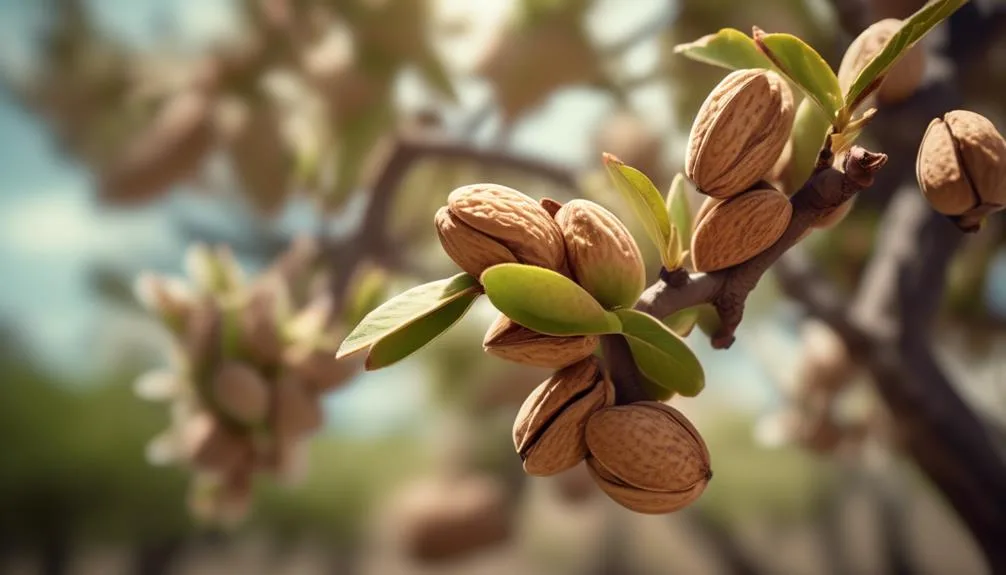
Almond trees can actually produce two types of almonds – sweet and bitter. Ever wonder why some trees yield bitter almonds? The reasons behind this lie in plant genetics and the environment.
Understanding this can offer valuable insights into almond cultivation. So, what causes almond trees to produce bitter almonds? Let's explore the factors at play that lead to this outcome.
Key Takeaways
- Almond tree genetics and environmental factors play a significant role in almond bitterness.
- Nutrient deficiency and inadequate watering can contribute to bitterness in almonds.
- Pests and diseases can affect the quality and taste of almonds, potentially leading to bitterness.
- Proper harvesting and processing techniques are crucial for controlling bitterness in almonds.
Almond Tree Genetics
Understanding the genetic makeup of almond trees is crucial for enhancing their resilience, yield, and overall quality. Genetic mutations and inheritance play a significant role in determining the characteristics of almond trees.
Almond tree breeding and selection processes aim to identify and propagate desirable genetic traits, such as disease resistance, nut size, and yield. Through careful selection, breeders can isolate specific genetic profiles that contribute to the overall health and productivity of the trees.
Environmental Factors
The genetic traits of almond trees are not the only factors that influence their growth and production; environmental factors also significantly impact their development and overall success. Almond trees thrive in well-drained soil with a pH between 6.0 and 7.5, allowing for optimal nutrient uptake. Variations in climate, such as temperature and rainfall, play a crucial role in the production of bitter almonds. Almond trees require a Mediterranean climate, characterized by mild, wet winters and hot, dry summers. The fluctuation in temperature and water availability can directly affect the bitterness of the almonds produced. The table below summarizes the environmental factors affecting almond tree growth and the production of bitter almonds.
| Environmental Factor | Impact on Almond Trees |
|---|---|
| Soil pH | Influences nutrient uptake |
| Climate variations | Affects bitterness of produced almonds |
Understanding and managing these environmental factors is essential for cultivating almond trees and controlling the production of bitter almonds.
Nutrient Deficiency
If your almond trees are showing signs of yellowing leaves and stunted growth, they may be experiencing nutrient deficiency. Soil pH greatly affects nutrient availability to almond trees. When the soil pH is too high or too low, certain essential nutrients become less accessible to the trees, leading to deficiencies.
Additionally, water availability plays a crucial role in nutrient uptake. Inadequate watering can hinder the trees' ability to absorb essential nutrients from the soil, exacerbating nutrient deficiency.
To address this, consider conducting a soil test to determine the pH level and adjust it if necessary. Ensure that your almond trees receive sufficient and consistent watering, especially during critical growth stages.
Taking these measures can help alleviate nutrient deficiencies and promote healthier, more productive almond trees.
Pests and Diseases
Examine your almond trees closely for any signs of infestation or disease, as early detection and swift action are crucial for preserving their health and productivity. Pests and diseases can have a detrimental impact on your almond trees, potentially leading to a bitter almond taste and reduced yields.
To ensure the well-being of your trees, here are some essential pest control measures to consider:
- Regularly prune and inspect your trees for any signs of pest infestation or disease.
- Implement natural predators or beneficial insects to control pest populations.
- Utilize organic pesticides and insecticidal soaps to protect your trees without harming the environment.
- Monitor the weather conditions and adopt cultural practices such as proper irrigation to minimize the risk of diseases.
Recommended Products

READY-TO-USE CONTACT SPRAY: No mixing required. Thoroughly spray insecticide on all plant parts, including the underside of leaves. Pests must be sprayed directly to achieve control

PEST DEFENSE - Insecticidal Super Soap controls species of adelgid, ant, aphid, borer, caterpillar, spider mite, cricket, chinch bug, weevil, fly, thrip, & more.

CROP, GARDEN & HOUSEPLANT INSECT CONTROL. Trifecta Crop Control all-natural, plant-based formula effectively combats destructive spider mites, aphids, whiteflies, fungus gnats, and other soft-bodied pests on indoor and outdoor plants. Our biodegradable, eco-friendly solution is safe for use on edible crops, without chemical residues. Our gentle yet potent plant spray suffocates and dehydrates pests without harming beneficial insects or the environment, making it ideal for organic gardening.
Harvesting and Processing
When harvesting and processing your almonds, pay close attention to timing and methods to ensure the highest quality yield. Almond harvesting methods vary, but the most common involves shaking the trees and collecting the nuts from the ground.
Promptly removing the hulls and drying the almonds is crucial to prevent mold and ensure freshness. Post-harvest handling, including proper storage and transportation, is essential to maintain the almonds' quality.
Almond processing techniques, such as blanching, roasting, or grinding, can significantly impact the flavor and texture of the final product. Additionally, taste testing throughout the processing stages allows for adjustments to be made to achieve the desired flavor profile.
Conclusion
In the intricate world of almond production, the presence of bitter almonds can be attributed to a multitude of factors, including genetics, environment, nutrients, pests, and diseases. By understanding these influences, almond farmers and researchers can work towards cultivating sweeter and more delectable almonds.
This ongoing pursuit not only benefits our taste buds but also underscores the delicate interplay of nature and science in agriculture.
