

Growing apple trees in Iowa can yield a bountiful harvest with the right care and attention. Understanding local climate conditions and selecting the right varieties are crucial steps for success.
Best Apple Varieties for Iowa’s Climate
Iowa’s climate presents unique challenges and opportunities for apple cultivation. Selecting the right apple varieties is crucial for ensuring a healthy harvest. This section explores the best apple varieties suited for Iowa’s weather conditions, helping growers maximize their yields and enjoy delicious fruit.
Choosing the right apple varieties is essential for maximizing yield and ensuring a healthy harvest. Iowa’s climate, characterized by cold winters and warm summers, favors certain types of apples.
Varieties such as Honeycrisp, Fuji, and Gala thrive well in this environment. These apples not only adapt well to local conditions but also offer excellent flavor and storage capabilities.
| Variety | Flavor Profile | Harvest Time | Storage Life |
|---|---|---|---|
| Honeycrisp | Sweet and crisp | Early September | 6 months |
| Fuji | Sweet and dense | Late September | 6 months |
| Gala | Sweet and aromatic | Early September | 3 months |
Soil Preparation for Thriving Apple Trees
Proper soil preparation is essential for cultivating healthy apple trees in Iowa. Understanding the specific soil requirements and conditions can significantly impact tree growth and fruit production. This section will explore effective techniques and practices to ensure your soil is primed for thriving apple trees, leading to bountiful harvests.
Soil preparation is a critical step in growing healthy apple trees. The soil should be well-draining and rich in organic matter.
Conduct a soil test to determine pH levels and nutrient content. Amend the soil with compost or well-rotted manure to enhance fertility.
Ensure a pH between 6.0 and 7.0 for optimal growth.
Incorporate organic matter to improve soil structure.
Avoid compacted soils that hinder root development.
Recommended Products

Kindly NOTE: This soil tester can not be applied to test pH value of any other liquid. If the soil is too dry the indicator will not move, and water it before testing.

KNOW BEFORE YOU GROW | Grow the healthiest, sustainable lawn and garden with the most accurate and easy to use professional soil test kit on the market

✅ 1Dial & 1 LCD Screen - Replace/install all 3 batteries each time. Put button to %RH/°F to - Turn On, and put to LIGHT to - Turn Off. Read the LCD results in 3-5 mins. (Not Water Moisture Meter, so, please don't test liquid)
Iowa Apple Tree Watering Strategies
Proper watering is vital for the health of apple trees in Iowa. During the first few years, young trees require consistent moisture to establish roots. Use a drip irrigation system or soaker hoses to deliver water directly to the roots.
Water deeply to encourage deep root growth.
Monitor soil moisture levels to prevent overwatering.
Adjust watering frequency based on seasonal rainfall.
Recommended Products
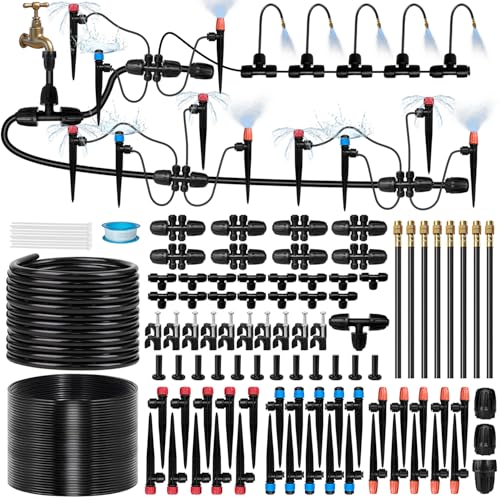
【Upgraded Tube Design & Water Saving】 Our garden watering system is upgraded to 1/2” diameter to support high water pressure. The 1/2” tee connector allows seamless splitting into 2 independent zones for customized watering schedules. By delivering moisture directly to root zones, this drip Irrigation system significantly reduces evaporation and runoff—saving more water compared to conventional sprinklers while eliminating the need for manual watering.

NO MORE HARD INSTALLATION - SET UP IN MINUTES. Tired of struggling with stiff barbed fittings? This drip irrigation system features quick-connect fittings that let you push, lock, and secure tubing effortlessly. No tools, no leaks, just a smooth setup experience. Enjoy a frustration-free installation and get your garden watering system running in minutes.

Be a Gardening Master with the help of our superior and complete Drip Irrigation Kit: 50ft flexible & durable PVC 5/16" Irrigation Tubing + 50ft 1/4" Drip Distribution Tubing + 2 x Female Thread Water Connectors for 5/16" Mainline + 20 Barbed Drip Emitters Stream + 10 Barbed Drip Emitters Vortex + 4 x 1-Way, 6 x 2-Way and 2 x 4-Way Barbed Splitters from 5/16" to 1/4" + 5 x 1/4" Tubing Tee Splitters + 2 x 5/16" Mainline End Plugs + 5 x 1/4" Distribution Tubing End Plugs
Proactive Pest and Disease Management for Apples
Managing pests and diseases is crucial for ensuring a bountiful apple harvest in Iowa. By taking proactive measures, growers can protect their trees from common threats that can diminish fruit quality and yield. Understanding the specific challenges faced in the region will help in implementing effective strategies for healthier apple trees.
Iowa’s climate can foster various pests and diseases that threaten apple trees. Regular monitoring and proactive management are essential. Common pests include aphids and codling moths, while diseases like apple scab can affect foliage and fruit.
Use organic insecticides for pest control.
Implement crop rotation to reduce disease incidence.
Prune trees annually to improve air circulation and reduce disease risk.
Recommended Products

Control diseases and insects in your garden with Captain Jack’s Fruit Tree Spray Concentrate! Use on a variety of listed fruits, nuts and citrus plants.

Control diseases and insects in your garden with Captain Jack’s Fruit Tree Spray Concentrate! Use on a variety of listed fruits, nuts and citrus plants.

Balanced Fertilization for Apple Trees
Proper fertilization is essential for the health and productivity of apple trees in Iowa. Understanding the specific nutrient needs and timing can significantly impact growth and fruit quality. This section explores effective strategies for balanced fertilization, ensuring your apple trees thrive and yield abundant, flavorful harvests.
Fertilization plays a crucial role in the development of apple trees. A balanced fertilizer with nitrogen, phosphorus, and potassium promotes healthy growth and fruit production. Apply fertilizer in early spring before new growth begins.
Use a slow-release fertilizer to provide nutrients over time.
Follow soil test recommendations for specific nutrient needs.
Avoid over-fertilizing, which can lead to excessive foliage growth at the expense of fruit.
Pruning Techniques for Apple Tree Health
Pruning is a crucial practice for maintaining the health and productivity of apple trees in Iowa. By employing the right techniques, you can encourage strong growth, improve air circulation, and enhance fruit quality. Understanding the timing and methods of pruning will help ensure a bountiful harvest year after year.
Pruning is essential for maintaining the health and productivity of apple trees. Proper pruning encourages strong branch structure and improves light penetration. Focus on removing dead or diseased wood and thinning crowded branches.
Prune during the dormant season for best results.
Aim for an open center structure to enhance airflow.
Remove suckers and water sprouts to direct energy to fruit-bearing branches.
Optimal Timing for Apple Harvests
Understanding the optimal timing for apple harvests is crucial for maximizing yield and fruit quality in Iowa. Factors such as climate, variety, and ripeness indicators play significant roles in determining the best time to pick apples. This section will provide essential insights to ensure a successful and fruitful apple harvest.
Timing your harvest is crucial for achieving the best flavor and quality in apples. Apples should be picked when they are fully colored and have a slight give when gently squeezed.
Monitor color changes and taste test for ripeness.
Harvest on dry days to prevent bruising.
Store apples in a cool, dark place to extend freshness.
Iowa Apple Tree Weather Monitoring Strategies
Iowa’s weather can present challenges for apple trees, including frost and drought. Monitoring local weather forecasts and taking preventive measures can mitigate these risks. Use frost cloths to protect blossoms during late frosts and mulch to retain soil moisture during dry spells.
Be prepared to cover trees during unexpected frost.
Use mulch to conserve moisture and regulate soil temperature.
Adjust care practices based on seasonal weather patterns.
Iowa Apple Harvesting Best Practices
Harvesting apples in Iowa requires a keen understanding of local conditions and best practices to ensure a bountiful yield. From timing the harvest to proper picking techniques, these strategies will help maximize the quality and quantity of your apple crop. Implementing these tips will lead to healthier trees and more fruitful seasons.
Regular maintenance and attention to detail are keys to successful apple harvesting in Iowa. Keep records of your practices and results to refine your approach over time. Engage with local gardening communities for shared insights and support.
Stay informed about local pests and diseases.
Attend workshops or seminars on apple cultivation.
Share experiences with fellow growers to enhance your knowledge.
By following these pro tips, you can cultivate healthy apple trees and enjoy a fruitful harvest in Iowa.
